Family Life
School Lunches That Don't Need Refrigeration: No-Fridge Ideas That Stay Food-Safe
School lunches that don't need refrigeration: shelf-stable protein, fruit and veggie ideas, how to pack a thermos so hot food stays safe, and the USDA 40°F–140°F rule for anything perishable.
As an Amazon Associate I earn from qualifying purchases.Some links on this page are affiliate links. If you buy through them, Mom's Magazine may earn a small commission at no extra cost to you. It never changes which products we recommend. How we recommend products.
School lunches that don't need refrigeration work best when you build around shelf-stable foods first — whole fruit, crackers, nut or seed butter (if school policy allows), dried fruit, and sealed pouches — then add perishable items only when an insulated bag with two cold sources can keep them out of the USDA FSIS Danger Zone (40°F–140°F). USDA FSIS guidance for bag lunches is clear: pack at least two frozen cold sources with perishable food, use an insulated soft-sided bag, and discard leftovers after lunch rather than saving them for the ride home. The familiar 2-hour / 1-hour rule still applies: perishable food should not sit in the Danger Zone more than 2 hours, or more than 1 hour if ambient temperatures are above 90°F.
Quick picks
| Product | Best for | |
|---|---|---|
| Bentgo Chill Kids 4-Compartment Bento Box Best with a built-in ice pack | Cold lunches with a perishable extra like yogurt or a cheese stick | Check price on Amazon |
| Thermos Funtainer 10 oz Food Jar Best for hot lunches | Soup, pasta, or leftovers packed hot | Check price on Amazon |
| OmieBox Insulated Bento Lunch Box with Food Jar Best hot + cold combo | A warm main and cold sides in one box | Check price on Amazon |
| Yumbox Original Leakproof Bento Lunch Box Best for no-fridge variety | Shelf-stable lunches built from crackers, fruit, dips, and snacks | Check price on Amazon |
A packed lunch that sits in a warm cubby or backpack for hours has to clear two bars: it has to stay safe to eat, and it has to still look appealing when the bag is finally opened. The good news is that plenty of foods are naturally shelf-stable, and for the perishable items kids love, a simple insulated bag and an ice pack do most of the work. This guide covers which foods travel without a cold pack, how to safely extend the list, how to mix and match a week of lunches, and the packing habits that keep everything fresh.
How food safety works in a lunchbox
The core idea comes from public food-safety guidance: perishable foods are safest when they're kept cold, and they spend as little time as possible in the temperature range where bacteria multiply fastest. The U.S. FDA advises keeping cold foods at or below 40°F, and USDA guidance describes the range roughly between 40°F and 140°F as the zone where perishable food shouldn't linger. A school day easily exceeds the couple of hours perishable food should sit out, which is why an ice pack matters for anything dairy-, meat-, or egg-based.
Naturally shelf-stable foods sidestep the whole issue: they were never relying on refrigeration in the first place. Building the core of the lunch from those, then adding a cold pack only when you want a perishable extra, is the simplest way to pack with confidence.
When in doubt, keep it cold
Food-safety guidance is general, and real lunchboxes vary — a hot classroom, a long bus ride, or a delayed lunch period all shorten the safe window. If a perishable item is borderline, pack it with an ice pack or leave it out. Follow FDA and USDA guidance for your specifics rather than any single rule of thumb.
Foods that need no cold pack at all
These are the workhorses of a no-refrigeration lunch. They hold up for hours at room temperature, survive a backpack, and cover a real range of tastes and textures so lunch doesn't get boring.
Fruits and vegetables
- Whole fruit: apples, bananas, oranges, clementines, grapes, and pears
- Dried fruit: raisins, apricots, mango, or a small handful of a favorite
- Sturdy raw vegetables: baby carrots, sugar-snap peas, bell-pepper strips, and cherry tomatoes
Grains, crackers, and snacks
- Crackers, pretzels, rice cakes, and breadsticks
- Whole-grain muffins, granola bars, and cereal in a container
- Popcorn or a small trail mix (check your school's allergy policy first)
Proteins and spreads that travel
- Nut or seed butter on bread or crackers
- Shelf-stable pouches designed to be stored at room temperature until opened
- Sealed, single-serve snacks the packaging says don't require refrigeration
Allergy note
Many schools are nut-free. Sunflower-seed butter is a common one-to-one swap for peanut butter, and it packs the same way. Always confirm your school's specific allergy policy before sending any nut product.
Extending the menu with an insulated bag + ice pack
An insulated lunch bag with a frozen gel pack turns a lot of "needs a fridge" foods back into safe options. This is how sandwiches with real fillings, yogurt, cheese, and cut produce make it to lunchtime. A few habits make the cold last longer.
- Chill perishable items in the fridge overnight so they start cold, not at room temperature.
- Use a fully frozen gel pack, and for warm days consider two — one above and one below the food.
- Pack the bag tightly; a full insulated bag holds cold better than a half-empty one.
- Keep the bag out of direct sun and away from radiators or heaters once at school.
A frozen drink or a frozen yogurt tube can double as an ice pack, chilling the rest of the lunch as it thaws and being ready to eat by midday.
Check Bentgo Chill Kids on AmazonAffiliate link. Insulated kids bento with removable ice pack.
Check OmieBox on AmazonAffiliate link. Hot-food option when a thermos lunch is the plan.
Compare lunch boxes for kindergartenFull roundup.
Mix-and-match combos for a no-fridge week
A lunch feels balanced and stays interesting when it pulls from a few categories: something hearty, a fruit or vegetable, a fun or crunchy element, and sometimes a small treat. Here's a week built entirely from shelf-stable foods, plus one column noting where an ice pack unlocks an upgrade.
| Day | Main | Produce | Extra | Ice-pack upgrade |
|---|---|---|---|---|
| Monday | Sunflower-seed butter and banana on whole-grain bread | Apple slices | Pretzels | Add a yogurt tube |
| Tuesday | Crackers with a shelf-stable cheese or hummus cup | Baby carrots | Dried apricots | Swap in a cheese stick |
| Wednesday | Whole-grain muffin and a hard-boiled-egg-free protein pouch | Grapes | Popcorn | Add cut melon |
| Thursday | Nut-free trail mix and breadsticks | Clementine | Granola bar | Add a small yogurt |
| Friday | Bagel with seed butter | Bell-pepper strips | Rice cakes | Add a cheese-and-cracker kit |
Repeating a format kids already like, and just rotating the fruit or the crunchy piece, keeps packing fast and cuts down on lunch coming home uneaten.
Packing tips that keep lunch appealing
Safe and eaten aren't the same thing. A few small moves make a no-fridge lunch more likely to actually get finished.
- Prevent sogginess: pack wet and dry components separately, and send spreads on sturdy bread rather than thin sandwich bread.
- Stop browning: toss apple or pear slices with a little citrus, or send whole fruit the child can bite into.
- Right-size portions: several small items in a compartment tray tend to get eaten more than one large serving.
- Make it openable: test that your child can actually open every container, pouch, and wrapper on their own.
- Involve your kid: a lunch they helped choose comes home empty far more often than one they didn't.
Send it cold to start
Even for shelf-stable foods, packing items that spent the night in the fridge and adding a small ice pack in warm weather buys margin. Starting cold is the cheapest insurance you have.
Foods to keep out of a no-fridge lunch
Some foods just aren't good candidates for a warm, hours-long wait, and are better saved for lunches you can keep cold. General food-safety guidance points to keeping these perishable items refrigerated.
- Deli meats, cooked poultry, and other meats without a reliable ice pack
- Mayonnaise-based salads such as chicken, tuna, or egg salad
- Soft cheeses and dairy left without a cold source
- Cut melon and other cut fruit that don't hold up unrefrigerated
- Leftovers meant to be eaten hot, unless sent in an insulated container that keeps them properly hot
Gear that actually holds the cold
If the packing plan above depends on an insulated box or bag, check live listings rather than memorized prices — Amazon availability moves. These are the same Amazon picks already on our kindergarten lunch-box guide.
Check Bentgo Chill Kids on AmazonAffiliate link.
Check Yumbox Original on AmazonAffiliate link.
Check OmieBox on AmazonAffiliate link.
If a younger sibling is still on first foods or cups while you pack this no-fridge lunch, starting solid foods, open cups for babies, and sippy cups are the earlier pages in the solids → open-cup → sippy → lunch sequence — readiness and spill practice at home, not another school lunch recipe.
Drinks are the easy half of this. A kids' water bottle that seals properly keeps the rest of the bag dry, and our comparison covers lid styles and cleaning alongside insulation.
The container matters about as much as the menu when there's no cold pack involved. Our kindergarten lunch box comparison goes through bento versus bag, food safety, and which designs a five-year-old can open alone.
A younger sibling packing for daycare is a smaller box than that kindergarten comparison. Toddler lunch gear before kindergarten is the Rover, Bentgo, and OmieBox page in the same solids-to-lunch sequence.
Lunch box comparison
What each pick does to keep lunch at a safe temperature, and the basics that matter for daily packing. Values are taken from each product's Amazon listing.
| Product | Temperature help | Capacity | Compartments | Dishwasher-safe | Maker age guidance | |
|---|---|---|---|---|---|---|
| Bentgo Chill Kids 4-Compartment Bento Box Best with a built-in ice pack | Built-in removable ice pack | About 3 cups | 4 (optional divider) | Tray, top rack (hand-wash shell and ice pack) | 3–7 years | Check price on Amazon |
| Thermos Funtainer 10 oz Food Jar Best for hot lunches | Vacuum insulated: hot up to 5 hr, cold up to 7 hr (per Thermos) | 10 oz | 1 (food jar) | Yes (hand-washing recommended) | Not listed | Check price on Amazon |
| OmieBox Insulated Bento Lunch Box with Food Jar Best hot + cold combo | Removable vacuum-insulated food jar | 8.5 fl oz food jar | 3 (per listing) | Not listed | 3+ | Check price on Amazon |
| Yumbox Original Leakproof Bento Lunch Box Best for no-fridge variety | None (pair with an insulated bag and cold sources) | About 3.2 cups | 6 (5 food + 1 dip) | Tray, top rack | 3+ | Check price on Amazon |
Our Recommendations
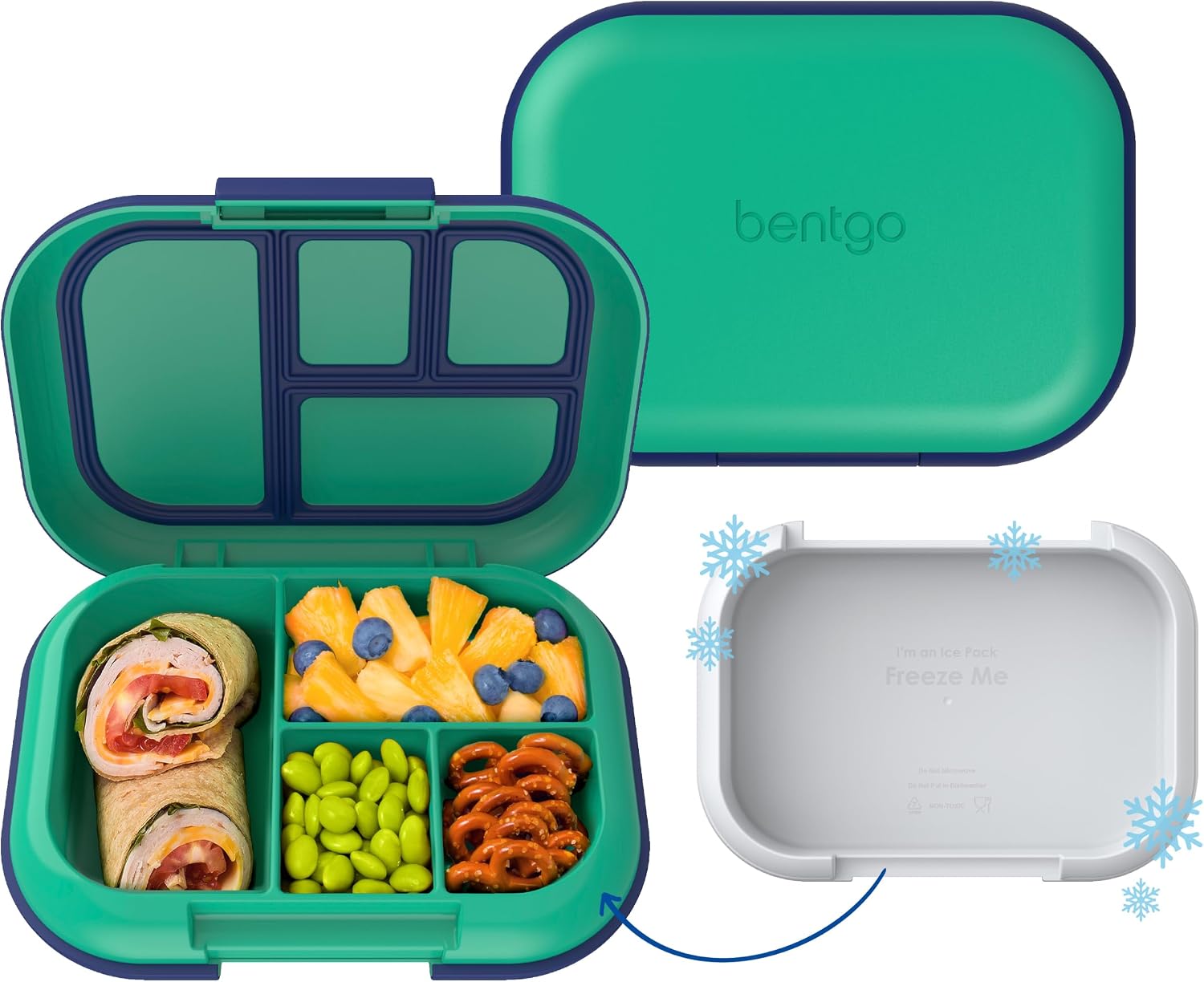
Bentgo Chill Kids 4-Compartment Bento Box
Best for: Cold lunches with a perishable extra like yogurt or a cheese stick
A leakproof four-compartment bento with a removable ice pack that sits under the tray, so one cold source travels with the food itself. Freeze the pack overnight, then add a second cold source in the lunch bag for perishables, as USDA FSIS bag-lunch guidance recommends.
- Built-in removable ice pack that goes under the tray (freeze overnight)
- 4-compartment tray holds about 3 cups, with an optional divider
- Tray is microwave-safe and top-rack dishwasher-safe; Bentgo recommends hand-washing the shell and ice pack
- Maker's age guidance: 3–7 years
Keep in mind: The built-in pack is one cold source. For perishable food, add a second one (a frozen water bottle or gel pack) in the bag.

Thermos Funtainer 10 oz Food Jar
Best for: Soup, pasta, or leftovers packed hot
The simplest way to send a warm main without a fridge: a small vacuum-insulated food jar with a spoon that folds into the lid. Preheat it with boiling water for a few minutes, empty it, then fill it with piping-hot food and keep it closed until lunch.
- Vacuum-insulated 18/8 stainless steel; Thermos rates it hot up to 5 hours and cold up to 7
- 10 oz capacity with a foldable spoon built into the lid
- Push-button lid designed for kids to open
- Dishwasher-safe per Thermos, though hand-washing is recommended
Keep in mind: Holds one food, so pair it with a bento or snack containers for the rest of the meal.

OmieBox Insulated Bento Lunch Box with Food Jar
Best for: A warm main and cold sides in one box
A bento with a removable vacuum-insulated stainless food jar built into one corner, so a warm entrée and crisp fruit or crackers can share a single leakproof box. Useful for kids who get tired of room-temperature sandwiches.
- Removable 18/8 stainless-steel vacuum-insulated food jar (8.5 fl oz)
- Listed with 3 compartments
- Removable, replaceable rubber seals for thorough cleaning
- BPA- and phthalate-free per Omie; maker's age guidance 3+
Keep in mind: Heavier than a plain bento (listed at about 1.8 lb), and the jar only keeps food hot if you preheat it first.

Yumbox Original Leakproof Bento Lunch Box
Best for: Shelf-stable lunches built from crackers, fruit, dips, and snacks
Six sealed compartments make it easy to build the grazing-style, shelf-stable lunches this guide recommends (crackers, whole or dried fruit, seed butter, a dip) without everything running together.
- 6 compartments (5 food + 1 dip) sealed individually by a silicone-lined lid
- About 3.2 cups total capacity
- Removable tray is top-rack dishwasher-safe; BPA-free materials
- Maker's age guidance: 3+
Keep in mind: No insulation or ice pack. For anything perishable it needs to ride in an insulated bag with two cold sources.
As an Amazon Associate I earn from qualifying purchases. Mom's Magazine may earn a commission when you buy through links on this page, at no extra cost to you. Learn more.
Frequently Asked Questions
Are sandwiches safe to pack without refrigeration?
It depends on the filling. Sandwiches with perishable fillings — meat, poultry, egg, mayo, or dairy — should be kept cold with an ice pack, per general FDA guidance on cold foods. Nut- or seed-butter sandwiches are far more forgiving and travel well, though an insulated bag is still smart in warm weather.
How long can a packed lunch safely sit out?
Perishable foods shouldn't spend long in the temperature range where bacteria grow fastest, so a full school day is too long without a cold source. USDA guidance describes that danger zone as roughly 40°F to 140°F. Shelf-stable foods avoid the concern; for anything perishable, use an ice pack and check current FDA and USDA guidance.
Do ice packs really keep lunch cold until noon?
A frozen gel pack in an insulated bag helps a lot, especially if the food started cold from the fridge and the bag is packed full and kept out of the sun. On hot days, two ice packs or a frozen drink used as one add margin. When something feels borderline, keep it cold or leave it out.
What are the easiest no-refrigeration lunches for young kids?
Build around whole fruit, crackers or pretzels, sunflower- or nut-butter sandwiches, dried fruit, and sealed shelf-stable snacks. A compartment tray of several small, easy-to-open items tends to get eaten more reliably than one big serving.
Can I pack yogurt or cheese without a fridge?
Not on their own — they're perishable and belong with an ice pack. A frozen yogurt tube is a handy trick: it stays safe as it thaws, helps chill the rest of the lunch, and is usually ready to eat by lunchtime.
Sources & Further Reading
- Danger Zone (40°F–140°F) — U.S. Department of Agriculture, Food Safety and Inspection Service (reviewed 2026-09-24)
- Keeping "Bag" Lunches Safe — U.S. Department of Agriculture, Food Safety and Inspection Service (reviewed 2026-09-24)
- Pack It Safe, Pack It Smart: Back-to-School Lunchbox Packing Essentials — U.S. Department of Agriculture, Food Safety and Inspection Service (reviewed 2026-09-24)
- Handling Food Safely While Eating Outdoors — U.S. Food & Drug Administration (reviewed 2026-09-24)
- What You Need to Know About Egg Safety — U.S. Food & Drug Administration (reviewed 2026-09-24)
Related Guides
Best Lunch Boxes for Kindergarten (2026 Buying Guide)
Lunch box for kindergarten buying guide: hard vs soft, age bands, what to avoid, bento compartments, thermos wells, dishwasher care, backpack fit, short lunch periods, USDA FSIS / CDC packing notes, spill risk, and five Amazon picks.
Best Insulated Lunch Bags for Kids (2026 School Lunch Guide)
Best insulated lunch bags for kids for school: freezable-wall vs thick soft insulation vs fitted brand bags vs kids hard-sided coolers, USDA FSIS and CDC cold-safety packing framework, and five real Amazon options.
Best Bento Boxes for Kids
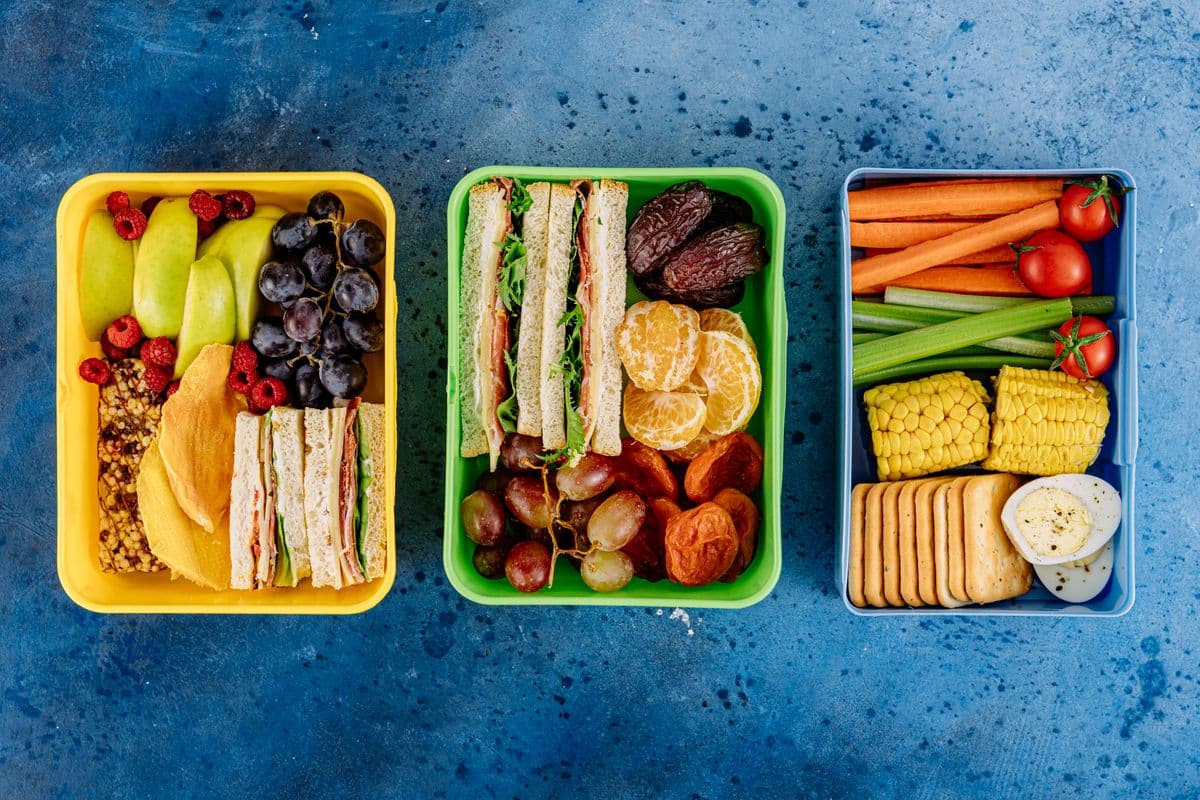
How to choose the best bento box for kids: sealed vs stainless compartments, kid-openable latches, hot-food jars vs cold packing, backpack fit, USDA FSIS cold-safety pairing, washability, and five Amazon picks.
Best Water Bottles for Kids (2026): Preschool, Lunch Bag & Sports
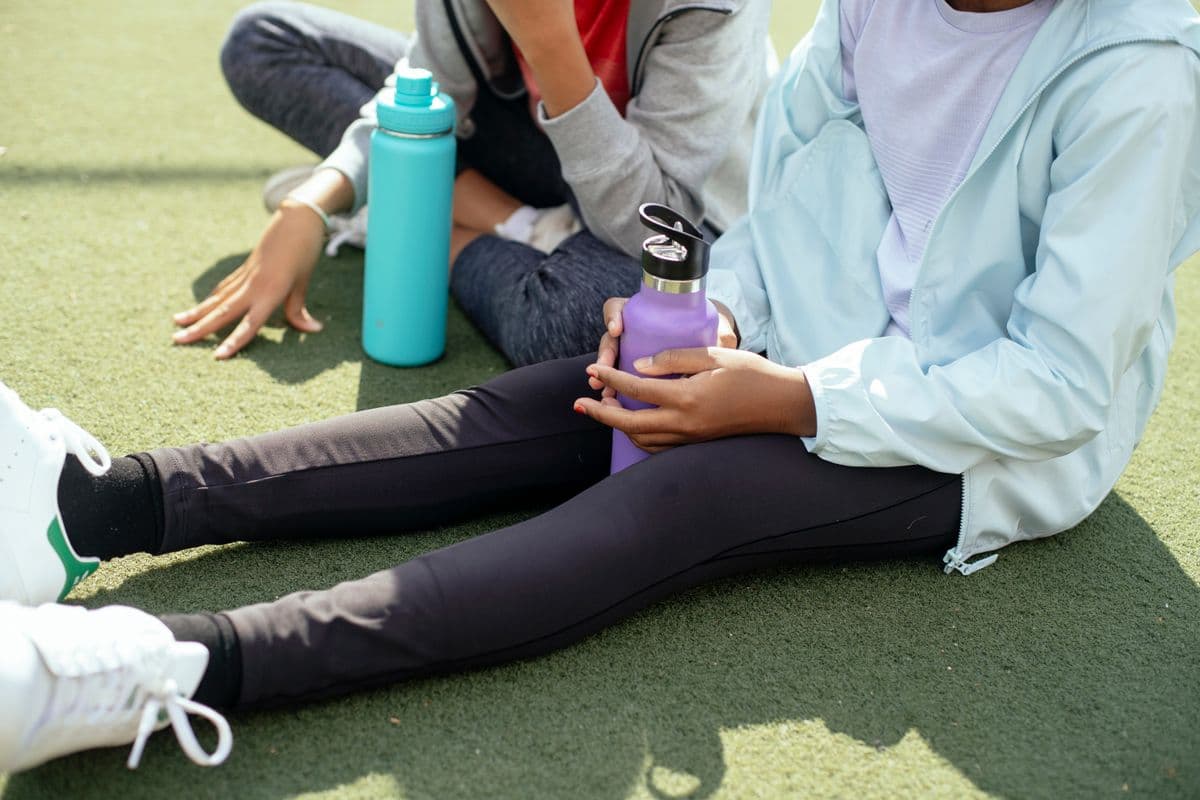
Best water bottle for kids by job — preschool carry, school lunch bag, sports bag, and older-kid dual spout — plus leak tests, cleaning to stop straw mold, size by age, and CDC/AAP water guidance.
Best Toddler Snack Containers of 2026
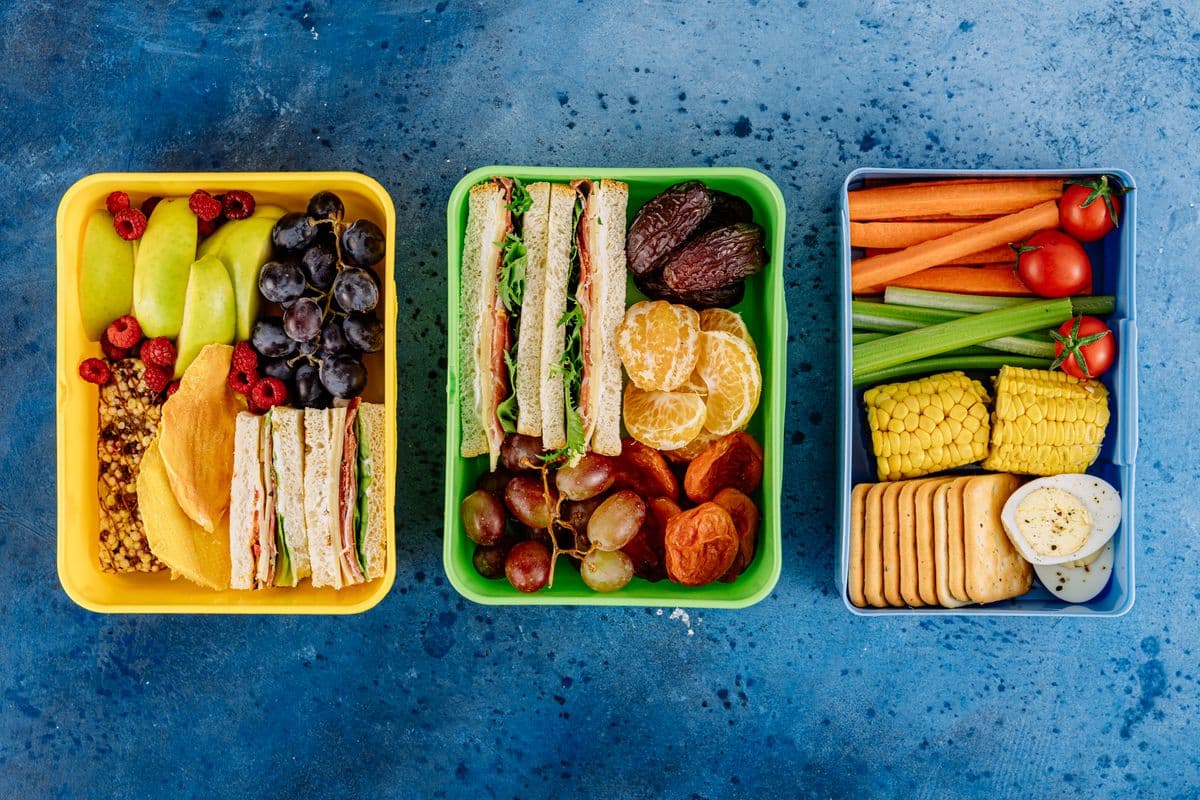
Spill-proof snack cups, silicone snack bags, and stacking snack containers compared by lid mechanism — plus lunchbox packing, daycare snack rules (CFOC/HHS piece size and grape quartering), and how snack cups pair with bento boxes and insulated lunch bags.
Back-to-School Checklist by Grade
A practical, grade-by-grade back-to-school checklist covering supplies, routines, and paperwork.
Best First Baby Foods & Best First Foods for Baby (CDC and AAP Guide)
Best first baby foods and best first foods for baby, in plain CDC and AAP terms: iron-rich starters around 6 months, one food at a time, allergen timing, first-feeding setup (bibs, spoons, cups), and what not to give. Editorially reviewed general information, not medical advice — not a ranked jar list.
Best Backpacks for Elementary School
How to choose a well-fitting, durable elementary-school backpack, plus options to compare.
Mom's Magazine Editorial Team
Editorial Team
The Mom's Magazine editorial team researches and writes practical, plainly-sourced guidance for parents and families. Guides are reviewed for accuracy and updated as recommendations change. Where a topic calls for professional expertise, we cite reputable organizations and, for health topics, add a qualified reviewer before publishing.
Newsletter
Get the Weekly Mom List
One short email a week: the most useful guides, activities, and picks for your family. No spam, unsubscribe anytime.