Products
Best Toddler Snack Containers of 2026
Spill-proof snack cups, silicone snack bags, and stacking snack containers compared by lid mechanism — plus lunchbox packing, daycare snack rules (CFOC/HHS piece size and grape quartering), and how snack cups pair with bento boxes and insulated lunch bags.
As an Amazon Associate I earn from qualifying purchases.Some links on this page are affiliate links. If you buy through them, Mom's Magazine may earn a small commission at no extra cost to you. It never changes which products we recommend. How we recommend products.
There's no single best toddler snack container — the right one depends on the lid mechanism your child can work, and whether you're packing a stroller snack, a daycare morning snack, or sides inside a lunch box. A flexible slit-top "snack catcher" like the Munchkin Snack Catcher lets a toddler reach in one-handed without opening anything, which is the easiest design for a not-yet-coordinated 12- to 18-month-old, but it isn't sealed against liquid and the slit needs regular hand-washing so it doesn't get sticky. A rigid press-lid cup like WeeSprout's silicone-and-plastic set seals more securely for car rides and diaper bags. A hinged flip-top like OXO Tot's teaches a toddler to open it themselves around age 2 to 3. Stacking cups like Boon Snug save drawer space for families who go through several a day, and a flat silicone bag like Bumkins fits a stroller pocket or lunch-bag side pocket better than any rigid cup. For full lunch packing, these cups usually sit beside a main tray — see our bento and insulated lunch bag guides — not replace them. This is a researched buying guide based on manufacturer specifications and recurring patterns in verified reviews, not a hands-on side-by-side spill test.
Best seal for car rides
WeeSprout Snack Containers, Silicone Cups with Spill-Proof Tops, Set of 2
Best for: Car rides and diaper bags where a full seal matters
Quick picks
| Product | Best for | |
|---|---|---|
| WeeSprout Snack Containers, Silicone Cups with Spill-Proof Tops, Set of 2 Best seal for car rides | Car rides and diaper bags where a full seal matters | Check price on Amazon |
| Munchkin Snack Catcher, 9 Ounce, 4-Count Easiest first snack cup | The youngest independent snackers, roughly 12–24 months | Check price on Amazon |
| OXO Tot Flip-Top Snack Cup, 5 Ounce Best for self-opening independence | Ages 2–3 learning to open a snack cup themselves | Check price on Amazon |
| Boon Snug Toddler Snack Containers with Lids, 2 Cups + 2 Lids Best for packing multiple snacks | Families packing more than one snack per outing | Check price on Amazon |
| Bumkins Silicone Reusable Snack Bags, 2-Pack Most packable | Stroller pockets and backpacks where bulk is the enemy | Check price on Amazon |
How we picked
This is a researched buying guide, not a hands-on lab test — we haven't packed a diaper bag or a daycare lunch tote with all five of these and compared spill rates ourselves. We looked at manufacturer specifications, lid mechanism design, and the recurring patterns in verified customer reviews for widely available snack containers, focused on the difference that actually matters day to day: how the lid works, not how the marketing copy describes it. If we run a hands-on comparison later, we'll update this guide and say so.
What actually makes a snack container work
"Spill-proof" is doing a lot of work on packaging, and it means different things depending on the lid. Before comparing brands, it helps to know what you're actually choosing between.
- Lid mechanism: a flexible slit or star-shaped opening lets a hand in without a separate open/close step, which is the easiest design for a toddler who can't yet work a hinge or a press-fit seal.
- Dry vs. wet capability: most snack cups are designed and reviewed for dry, low-mess foods — crackers, dry cereal, puffs, cut fruit. None of the five in this guide are marketed as leak-proof for yogurt, applesauce, or liquid.
- Capacity that matches the outing: a 5-ounce cup is plenty for a stroller walk; a car ride, daycare morning snack, or a full afternoon at a playground usually wants closer to 9 ounces so you're not refilling every twenty minutes.
- Parts that actually come apart for washing: a lid that doesn't fully separate from the cup traps crumbs and oil in corners a sponge can't reach.
- Whether a toddler can eventually open it themselves: a flip-top hinge or a press-and-turn lid teaches independence around age 2 to 3 in a way a parent-only screw lid doesn't — and that matters once lunch periods expect kids to open sides without waiting on a teacher for every cracker.
Lid mechanisms, compared
| Lid style | Best for | Cleaning | Trade-off |
|---|---|---|---|
| Flexible slit / star opening (Munchkin-style) | Youngest independent snackers, roughly 12–24 months | Hand-wash the slit regularly; residue collects in the flex points | Not sealed against liquid; a hard yank can pop the lid off entirely |
| Rigid press-fit lid (WeeSprout-style) | Car rides, diaper bags, anywhere a full seal matters more than one-handed access | Fully removable parts, generally dishwasher-safe | Toddler usually needs an adult to open and close it |
| Hinged flip-top (OXO Tot-style) | Ages 2–3 learning to self-serve without losing a separate lid | Hinge crevice needs a toothbrush pass occasionally | The hinge is a moving part that can loosen or crack with hard use over a year or two |
| Stacking press-lid cups (Boon-style) | Families packing 2–3 snacks per outing who want compact storage | Dishwasher-safe; lids and cups nest for drawer space | Extra pieces to keep track of and match correctly |
| Flat silicone zip bag (Bumkins-style) | Stroller pockets, backpacks, lunch-bag side pockets | Turns inside out for washing; air-dry fully before closing | No rigid structure, so it can't protect against a food getting crushed |
Age-by-age fit
A snack container isn't a developmental milestone product the way a spoon or a sippy cup is, but coordination still drives which lid style is worth buying first.
- Around 12–18 months: a flexible slit-top container is usually the easiest first snack cup because there's no separate open step — the child just reaches in. Expect some food to end up on the floor as they figure out the motion; that's normal, not a defective product.
- Around 18 months–2.5 years: this is when a rigid press-fit lid starts making sense for car rides and errands, since a toddler this age can hold a cup upright but usually still needs help opening a sealed lid — and daycare teachers often open lids for this age anyway.
- Around 2.5–3 years and up: a hinged flip-top or a screw-style lid becomes something most kids can manage themselves, which is also when "snack container" starts doubling as an early independence skill for preschool lunch packing rather than purely a mess-prevention tool.
The container doesn't make food safe to choke on
HHS's Caring for Our Children guidance for early childhood settings calls for cutting food for young children into pieces of about a half-inch or smaller, and specifically for quartering grapes lengthwise rather than just cutting them in half — a grape cut in half keeps a rounded shape that can still block a young child's airway the way a whole grape can. That rule applies to whatever you put in any of these containers; a spill-proof lid has nothing to do with whether the food itself is a choking risk.
Lunchbox packing: where snack cups actually fit
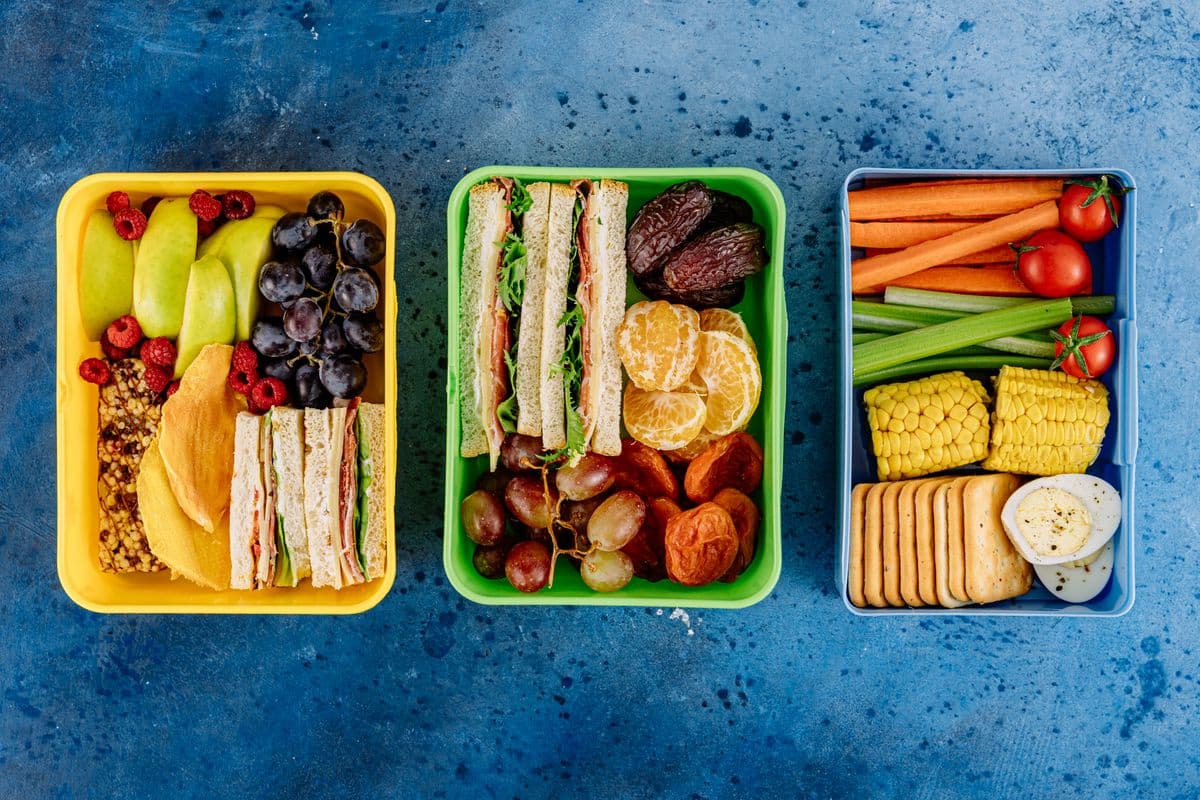
A toddler snack cup is almost never the whole lunch — it's a side container for crackers, dry cereal, cut fruit, or a crunchy snack that would otherwise migrate into the sandwich compartment. The main tray still does the heavy lifting. If you're building a full packed lunch, start with the box or bag, then decide which sides belong in a snack cup versus a bento compartment.
- Use a snack cup for dry sides that spill easily in a soft bag (crackers, cereal, pretzels) when you want a lid a toddler can dig into without opening a full lunch tray mid-morning.
- Keep wet or saucy foods in a sealed lunch-box compartment or a dedicated leak-resistant container — slit-top snack catchers are the wrong tool for yogurt, applesauce pouches that have been opened, or cut fruit that weeps juice.
- Pair the cup with an insulated lunch bag when anything perishable has to travel — the snack cup itself is not insulation. See insulated lunch bags for kids for the soft cold carrier.
- When the main meal needs compartments (protein + carb + produce), use a bento box for kids or kindergarten lunch box as the tray, and treat snack cups as optional extras for a second snack window.
- Pack to about three-quarters full so press-fit and flip-top lids aren't forced shut under pressure — overfilled cups are more likely to pop open in a backpack than under-filled ones.
For menus that skip the fridge entirely on long field-trip or delayed-lunch days, school lunches that do not need refrigeration covers shelf-stable packing that pairs with these same containers.
Daycare and preschool snack rules that matter more than the brand
Daycare packing is a policy problem as much as a product problem. Centers set allergen rules, leftover rules, and labeling expectations that override which Amazon cup you prefer. The container still has to survive a cubby and a teacher opening it one-handed — but the food rules come first.
- Follow the center's written allergy and shared-food policy. Nut-free, sesame-free, or "no homemade baked goods" rules are common; a spill-proof lid does not make a restricted food allowed.
- Label the cup with your child's name. Teachers move snacks between bags, tables, and refrigerators — unlabeled cups are how lunches get swapped.
- Cut pieces to about a half-inch and quarter grapes lengthwise, per HHS Caring for Our Children guidance used widely in early childhood settings. Whole grapes, hot dogs cut into coins, large chunks of raw carrot, and sticky globs of nut butter are recurring choking-risk patterns — not because of the cup, because of the food shape.
- Ask whether leftover perishable snacks come home or get discarded. Many centers discard opened perishable food for food-safety reasons; packing a huge cup "just in case" often means waste, not more eating.
- Prefer lids teachers can open quickly. A clever child-proof mechanism that takes thirty seconds frustrates a room of twelve toddlers more than a simple press-fit or flip-top does.
- Keep a spare clean cup in the spare-clothes bag when the center allows it — daycare snack cups get left in cubbies, dropped on playgrounds, and borrowed for water more often than stroller cups do.
Daycare snack ≠ all-day grazing cup
A snack cup that stays open on a stroller tray all afternoon is a different habit than a labeled cup opened at a scheduled snack time. Constant grazing can blunt appetite at meals; for daycare, pack a portion sized for the center's snack window and let the schedule do the work.
Common mistakes
- Buying a mixed batch of lids and cups across brands because they look the same size — most brands' lids only seal correctly on their own cups, and a loose-fitting swap is the top reason a "spill-proof" cup suddenly isn't.
- Packing wet or saucy food into a flexible slit-top container and expecting it to seal — these lids are designed to let a hand in, which means they are not designed to keep liquid in.
- Overfilling a press-fit or flip-top lid so it has to be forced shut — a lid under pressure is more likely to pop open in a diaper bag or lunch tote than one filled to about three-quarters capacity.
- Expecting one snack cup to replace a lunch box — crackers in a catcher plus a sandwich loose in a backpack is how lunches get crushed; use a proper tray or bag for the meal.
- Letting a snack cup become an all-day, walk-around grazing container rather than a sit-down or scheduled snack — that's more a feeding-habit choice than a container flaw, but it's worth deciding on purpose rather than by default.
- Assuming "dishwasher-safe" applies to every piece — flexible silicone slit lids in particular are often better hand-washed, since dishwasher heat can shorten the life of the flex points faster than the rigid parts.
Troubleshooting
- Sour or musty smell: fully disassemble every piece (lid, gasket, cup) and air-dry inverted rather than sealing it while still damp — trapped moisture in a closed lid is the most common cause of an off smell developing within a week or two.
- Sticky or hard-to-open slit lid: warm soapy water worked into the flex points with a fingertip, rinsed well, usually restores it; oily snacks (crackers with seasoning, cheese) build up residue there faster than plain crackers or fruit.
- Missing lid: buy same-color multi-packs when a brand offers them, so a stray lid is easier to match back to its cup, and keep a dedicated bin instead of storing snack cups loose in the general Tupperware drawer.
- Cracked or brittle hinge on a flip-top: check the manufacturer's page for a replacement lid before replacing the whole set — some brands sell lids and cups separately.
- Cup keeps coming home empty from daycare with leftover policy confusion: ask the teacher whether unopened sealed snacks can return; if not, pack smaller portions closer to what your child actually eats at snack time.
How many to buy
Most families land on somewhere between two and four snack containers in regular rotation — enough that one is always clean while another is in the diaper bag, the car, or the daycare tote, without so many that half of them are lost under a car seat by the second month. A two-pack of one lid style plus a two-pack of a second style (say, a slit-top for stroller walks and a sealed press-lid for the lunch bag) covers more real situations than four of the same cup. Daycare families often want one more spare than weekend-only packers because cups sit in cubbies overnight.
Snack containers are one piece of a bigger on-the-go feeding kit. If freezer-to-daycare portions are more the issue than stroller snacks, our comparison of baby food storage containers and freezer trays covers that separately. For the utensils a toddler uses to actually eat what's in the cup, our stage-by-stage self-feeding utensil guide covers pre-spoons through toddler forks. And once snack cups graduate into a full lunch routine, our kindergarten lunch box guide, bento boxes for kids, and insulated lunch bag picks pick up from here.
Our Recommendations

WeeSprout Snack Containers, Silicone Cups with Spill-Proof Tops, Set of 2
Best for: Car rides and diaper bags where a full seal matters
A food-grade silicone cup with a rigid hard-plastic press-fit lid designed to seal more securely than a flexible slit-top catcher, aimed at reducing spills when the cup gets tipped over rather than just when a hand reaches in.
- Food-grade silicone cup body with a hard-plastic press-fit lid
- Sold as a set of 2 so one can be washed while the other is packed
- Dishwasher-safe per manufacturer listing
- Silicone body is more drop-resistant than a rigid plastic cup
Keep in mind: A toddler usually needs an adult to get the press-fit lid on and off, so it's less of an independence tool than a slit-top or flip-top design.
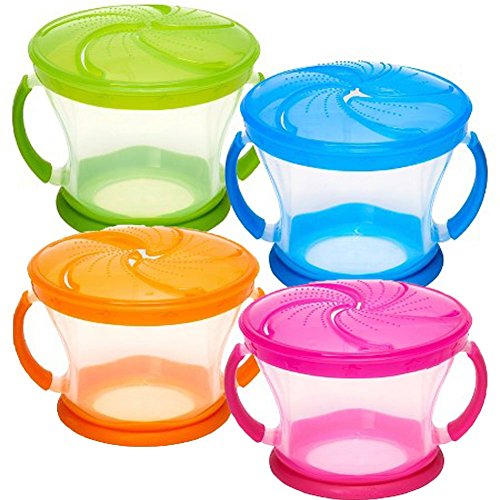
Munchkin Snack Catcher, 9 Ounce, 4-Count
Best for: The youngest independent snackers, roughly 12–24 months
The long-running flexible slit-top design that lets a toddler reach in without opening anything, sold as a 4-count so there's always a clean one on hand. The 9-ounce size holds more than a single stroller-walk portion.
- Flexible star-shaped opening for one-handed reaching
- 9-ounce capacity, larger than most single-serving cups
- Sold as a 4-count, useful for keeping a spare in the diaper bag
- Lid separates from the cup for washing
Keep in mind: Not sealed against liquid, and the flexible opening needs regular hand-washing attention since residue collects in the flex points.
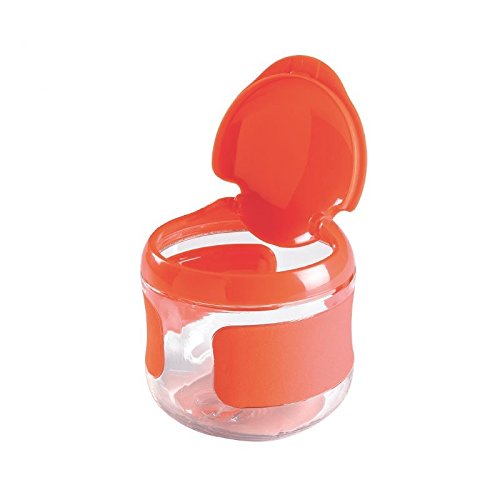
OXO Tot Flip-Top Snack Cup, 5 Ounce
Best for: Ages 2–3 learning to open a snack cup themselves
A hinged flip-top lid that stays attached to the cup, so there's no separate lid to lose, and one a toddler can usually learn to flip open and closed on their own well before they can manage a screw-top container.
- Hinged flip-top lid stays attached — nothing to misplace
- 5-ounce size sized for a single walking-around snack
- Compact enough for a stroller cup holder or coat pocket
- BPA-free plastic construction
Keep in mind: The hinge is a moving part; over a year or more of daily use it can loosen or crack, and 5 ounces runs small for a long outing.
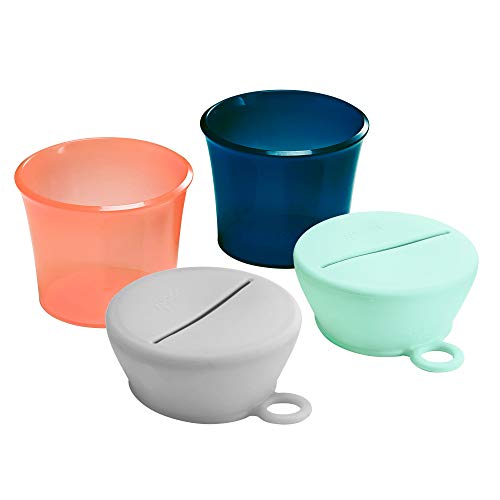
Boon Snug Toddler Snack Containers with Lids, 2 Cups + 2 Lids
Best for: Families packing more than one snack per outing
Spill-proof cups designed to stack and nest for compact storage, which matters if you're regularly packing two or three different snacks rather than one. Comes as a matched 2-cup, 2-lid set to avoid the mismatched-lid problem.
- Stackable, nesting design for compact drawer or bag storage
- Matched 2-cup, 2-lid set, sold together
- Spill-proof press-fit lid
- Dishwasher-safe per manufacturer listing
Keep in mind: More individual pieces than a single all-in-one cup, so there's more to keep track of if you separate the set.

Bumkins Silicone Reusable Snack Bags, 2-Pack
Best for: Stroller pockets and backpacks where bulk is the enemy
A flat, food-grade silicone zip bag rather than a rigid cup, which packs flatter in a stroller pocket or diaper bag side pocket than any of the cup-style options here. Manufacturer lists it as microwave, freezer, and dishwasher safe.
- Flat silicone zip-seal bag, not a rigid cup
- Manufacturer-listed as microwave, freezer, and dishwasher safe
- Sold as a 2-pack
- Turns inside out for thorough washing
Keep in mind: No rigid structure, so it won't protect crackers or chips from getting crushed the way a hard-sided cup does.
As an Amazon Associate I earn from qualifying purchases. Mom's Magazine may earn a commission when you buy through links on this page, at no extra cost to you. Learn more.
Frequently Asked Questions
Are snack containers dishwasher-safe?
Most rigid parts (cups, hinged lids, press-fit lids) are dishwasher-safe per their manufacturer listings, but flexible silicone slit-top lids are often better hand-washed — dishwasher heat can shorten the life of the flex points faster than it affects rigid plastic or the cup body itself. Check the specific product's care instructions rather than assuming every piece goes on the top rack.
What's the actual difference between a 'snack catcher' and a regular container with a lid?
A snack catcher has a flexible slit or star-shaped opening designed so a child can reach a hand in without opening anything — it trades a liquid-tight seal for one-handed, no-assembly access. A regular container has a fully removable lid that seals more completely but usually needs an adult (or an older toddler) to open and close it.
Can silicone snack bags go in the microwave?
Check the specific product — Bumkins lists its silicone snack and sandwich bags as microwave, freezer, and dishwasher safe, but not every silicone snack product on the market carries the same rating, and food-grade silicone products vary by manufacturer. Always follow the label on the exact item you bought rather than assuming all silicone is interchangeable.
How do I stop losing lids to mismatched sets?
Buy same-brand, same-release multi-packs rather than mixing brands or generations of a product line — lids that look like they'd fit another cup often don't seal correctly even when they physically snap on. Keeping snack cups in a dedicated bin, rather than mixed into a general food-storage drawer, also cuts down on stray lids ending up elsewhere.
Is a BPA-free label enough to consider a snack container safe?
BPA-free covers one specific chemical-safety question and has been standard for products sold for children in the U.S. for years — it says nothing about whether the food inside is a choking risk. Piece size and shape (see HHS's Caring for Our Children guidance on cutting food to about a half-inch and quartering grapes) is a separate, and arguably more immediate, safety question from what the container itself is made of.
Can I use a snack cup as the whole daycare lunch?
Usually no — a snack cup holds a side portion, not a balanced lunch. Use a lunch box or bento tray for the main meal and treat snack cups as extras for crackers or fruit. See our kindergarten lunch box and bento guides for the tray side of the same packing system.
What should I put in a snack cup for daycare?
Dry, low-mess finger foods cut to about a half-inch, with grapes quartered lengthwise — crackers, dry cereal, cut soft fruit, or similar items your center allows. Skip wet foods in slit-top catchers, follow the center's allergen rules, and label the cup. Ask the teacher about leftover and refrigeration policy before packing perishable items.
Do snack cups replace an insulated lunch bag?
No. A snack cup is a portion container; an insulated lunch bag is the cold carrier for the whole meal. When you pack perishables, pair the cup (or bento tray) with an insulated bag and cold sources — compare options in our insulated lunch bags for kids guide.
Sources & Further Reading
- Foods that Are Choking Hazards — HHS Administration for Children and Families — Caring for Our Children (CFOC) (reviewed 2026-09-27)
Related Guides
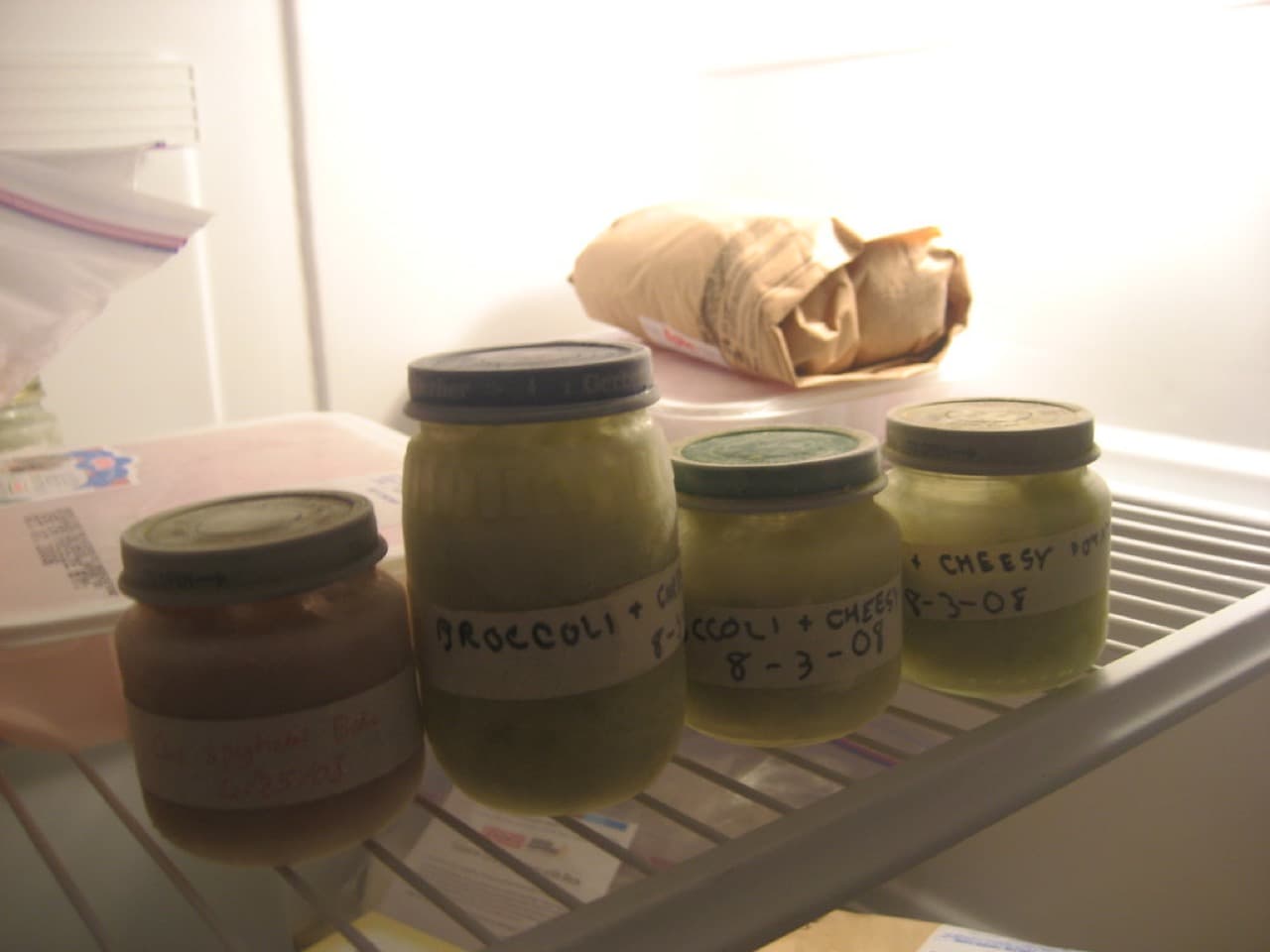
Best Baby Food Storage: Silicone Freezer Trays & Containers (2026)
Baby food storage compared: best silicone freezer trays for baby food plus glass and travel containers — well size, lids, batch-freeze workflow, labeling, thawing, and who each pick is for (no invented prices).
Best Toddler Self-Feeding Utensils and Baby Spoons of 2026
Why the first spoon your baby actually uses isn't shaped like a spoon, which self-feeding utensils fit each stage from first purees to a toddler fork, and how utensils pair with solids, open cups, high chairs, bibs, and plates.
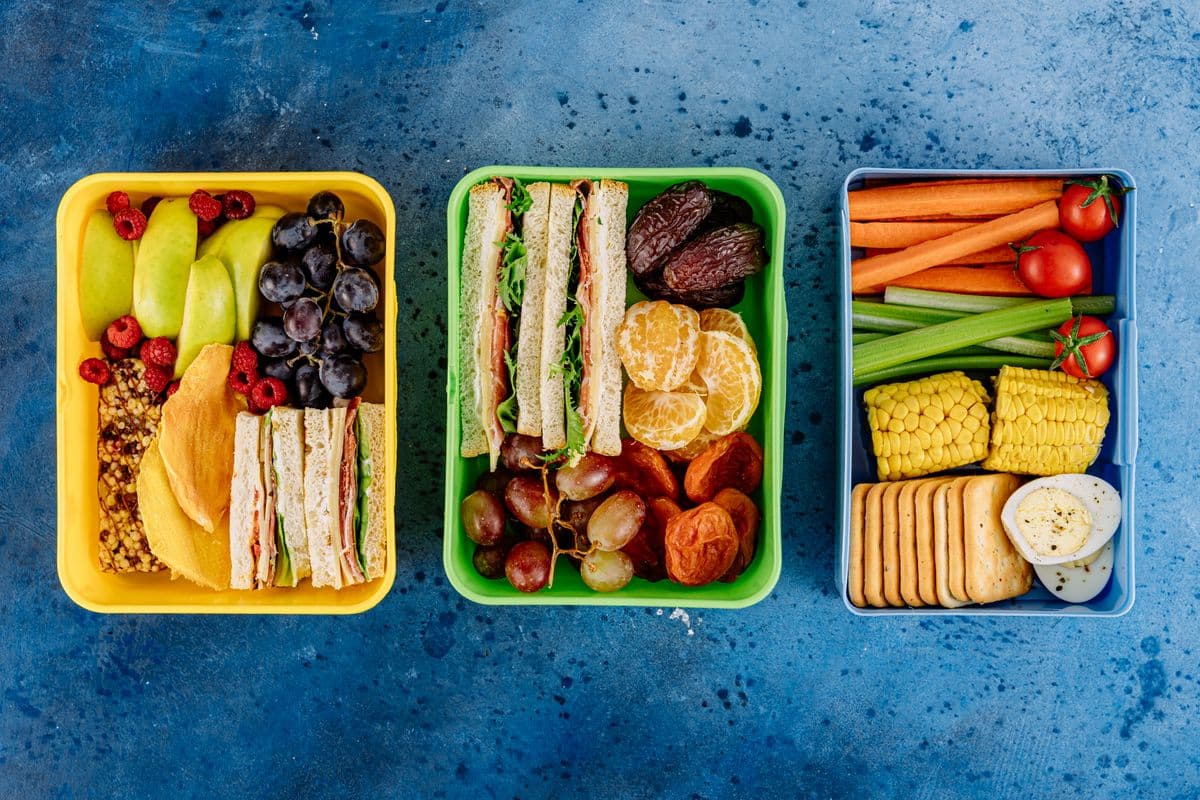
Best Lunch Boxes for Kindergarten (2026 Buying Guide)
Lunch box for kindergarten buying guide: hard vs soft, age bands, what to avoid, bento compartments, thermos wells, dishwasher care, backpack fit, short lunch periods, USDA FSIS / CDC packing notes, spill risk, and five Amazon picks.
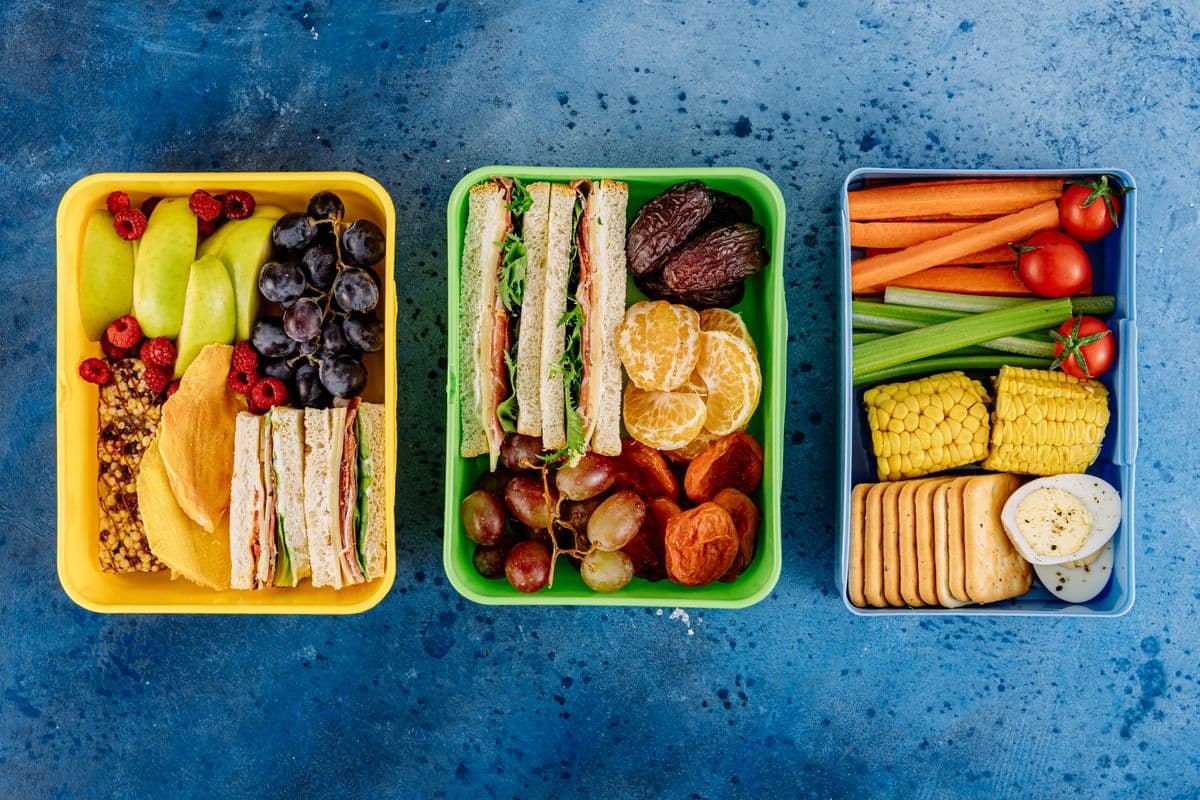
Best Bento Boxes for Kids
How to choose the best bento box for kids: sealed vs stainless compartments, kid-openable latches, hot-food jars vs cold packing, backpack fit, USDA FSIS cold-safety pairing, washability, and five Amazon picks.
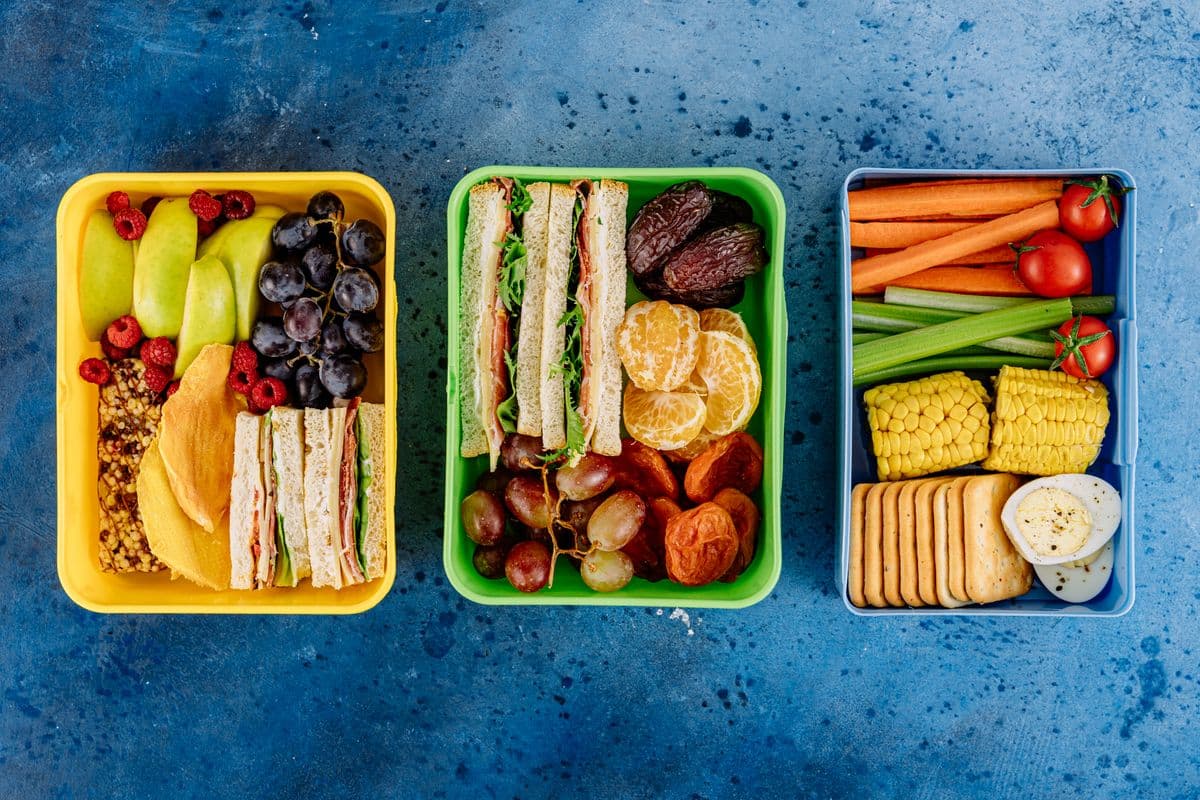
Best Insulated Lunch Bags for Kids (2026 School Lunch Guide)
Best insulated lunch bags for kids for school: freezable-wall vs thick soft insulation vs fitted brand bags vs kids hard-sided coolers, USDA FSIS and CDC cold-safety packing framework, and five real Amazon options.
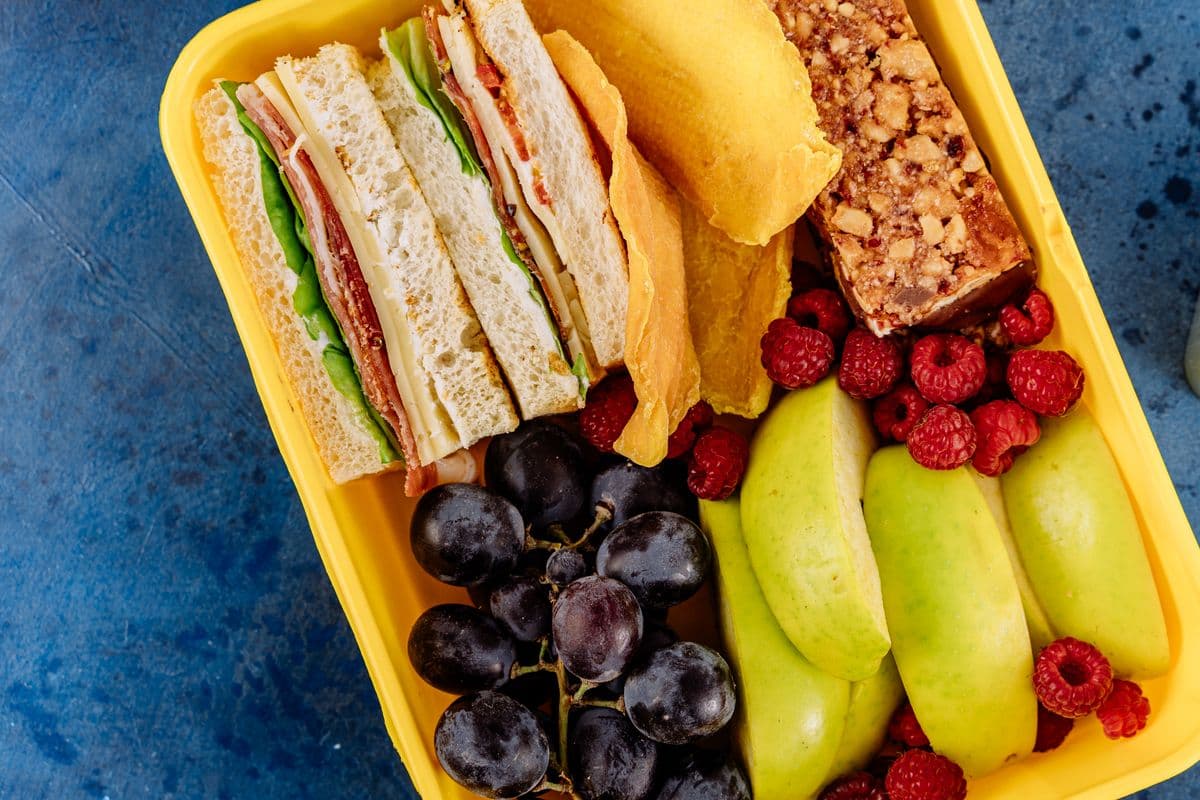
School Lunches That Don't Need Refrigeration: No-Fridge Ideas That Stay Food-Safe
School lunches that don't need refrigeration: shelf-stable protein, fruit and veggie ideas, how to pack a thermos so hot food stays safe, and the USDA 40°F–140°F rule for anything perishable.
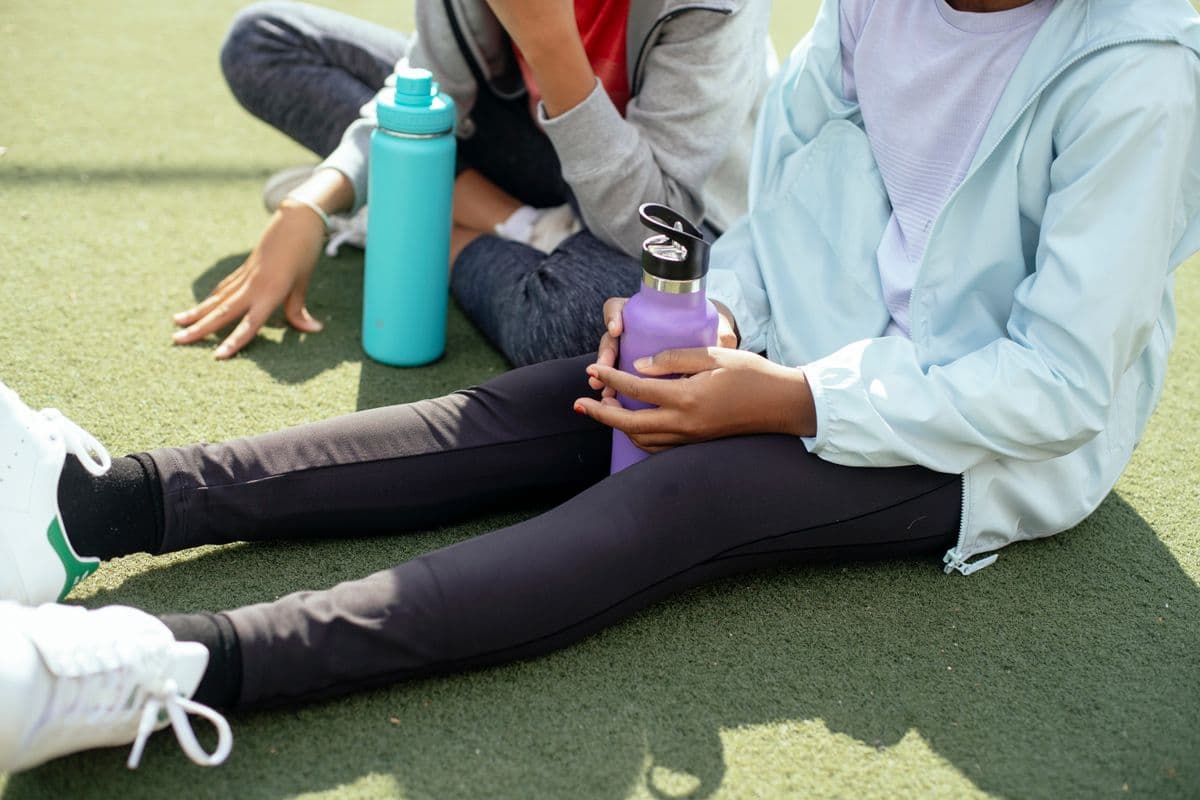
Best Water Bottles for Kids (2026): Preschool, Lunch Bag & Sports
Best water bottle for kids by job — preschool carry, school lunch bag, sports bag, and older-kid dual spout — plus leak tests, cleaning to stop straw mold, size by age, and CDC/AAP water guidance.
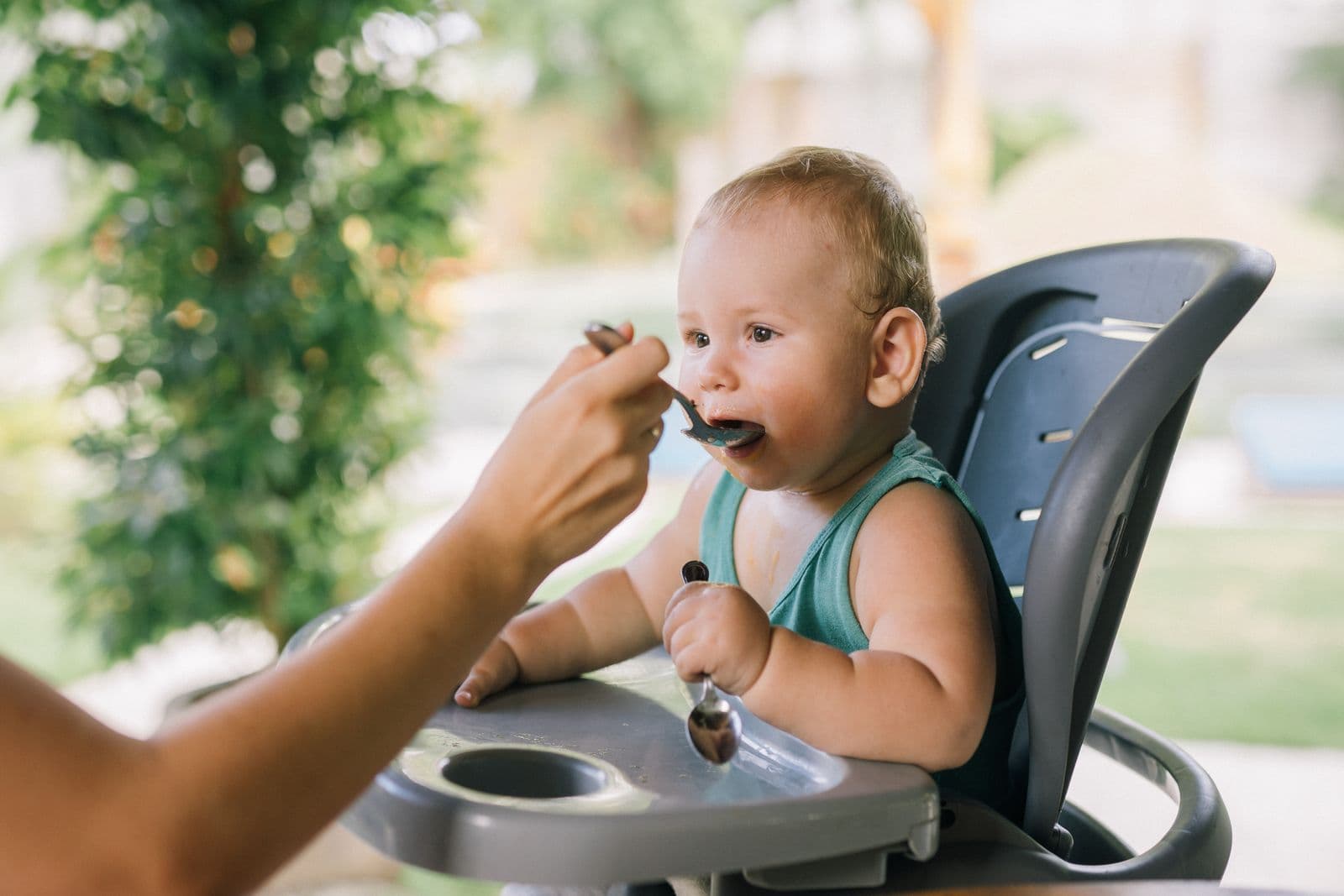
Best First Baby Foods & Best First Foods for Baby (CDC and AAP Guide)
Best first baby foods and best first foods for baby, in plain CDC and AAP terms: iron-rich starters around 6 months, one food at a time, allergen timing, first-feeding setup (bibs, spoons, cups), and what not to give. Editorially reviewed general information, not medical advice — not a ranked jar list.
Mom's Magazine Editorial Team
Editorial Team
The Mom's Magazine editorial team researches and writes practical, plainly-sourced guidance for parents and families. Guides are reviewed for accuracy and updated as recommendations change. Where a topic calls for professional expertise, we cite reputable organizations and, for health topics, add a qualified reviewer before publishing.
Newsletter
Get the Weekly Mom List
One short email a week: the most useful guides, activities, and picks for your family. No spam, unsubscribe anytime.