Products
Best Baby Food Storage: Silicone Freezer Trays & Containers (2026)
Baby food storage compared: best silicone freezer trays for baby food plus glass and travel containers — well size, lids, batch-freeze workflow, labeling, thawing, and who each pick is for (no invented prices).
As an Amazon Associate I earn from qualifying purchases.Some links on this page are affiliate links. If you buy through them, Mom's Magazine may earn a small commission at no extra cost to you. It never changes which products we recommend. How we recommend products.
Baby food storage is the job after the blender stops: portion, seal, freeze or refrigerate, label, and thaw without waste. For most families batch-freezing puree, the best silicone freezer tray for baby food is the WeeSprout Silicone Freezer Tray (ten 1.5 oz sections with 1 oz markings, hard plastic clip-on lid, dishwasher- and boil-safe per the listing). Smaller early-solids cubes: Souper Cubes 2 Tbsp (1 oz). Bigger 2 oz pods: KeaBabies. Glass reheat vessels: Wean Green. Daycare travel blocks: OXO Tot 2 oz Baby Blocks. Specs come from maker and Amazon listings — not a kitchen lab test — and we do not list prices. Fridge and freezer timelines live on our store-and-freeze safety guide.
Quick picks
| Product | Best for | |
|---|---|---|
| WeeSprout Silicone Freezer Tray Best Silicone Freezer Tray | Most families batch-freezing purees | Check price on Amazon |
| Souper Cubes 2 Tbsp Silicone Freezer Tray Best for Early Solids | Small 1 oz cubes for the first weeks of solids | Check price on Amazon |
| KeaBabies Silicone Freezer Tray Best for Bigger Portions | Bigger 2 oz portions for later purees | Check price on Amazon |
| OXO Tot Baby Food Freezer Tray Best Sliding-Lid Tray | Sliding out one cube at a time without flexing a tray | Check price on Amazon |
| Wean Green Glass Starter Set Best Glass System | Families who reheat directly in the storage container | Check price on Amazon |
| OXO Tot Baby Blocks 2 oz Best for Grab-and-Go Portions | Carrying single portions to daycare or a grandparent's house | Check price on Amazon |
| Beaba Multiportions Silicone Freezer Tray (3 oz) Oven-safe silicone tray | Larger portions that can go in the oven | Check price on Amazon |
| OXO Tot Glass Baby Blocks (4 oz) Glass with locking lids | Freezer-to-microwave glass portions | Check price on Amazon |
| WeeSprout Glass Baby Food Jars (4 oz, 12-Pack) 12-jar glass set | Batch-prepping a week of purees | Check price on Amazon |
Baby food storage: what the search actually needs
If you searched baby food storage, you are usually deciding among three tools, not hunting for one magic jar. A lidded silicone freezer tray batch-portions puree into freeze-solid cubes you bag and date. Glass containers carry the same food from freezer to microwave when the maker rates them for that path. Individual travel blocks leave the house for daycare or grandparents without sending a whole multi-well tray. Most families who cook weekly end up with a tray plus a small travel set; families who reheat obsessively lean glass; baby-led weaning households that skip puree may skip a dedicated tray entirely.
This page answers baby food storage with real listing specs — well size, lid type, heat and cleaning claims — and a workflow for Sunday batch-freeze days. It is not a scored lab ranking and it does not invent prices, star ratings, or test scores. For fridge and freezer timelines by food type, use how to store and freeze homemade baby food safely (University of Illinois Extension), not a guess from a shopping page.
Match the tool to this month's job
Starting solids this month with tiny portions? Prioritize ~1–1.5 oz wells with a real lid. Appetite already bigger? Look at 2 oz pods or glass. Daycare drop-offs three days a week? Travel blocks matter more than another freezer tray. Buy for the job you have now; size up later rather than filling a drawer with unused molds.
Best silicone freezer trays for baby food, compared
If you searched for the best silicone freezer tray for baby food, the short answer is to pick by well size and lid, not by color. A 1 oz well suits the first weeks of solids. About 1.5 oz is a flexible middle size. A 2 oz pod saves thawing three cubes for one meal later on. Every silicone tray below comes with a lid. The table only lists what each maker or Amazon listing states. We don't cite star ratings or test scores, and we don't list prices.
| Product | Material (per listing) | Portion size | Lid | Heat / cleaning (per listing) |
|---|---|---|---|---|
| WeeSprout Silicone Freezer Tray | Food-grade silicone tray; BPA-free hard plastic lid | Ten 1.5 oz sections with 1 oz markings | Hard plastic clip-on lid; reinforced bottom for stacking | Dishwasher-safe and boil-proof |
| Souper Cubes 2 Tbsp Silicone Freezer Tray | 100% food-grade platinum-cured silicone, steel-reinforced rim | 2 Tbsp (1 fl oz) wells with 1 Tbsp and 2 Tbsp fill lines | Secure-fitting lid; sold as a 2-pack | Microwave, freezer, dishwasher, and oven safe to 415°F without the lid |
| KeaBabies Silicone Freezer Tray | 100% food-grade silicone, BPA-free | Ten 2 oz pods | Clear silicone clip-on lid, stackable | Dishwasher- and microwave-safe |
| OXO Tot Baby Food Freezer Tray | BPA-free plastic (not silicone) | Fourteen ¾ oz cubes per tray (per OXO retail listings); 2-pack | Sliding lid releases as many cubes as you choose | Top-rack dishwasher-safe |
| Wean Green Glass Starter Set | Tempered glass with snap-lock lids | 2 Wean Cubes (4 oz), 2 Wean Bowls (5.4 oz), 2 Wean Tubs | Snap lids (12 pieces counting lids) | Microwave, dishwasher, and freezer safe |
| OXO Tot Baby Blocks, 2 oz | BPA-, phthalate-, and PVC-free plastic | Six 2 oz containers plus a freezer tray (per OXO's description) | Airtight, watertight push-on lids | Freezer- and microwave-safe; top-rack dishwasher-safe |
Two listing details worth knowing
The OXO Tot freezer tray is hard plastic with a sliding lid, not silicone. It's here because a sliding lid that releases one cube at a time is a real alternative to flexing a silicone tray. The OXO Tot Baby Blocks listing's title and description say 2 oz, but one bullet says 6 oz. Confirm the size you've selected on Amazon before you buy.
Who each pick is for (and who should skip it)
WeeSprout Silicone Freezer Tray
- Who it's for: most families batch-freezing purees. The 1.5 oz sections with 1 oz markings let you freeze a small serving now and fill higher as appetite grows.
- Skip it if: you want oven-safe silicone or one-at-a-time release without flexing. The lid is hard plastic, and you pop cubes out by bending the tray.
Check price on AmazonWeeSprout Silicone Freezer Tray
Souper Cubes 2 Tbsp Silicone Freezer Tray
- Who it's for: the first weeks of solids, when a meal is a spoonful or two. It also suits families who want to reheat in the tray, since it's oven-safe to 415°F and microwave-safe without the lid. Later, it keeps working for herbs and sauces.
- Skip it if: your baby already eats 2 oz or more per meal. Thawing several small cubes becomes a chore.
Check price on AmazonSouper Cubes 2 Tbsp Silicone Freezer Tray
KeaBabies Silicone Freezer Tray
- Who it's for: later purees and bigger appetites, where one 2 oz pod is a full portion. The clear clip-on lid lets you see what's inside.
- Skip it if: you're just starting solids. Most of a 2 oz pod can go to waste early on.
Check price on AmazonKeaBabies Silicone Freezer Tray
OXO Tot Baby Food Freezer Tray
- Who it's for: parents who want to slide out one or two cubes at a time without flexing a tray, and freezers with wire shelves. OXO designed the feet for wire shelving.
- Skip it if: you specifically want silicone. This tray is plastic, and plastic tends to show stains from carrot and beet sooner than glass.
Check price on AmazonOXO Tot Baby Food Freezer Tray
Wean Green Glass Starter Set
- Who it's for: families who freeze, reheat, and serve in the same container and want glass's resistance to staining and odors.
- Skip it if: you need the lightest possible containers for daily daycare transit. Glass is heavier and can chip or break if dropped.
Check price on AmazonWean Green Glass Starter Set
OXO Tot Baby Blocks 2 oz
- Who it's for: daycare, grandparents, and diaper-bag portions. Each container is a sealed single serving with measurement markings.
- Skip it if: your main job is freezing a big Sunday batch in one go. A multi-well tray is faster to fill.
Check price on AmazonOXO Tot Baby Blocks 2 oz
How we picked
This is a researched buying guide for baby food storage, not a hands-on lab test. We have not frozen a winter's worth of purees in each product ourselves. We compared what each maker and Amazon listing states about material, lid design, portion size, and heat and dishwasher ratings, and we corrected earlier descriptions on this page against those listings. Where a claim belongs to the manufacturer, we say so. Check live Amazon listings for current availability. If we add hands-on testing later, we will update this page and note the change.
Affiliate disclosure
Mom's Magazine may earn a commission from qualifying purchases made through Amazon links on this page. That does not change which products we include, and it does not create a ranked "winner" scoreboard. Prices and stock change — we never hard-code them here.
How to choose a baby food storage system (answer first)
If you are searching baby food storage because solids just started, start with the job you need this month — not a full kitchen remodel. Ask three questions: Will I batch-cook and freeze many small cubes at home? Will I reheat in the same container I froze in? Will portions leave the house for daycare or a relative? A silicone freezer tray with a snap- or clip-on lid answers the first job fastest. Glass containers answer the second with less staining and odor over months. Individual airtight blocks answer the third because they travel as single servings. Families who cook weekly often end up with a tray plus a small set of travel containers; families who reheat obsessively lean glass; families leaning hard on baby-led weaning finger foods may skip a dedicated tray entirely.
| System | Best job | Skip if… |
|---|---|---|
| Lidded silicone freezer tray | Batch-portion puree, freeze solid, pop cubes into a dated bag | You rarely freeze puree or you only need one travel jar a day |
| Glass storage set | Freeze + reheat in the same vessel; long-term stain/odor resistance | You need the lightest bag for daily daycare transit and hate glass weight |
| Individual travel blocks (≈2 oz) | Grab one or two premade portions for the car or provider | Your main need is freezing a whole Sunday batch in one tray |
| Bare ice cube tray + wrap | Ultra-budget occasional freezes | You freeze weekly — wrap fails more often than a real lid |
A baby food maker or a pot and blender gets you a bowl of puree. What happens next — portioning, cooling, freezing, and pulling food back out weeks later — is where effort is preserved or wasted. Our baby food maker comparison covers the cooking side; this page covers baby food storage after the blender stops. For readiness signs and first foods, start with our beginner's guide to starting solid foods.
Check WeeSprout Silicone Freezer Tray on AmazonAffiliate link. Our top silicone pick.
Check Wean Green Glass Starter Set on AmazonAffiliate link. Glass system on this page.
Jump to all six product cardsThe same researched picks, with full details below.
The Sunday batch-cook workflow: cook, cool, portion, freeze, bag, rotate
The single habit that makes homemade baby food sustainable is batching it — cooking one larger session, usually on a weekend, instead of steaming a fresh vegetable every evening. The containers on this page are only as useful as the routine you run them through, so here is an honest version of that routine, including the parts that are less tidy than a listing photo suggests. It is not a race; the whole thing takes an unhurried hour or two once a week, most of which is hands-off while things steam or freeze.
- Cook one ingredient at a time to the texture your baby is currently eating — steaming keeps more of the water-soluble nutrients than boiling, and it purees smoother with a splash of the steaming water.
- Cool it down before it goes near the freezer. Warm puree spooned straight into a tray raises the freezer's temperature and can partially thaw whatever is next to it, so let batches come down to roughly room temperature first (but do not leave them sitting out for hours — the room-temperature clock is real).
- Portion into a lidded tray or containers in the well size that matches this stage, not the biggest cube you own.
- Freeze until solid — several hours or overnight. Do not skip to bagging while cubes are still soft, or they fuse into one block.
- Pop the frozen cubes out and transfer them into a labeled, dated freezer bag or airtight container. Press the air out of a bag before sealing to slow freezer burn. This frees the tray for the next batch.
- Rotate: put the newest bag behind the older ones so you reach for the oldest first. A drawer that is loaded front-to-back the same way every week almost rotates itself.
The honest friction points: one tray means you wait for a batch to freeze before you can fill again, cooling adds a step people are tempted to skip, and unlabeled bags multiply fast when a session produces five different purees. Two trays and a marker solve most of it. The safety timelines that govern how long each labeled bag actually keeps live on our store-and-freeze guide (University of Illinois Extension) — this workflow gets the food into good containers; that guide tells you the windows.
Batch the protein purees to freeze first
Anything with meat, poultry, fish, or egg carries a shorter refrigerator window than plain fruit or vegetable purees. On batch day it is simpler to portion and freeze the protein-containing batches immediately rather than tracking which fridge day belongs to which bowl.
Silicone vs glass vs hard plastic — real trade-offs
Material marketing is loud; the usable differences are quieter. Silicone flexes so frozen cubes pop out without running the tray under water first, and it is usually the lightest option per ounce of capacity. Glass tolerates repeated freeze-thaw and dishwasher cycles without warping or clouding the way some plastics do, and it goes from freezer to microwave in the same container when the maker rates it for that. Hard plastic trays and boxes are often cheapest and most likely to look worn — scratched, stained orange from carrots or beets — within a year of heavy use.
| Material | Freezer performance | Reheating | Cleaning | Trade-off |
|---|---|---|---|---|
| Silicone tray | Flexes to release cubes without warm-water coaxing | Some brands are microwave/oven-safe — check the specific product, not the category | Dishwasher-safe on most; can pick up odor or stain faster than glass | Lightest and usually cheapest per ounce; lower-grade silicone ages sooner |
| Glass containers | Rigid; handles freeze-thaw without warping | Freezer to microwave to dishwasher in one vessel when rated | Resists staining and odor far better over months | Heavier, pricier, can chip if dropped hard without a sleeve |
| Hard plastic tray/containers | Rigid; cubes can stick until you warm the underside | Not every BPA-free plastic is microwave-safe — check the label | Prone to staining and scratching | Usually cheapest; often looks tired first |
None of these is "wrong." A tight budget and daily small-batch cooking can work fine with a drugstore hard-plastic tray. The comparison here is about what holds up over the roughly six to nine months many families actively freeze purees — from early solids until table food dominates — not which product wins a single use.
A few honest points that get lost in material marketing. "Food-grade silicone" is not one standard grade — cheaper silicone can go slightly tacky or hold onto smells sooner, which is a durability difference, not a safety scandal. Glass is the most inert and the easiest to keep looking new, but it is heavier in a diaper bag and it does not forgive a tile floor even inside a silicone sleeve; treat the sleeve as chip insurance for normal handling, not a guarantee. Hard plastic is the value option that ages the most visibly — carrot and beet pigment will tint it, and repeated freeze-thaw cycles can eventually make thin plastic brittle at the corners. There is no lab test behind these observations; they are the patterns that recur across buyer reviews and the ordinary physics of each material. Match the material to which failure you would rather live with — weight, staining, or replacing it sooner — because every option trades one for another.
Why the lid matters more than the material
An uncovered ice cube tray teaches the lesson once: food left exposed in a freezer picks up freezer burn — dry, grayish patches from moisture leaving the food's surface — and absorbs odors from whatever else shares the drawer. A batch of pureed pears next to leftover fish will taste like it by thaw day. A tight lid solves both problems. That is most of the value of a dedicated baby food freezer tray over a bare ice cube tray: not mystical silicone chemistry, but a seal that still holds when you jostle the tray sideways in a crowded freezer.
Push-on and snap-on lids generally beat plastic wrap stretched over a tray, because wrap tears or loosens with repeated door openings. If you only freeze occasionally, tightly pressed wrap over a food-grade ice cube tray (double-wrapped) still works — more fuss per batch, not automatically a worse result. If you freeze multiple batches a week, a real lid is the convenience you are buying.
Freezer tray well sizes — and when to size up
Well size is the spec people pay the least attention to and regret the most. Trays marketed for babies cluster around a few sizes: about ¾-ounce cubes (the OXO Tot freezer tray), 1-ounce wells (Souper Cubes 2 Tbsp), 1.5-ounce wells (WeeSprout), and 2-ounce pods or blocks (KeaBabies and OXO Tot Baby Blocks). Household ice cube trays vary, so check the capacity if you use one. None of these is a medical target — they are just molds — but the size you pick determines how many cubes you thaw per meal and how much gets scraped into the trash unfinished.
| Well size | Fits this stage | Watch out for |
|---|---|---|
| ≈0.5–1 oz | The very first weeks, when a whole meal is a spoonful or two | You will outgrow it fast; too small becomes a lot of tiny cubes to thaw per meal |
| ≈1.5 oz | Established early solids, one small serving per cube | A good middle default that stays useful longer than the smallest wells |
| ≈2–4 oz | Bigger appetites and later purees; one cube or block is a full portion | Overkill at the very start — most of a 4 oz cube can go to waste early on |
Size up when you notice you are routinely thawing three or four small cubes to make one meal, or when a single cube stopped being a full serving. That crossover often lands in the later part of the first year, around the same time textures get chunkier and finger foods start replacing spoon-fed purees — but babies vary, so watch the plate, not the calendar. A practical pattern many families follow: start with a small-well tray, then buy 2-ounce blocks (rather than a second small tray) once portions grow, so the small tray keeps handling herbs, single-ingredient flavor cubes, and freezer-stashed breast milk while the blocks carry the bigger meals. Sizing decisions are about convenience and waste, not nutrition quotas — how much a baby should eat is a conversation for your pediatrician, not a tray label.
Portion sizing by stage: early solids vs later meals
A newly started baby eating a spoonful or two per sitting does not need 4-ounce cubes — most of it sits unfinished or gets discarded. Trays built for early solids often run about 1 to 1.5 ounces per well, which matches the small volumes families actually use in the first weeks. As appetite grows, defrosting four or five tiny cubes for one meal becomes more dishes than defrosting one larger portion. Many households size up toward 2- to 4-ounce containers somewhere around the later part of the first year of solids, which is also when finger foods and less-pureed textures start crowding out spoon-fed purees.
Our starting solids beginner guide stays with CDC and AAP readiness framing for when and how to introduce complementary foods. Ounce quotas and dosing questions belong with your child's clinician and the baby's overall feeding pattern. Use tray wells as a convenience match to what is already being eaten, not as a medical target.
- Early solids weeks: smaller wells (≈1–1.5 oz) reduce leftover thaw waste.
- Later puree months: 2 oz travel blocks or larger glass jars mean fewer pieces to thaw per meal.
- Toddler table-food stage: you may need bigger lunch containers more than more puree cubes — see our lunch and utensil guides only when that stage arrives.
- Mixed textures: cookie-sheet freeze-then-bag still works when shapes do not fit a tray well.
Freezer organization and labeling
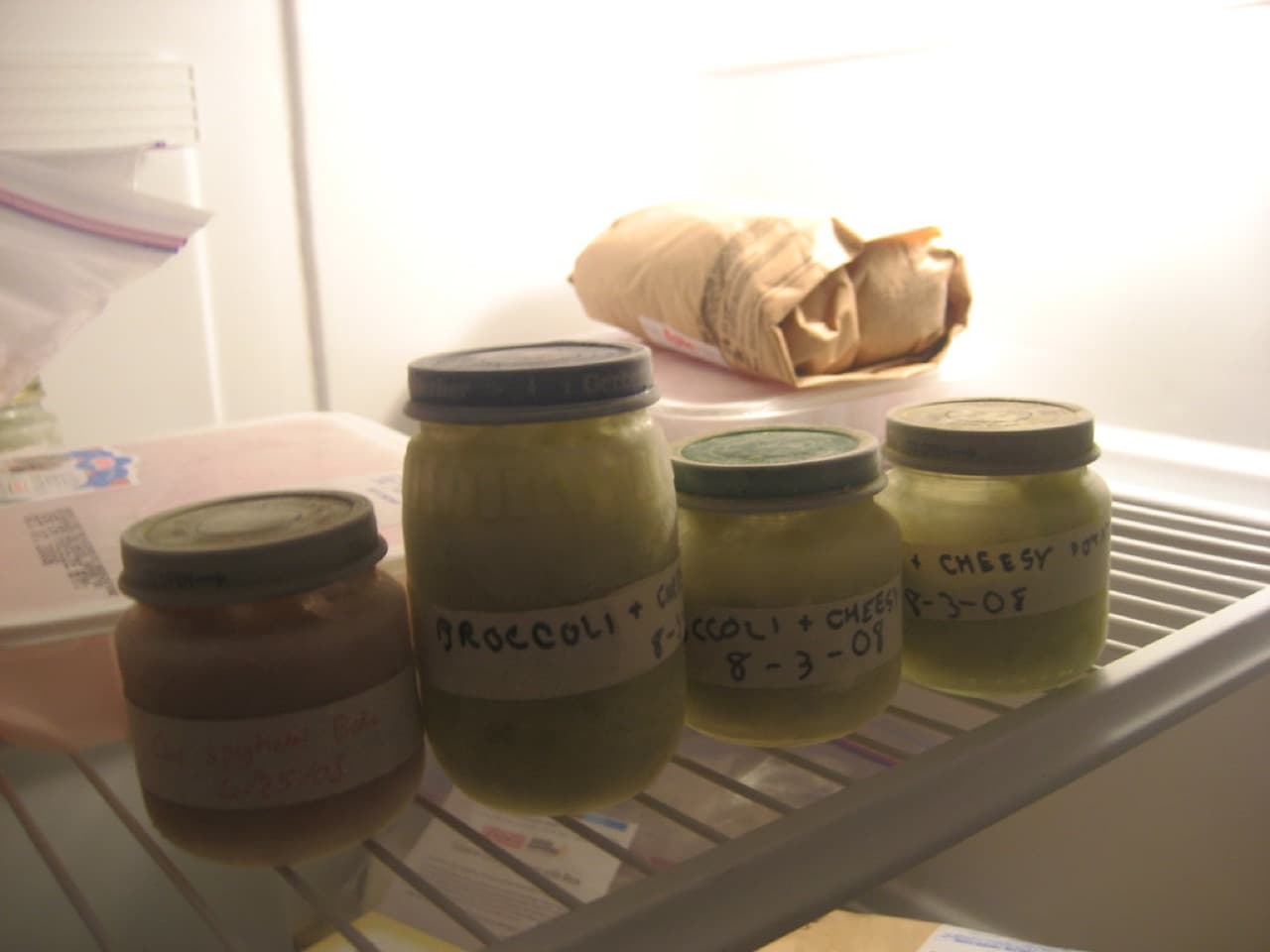
Every useful storage habit starts with a date. Skip the label the first few times and you will eventually find a mystery green cube that could be from last month or last season. Masking tape and a permanent marker on the bag (not only on the reusable tray) is enough — the tray gets washed and reused; the bag is where the date needs to live.
- Portion into a covered tray or containers; freeze until solid.
- Pop cubes into a freezer bag or move glass containers into a dated zone of the drawer.
- Write food type + date where you will see it when half-awake at 6 a.m.
- Rotate oldest batches to the front — chest-freezer logic, not "bury and forget."
- Keep breast milk cubes physically and verbally labeled apart from puree cubes.
For how long homemade baby food keeps in the fridge and freezer by food type, do not use a blog-invented number from this shopping page. Use our guide to storing and freezing homemade baby food safely, which cites University of Illinois Extension Feeding My Baby guidance (about 2 days fridge for cooked fruits/vegetables/grains/beans; about 1 day when meat, poultry, fish, or egg is in the mix; about 1 month freezer for best quality). Those timelines belong on the safety page; this page covers containers and workflow.
Two trays beat one for Sunday batch day
One tray means waiting for a batch to freeze solid before you can fill again. Two trays let you fill the second while the first freezes. Most families settle at two rather than four, because cubes get bagged and trays free up within a day or two.
Labeling, FIFO, and avoiding the mystery cube
A frozen puree cube is a small orange, green, or beige lozenge that looks a lot like every other frozen puree cube — and a lot like a frozen breast milk cube. Once it leaves the tray, the only thing that tells squash from sweet potato from pear, or food from milk, is what you wrote down. Skip labeling a few times and the drawer fills with cubes nobody can identify, which get thrown out not because they spoiled but because guessing is not worth the risk. Labeling is the cheapest insurance in the whole system.
- Write the contents and the date on the bag or container — not just the reusable tray, which gets washed and refilled with something else next week.
- Put the label where a half-awake adult will actually read it at 6 a.m. — the flat front of a bag, not a curled corner.
- Load newest-to-back so you naturally grab oldest-first (FIFO — first in, first out); pointing the drawer the same direction every week keeps rotation automatic.
- Keep breast milk cubes in a clearly separate, separately labeled zone from puree cubes — identical once frozen.
- When a bag turns up unlabeled and nobody remembers filling it, discard it rather than serve a guess.
FIFO is the whole game with a freezer: the food that goes bad is almost never the food you can see — it is the bag that slid to the back in week two and resurfaced in month three. Rotating the oldest forward every time you add a new batch means the front of the drawer is always the next thing to use, and the "best quality within about a month" window on the store-and-freeze safety guide stays realistic instead of aspirational. None of this requires a label maker; masking tape and a permanent marker do the job.
"BPA-free" and other label claims, in plain terms
Most baby feeding products sold in the U.S. today are labeled BPA-free, and the plastic and silicone picks on this page list BPA-free materials. FDA stopped allowing BPA in baby bottles and sippy cups years ago. Treat that label as a baseline, not a differentiator. The more useful check is whether a specific plastic or silicone piece is rated microwave-safe — not every food-grade container is — before you reheat in it. Glass sidesteps that question when the set is rated freezer/microwave/dishwasher, which is part of why glass remains the durable long-term option even when it costs more up front.
Breast milk storage is not the same rulebook as puree
Some trays and containers, including picks on this page, are marketed for both baby food and breast milk. Physically, the vessel can hold either. The storage timelines do not transfer. Breast milk has its own refrigerator and freezer guidance from the CDC, generally different from fruit-and-vegetable puree windows and different again from shorter meat-and-egg windows. Do not assume a milk-storage habit applies to solid food or the reverse. If both live in the same drawer, label which is which — a frozen cube of squash and a frozen cube of milk look identical once they leave the tray.
Thawing frozen portions without guesswork
Good containers make thawing easier, but the container does not decide whether a thawed portion is safe — the method does. The general shape of safe thawing is the same one that applies to any frozen home-cooked food: keep it cold while it comes back to liquid, and do not let it sit out warming on a counter for a long stretch. The most hands-off approach is moving a cube or block from the freezer to the refrigerator the night before, so it is ready by the next meal without ever warming up. When there is less lead time, a sealed portion can thaw faster in a bowl of cold water, or you can reheat straight from frozen on the stovetop or in short microwave bursts with stirring in between.
This page does not set the timelines
Editorial, not medical. For the actual fridge, freezer, thawing, and reheating steps — including why a slow cooker is the wrong tool and why you never refreeze a thawed portion — use our store-and-freeze guide, which cites University of Illinois Extension. Questions about volume, allergies, or a specific medical situation belong with your child's clinician.
Two container-specific notes worth making here. First, reheat in a piece that is actually rated for it — glass sets rated freezer-to-microwave save a transfer step, but not every plastic or silicone lid is microwave-safe, so reheat in the base and check the specific product's rating rather than the category's. Second, stir after any reheat and test the temperature yourself before it reaches the baby: microwaves leave hot pockets inside food that feels only warm on the surface, and that is true no matter how good the container is.
Daycare, travel, and the insulated-bag gap
Providers often have written policies on accepting frozen versus refrigerated food, and many will only reheat from chilled — not judge whether something thawed safely on the commute. Ask before assuming a frozen cube from home will be warmed on arrival. A small insulated bag with an ice pack covers the gap between your freezer and the provider's fridge. Individual airtight blocks (like the 2 oz OXO Tot Baby Blocks on this page) beat a multi-well tray for that job because they are built to travel as single servings.
For self-feeding utensils that often show up in the same solids stretch, our toddler utensils guide is the adjacent tray skill. Cup practice that pairs with solids lives on open cups for babies and sippy cups — link them when drinks are the question.
Freezer trays and travel blocks cover portioned meals; loose finger foods for a walk or a car ride are a separate job. Our comparison of toddler snack containers covers spill-proof cups and a flat silicone bag built for that on-the-go snacking instead of a meal.
Daycare and provider packing checklist
Sending homemade food to a provider has one rule that trumps every container choice: ask the provider's policy first. Many centers accept only refrigerated (not frozen) food, some require store-bought sealed containers, some reheat only to their own posted procedure, and licensing rules vary by state. Build your packing habit around their written policy, not around what your freezer setup makes convenient. Once you know the policy, the day-to-day packing is simple.
- Confirm the provider's policy: frozen vs refrigerated only, whether they reheat, and any labeling or sealed-container requirements.
- Label every container with your child's name, the contents, and the date — providers handle many kids' food and cannot guess.
- Send single servings in individual airtight containers (like 2 oz travel blocks) rather than a multi-well tray that has to be split on site.
- Pack an insulated bag with an ice pack to cover the commute between your freezer and their fridge.
- Send the amount for the day, not a week's supply, so nothing lingers unlabeled in a shared fridge.
- Include a clean serving spoon if the provider expects you to, and never send a jar you have already fed directly from.
Individual airtight blocks beat a connected tray for this job because they travel as sealed single portions and stack in a bag. If your provider reheats, remember the same rule from home: reheat in a piece rated for it, and let them stir and temperature-check. The commute gap — freezer at home to fridge at daycare — is exactly what the insulated bag and ice pack exist to cover.
Dishwasher reality and staining
Most of the trays and containers below list dishwasher-safe parts. That does not mean every lid seal loves the top rack forever, or that carrot and beet pigments will never tint silicone or plastic. Glass wins the long stain fight. Silicone wins the "pop the cube out" fight. If your household already drowns in pump parts, be honest about whether a multi-piece lid system will get fully dried every night — trapped moisture in seals is a hygiene problem, not just a smell problem.
When skipping a dedicated tray makes sense
Families leaning on store-bought pouches and jars, or using baby-led weaning with soft whole-food pieces instead of purees, may not need a freezer tray at all. A tray earns its cost when you actually batch-cook and freeze on a schedule. If purees are not the plan, our baby-led weaning vs purees comparison is a better starting point than a shopping list.
Mistakes that waste money on storage gear
Baby food storage is a category where it is easy to spend on the wrong thing, because the marketing rewards buying a matching set before you know how your family actually feeds. The purees stage is also short — often six to nine active months — so gear that outlives its usefulness fast is money that could have gone elsewhere. A few patterns come up again and again.
- Buying the biggest wells first. A 4-ounce cube is mostly waste in the first weeks, when a whole meal is a spoonful. Start small and size up when portions actually grow.
- Buying one tray, then batch day stalls waiting for it to freeze before you can refill. Two affordable trays beat one premium tray for throughput.
- Buying a bare ice cube tray to save a few dollars, then losing batches to freezer burn and odor because there is no real lid. The lid is most of what a dedicated tray is for.
- Over-buying glass when your real need is daily daycare transit. Glass is durable and stain-resistant, but it is heavy and breakable in a bag — the wrong tool for grab-and-go.
- Buying a big matching set before you know whether you will batch purees at all. If you lean baby-led weaning or store-bought pouches, most of a storage set sits unused.
- Paying up for features you will not use — engraved lids, dozens of tiny cubes, novelty shapes — when a plain lidded tray plus a marker does the actual work.
The cheapest path is usually the honest one: one small-well tray to start, a second tray or a set of 2-ounce blocks once portions grow, freezer bags for bulk storage, and tape and a marker. Add glass if reheating in the storage vessel is genuinely your routine. Everything past that is convenience, not necessity — worth buying only after you know it fits how you feed.
The picks (six roles, not a scored ranking)
Six options cover the situations that actually come up: three silicone trays with lids at different portion sizes (Souper Cubes 1 oz, WeeSprout 1.5 oz, KeaBabies 2 oz), a plastic tray with a sliding lid, a glass system for families who reheat in the storage container, and small containers for carrying single portions out of the house. Badges describe the job each one fits. They are not overall scores.
Check Souper Cubes 2 Tbsp Silicone Tray on AmazonAffiliate link. 1 oz silicone cubes.
Check OXO Tot Baby Blocks 2 oz on AmazonAffiliate link. Travel blocks on this page.
How many trays or containers to buy
One tray is rarely enough once batch cooking becomes a habit. Two trays let you fill while the first freezes. If you buy glass, the math shifts: glass is more often the long-term storage vessel than a freeze-then-transfer tool, so a 12-piece starter set functions like a rotating supply rather than a single-use mold you empty immediately.
Where this fits in the rest of the solids setup
Storage is one piece of the first-foods stretch, and it connects to a handful of adjacent decisions. For readiness signs, first foods, and timing, our beginner's guide to starting solid foods is the place to start. The cooking side of batch prep — steaming and blending a week of purees at once — lives in our baby food maker comparison, and the food-safety timelines for everything you freeze live in how to store and freeze homemade baby food safely.
- Deciding purees vs finger foods first: baby-led weaning vs purees covers the choice that determines whether you need a tray at all.
- Making the purees: best baby food makers handles the steam-and-blend side that feeds this workflow.
- The safety windows: store and freeze homemade baby food safely has the fridge, freezer, and reheating guidance.
- Drinks alongside solids: open cups for babies and sippy cups cover cup practice that usually starts in the same months.
- Getting started overall: starting solid foods, a beginner's guide ties the timing and readiness pieces together.
Best-fit picks to check next
Match the Amazon listing to the job you have this week. Everyday silicone batch cubes → WeeSprout. Tiny early-solids cubes → Souper Cubes 2 Tbsp. Bigger 2 oz portions → KeaBabies. One-cube-at-a-time sliding lid → OXO Tot freezer tray. Freezer-to-microwave in one vessel → Wean Green glass. Daycare or grandma bag → OXO Tot 2 oz Baby Blocks. Then open the store-and-freeze safety guide for fridge and freezer timelines so the containers you bought get used before forgotten food accumulates.
WeeSprout Silicone Tray (best silicone overall)Affiliate link.
Souper Cubes 2 Tbsp Silicone Tray (1 oz cubes)Affiliate link.
KeaBabies Silicone Tray (2 oz pods)Affiliate link.
OXO Tot Freezer Tray (sliding lid)Affiliate link.
Wean Green Glass Starter SetAffiliate link.
OXO Tot Baby Blocks 2 oz (travel)Affiliate link.
Read safe store-and-freeze timelinesUniversity of Illinois Extension–based fridge/freezer windows.
Starting solids beginner guideCDC/AAP solids timing that pairs with first storage setup.
Our Recommendations

WeeSprout Silicone Freezer Tray
Best for: Most families batch-freezing purees
A flexible food-grade silicone tray with ten 1.5 oz sections, each with a 1 oz marking, and a BPA-free hard plastic lid that clips on and stacks. The listing says it's dishwasher-safe and boil-proof, with a reinforced bottom so stacked trays don't get crushed.
- Ten 1.5 oz sections with 1 oz measurement markings
- Food-grade silicone flexes to pop out frozen cubes
- BPA-free hard plastic clip-on lid; listing says it won't warp in the dishwasher
- Dishwasher-safe and boil-proof
Keep in mind: Silicone can pick up stains and odors sooner than glass with heavy use, and the lid is not oven-safe.

Souper Cubes 2 Tbsp Silicone Freezer Tray
Best for: Small 1 oz cubes for the first weeks of solids
A 2-pack of platinum-cured silicone trays with 2-tablespoon (1 fl oz) wells, 1 Tbsp and 2 Tbsp fill lines, a steel-reinforced rim, and fitted lids. The listing rates the trays microwave-, freezer-, dishwasher-, and oven-safe to 415°F without the lid.
- 2 Tbsp (1 fl oz) wells with 1 Tbsp and 2 Tbsp fill lines
- 100% food-grade platinum-cured silicone with steel-reinforced rim
- Oven-safe to 415°F and microwave-safe without the lid (per listing)
- Secure-fitting lids for stacking; sold as a 2-pack
Keep in mind: Small wells mean thawing several cubes per meal once your baby eats more. Souper Cubes markets it for general meal prep, not specifically for babies.

KeaBabies Silicone Freezer Tray
Best for: Bigger 2 oz portions for later purees
A 100% food-grade, BPA-free silicone tray with ten 2 oz pods, a wide base, and a clear silicone lid that clips on and stacks. The listing says it's dishwasher- and microwave-safe.
- Ten 2 oz pods
- 100% food-grade, BPA-free silicone
- Clear stackable clip-on silicone lid
- Dishwasher- and microwave-safe (per listing)
Keep in mind: 2 oz pods are more than most babies eat in the first weeks of solids. Start smaller if you're just beginning.
OXO Tot Baby Food Freezer Tray
Best for: Sliding out one cube at a time without flexing a tray
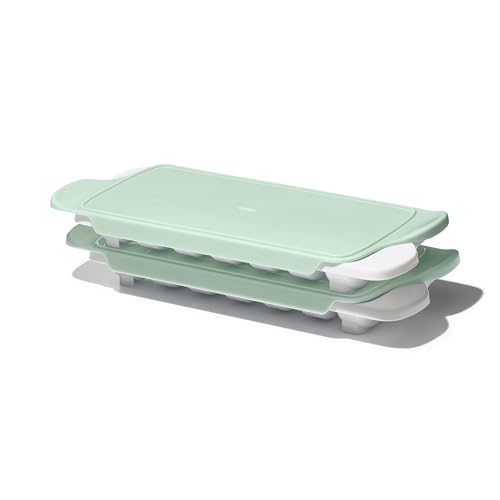
A 2-pack of BPA-free plastic trays with rounded cube wells and a sliding lid that releases as many pieces as you choose. OXO says the lid keeps out freezer odors and stacks, and the feet are designed for wire shelving. It's top-rack dishwasher-safe. OXO retail listings give fourteen ¾ oz cubes per tray.
- Sliding lid releases one or several cubes at a time
- Rounded cube shape designed for easy release
- Lid blocks freezer odors and stacks; feet designed for wire shelving
- BPA-free plastic; top-rack dishwasher-safe
Keep in mind: It's plastic, not silicone, so it's more likely to stain from carrot and beet purees than glass. ¾ oz cubes are small once portions grow.
Wean Green Glass Starter Set
Best for: Families who reheat directly in the storage container
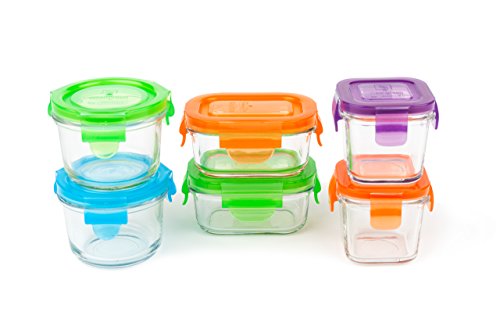
Six tempered-glass containers with snap-lock lids (12 pieces counting lids): two 4 oz Wean Cubes, two 5.4 oz Wean Bowls, and two Wean Tubs. The listing says it's microwave-, dishwasher-, and freezer-safe. Glass resists staining and odor retention better than plastic or silicone.
- Tempered glass containers with snap-lock lids
- Microwave-, dishwasher-, and freezer-safe (per listing)
- Two 4 oz Wean Cubes, two 5.4 oz Wean Bowls, two Wean Tubs
- Useful for snacks and condiments after the puree stage
Keep in mind: Heavier and pricier than a silicone tray, and there's no protective sleeve. Glass can chip or break if dropped on a hard floor.
OXO Tot Baby Blocks 2 oz
Best for: Carrying single portions to daycare or a grandparent's house
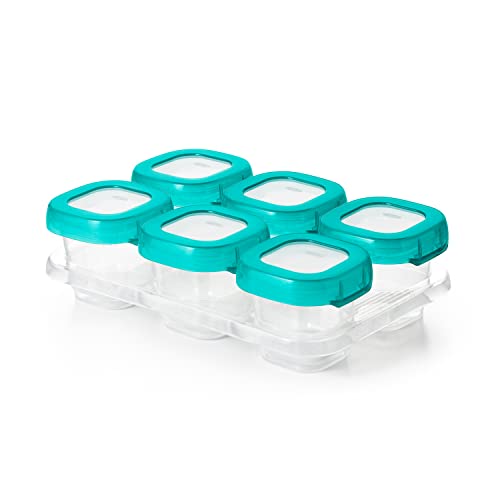
OXO describes six 2 oz containers that fit a stackable freezer tray, each with measurement markings and an airtight, watertight, leak-proof lid. The listing says they're microwave- and freezer-safe and top-rack dishwasher-safe. One listing bullet says 6 oz, so confirm the size you've selected.
- Six 2 oz containers plus stackable freezer tray (per OXO's description)
- Airtight, watertight, leak-proof lids
- Measurement markings; clear lid and body
- Microwave- and freezer-safe; top-rack dishwasher-safe; BPA-, phthalate-, and PVC-free
Keep in mind: Filling individual containers is slower than a multi-well tray for a big batch day.

Beaba Multiportions Silicone Freezer Tray (3 oz)
Best for: Larger portions that can go in the oven
A silicone freezer tray with a clip-on lid and six 3 oz portions. Beaba lists it as dishwasher, microwave, and oven safe up to 425°F.
- Six portions, 3 oz (90 ml) each
- Clip-on lid
- Dishwasher, microwave, and oven safe to 425°F
- BPA-, lead-, and phthalate-free platinum silicone
Keep in mind: Only six portions, and 3 oz cubes are bigger than most early-solids servings.
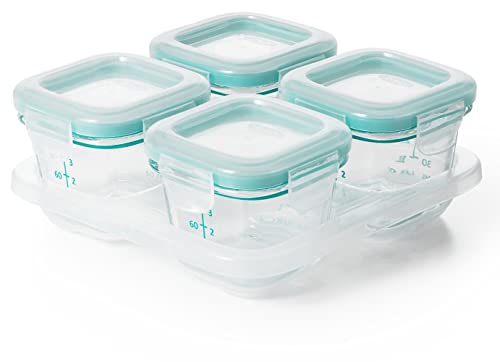
OXO Tot Glass Baby Blocks (4 oz)
Best for: Freezer-to-microwave glass portions
Four 4 oz glass containers with locking lids and a stacking tray. OXO says the glass can go from freezer to microwave or oven, and the containers have measurement markings.
- Four 4 oz containers, four lids, one tray
- Airtight, leak-proof locking lids
- Glass goes from freezer to microwave or oven, per OXO
- Measurement markings; BPA-, phthalate-, and PVC-free
Keep in mind: Glass is heavier than plastic or silicone for daycare bags.

WeeSprout Glass Baby Food Jars (4 oz, 12-Pack)
Best for: Batch-prepping a week of purees
Twelve 4 oz glass jars with silicone lids and embossed oz/ml markings. They're listed as microwave, dishwasher, and freezer safe (see the maker's microwaving instructions).
- Twelve 4 oz glass jars
- Silicone lids in assorted colors
- Embossed oz and ml markings
- Microwave, dishwasher, and freezer safe
Keep in mind: Round jars take up more freezer space than a flat cube tray.
As an Amazon Associate I earn from qualifying purchases. Mom's Magazine may earn a commission when you buy through links on this page, at no extra cost to you. Learn more.
Frequently Asked Questions
What is the best silicone freezer tray for baby food?
For most families, the WeeSprout Silicone Freezer Tray: ten 1.5 oz sections with 1 oz markings, a clip-on lid, and dishwasher- and boil-safe per the listing. For 1 oz early-solids cubes, Souper Cubes' 2 Tbsp tray is oven-safe to 415°F without the lid. For 2 oz portions, the KeaBabies tray has ten pods. Pick by portion size and lid, not by brand.
Is the OXO Tot baby food freezer tray silicone?
No. The OXO Tot Baby Food Freezer Tray is BPA-free plastic with a sliding lid that releases one or more cubes at a time. OXO retail listings give fourteen ¾ oz cubes per tray. If you want silicone specifically, look at WeeSprout, Souper Cubes, or KeaBabies.
What is the best baby food storage for homemade puree?
Baby food storage after homemade puree means three jobs: freeze batch cubes at home, reheat without transferring when you can, and send single portions out of the house. A lidded silicone freezer tray handles the first; glass handles the second; travel blocks handle the third. Most families use a tray plus travel containers. For most batch-freezers, WeeSprout is the everyday silicone tray on this page; Souper Cubes for tinier 1 oz cubes; KeaBabies for 2 oz pods; Wean Green for glass; OXO Tot Baby Blocks for daycare. Specs are from listings — not a lab ranking — and we do not list prices.
Is silicone or glass better for baby food storage?
Glass resists staining, scratching, and odor retention better over months of freezing, reheating, and dishwasher cycles, and it can go freezer-to-microwave in the same container when rated. Silicone is lighter, usually cheaper, and flexes to release frozen cubes without running water over the tray first. Choose based on budget and whether you reheat in the storage container.
Can I use a regular ice cube tray for baby food?
Yes, if it is food-grade and covered tightly with wrap or a fitted lid to limit freezer burn and odor transfer. A dedicated baby food freezer tray mainly buys convenience: a built-in lid and portion wells sized for early solids, without hunting for wrap mid-freeze.
How long does frozen homemade baby food last?
It depends on food type, not a single number. Our store-and-freeze safety guide cites University of Illinois Extension: about 1 month in the freezer for best quality, with shorter refrigerator windows (about 2 days for cooked fruits/vegetables/grains/beans; about 1 day when meat, poultry, fish, or egg is included). Use that guide for timelines; use this page for containers.
What size portions should a baby food freezer tray have?
Early solids trays often run about 1 to 1.5 ounces per well. As appetite grows, 2- to 4-ounce containers are usually more practical than thawing many tiny cubes per meal. Match wells to what your baby already eats. These are convenience sizes, not medical ounce quotas.
Can baby food storage containers also hold breast milk?
Some trays and containers are marketed for both. The vessel can hold either, but CDC breast milk storage timelines are separate from solid-food windows. Label milk vs puree clearly — frozen cubes look identical once they leave the tray.
What baby food storage works best for daycare?
Ask the provider whether they accept frozen or only refrigerated food. Individual airtight containers (such as 2 oz travel blocks) are usually easier to send than a multi-well freezer tray. Pack an insulated bag with an ice pack for the commute gap.
Are these freezer trays and containers dishwasher-safe?
All six picks on this page list dishwasher-safe parts per manufacturer claims (some top-rack only), but always follow the specific care instructions for lids and seals. Glass generally stays clearer longer; silicone and plastic can stain from carrots and beets with heavy use.
Do I need a baby food freezer tray if we do baby-led weaning?
Not necessarily. A dedicated tray pays off when you batch-cook and freeze purees. Soft finger-food BLW households may skip it. See our baby-led weaning vs purees guide if that decision is still open.
How do you store homemade baby food in the freezer?
Portion the puree into a lidded freezer tray, freeze until solid, then pop the cubes into a labeled, dated freezer bag or airtight container so the tray is free for the next batch. Press the air out of bags to slow freezer burn and rotate the oldest to the front.
What is the best way to organize baby food in the freezer?
Label every bag or container with the contents and date, keep breast milk separate from puree, and load newest-to-back so you reach for the oldest first (FIFO). That routine is what keeps a drawer from filling with unidentifiable mystery cubes that get tossed out on a guess.
How do you thaw frozen baby food from a freezer tray safely?
The most hands-off method is moving a cube from the freezer to the refrigerator the night before. With less time, thaw a sealed portion in cold water or reheat straight from frozen on the stovetop or in short microwave bursts, stirring between. This is editorial, not medical, guidance — the specific steps, why a slow cooker is the wrong tool, and why you never refreeze live on our store-and-freeze guide, and volume or medical questions belong with your clinician.
Sources & Further Reading
- Storing Homemade Baby Food — University of Illinois Extension (Feeding My Baby) (reviewed 2026-09-20)
- When, What, and How to Introduce Solid Foods — Centers for Disease Control and Prevention (reviewed 2026-09-20)
- Proper Storage and Preparation of Breast Milk — Centers for Disease Control and Prevention (reviewed 2026-09-20)
- Starting Solid Foods — American Academy of Pediatrics (HealthyChildren.org) (reviewed 2026-09-20)
Related Guides
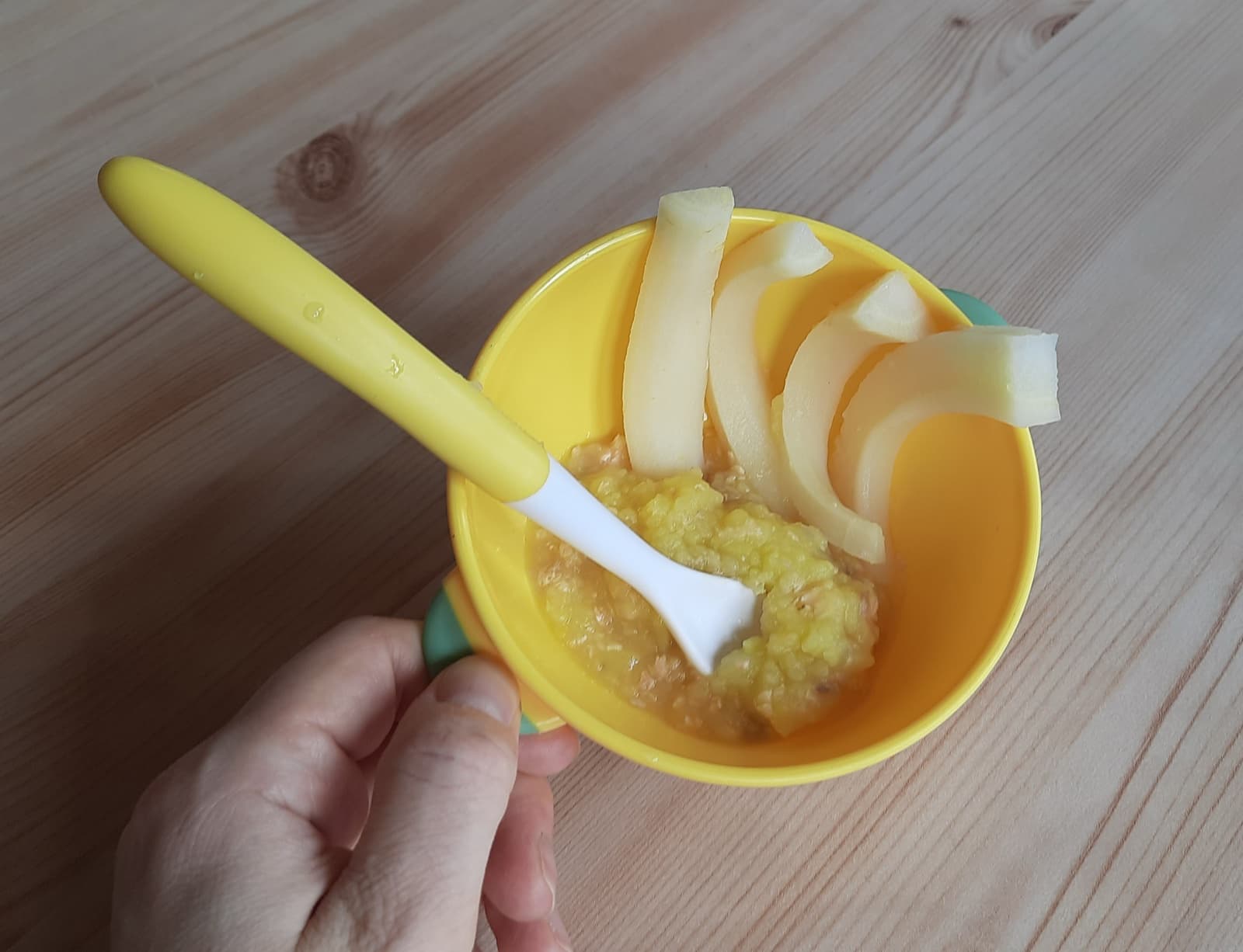
Best Baby Food Makers of 2026: Steam-and-Blend All-in-Ones vs Pot and Blender
Best baby food makers compared for parents searching baby food maker options: what a dedicated steam-and-blend appliance actually buys you over a stovetop pot and blender, steam vs boil nutrient retention, batch-cook and freeze workflow, glass vs plastic, cleanup, and a manual mill for travel.
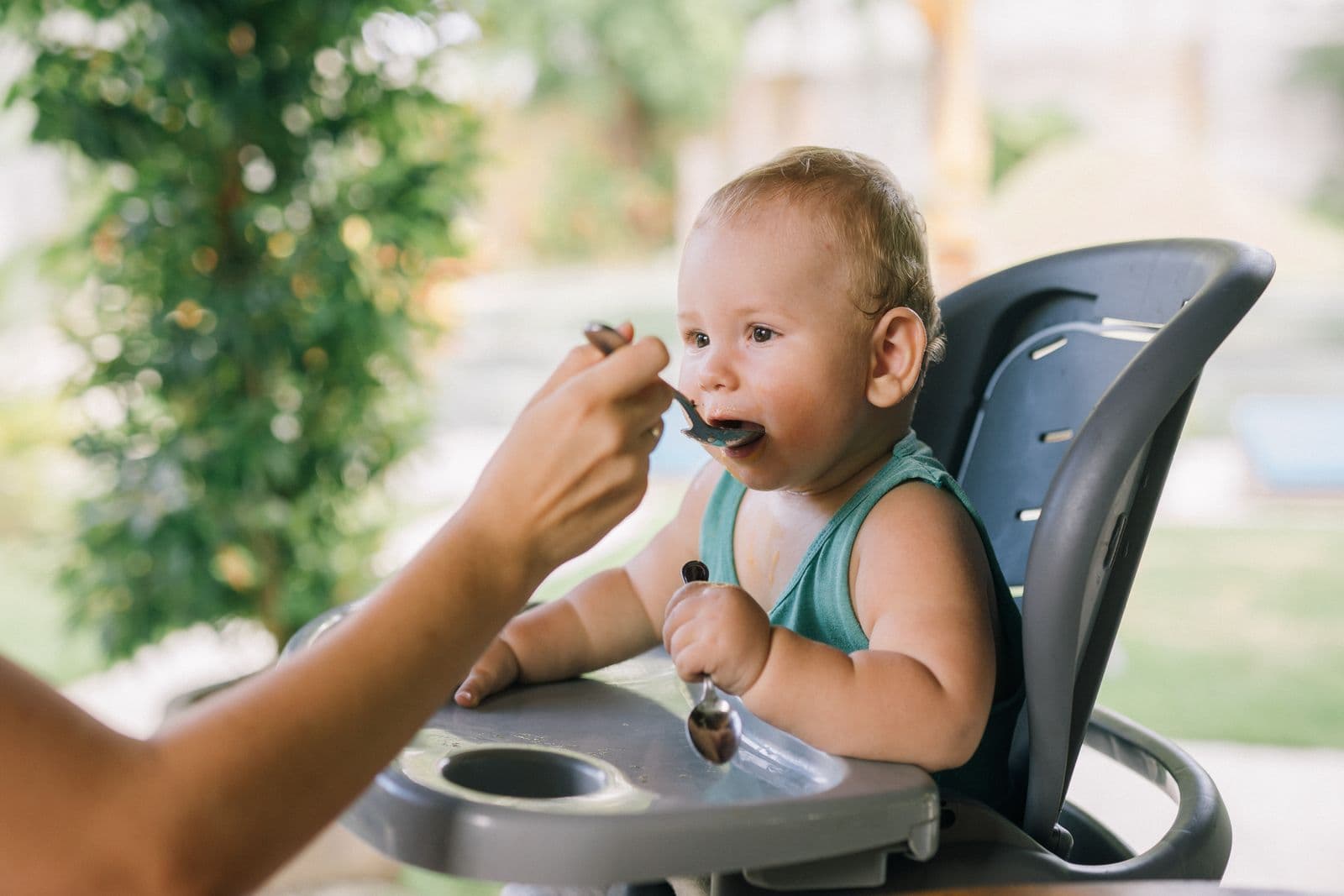
Best First Baby Foods & Best First Foods for Baby (CDC and AAP Guide)
Best first baby foods and best first foods for baby, in plain CDC and AAP terms: iron-rich starters around 6 months, one food at a time, allergen timing, first-feeding setup (bibs, spoons, cups), and what not to give. Editorially reviewed general information, not medical advice — not a ranked jar list.
How to Freeze Homemade Baby Food (and Store It Safely in the Fridge)
How to freeze homemade baby food safely, how long it keeps in the fridge and freezer by food type, and a practical week-one freezer workflow — grounded in FDA and University of Illinois Extension food-safety guidance, not a blog-invented number.
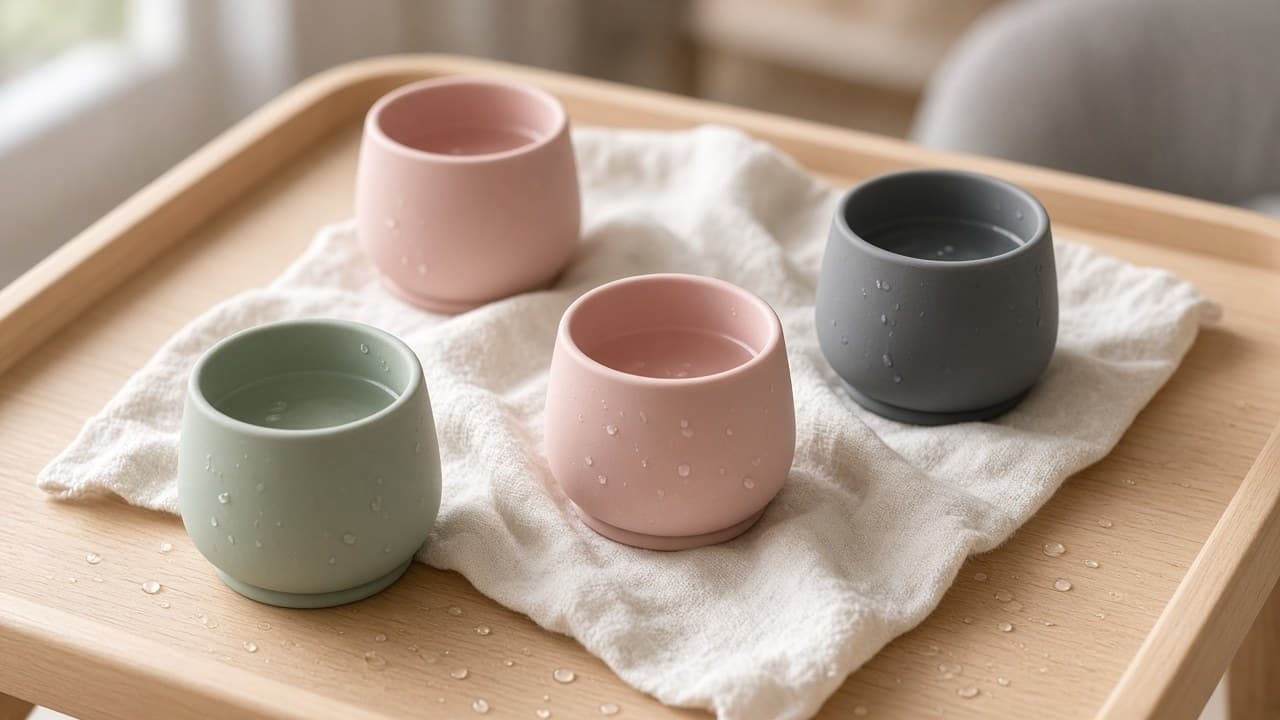
Best Open Cups for Babies and 6-Month-Olds (2026 Buying Guide)
Why open-cup and straw skills matter around 6 months with solids, how they differ from valved sippies, and four researched picks — ezpz Tiny Cup, ezpz Mini Cup + Straw, Munchkin C'est Silicone, and a squeeze straw trainer — with CDC and AAP sources.
Baby-Led Weaning vs. Purees: How to Choose (or Combine Both)
Baby-led weaning vs purees (and BLW vs purees combination feeding): mess, iron, gagging vs choking, and what CDC and AAP actually say about textures, readiness, and safety.
Best Toddler Snack Containers of 2026
Spill-proof snack cups, silicone snack bags, and stacking snack containers compared by lid mechanism — plus lunchbox packing, daycare snack rules (CFOC/HHS piece size and grape quartering), and how snack cups pair with bento boxes and insulated lunch bags.
Mom's Magazine Editorial Team
Editorial Team
The Mom's Magazine editorial team researches and writes practical, plainly-sourced guidance for parents and families. Guides are reviewed for accuracy and updated as recommendations change. Where a topic calls for professional expertise, we cite reputable organizations and, for health topics, add a qualified reviewer before publishing.
Newsletter
Get the Weekly Mom List
One short email a week: the most useful guides, activities, and picks for your family. No spam, unsubscribe anytime.