Products
Best Baby Food Makers of 2026: 4 Steamer-Blenders and a Manual Mill Compared
Best baby food makers of 2026 compared: BEABA Babycook Neo and Duo, Baby Brezza One Step, nutribullet Baby Steam + Blend, and the OXO Tot manual mill. One-step vs basket steamer-blender combos, capacity, twin-bowl batch cooking, cleanup and descaling, and when a pot and blender is enough.
As an Amazon Associate I earn from qualifying purchases.Some links on this page are affiliate links. If you buy through them, Mom's Magazine may earn a small commission at no extra cost to you. It never changes which products we recommend. How we recommend products.
A baby food maker is a dedicated steam-and-blend appliance that cooks soft vegetables, fruit, or protein and purees them in one container — useful when you want fewer dishes and a weekly batch-cook habit, not required for starting solids. A pot for steaming plus a blender or food processor you already own produces the same puree texture CDC and AAP describe for early solids; the machine mainly removes the transfer step and shortens cleanup. Among the five researched picks on this page, the BEABA Babycook Neo is the premium glass-bowl 4-in-1 for families batch-cooking regularly; the Baby Brezza One Step Food Maker Deluxe steams and blends automatically with no transfer; the BEABA Babycook Duo's two bowls suit twins or big batch sessions; the nutribullet Baby Steam + Blend covers steam-then-blend at a simpler feature set and smaller footprint; and the OXO Tot Mash Maker is the no-electricity manual mill for travel or occasional use. This is a researched buying guide — not a hands-on lab, not medical advice, and not a scored ranking with invented prices or review counts. Check live Amazon listings for current availability.
Best premium all-in-one
BEABA Babycook Neo Baby Food Maker
Best for: Families batch-cooking regularly who want one premium appliance
Quick picks
| Product | Best for | |
|---|---|---|
| BEABA Babycook Neo Baby Food Maker Best premium all-in-one | Families batch-cooking regularly who want one premium appliance | Check price on Amazon |
| nutribullet Baby Steam + Blend Best value all-in-one | The same steam-then-blend convenience at a lower price | Check price on Amazon |
| Baby Brezza One Step Baby Food Maker Deluxe Best one-step automatic | Parents who want to press one button and walk away | Check price on Amazon |
| BEABA Babycook Duo 4-in-1 Baby Food Maker Best for big batches or twins | Twins, siblings close in age, or big weekly batch sessions | Check price on Amazon |
| OXO Tot Mash Maker Baby Food Mill Best manual/travel pick | Occasional use, travel, or a grandparent's house | Check price on Amazon |
How we picked
This is a researched buying guide, not a hands-on lab test — we have not cooked and pureed a week of meals on each of these machines ourselves. We compared manufacturer specifications, the recurring patterns in verified customer reviews, and official infant-feeding guidance from CDC and AAP/HealthyChildren pages we cite below. We focused on what actually changes the daily routine: whether steaming and blending happen in the same container, batch capacity, bowl material, cleanup, footprint, and whether a manual mill is enough for occasional use. Use the Check Current Price buttons on the product cards for live Amazon availability. If we add hands-on testing later, we will update this guide and say so.
General information, not medical advice
Infant feeding, choking prevention, and which foods to introduce when are health topics that belong with your child's clinician. This article is editorially reviewed general information from CDC and AAP/HealthyChildren pages we cite in the sources list. It is not medical advice, not a feeding plan for your child, and not medically reviewed by a named clinician. Talk with your pediatrician before changing feeding routines, especially if your baby was premature, has a medical condition, or has oral-motor or feeding concerns.
Who actually needs a baby food maker (vs pot + blender)
No — a dedicated baby food maker is not required to start solids. CDC and AAP guidance on starting solids is about readiness signs, iron-rich first foods, allergen timing, soft textures, and supervision — not about owning a specialty appliance. A pot of water with a steamer basket (or a simple steamer insert) plus a blender, immersion blender, food processor, or even a sturdy fork for the softest early purees produces the same result: mashed or pureed food at a texture your baby can manage.
Families who already cook regularly and own a blender often do not need a new counter appliance at all. What a dedicated baby food maker adds is not a "better" puree in the nutritional sense of a different food — it is fewer steps and less cleanup, because the steaming basket and the blending container are usually the same piece. You skip moving hot vegetables from a pot into a separate blender jar and washing both. That convenience matters most when you batch-cook several days of purees in one session rather than steaming one small portion every evening.
- You may want a dedicated machine if you plan weekly batch-cook sessions, hate transferring hot food, or want reheat/defrost cycles in the same footprint.
- You can skip it if you already steam for the family and own a blender, or if you are mostly offering soft finger foods (baby-led weaning style) with purees as an occasional side.
- A manual mill covers travel, a grandparent's house, or "puree once or twice a week" use without claiming counter real estate.
If you are still deciding whether purees are even the method you want to build around, our baby-led weaning vs. purees comparison covers the tradeoffs with AAP safety framing. For the solids timeline itself — readiness signs, iron-rich starters, what not to give — use our beginner's guide to starting solid foods.
What a baby food maker actually buys you
| What you're paying for | Why it matters | Alternative without a machine |
|---|---|---|
| Steam + blend in one container | No transferring hot food between a steamer basket and a blender jar | Steam in a pot, transfer to a blender or food processor |
| Batch capacity (often ~30–40+ oz on larger models) | Cook a week's worth of purees in one session instead of daily | Steam and blend in smaller batches, more often |
| Reheat and defrost settings (on some models) | Pull a frozen portion toward ready-to-eat in the same appliance | Microwave or stovetop reheating, with more attention to avoid hot spots |
| Fewer dishes | One bowl and blade to wash instead of a pot, basket, and blender jar | More items to hand-wash or load into the dishwasher |
| Smaller dedicated footprint than a full-size blender + steamer | One appliance sized for baby portions | Use family cookware you already own |
None of those rows is a clinical endorsement. They are workflow differences. Marketing copy that implies a machine alone "preserves more vitamins than any other method" without context is overselling a real but general food-science point we cover next.
Baby food makers compared: capacity, workflow, and modes
The table below uses only what each manufacturer states on its Amazon listing as of October 14, 2026: capacity and listed modes, not our own lab measurements. Where a listing does not state something clearly, we leave the cell general rather than guess. Check the live listing before you buy, because bundles and model revisions change.
| Model | Type | Capacity (as listed) | How steaming and blending connect | Listed modes |
|---|---|---|---|---|
| BEABA Babycook Neo | Electric steam + blend | 42 oz (about 5.5 cups) | Food steams in a basket inside the glass bowl, then goes into the same bowl to blend | Steam, blend, reheat, defrost |
| BEABA Babycook Duo | Electric steam + blend, two bowls | Two 27 oz bowls (9.1 cups total) | Same basket-then-bowl method, with two bowls cooking in one cycle | Steam, blend, reheat, defrost |
| Baby Brezza One Step Food Maker Deluxe | Electric one-step steam + blend | 3.5 cups | Steams and then blends automatically with no transfer | Automatic steam and blend, steam only, blend only |
| nutribullet Baby Steam + Blend | Electric steam + blend | Check the listing | Combined jar and blade with one-dial control | Steam, blend, or automated steam + blend |
| OXO Tot Mash Maker | Manual hand-crank mill | Single portions | No steaming; it mashes food you already cooked | Manual mashing only |
Steamer and blender combos: one-step automatic vs basket-and-bowl
Most parents shopping for a baby food steamer and blender combo are really choosing between two designs, and the difference shows up every time you cook. One-step machines, like the Baby Brezza One Step Food Maker Deluxe and the automated cycle on the nutribullet Baby Steam + Blend, steam the food and then blend it without you moving anything. Baby Brezza's listing describes pressing one button and having the machine steam and blend in as little as 10 minutes, with three settings: automatic steam and blend, steam only, and blend only.
Basket-and-bowl machines, like the BEABA Babycook Neo and Babycook Duo, steam food in a basket held above the water, and then you tip the cooked food into the bowl and blend. That is one extra step, but BEABA's listing points out the upside: you can pour some of the leftover cooking water back in as stock to make the puree thinner or thicker. When your baby moves from smooth purees toward lumpier textures, that manual control over liquid is genuinely useful.
Neither design produces a safer or more nutritious puree by itself. Choose one-step if walking away from the counter matters most on busy evenings; choose basket-and-bowl if you want more control over texture and liquid. Either way, stir and temperature-test before feeding.
Steam vs boil: nutrient retention without fake studies
Every dedicated baby food maker in this comparison steams rather than boils, and that design choice maps to a well-documented pattern in food science: boiling vegetables in a large volume of water and then discarding the water leaches water-soluble nutrients — vitamin C and several B vitamins in particular — into the cooking liquid. Steaming cooks with vapor rather than long submersion, so less of that nutrient content ends up poured down the drain.
That is a real, general cooking-method difference — not a proprietary clinical trial unique to any brand, and not a reason to claim a specific machine is "doctor recommended". You can get the same steaming benefit with a $10 steamer basket in a covered pot. The machine's edge is combining that steam step with blending in one vessel so the nutrient-aware method is also the convenient method on a Tuesday night.
A note on homemade vegetables for babies under ~6 months
Homemade purees made from spinach, beets, carrots, green beans, and squash carry a small but real risk of naturally occurring nitrates for babies younger than about 6 months, whose bodies process nitrates less efficiently than older infants and adults. Pediatric guidance generally suggests choosing commercially prepared versions of these specific vegetables for very young babies, or waiting until closer to 6 months and beyond for homemade versions, and checking with your pediatrician if you are unsure. This is not a reason to avoid a baby food maker; it is a reason to be selective about which vegetables you puree at home in the earliest weeks of solids — and another reminder that appliance ownership does not replace clinician guidance.
Batch-cook + freeze workflow (where the machine earns its keep)
The real time savings from a baby food maker shows up over a week, not a single meal. Steam and blend several vegetables or a soft-cooked protein back-to-back, then portion the results into ice cube trays or small silicone freezer trays instead of cooking fresh daily. Once frozen solid, pop the cubes into a labeled freezer bag so the tray is free for the next batch.
For food quality and best texture, homemade purees are generally recommended to be used within about 1 to 2 months in a standard freezer — they typically remain safe somewhat longer than that, but texture and flavor hold up best within that window, which is also a manageable amount to actually finish before a baby's tastes and textures move on. Label every batch with the food and the date; a freezer with three unlabeled trays of orange puree six months later is a common kitchen problem this habit avoids.
Gear that makes the freeze step work is half the system: our comparison of baby food storage containers and freezer trays covers portion sizes and materials, and our guide to storing and freezing homemade baby food safely covers fridge vs freezer windows and reheating caution.
- Wash and prep produce (or soft-cook protein) — skip salt and honey for babies under 1 per AAP framing on starting solids.
- Steam in the machine (or pot) until fork-tender.
- Blend to the texture your baby currently manages — smoother early, more texture as skills grow.
- Cool, portion into trays, freeze, label with food + date.
- Reheat a single portion thoroughly, stir, and temperature-test before feeding.
Test the temperature — steam is hotter than it looks
The same rule that applies to a warmed bottle applies here, and matters more: food straight out of a steam cycle can be significantly hotter than the outside of the container suggests, and uneven heating (especially microwave reheats of frozen cubes) can leave hot pockets in an otherwise mild-seeming batch. Stir thoroughly and test on your own wrist or lip before feeding, every time — not just the first time you use a new machine.
The 1-to-2-month freezer window above is a quality guideline, not the full safety picture — food with meat, poultry, fish, or egg in it needs to move from fridge to freezer much sooner than a fruit or vegetable puree does. Our guide to storing and freezing homemade baby food safely breaks down the timelines by food type.
Capacity, footprint, and glass vs plastic
Batch capacity is the quiet differentiator between "nice to have" and "actually used." Larger glass-bowl machines in the Babycook Neo class are often advertised around roughly 5.5 cups / ~42 ounces — enough to portion a week of single-vegetable purees if you cook a few sessions. Smaller steam-and-blend jars trade capacity for a lighter footprint on a crowded counter. Measure the spot next to the coffee maker before you fall in love with a product photo; some 4-in-1 units are bulkier than they look online.
Glass vs plastic is the other long-term tradeoff. Glass bowls (like the BEABA Babycook Neo's borosilicate bowl) resist scratching, clouding, and retained odors better than plastic after months of repeated steaming and dishwashing — the same tradeoff as glass vs plastic baby bottles. Plastic jars are lighter, usually cheaper, and will not chip if they hit a hard floor; they can look and smell more worn after a year of heavy use. Neither material makes food "safer" by itself if you follow ordinary cleaning and temperature-test rules.
| Factor | Glass bowl | Plastic jar |
|---|---|---|
| Scratch / cloud / odor over months | Generally better resistance | More prone to wear with heavy steaming |
| Drop on a hard floor | Can chip or crack | Usually survives; may scuff |
| Weight | Heavier to lift when full | Lighter |
| Typical price tier | Often paired with premium 4-in-1s | Often paired with value steam+blend units |
Cleanup, dishwasher, and temperature-test safety
Check whether the blending blade and bowl are dishwasher-safe before buying — most removable parts are, but the base with the motor and any electronics never goes in water or the dishwasher; wipe it only. Follow the manufacturer's care label rather than a blog's invented temperature number. If packaging says top-rack only, believe it. If a gasket or lid needs hand-washing, plan for that — gaskets that trap puree residue are a common smell source.
- Disassemble bowl, basket, blade, and lid after each use; rinse puree before it dries.
- Inspect silicone gaskets and blades for wear; retire cracked parts.
- Never immerse the motor base.
- After reheating, stir and wrist/lip-test every portion — including "just defrosted" cycles.
- Keep the high chair harnessed and sit with the baby for meals; a perfect puree does not make unsupervised feeding safe.
Choking prevention still sits with food shape, seating, and supervision — not with the brand of steamer. AAP/HealthyChildren's choking-prevention guidance stresses sitting to eat and avoiding classic hazards (whole grapes, hot dogs, nuts, popcorn, hard candy, and similar). Soft puree texture reduces some risks for early spoon-feeding; it does not replace those rules when you move to lumpy textures or finger foods.
Whatever you cook it in, what you freeze it in matters just as much. Our comparison of baby food storage containers and freezer trays covers glass versus silicone and which portion sizes actually match a baby's appetite at each stage.
Manual mill travel use-case
An electric steam-and-blend machine makes the most sense for families cooking baby food regularly, in batches, at home. For occasional use — a grandparent's house, a trip, restaurant leftovers that need a quick mash, or a family that mostly uses store-bought pouches with homemade as a supplement — a hand-crank food mill does the same texture job without a power outlet, counter space, or an appliance to store between uses.
A mill works by pushing softened, already-cooked food through a fine mesh with a hand crank, which produces a smooth puree from soft-cooked vegetables, fruit, or meat in a couple of minutes of manual effort. It is slower per batch than an electric blender and impractical for large-volume weekly batch cooking, but for the family that needs fresh puree a few times a week rather than a freezer full at once, it is a genuinely lower-cost, lower-clutter option — not just a consolation prize. The OXO Tot Mash Maker on this page is built for that job: compact enough for a diaper bag, dishwasher-safe per manufacturer, no batteries.
Twin-bowl batch cooking: when the Babycook Duo makes sense
The BEABA Babycook Duo is built around two 27-ounce bowls, and BEABA's listing says it can make 54 servings in about 20 minutes in one cooking cycle. Treat that serving count as the manufacturer's number. How many servings you actually get depends on how much your baby eats, and early solids portions are often a spoonful or two. The more practical advantage is cooking two different foods at once, for example a vegetable in one bowl and a fruit in the other, so one session fills more of the freezer tray with variety.
A two-bowl machine makes the most sense for twins, for families feeding an infant and a toddler at the same time, or for parents who batch-cook once a week and want that session to cover more foods. For one baby and a parent who purees a few times a week, the single-bowl Neo or a one-step machine is usually enough and takes less counter space. Measure the spot where it will live before you order.
Water tanks, reservoirs, and descaling
Every electric steamer heats water, and how it holds that water affects upkeep. Baby Brezza's listing describes a removable water tank you fill separately, which makes refilling easy; empty it and let it dry between uses rather than leaving water sitting. BEABA's Babycook listing says the machine uses all the water you add in each cooking cycle, so no standing water is left in the appliance afterward.
In areas with hard tap water, any appliance that boils water can build up mineral scale over time. Follow the descaling method and schedule in your machine's manual, and use the cleaning product or method the manufacturer names rather than a home remedy from a forum. Scale is a maintenance chore, not a reason to skip the appliance, but it is worth knowing about before you buy a machine with a built-in tank.
Which baby food maker fits your situation
- If you batch-cook once a week for one baby and want a glass bowl, start with the BEABA Babycook Neo.
- If you want to press one button and walk away, look at the Baby Brezza One Step Food Maker Deluxe or the automated cycle on the nutribullet Baby Steam + Blend.
- If you have twins, an infant and a toddler, or want two foods cooking at once, the BEABA Babycook Duo's two bowls are the reason to choose the bigger machine.
- If you want a simpler electric option with a smaller footprint, the nutribullet Baby Steam + Blend covers steaming and blending without extra modes.
- If you only puree occasionally, travel often, or need something for a grandparent's house, the OXO Tot Mash Maker does the job with no outlet.
- If you already steam vegetables for the family and own a blender, you may not need any of these yet.
Check Baby Brezza One Step Food Maker Deluxe on AmazonAffiliate link. One-step automatic pick on this page.
Check BEABA Babycook Duo on AmazonAffiliate link. Two-bowl batch pick on this page.
How a baby food maker fits starting solids, BLW, high chairs, bibs, and utensils
A baby food maker is one tool inside a larger solids system. Purees from a steamer-blender are one path; baby-led weaning leans more on soft finger foods from day one, with mashed sides optional. Many families mix both. Treat gear as a mealtime system rather than four unrelated Amazon carts:
- Solids plan: starting solids beginner's guide and BLW vs purees.
- Seat: upright trunk support and a harness — high chairs for babies and toddlers.
- Catch layer: silicone bibs and suction placemats.
- Self-feeding tools: toddler self-feeding utensils when scooping practice starts.
- Cups that often start in the same window: open cups for babies.
- Freeze and store the batches you make: storage containers and freezer trays.
CDC's mealtime skill pages put spoon self-use later than first purees for many babies (often around 10 to 12 months for self-spooning, with lots of mess). A machine that makes a silky puree does not accelerate that timeline; readiness is developmental. Premature babies and babies with oral-motor delays often need a different pace — ask your clinician rather than forcing an aisle age badge.
Five researched baby food maker picks
The product cards further down, under Our Recommendations, cover five researched options: BEABA Babycook Neo, Baby Brezza One Step Food Maker Deluxe, nutribullet Baby Steam + Blend, BEABA Babycook Duo, and OXO Tot Mash Maker. Badges like "Best premium all-in-one" are editorial shortcuts for use-cases, not scores. We do not hard-code prices because Amazon prices change.
Check BEABA Babycook Neo on AmazonAffiliate link. Premium glass 4-in-1 on this page.
Check Baby Brezza One Step Food Maker Deluxe on AmazonAffiliate link. One-step automatic pick on this page.
Check nutribullet Baby Steam + Blend on AmazonAffiliate link. Value steam+blend on this page.
Check BEABA Babycook Duo on AmazonAffiliate link. Two-bowl batch pick on this page.
Check OXO Tot Mash Maker on AmazonAffiliate link. Manual/travel mill on this page.
Jump to all product cardsSame picks as Our Recommendations below — no new ranking.
What we skipped on purpose
We did not publish dollar prices or "usually $X–$Y" bands as current — check live listings. We also did not claim any machine is medically endorsed or clinically superior for nutrient delivery beyond the general steam-vs-boil cooking-method point above.
How to buy a baby food maker
- Decide if you need an appliance at all, or if pot + blender already covers you.
- If yes, choose steam+blend electric for weekly batches, or a manual mill for travel/occasional use.
- Pick glass vs plastic based on drop risk, odor tolerance, and budget — not marketing adjectives.
- Measure counter footprint and confirm dishwasher rules for bowl and blade.
- Plan the freeze workflow (trays + labels) the same week you unbox the machine.
- Keep seat, bib, and spoon practice in the same solids system so the puree has somewhere to go.
Affiliate disclosure applies the same way it does on our other product pages: we may earn a commission if you buy through our Amazon links, at no extra cost to you. That commission does not change the honesty rules — no fabricated prices, no fabricated review scores, no pretend clinical endorsements.
Common mistakes with baby food makers
- Buying a large 4-in-1 when you will mostly offer finger foods and only puree once a month.
- Skipping the temperature test because the bowl "doesn't feel hot" on the outside.
- Freezing unlabeled trays and losing track of what is inside six weeks later.
- Boiling vegetables into discard water out of habit, then wondering why the machine's steam cycle mattered.
- Leaving the motor base near the sink spray — electronics and puree cleanup do not mix.
- Treating the machine as a substitute for sitting, supervising, and age-appropriate textures.
Check current prices on the baby food makers below
Our Recommendations section lists the five picks with Check Current Price buttons. Availability and bundles change; use the live Amazon listing rather than memorizing a number from a blog.
Check BEABA Babycook Neo on AmazonAffiliate link.
Check nutribullet Baby Steam + Blend on AmazonAffiliate link.
Check Baby Brezza One Step Food Maker Deluxe on AmazonAffiliate link.
Check BEABA Babycook Duo on AmazonAffiliate link.
Check OXO Tot Mash Maker on AmazonAffiliate link.
See the product cardsIncludes badges and drawbacks on this page.
Our Recommendations

BEABA Babycook Neo Baby Food Maker
Best for: Families batch-cooking regularly who want one premium appliance
A 4-in-1 steam, blend, reheat, and defrost machine with a borosilicate glass bowl and stainless steel steaming basket — the best-known premium dedicated baby food maker for weekly batch sessions. The glass bowl avoids the scratching, clouding, and odor retention plastic bowls can develop after months of steaming and washing.
- 4-in-1: steam, blend, reheat, and defrost in one glass bowl
- Borosilicate glass bowl and stainless steel steaming basket
- Roughly 5.5-cup / 42-ounce capacity for batch cooking
- Dishwasher-safe bowl and steaming basket (base wipes clean only)
Keep in mind: It's the most expensive of the three picks here, and the glass bowl, while more durable long-term than plastic, is heavier and can chip if dropped on a hard floor.
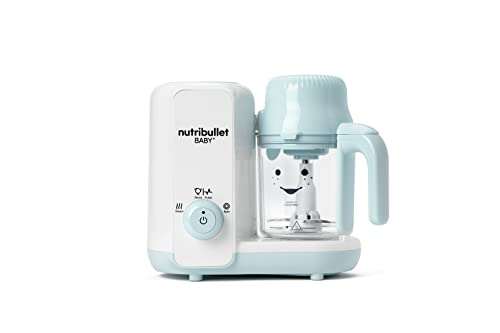
nutribullet Baby Steam + Blend
Best for: The same steam-then-blend convenience at a lower price
Combines a steaming and blending cycle in one container with a turn-of-a-dial control for steam only, blend only, or a fully automated steam-and-blend cycle. It covers the core convenience a dedicated baby food maker offers — no transferring hot food to a separate blender — without the glass bowl or the largest batch capacity of the premium pick above.
- One-dial control: steam, blend, or automated steam + blend
- Combined jar and blade — steam and blend without transferring food
- Dishwasher-safe components
- Smaller footprint than the BEABA Babycook Neo
Keep in mind: Plastic jar rather than glass, so it's more prone to scratching, clouding, or picking up odors than a glass-bowl machine after months of heavy use.
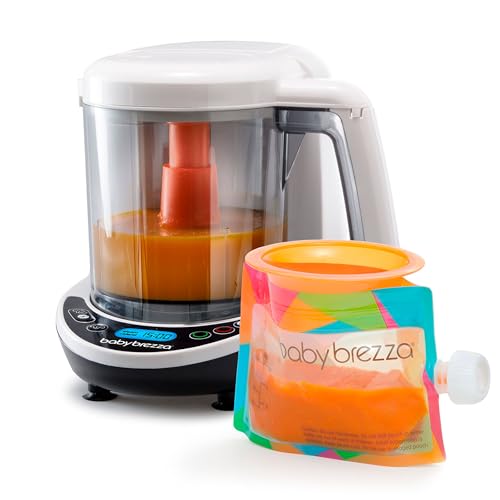
Baby Brezza One Step Baby Food Maker Deluxe
Best for: Parents who want to press one button and walk away
A one-step machine that steams and then blends automatically with no transfer after cooking, according to Baby Brezza's listing. It offers three settings (automatic steam and blend, steam only, blend only), an LCD control panel, and a removable water tank, and the Deluxe set includes three reusable food pouches with filling funnels for storing and serving.
- Automatic steam + blend in one step, in as little as 10 minutes per the listing
- 3.5-cup capacity
- Three settings: steam and blend, steam only, blend only
- Dishwasher-safe bowl and blade; removable water tank
- Includes 3 reusable food pouches and filling funnels
Keep in mind: Its listed 3.5-cup capacity is smaller than the Babycook Neo's, and the removable water tank is one more part to empty, dry, and descale.

BEABA Babycook Duo 4-in-1 Baby Food Maker
Best for: Twins, siblings close in age, or big weekly batch sessions
A 4-in-1 steam, blend, defrost, and reheat machine with two 27-ounce bowls, so you can cook two different foods in one cycle. BEABA's listing describes an elevated steam basket that keeps food above the water, an auto shut-off timer that beeps when cooking is done, and one-handed operation. It is the largest-capacity pick on this page.
- Two 27 oz bowls (9.1 cups total per the listing)
- Steam, blend, defrost, and reheat
- Elevated steam basket keeps food above the water
- Auto shut-off with an audible done signal
- Measurement markings on the bowls
Keep in mind: Most families feeding one baby will not need two bowls, and a two-bowl machine takes more counter space than the single-bowl picks.
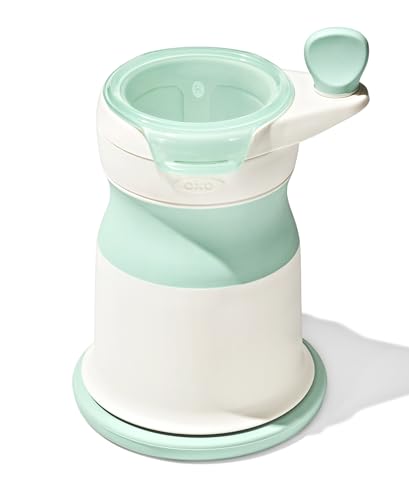
OXO Tot Mash Maker Baby Food Mill
Best for: Occasional use, travel, or a grandparent's house
A hand-crank mill that turns soft-cooked food into a smooth puree with no electricity or counter appliance needed. It's slower per batch than an electric blender and not built for large-volume batch cooking, but it's a genuinely useful, low-cost baby food maker alternative for a family that needs fresh puree a few times a week rather than a freezer full at once.
- Hand-crank mechanism needs no power outlet or batteries
- Compact enough for a diaper bag or travel
- Dishwasher-safe
- Works directly over a bowl for a quick, single-portion puree
Keep in mind: Manual effort and smaller batch size make it impractical for weekly batch cooking — better as an occasional or travel tool than a primary appliance for a family cooking baby food daily.
As an Amazon Associate I earn from qualifying purchases. Mom's Magazine may earn a commission when you buy through links on this page, at no extra cost to you. Learn more.
Frequently Asked Questions
Do I really need a baby food maker, or can I use a regular blender?
A regular blender or food processor, paired with a pot or steamer basket for steaming, produces the same puree as a dedicated baby food maker. The machine's real advantage is convenience — steaming and blending in the same container means less transferring hot food and fewer dishes, not a different or clinically superior texture.
What is the best baby food maker?
There is no single best one for every family. Among the researched picks on this page, the BEABA Babycook Neo is the premium glass-bowl choice for regular batch cooking, the Baby Brezza One Step Food Maker Deluxe is the press-one-button option, the BEABA Babycook Duo is for twins or very large batches, the nutribullet Baby Steam + Blend is the simpler compact option, and the OXO Tot Mash Maker covers travel and occasional use. Match the machine to how often you cook and how much counter space you have.
Which baby food maker is best for twins?
A two-bowl machine like the BEABA Babycook Duo is designed for that situation: two 27-ounce bowls let you cook two foods in one cycle. BEABA's listing says it makes 54 servings in about 20 minutes, but real servings depend on portion size. A single-bowl machine also works for twins if you are willing to run more cycles.
What is the difference between a one-step and a basket-style baby food maker?
A one-step machine, like the Baby Brezza One Step Food Maker Deluxe, steams and blends automatically with no transfer. A basket-style machine, like the BEABA Babycook, steams food in a basket above the water; then you tip it into the bowl and blend, adding cooking water as needed to adjust texture. One-step saves a step, and basket-style gives you more control over liquid.
Do baby food makers need descaling?
Electric steamers heat water, so in hard-water areas mineral scale can build up over time. Follow the descaling method and schedule in your machine's manual, and empty and dry any removable water tank between uses.
What is the best baby food maker for batch cooking?
If you plan weekly batches, look for steam-and-blend in one bowl plus enough capacity to portion several days at once. On this page, the BEABA Babycook Neo is the premium glass 4-in-1 built for that workflow; the nutribullet Baby Steam + Blend covers the same core function with a smaller footprint, and the BEABA Babycook Duo's two 27-ounce bowls suit twins or very large batch sessions. Match capacity to how often you actually cook, not to the largest marketing number.
Does steaming keep more nutrients than boiling for baby food?
In general food science, steaming tends to retain water-soluble vitamins better than boiling vegetables in a large volume of water and discarding that water. That is a cooking-method pattern, not a brand-specific clinical trial or a reason to claim any one machine is medically superior. A steamer basket in a pot gets the same steaming benefit without a specialty appliance.
How long do homemade baby food purees last in the freezer?
For best quality and texture, most guidance points to using homemade purees within about 1 to 2 months in a standard freezer, though they generally remain safe somewhat longer. Label each batch with the food and date. See our storage-containers and freeze-safely guides linked in this article for the workflow details.
Is a glass or plastic baby food maker bowl better?
Glass resists scratching, clouding, and odor retention better than plastic over months of repeated steaming and dishwasher cycles — the same tradeoff as glass versus plastic baby bottles. Plastic is lighter and won't chip if dropped, but it can look and smell more worn after a year of heavy use. Neither replaces cleaning and temperature-testing.
Is it safe to reheat frozen baby food in the microwave?
It can be done, but microwaves heat unevenly and can create hot spots that don't feel hot on the outside of the container. Stir thoroughly and always test the temperature on your own wrist or lip before feeding — the same caution used with a warmed bottle. Some machines offer a defrost/reheat cycle; still stir and test.
What's the difference between a baby food maker and a food mill?
A baby food maker is usually an electric appliance that steams and blends, sometimes with reheat and defrost settings, built for regular batch cooking. A food mill is a manual, hand-crank tool that mashes soft-cooked food through a mesh — no electricity, smaller batches, genuinely useful for occasional use or travel.
Can I use a baby food maker if we're doing baby-led weaning?
Yes, as an optional tool. BLW leans on soft finger foods and supervised self-feeding; a steamer-blender is handy for mashed sides, sauces, or days you want a spoon-fed puree without abandoning finger foods. See our BLW vs purees guide and AAP's BLW safety overview linked in sources — upright seating and soft foods still matter more than the appliance.
When should I start using homemade purees from a baby food maker?
Around the same time your baby shows solids readiness and your clinician is on board — commonly around 6 months for many babies, not on a calendar day alone. AAP and CDC framing emphasize readiness signs, iron-rich foods, and supervision. Be selective about early homemade versions of high-nitrate vegetables (spinach, beets, carrots, green beans, squash) for the youngest infants — ask your pediatrician.
Sources & Further Reading
- When, What, and How to Introduce Solid Foods — Centers for Disease Control and Prevention (CDC) (reviewed 2026-09-24)
- Fingers, Spoons, Forks, and Cups — Centers for Disease Control and Prevention (CDC) (reviewed 2026-09-24)
- Starting Solid Foods — American Academy of Pediatrics (HealthyChildren.org) (reviewed 2026-09-24)
- Choking Prevention for Babies & Children — American Academy of Pediatrics (HealthyChildren.org) (reviewed 2026-09-24)
- Baby-Led Weaning: Is It Safe? — American Academy of Pediatrics (HealthyChildren.org) (reviewed 2026-09-24)
Related Guides
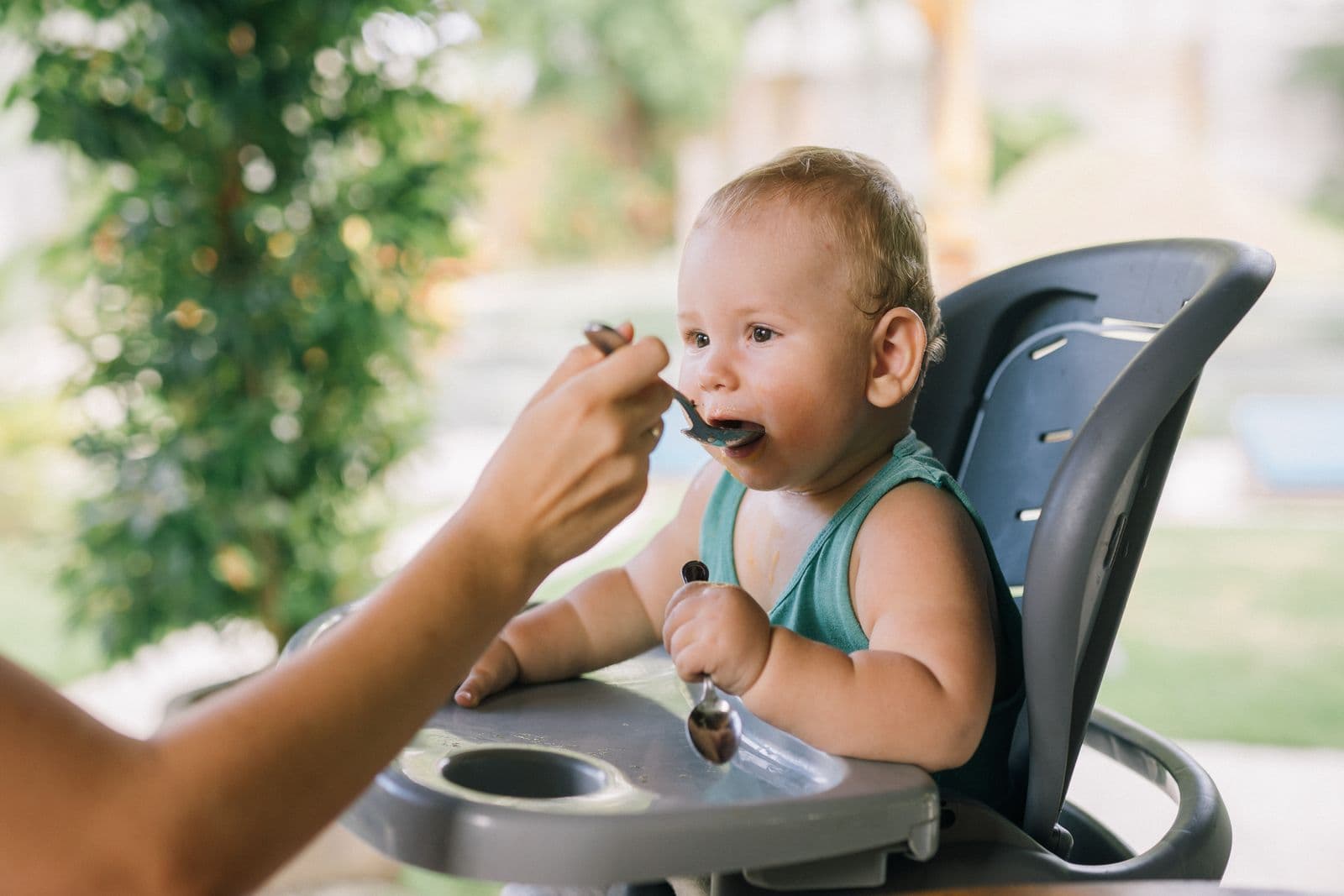
Best First Baby Foods & Best First Foods for Baby (CDC and AAP Guide)
Best first baby foods and best first foods for baby, in plain CDC and AAP terms: iron-rich starters around 6 months, one food at a time, allergen timing, first-feeding setup (bibs, spoons, cups), and what not to give. Editorially reviewed general information, not medical advice — not a ranked jar list.
Baby-Led Weaning vs. Purees: How to Choose (or Combine Both)
Baby-led weaning vs purees (and BLW vs purees combination feeding): mess, iron, gagging vs choking, and what CDC and AAP actually say about textures, readiness, and safety.
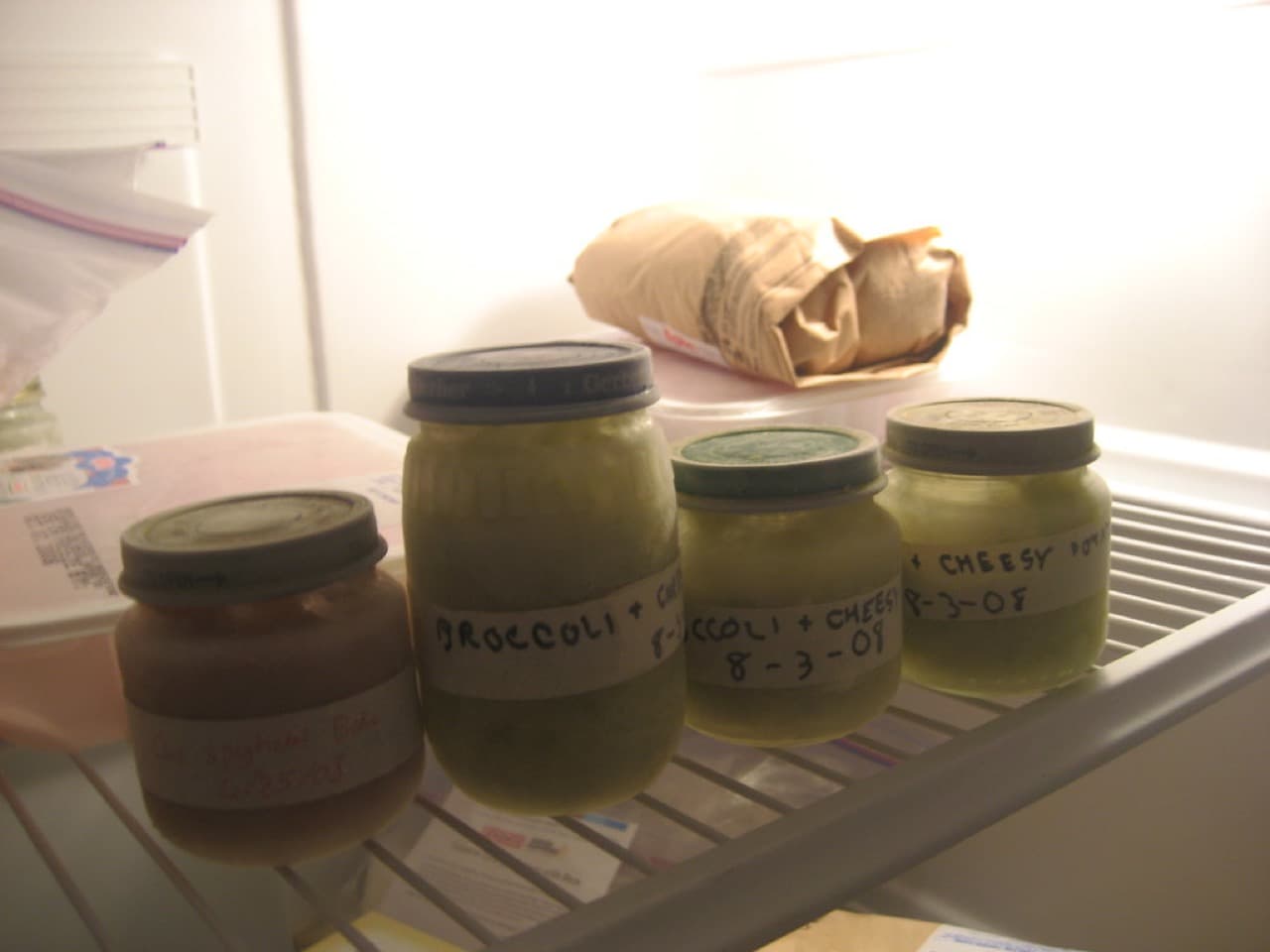
Best Baby Food Storage: Silicone Freezer Trays & Containers (2026)
Baby food storage compared: best silicone freezer trays for baby food plus glass and travel containers — well size, lids, batch-freeze workflow, labeling, thawing, and who each pick is for (no invented prices).
How to Freeze Homemade Baby Food (and Store It Safely in the Fridge)
How to freeze homemade baby food safely, how long it keeps in the fridge and freezer by food type, and a practical week-one freezer workflow — grounded in FDA and University of Illinois Extension food-safety guidance, not a blog-invented number.
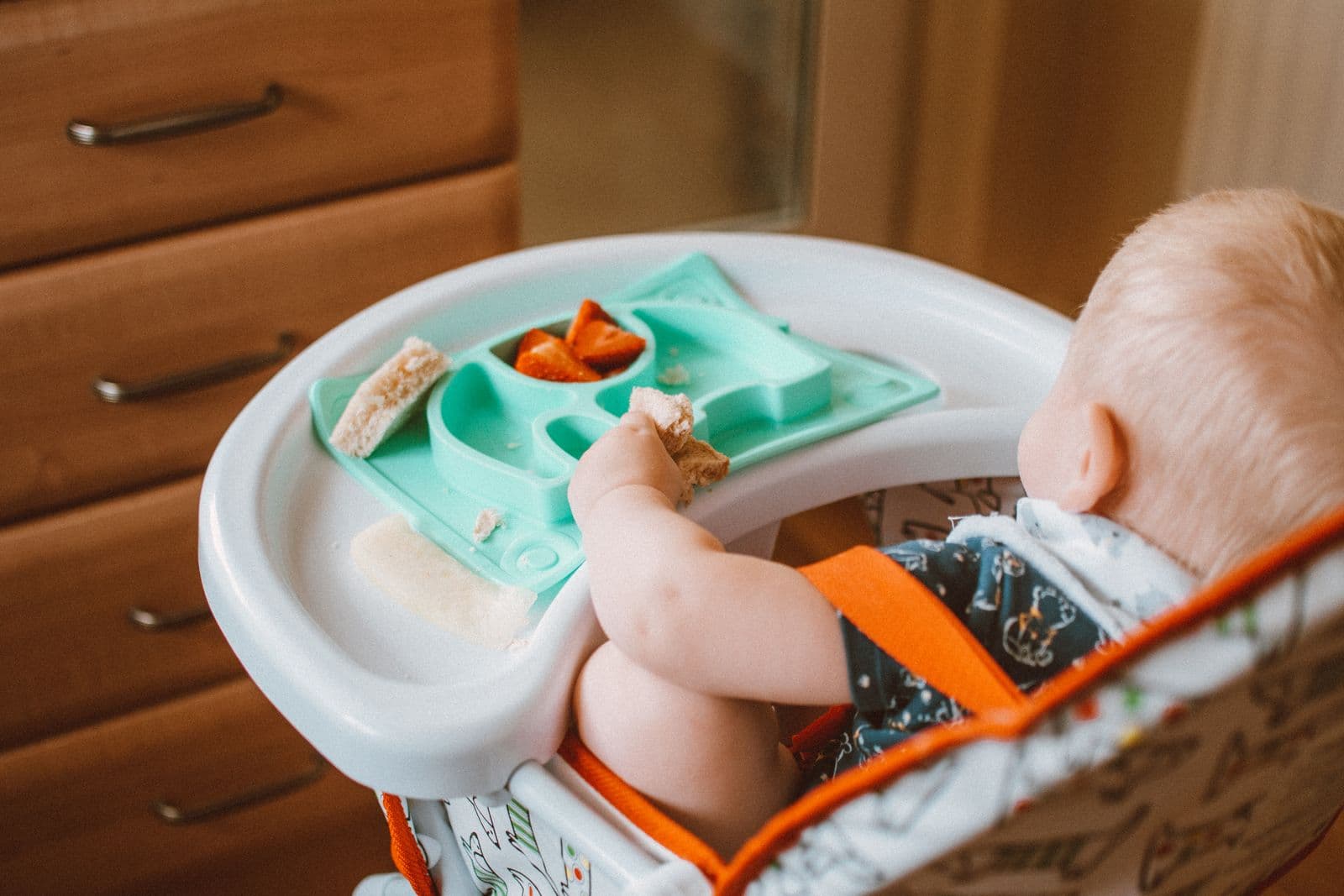
Best High Chair & Best Baby High Chair (2026): Convertible, Slim & Toddler Seats
Best high chair and best baby high chair picks for starting solids through toddler years: slim fold-flat, convertible grow-with-baby, infant recline, and portable booster.

Best Silicone Baby Bibs and Placemats of 2026
A researched comparison of silicone bibs and suction placemats for solids and baby-led weaning — what actually cuts down mess versus what just looks like it will, plus four options across ages and stages.
Best Toddler Self-Feeding Utensils and Baby Spoons of 2026
Why the first spoon your baby actually uses isn't shaped like a spoon, which self-feeding utensils fit each stage from first purees to a toddler fork, and how utensils pair with solids, open cups, high chairs, bibs, and plates.
Best Open Cups for Babies and 6-Month-Olds (2026 Buying Guide)
Why open-cup and straw skills matter around 6 months with solids, how they differ from valved sippies, and four researched picks — ezpz Tiny Cup, ezpz Mini Cup + Straw, Munchkin C'est Silicone in Coral/Pink, and a squeeze straw trainer — with CDC and AAP sources.
Mom's Magazine Editorial Team
Editorial Team
The Mom's Magazine editorial team researches and writes practical, plainly-sourced guidance for parents and families. Guides are reviewed for accuracy and updated as recommendations change. Where a topic calls for professional expertise, we cite reputable organizations and, for health topics, add a qualified reviewer before publishing.
Newsletter
Get the Weekly Mom List
One short email a week: the most useful guides, activities, and picks for your family. No spam, unsubscribe anytime.