Parenting
How to Freeze Homemade Baby Food (and Store It Safely in the Fridge)
How to freeze homemade baby food safely, how long it keeps in the fridge and freezer by food type, and a practical week-one freezer workflow — grounded in FDA and University of Illinois Extension food-safety guidance, not a blog-invented number.
As an Amazon Associate I earn from qualifying purchases.Some links on this page are affiliate links. If you buy through them, Mom's Magazine may earn a small commission at no extra cost to you. It never changes which products we recommend. How we recommend products.
Homemade baby food keeps for different lengths of time depending on what's in it. Per University of Illinois Extension's Feeding My Baby guidance, cooked fruits, vegetables, grains, and beans keep about 2 days in the refrigerator; cooked meat, poultry, fish, and eggs (or purees that contain them) keep about 1 day. In the freezer, Illinois Extension treats about 1 month as the best-quality window for all of those homemade foods — they can remain safe longer when properly frozen, but texture and flavor decline. FDA's "Once Baby Arrives" table lists homemade baby foods at 1 to 2 days in the refrigerator and 3 to 4 months in the freezer, and separately notes ice-cube-tray freezing with discard after about three months on that how-to blurb — so treat the Illinois 1-month figure as a practical quality target and the FDA months as the broader safety/storage range, not a reason to invent a third number. Freeze in single-serve portions (ice-cube tray or cookie-sheet method), label and date, thaw in the refrigerator or as part of reheating, reheat on the stovetop or microwave to 165°F (Illinois Extension), stir, cool, and temperature-test before feeding. Never reheat in a slow cooker, never refreeze thawed portions, and never return a spoon that touched baby's mouth to the storage container.
General information, not medical advice
This article is editorially reviewed general food-safety information sourced from public FDA and university extension guidance. It is not medical advice, not a feeding plan for your child, and not medically reviewed. Talk with your child's pediatrician about a specific feeding or storage concern, especially if your baby has a medical condition or a known food allergy.
The short version
Most of what goes wrong with homemade baby food storage is not dramatic — it is food that sat in the fridge two days too long because nobody wrote down when it was made, or a freezer full of unlabeled bags nobody wants to taste-test. The timelines below come from two public sources we checked for this update: University of Illinois Extension's Feeding My Baby "Storing and Reheating" page (fridge days by food type and a 1-month freezer quality window) and FDA's "Once Baby Arrives" food-safety page (homemade baby foods 1–2 days fridge / 3–4 months freezer, ice-cube method, and the 2-hour room-temperature limit). Where those sources emphasize different freezer windows, we keep both honest instead of inventing a blended number.
Refrigerator storage: 1 day or 2 days, depending on what's in the bowl
Homemade baby food can be refrigerated with a tight-fitting lid, but how long it stays good depends on the ingredients. Per Illinois Extension, cooked fruits, vegetables, grains, and beans keep for about 2 days in the refrigerator. Cooked meat, poultry, fish, and eggs — including purees that mix a protein into a vegetable base — keep for only about 1 day. FDA's summary table groups "homemade baby foods" at 1 to 2 days in the refrigerator, which lines up with that range when you do not invent a single day for every puree. A mixed puree (chicken and sweet potato, for instance) follows the shorter protein timeline for the whole batch, not an average of the two.
| Food type (Illinois Extension) | Refrigerator | Freezer (best quality) |
|---|---|---|
| Cooked fruits and vegetables | 2 days | 1 month |
| Cooked grains | 2 days | 1 month |
| Cooked beans | 2 days | 1 month |
| Cooked meat, poultry & fish | 1 day | 1 month |
| Cooked eggs | 1 day | 1 month |
Illinois Extension is explicit that the freezer times above are for quality: properly stored food remains best quality for about 1 month but can remain safe beyond that. FDA's separate table lists homemade baby foods at 3 to 4 months in the freezer. Use the shorter quality window as your household rotation target; do not treat either source as a reason to keep unlabeled mystery bags "a little longer" because a different chart looked more generous.
FDA homemade row at a glance
FDA's "Safe Storage of Baby Food" table lists homemade baby foods at 1 to 2 days in the refrigerator and 3 to 4 months in the freezer. Its ice-cube how-to on the same page also says store for up to three months and discard unused food after three months. We cite those numbers as FDA wrote them — they are not a contradiction of Illinois Extension's 1-month quality advice; they are a different emphasis (safety/storage range vs best-quality rotation).
Why meat, poultry, fish, and eggs get a shorter fridge clock
This is not an arbitrary distinction. Meat, poultry, fish, and eggs carry a higher bacterial-load risk than cooked plant foods, and that risk grows faster in the refrigerator than it does in produce-based purees. It is the same reason a container of cooked chicken in your own refrigerator gets a shorter shelf life than steamed carrots — baby food is not a special exception to general food-safety science; it is the same science applied to smaller portions eaten by someone with a less mature immune system. Bacteria multiply fastest in what food-safety guidance generally calls the temperature danger zone (roughly 40°F to 140°F), which is exactly the range food passes through on the way from fridge to reheating. Minimizing time in that range — moving food quickly from cooking to cooling to fridge or freezer, and reheating promptly — matters more for protein-based purees than for mashed sweet potato.
Mixed purees follow the shortest ingredient's timeline
A puree that combines chicken with sweet potato, or eggs with spinach, follows the 1-day refrigerator window that applies to the protein, not an average between ingredients. When batch-cooking protein and produce purees in the same session, freeze the protein-containing batches immediately rather than trying to remember which fridge day is whose deadline.
A practical week-one freezer workflow
The timelines only help if the kitchen workflow matches them. Here is a simple first-week pattern that fits Illinois Extension's ice-cube / cookie-sheet methods and FDA's "freeze in ice cube trays, label, date" advice — without inventing products or prices.
- Pick one or two simple first foods your clinician is comfortable with (for many babies that means a soft single-ingredient puree once solids readiness is clear — see our starting-solids guide linked below). Do not batch ten new foods in week one.
- Cook, cool quickly in shallow containers, and puree to the texture your baby is currently eating. Refrigerate what you will use within the 1- or 2-day window; freeze the rest the same day.
- Portion into a clean ice-cube tray or drop 1–2 tablespoon mounds on a clean cookie sheet. Cover and freeze solid.
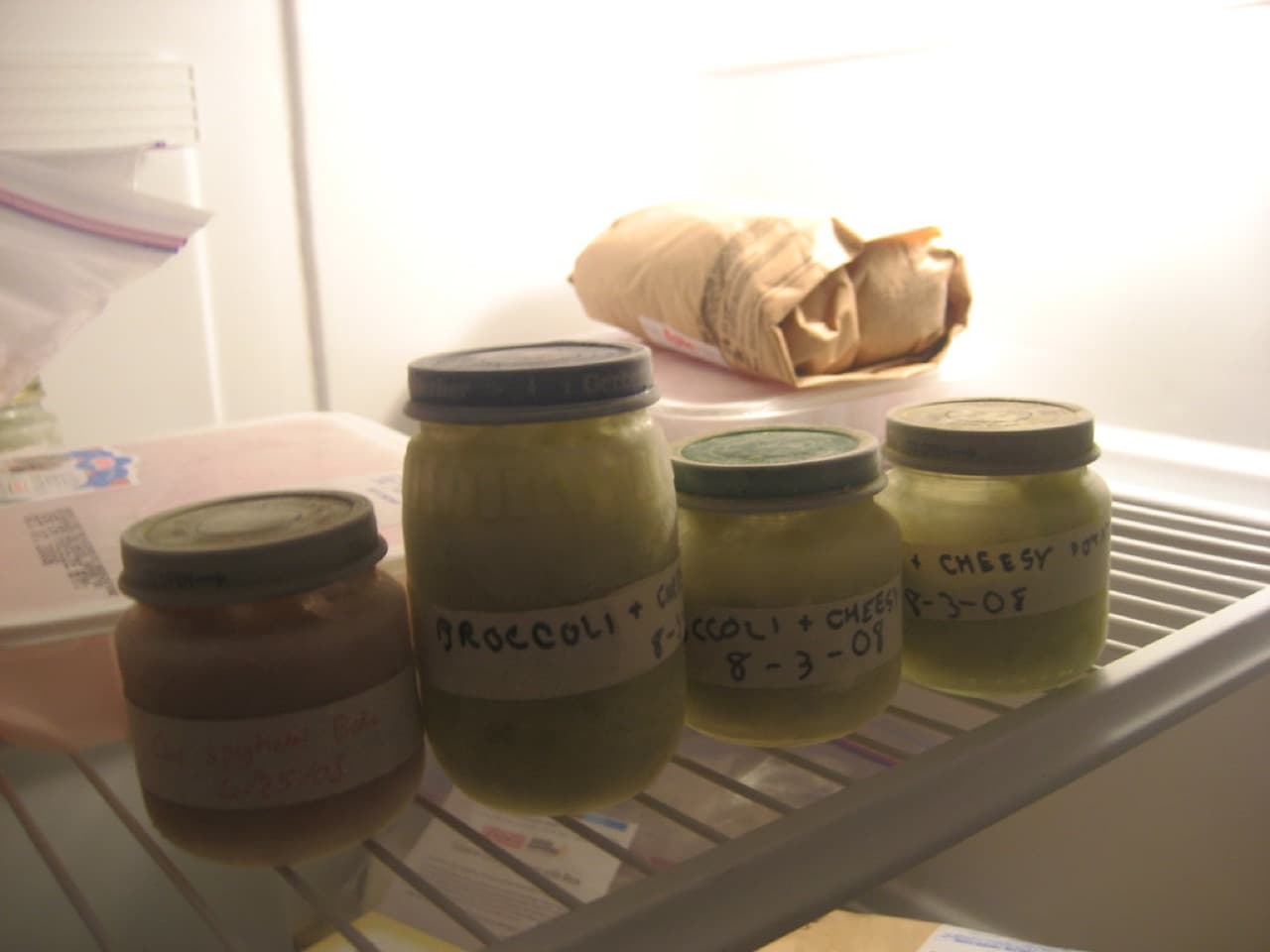
- Pop cubes or pieces into a freezer bag or airtight container. Label with food name and date. Press air out of bags.
- Keep a small "tonight / tomorrow" fridge zone for the 1–2 day portions and a dated freezer bin for the rest. Pull tomorrow's cubes into the fridge the night before when you can.
- At feeding time, serve a meal portion into a separate dish. Never dip the feeding spoon back into the storage container.
- Discard fridge leftovers past their window and anything left out more than about 2 hours (FDA). Do not refreeze thawed portions.
Gear that makes the freeze step smoother — trays, bags, labels — is optional infrastructure, not a medical requirement. Our comparison of baby food storage containers and freezer trays covers portion sizes and materials if you want that shopping lane; this page stays on the safety windows and workflow.
How to freeze homemade baby food: ice-cube tray and cookie sheet
Both FDA and Illinois Extension describe portion-then-freeze methods so you warm only what you need. Illinois Extension's ice-cube method: spoon puree into BPA-free plastic ice cube trays, cover, freeze solid, transfer to freezer-safe containers or bags, label and date. Cookie-sheet method: drop 1–2 tablespoons onto a clean cookie sheet with space between portions, cover, freeze solid, then bag and label. FDA's how-to similarly starts with an ice cube tray (one cube as one serving on that page), heavy-duty wrap, then transfer to a dated bag or airtight container — and notes small jars as an option with about 1/2 inch headspace because food expands when frozen.
- Cook and puree the food to the texture your baby is currently eating.
- Cool promptly; do not leave purees sitting out while you "finish later."
- Spoon into a covered tray (or cookie-sheet portions) rather than one large container.
- Freeze until solid — typically several hours or overnight.
- Transfer frozen portions into a labeled, dated freezer bag or airtight container.
- Press out excess air from a bag before sealing to slow freezer burn.
- Rotate using the quality window you chose from the sources above; write the date where you will actually see it.
Two trays beat one heroic batch
One tray means you wait for a batch to freeze before you can fill again. Two trays and a marker solve most of the week-one friction. Unlabeled bags multiply fast when a session produces five different purees — label before the cubes go into the bin.
Thawing: refrigerator, cold water, or as part of reheating
Illinois Extension points parents to safe thawing methods (refrigerator, or as part of reheating) and warns against approaches that leave food in the danger zone. The refrigerator is the slowest but most hands-off way — move a cube from freezer to fridge the night before. When there is less lead time, reheat from frozen on the stovetop or in short microwave bursts with stirring, or use cold (not hot) running-water style thawing consistent with general safe-thaw practice — not an all-afternoon counter sit. FDA is explicit for baby foods generally: do not leave solids or liquids out at room temperature for more than two hours.
Reheating to 165°F without creating hot spots
Illinois Extension: reheat on the stovetop or microwave; never reheat baby food in a slow cooker. Stovetop — warm over low heat, stirring often, to an internal temperature of 165°F on a food thermometer. Microwave — for about 2 tablespoons (4 ounces) on high for 15 seconds, stir, check temperature, repeat 15-second intervals as needed until 165°F. After reheating, allow food to cool; always stir and test before feeding. To speed cooling, Illinois Extension notes you can stir in a small ice cube, cold water, or cold breast milk or formula.
FDA separately warns that microwaving baby food in a jar heats unevenly (hottest in the center) and advises transferring to a dish, stirring, standing, and taste-testing. Do not microwave baby-food meats, meat sticks, or eggs in the microwave per FDA's microwave caution for those higher-fat foods — use the stovetop instead. Whatever method you use, test temperature yourself before the spoon goes to the baby.
Never refreeze thawed baby food
Illinois Extension: do not refreeze baby food that has thawed. Once a frozen portion has been thawed and reheated, treat leftovers like other cooked leftovers inside the short refrigerator windows above — then discard. Repeated freeze-thaw cycles are a food-safety risk, not just a texture problem.
The spoon that touched the baby's mouth does not go back in the jar
This is the most common way a fridge portion gets contaminated faster than the timelines assume. FDA: do not feed a baby from a jar of baby food and then put it back in the refrigerator — saliva on the spoon can contaminate the remaining food. Put a serving on a dish, refrigerate what remains in the jar (within the homemade windows), and throw away what is left in the serving dish. The same rule applies to homemade containers: serve a meal portion into a separate bowl, feed from that, and keep the feeding spoon away from the main storage container.
What to store it in
A tight-fitting lid is the requirement, not a specific brand. Glass resists staining and odor retention; silicone trays flex to release cubes; hard plastic is light. Whatever you use, a lid that actually seals matters more than the material. Our storage-containers and freezer-trays comparison stays in the shopping lane; this page stays on timelines and handling.
How this fits into batch cooking and first solids
These storage windows are why batch cooking works: cook a larger session once, portion and freeze immediately rather than letting everything sit in the fridge, and pull one dated portion at a time. Our baby food maker comparison covers the cooking side of batch prep. Readiness signs, first foods, and timing live in our beginner's guide to starting solid foods. If purees are not the plan — some families lean soft finger foods — most of this storage guidance still applies to homemade food kept for a baby; baby-led weaning vs. purees covers that decision.
When to just throw it out
Discard anything left in the refrigerator past its window rather than smelling it and deciding — a puree that has turned does not always announce itself. The same goes for food left out at room temperature more than about 2 hours (FDA). When a jar, tray, or bag is not labeled and nobody remembers when it went in, discard rather than guess. Honey still does not belong in food for babies under one year (FDA). Questions about volume, allergies, or a specific medical situation belong with your child's clinician.
Frequently Asked Questions
How long can homemade baby food stay in the refrigerator?
About 2 days for cooked fruits, vegetables, grains, and beans, and about 1 day for anything containing meat, poultry, fish, or eggs, per University of Illinois Extension. FDA lists homemade baby foods at 1 to 2 days overall. A mixed puree with protein follows the shorter 1-day window for the whole batch.
How long does frozen homemade baby food last?
Illinois Extension treats about 1 month as the best-quality freezer window for homemade baby food (safe longer when properly stored, but quality declines). FDA lists homemade baby foods at 3 to 4 months in the freezer, and its ice-cube how-to also mentions up to three months. Use the shorter quality window for household rotation; do not invent a blended blog number.
What's the best way to freeze homemade baby food?
Portion first: ice-cube tray or cookie-sheet method (Illinois Extension and FDA both describe ice-cube portioning). Freeze solid, transfer to a labeled dated bag or airtight container, and pull only what you need. Small jars with headspace are an FDA-noted option.
What temperature should I reheat homemade baby food to?
Illinois Extension advises reheating to an internal temperature of 165°F on a food thermometer via stovetop or microwave, then cooling and testing before feeding. Never reheat baby food in a slow cooker.
Is it safe to reheat baby food in a slow cooker?
No — Illinois Extension says never reheat food in a slow cooker. Use the stovetop or microwave, stir thoroughly, cool, and temperature-test.
Can I leave homemade baby food out on the counter?
Not for long. FDA says not to leave baby-food solids or liquids out at room temperature for more than two hours. Refrigerate or freeze promptly after cooking and cooling.
Can I put the feeding spoon back in the storage container?
No. FDA advises against feeding from a jar (or, by the same logic, a homemade container) and then storing the remainder — saliva can contaminate the batch. Serve a portion into a separate dish.
How do I know if reheated baby food is safe to feed my baby?
Reheat thoroughly (Illinois Extension: 165°F), stir to eliminate hot spots, let it cool, and test the temperature yourself before feeding. Never refreeze food once it has been thawed and reheated.
Sources & Further Reading
- Storing and Reheating (Homemade Baby Food) — University of Illinois Extension (Feeding My Baby) (reviewed 2026-09-26)
- Once Baby Arrives (Food Safety for Moms-to-Be) — U.S. Food and Drug Administration (FDA) (reviewed 2026-09-26)
Related Guides
Best Baby Food Storage: Silicone Freezer Trays & Containers (2026)
Baby food storage compared: best silicone freezer trays for baby food plus glass and travel containers — well size, lids, batch-freeze workflow, labeling, thawing, and who each pick is for (no invented prices).
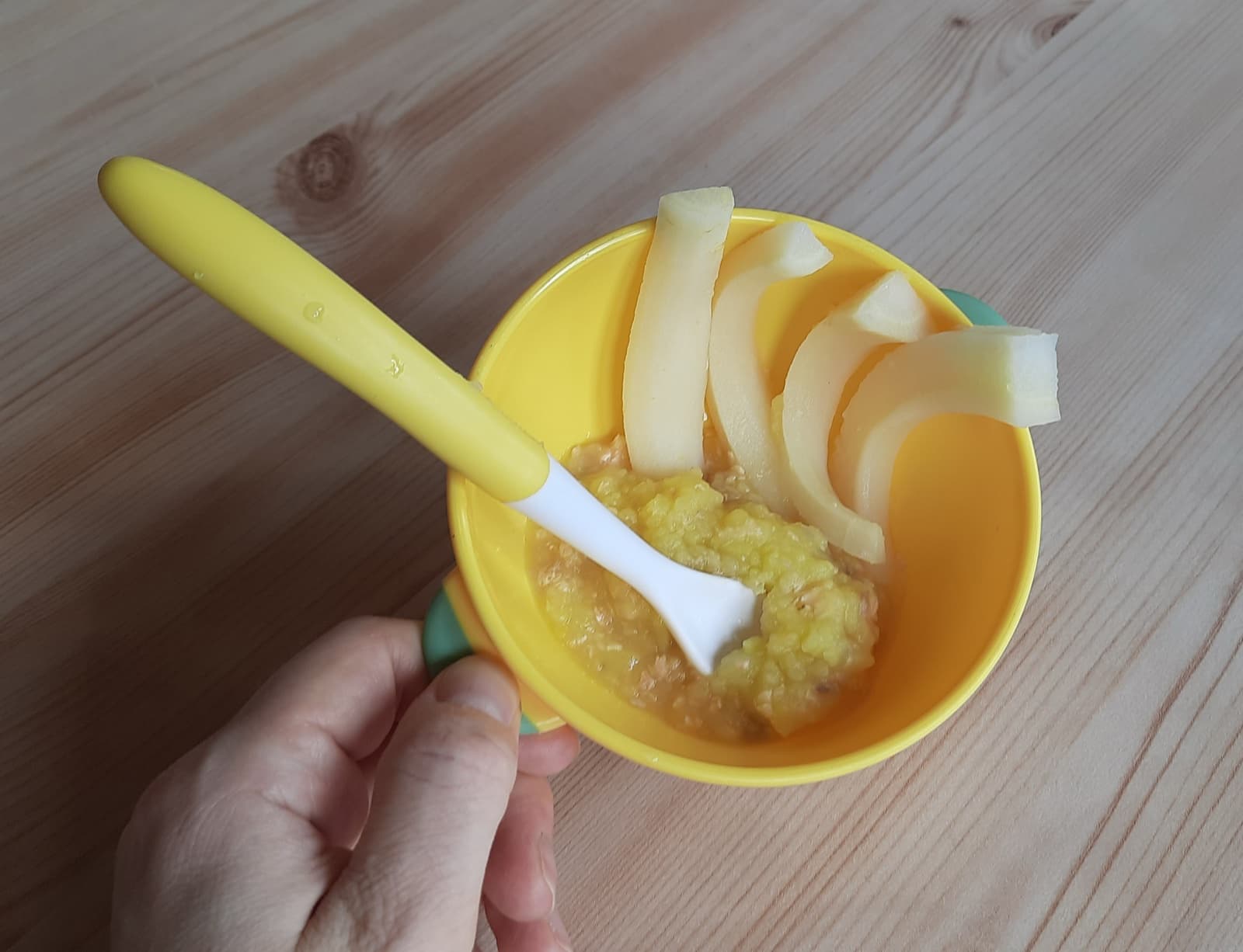
Best Baby Food Makers of 2026: Steam-and-Blend All-in-Ones vs Pot and Blender
Best baby food makers compared for parents searching baby food maker options: what a dedicated steam-and-blend appliance actually buys you over a stovetop pot and blender, steam vs boil nutrient retention, batch-cook and freeze workflow, glass vs plastic, cleanup, and a manual mill for travel.
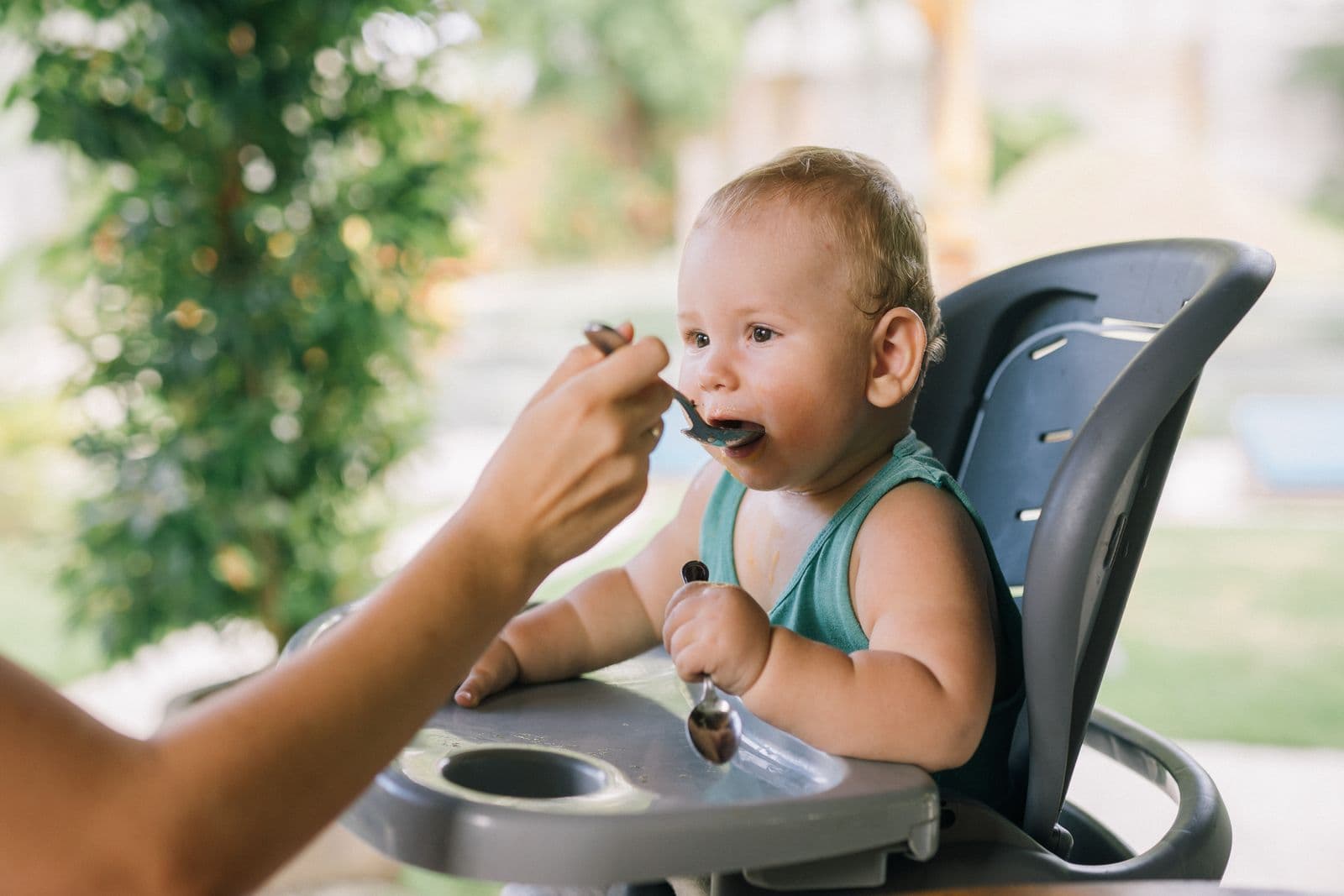
Best First Baby Foods & Best First Foods for Baby (CDC and AAP Guide)
Best first baby foods and best first foods for baby, in plain CDC and AAP terms: iron-rich starters around 6 months, one food at a time, allergen timing, first-feeding setup (bibs, spoons, cups), and what not to give. Editorially reviewed general information, not medical advice — not a ranked jar list.
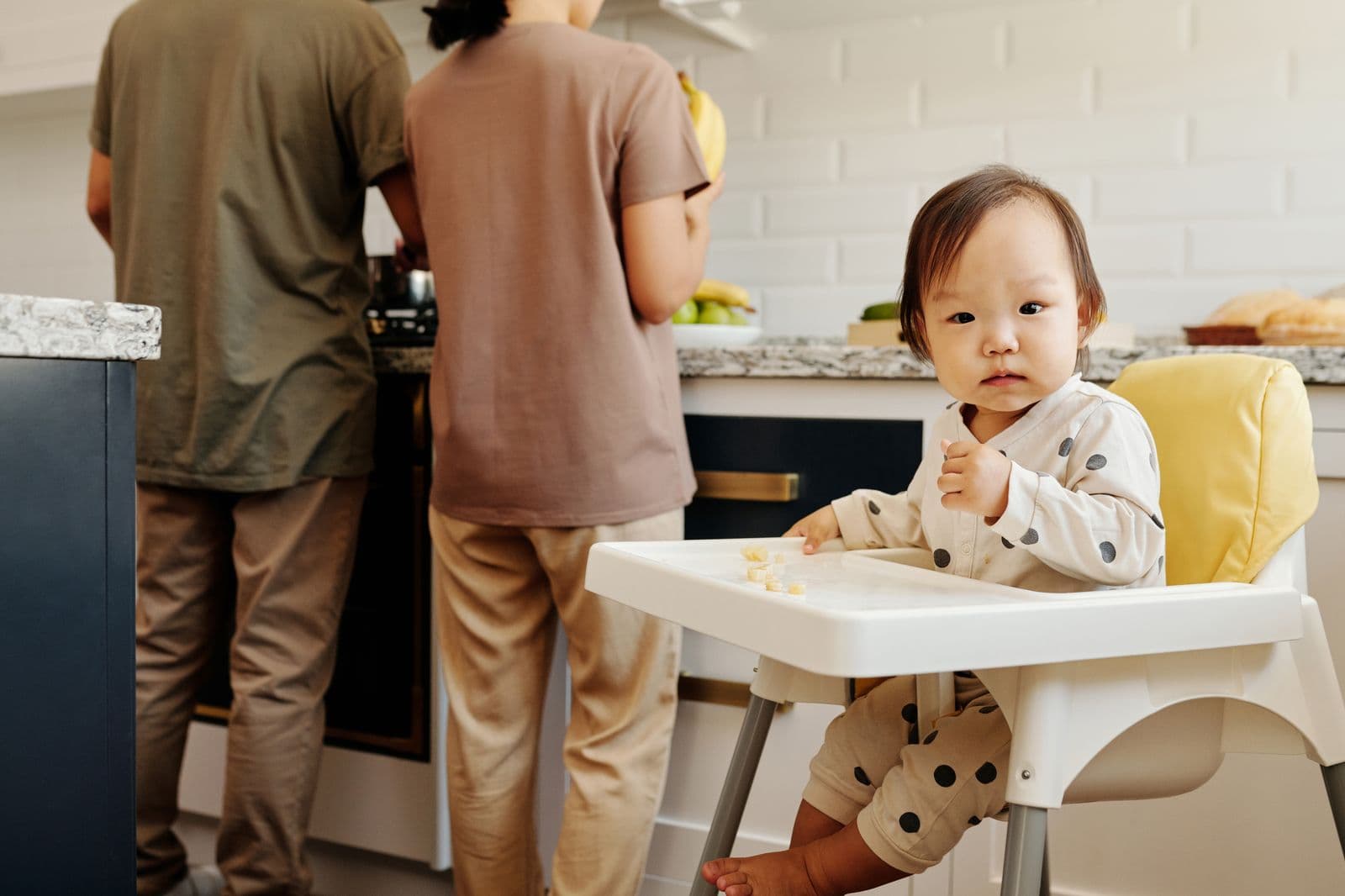
Baby-Led Weaning vs. Purees: How to Choose (or Combine Both)
Baby-led weaning vs purees (and BLW vs purees combination feeding): mess, iron, gagging vs choking, and what CDC and AAP actually say about textures, readiness, and safety.
Mom's Magazine Editorial Team
Editorial Team
The Mom's Magazine editorial team researches and writes practical, plainly-sourced guidance for parents and families. Guides are reviewed for accuracy and updated as recommendations change. Where a topic calls for professional expertise, we cite reputable organizations and, for health topics, add a qualified reviewer before publishing.
Newsletter
Get the Weekly Mom List
One short email a week: the most useful guides, activities, and picks for your family. No spam, unsubscribe anytime.