New Moms
Baby Registry Checklist: What to Actually Buy (and Skip)
The handful of items worth registering for, the ones you can safely skip, and where to send friends and family for the bigger decisions.
As an Amazon Associate I earn from qualifying purchases.Some links on this page are affiliate links. If you buy through them, Mom's Magazine may earn a small commission at no extra cost to you. It never changes which products we recommend. How we recommend products.
A workable registry covers six categories: a car seat (buy new, never secondhand), a safe sleep setup (crib or bassinet plus a fitted sheet, nothing else in it), feeding gear, diapering supplies, a few basic clothing sizes, and a couple of go-to travel or carrying items. Skip crib bumpers, blankets and pillows for the crib, a full wardrobe of newborn-size clothing (many babies barely wear it), and a stack of bottles or a specific formula before you know what your baby will actually take. For anything with real safety implications — the car seat, the crib, the bassinet — register for it and buy it new regardless of how tempting a secondhand deal looks.
Safe sleep / travel
Ingenuity Dream Retreat 3-in-1 Portable Bassinet & Playard
Best for: Portable bassinet + playard for overnight or travel
Quick picks
| Product | Best for | |
|---|---|---|
| Ingenuity Dream Retreat 3-in-1 Portable Bassinet & Playard Safe sleep / travel | Portable bassinet + playard for overnight or travel | Check price on Amazon |
| Infant Optics DXR-8 Pro Video monitor | No-Wi-Fi video monitoring with pan/tilt/zoom | Check price on Amazon |
| Ergobaby Omni 360 All-Position Baby Carrier Hands-free carrier | All-position carrier from newborn stretch through toddler | Check price on Amazon |
| Skip Hop Diaper Bag Backpack: Forma, Multi-Function Baby Travel Bag with Changing Pad & Stroller Attachment Diaper backpack | Everyday diaper backpack with changing pad | Check price on Amazon |
| Dr. Brown's Natural Flow Anti-Colic Options+ Wide-Neck Baby Bottles, 5 oz, 4-Pack Starter bottles | Small starter bottle set before you know preferences | Check price on Amazon |
| Yogasleep Dohm Classic White Noise Machine (White) Sound machine | Simple fan-based white noise kept away from the crib | Check price on Amazon |
The few things worth buying new, no exceptions
Most of a registry is flexible — sizes, styles, and brands genuinely come down to preference. A short list isn't: the car seat, the crib or bassinet, and the mattress that goes in it. Buy these new. A car seat with an unknown crash history, or a crib that's been recalled since it was manufactured, isn't worth the savings of going secondhand. If a friend or relative offers you a hand-me-down car seat or crib, it's fine to say a plain, warm no — most people who've researched this understand exactly why.
Safe sleep setup
- A crib, bassinet, or approved co-sleeper that meets current safety standards, bought new
- A firm mattress sized correctly for that specific crib or bassinet (no gaps around the edges)
- Fitted sheets — that's genuinely all that needs to go in the crib for the first year
- A sound machine, if you want one, kept a safe distance from the crib rather than clipped to it
Skip bumpers, blankets, and pillows
Current safe sleep guidance keeps the crib bare for the first year — a fitted sheet, nothing else — to reduce suffocation risk. Bumpers, loose blankets, pillows, and stuffed animals are common registry gifts that shouldn't actually go in the crib.
Check the Ingenuity Dream Retreat on AmazonAffiliate link.
Feeding
This is one of the harder categories to shop ahead of time, because you won't know your baby's preferences (nipple flow, bottle shape) until they're actually feeding. Register for a small starter set rather than a full case of one bottle brand, and expect to adjust once your baby's had a chance to try a few. Our comparison of baby bottles breaks down flow rates and shapes if you're picking a starting point, and once solids start, our guide to starting solid foods and our high chair comparison cover what comes next.
Check Dr. Brown's starter bottles on AmazonAffiliate link.
Bigger gear: strollers, carriers, and travel
These are worth researching before you buy rather than registering for on instinct, since they're some of the pricier items on a typical registry and the right pick depends on your specific life — an everyday stroller for city sidewalks is a different product than one built for a family that drives everywhere. Our stroller comparison and double stroller guide cover everyday and travel-system options, our convertible car seat guide covers what comes after the infant seat, and our baby carrier comparison breaks down wraps, slings, and structured carriers if you want hands-free options for the early months.
If overnight stays at a relative's house or actual travel are on the horizon, our guide to pack 'n plays and travel cribs and our diaper bag comparison are worth a look before you're packing for a trip at the last minute.
Buying the car seat new is only half the safety picture — knowing how to read its expiration date and what that date actually protects against matters just as much a few years in. Our guide to car seat expiration dates covers where to find it and when a hand-me-down seat is genuinely fine versus a hard no.
A swing or bouncer is one of the bigger judgment calls on a registry, since plenty of babies never need the pricier motorized option. Our comparison of baby swings and bouncers breaks down what a swing does that a bouncer can't, and which one to register for first.
Clothing: less than you'd think
Newborn-size clothing gets outgrown fast — often within a few weeks — so a full wardrobe in that size is one of the most common overspends on a registry. A better approach is a handful of newborn-size basics (onesies, a couple of sleepers) and a heavier concentration of 0–3 and 3–6 month sizes, since your baby will live in those longer. Growth is unpredictable enough that it's worth waiting on a lot of specific-size clothing until closer to when your baby will actually wear it. Basic cotton bodysuits are the one category worth registering for in real bulk rather than a few pieces — our comparison of bodysuit multipacks covers which pack sizes and sleeve lengths actually get used daily versus which sit in a drawer.
Diapering and health basics
- Diapers in newborn and size 1 — but not a huge stockpile in one size, since newborns move through sizes quickly
- Wipes, a changing pad, and diaper rash cream
- A digital thermometer and infant pain/fever reliever appropriate for newborns (confirm dosing with your pediatrician before you need it at 2 a.m.)
- A diaper pail, if you want a dedicated one rather than a regular lidded trash can
Whatever cream ends up in the diaper bag, most everyday redness clears with more frequent changes and a thick barrier layer. Our diaper rash guide covers how to tell ordinary irritation apart from a yeast rash that needs an antifungal instead of more of the same cream.
What to skip or hold off on
- Wearable blankets and sleep sacks in every size at once — babies grow out of them fast; buy the current size as you go.
- A large stock of one specific formula before you know your baby will tolerate it well.
- Baby shoes for a newborn who isn't walking — they're mostly decorative at this stage.
- Bottle warmers and sterilizers as must-haves — genuinely useful for some families, skippable for others; wait until you know your routine.
If you're still working through the rest of the pre-baby list, our hospital bag checklist covers what to have ready for delivery itself, and our guide to choosing a pediatrician covers the one big decision that isn't about gear at all.
Sleepwear is a category worth understanding rather than just guessing on, since children's pajamas fall under a federal flammability standard most parents never see explained. Our breakdown of snug-fit vs. flame-retardant pajamas covers what the label on the tag actually means before you register for or buy any.
Once your baby's grown into toddlerhood and the bodysuit-heavy wardrobe stops making sense, our roundup of Amazon Essentials toddler clothing multipacks covers the leggings, joggers, and tee multipacks that replace it — useful to bookmark now even though it's a later-stage purchase.
Our Recommendations
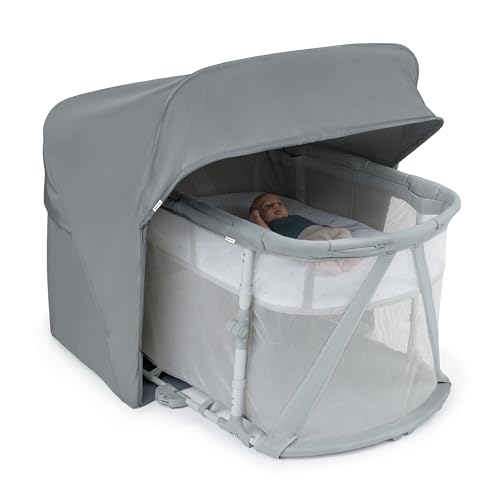
Ingenuity Dream Retreat 3-in-1 Portable Bassinet & Playard
Best for: Portable bassinet + playard for overnight or travel
A 3-step-fold playard that includes a bassinet stage and a UPF 50+ light-blocking shade, aimed at both indoor and outdoor use — a backyard nap or a shaded spot at a family gathering.
- Includes a bassinet insert for the newborn stage
- UPF 50+ shade panel usable indoors or outdoors
- 3-step fold
- Rated 0–36 months for the base playard
Keep in mind: Not as light or compact as a dedicated travel crib, so it fits occasional trips better than frequent flying.

Infant Optics DXR-8 Pro
Best for: No-Wi-Fi video monitoring with pan/tilt/zoom
A non-Wi-Fi monitor with a 5-inch screen, pan-tilt-zoom you control from the parent unit, and an interchangeable lens system. Because it doesn't connect to the internet, it can't be viewed remotely from a phone.
- 5-inch display on the parent unit
- Pan, tilt, and zoom controlled from the parent unit
- Interchangeable camera lenses
- No Wi-Fi, no app, no cloud account
Keep in mind: No remote phone viewing, since it does not connect to the internet.

Ergobaby Omni 360 All-Position Baby Carrier
Best for: All-position carrier from newborn stretch through toddler
A structured carrier rated for four carry positions and a 7–45 lb range without a separate infant insert, with lumbar support padding and a cool-air mesh panel option.
- 7–45 lb range with no separate infant insert needed
- Four carry positions: front-facing-in, front-facing-out, hip, and back
- Lumbar support waist belt
- Cool Air Mesh version available for warm climates
Keep in mind: Bulkier and heavier than a wrap or sling.

Skip Hop Diaper Bag Backpack: Forma, Multi-Function Baby Travel Bag with Changing Pad & Stroller Attachment
Best for: Everyday diaper backpack with changing pad
A backpack with padded, adjustable straps and an easy-grab top handle, plus an insulated bottle pocket, a stroller-strap attachment, and an included changing pad.
- Padded, adjustable backpack straps plus an easy-grab top handle
- Insulated bottle pocket and a separate mesh pocket cube
- Built-in stroller-strap attachment
- Included changing pad
Keep in mind: Fewer compartments than higher-capacity backpacks, so heavy packers may find it tight.
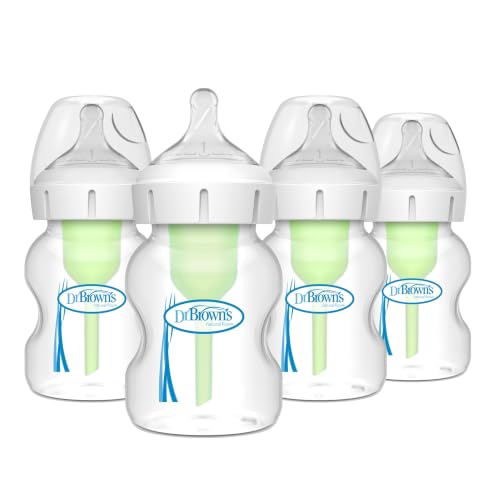
Dr. Brown's Natural Flow Anti-Colic Options+ Wide-Neck Baby Bottles, 5 oz, 4-Pack
Best for: Small starter bottle set before you know preferences
A 4-pack of 5 oz wide-neck bottles with an internal vent that routes air away from the milk. The wide neck is easier to fill and clean than Dr. Brown's older narrow-neck design.
- Internal vent system designed to reduce air ingestion
- Wide neck for easier filling and hand-washing
- Level 1 slow-flow nipple included, sized for newborns
- Dishwasher- and sterilizer-safe (top rack recommended)
Keep in mind: The vent adds a reservoir and insert to wash and reassemble on every bottle.

Yogasleep Dohm Classic White Noise Machine (White)
Best for: Simple fan-based white noise kept away from the crib
A mechanical fan-based white noise machine with a two-speed dial and no app or Wi-Fi. Keep it across the room from the crib, not clipped to the rail.
- Real fan-based white noise, not a looping speaker recording
- Two-speed dial for higher or lower tone
- No lights, app, or Wi-Fi to manage overnight
- Compact enough for a nightstand or dresser top
Keep in mind: Two speed settings only — no fine volume dial, timer, or auto-shutoff.
As an Amazon Associate I earn from qualifying purchases. Mom's Magazine may earn a commission when you buy through links on this page, at no extra cost to you. Learn more.
Frequently Asked Questions
Is it okay to accept a secondhand crib or car seat?
For a car seat, no — buy new, since crash history and expiration dates matter and can't be verified secondhand. For a crib, only if you can confirm it hasn't been recalled and meets current safety standards; when in doubt, buy new.
How many newborn-size outfits do I actually need?
Fewer than most default registry templates suggest — many babies move out of newborn size within a few weeks. A handful of newborn basics plus a heavier stock of 0–3 and 3–6 month sizes tends to fit real growth patterns better than a full newborn wardrobe.
Should I register for a specific baby bottle brand?
Register for a small starter set instead of committing to one brand in bulk. Babies have real preferences for nipple flow and shape that you won't know until they're actually feeding, so it's easier to adjust from a small set than to work through a large stockpile of one that isn't working.
Do I need a diaper pail, or can I use a regular trash can?
A regular lidded trash can works fine, especially if you take it out often. A dedicated diaper pail mainly helps with odor control between trips to the outdoor bin — genuinely useful for some households, optional for others.
Sources & Further Reading
- A Parent's Guide to Safe Sleep — American Academy of Pediatrics (HealthyChildren.org) (reviewed 2026-08-13)
- Car Seat Recommendations for Children — American Academy of Pediatrics (HealthyChildren.org) (reviewed 2026-08-13)
Related Guides
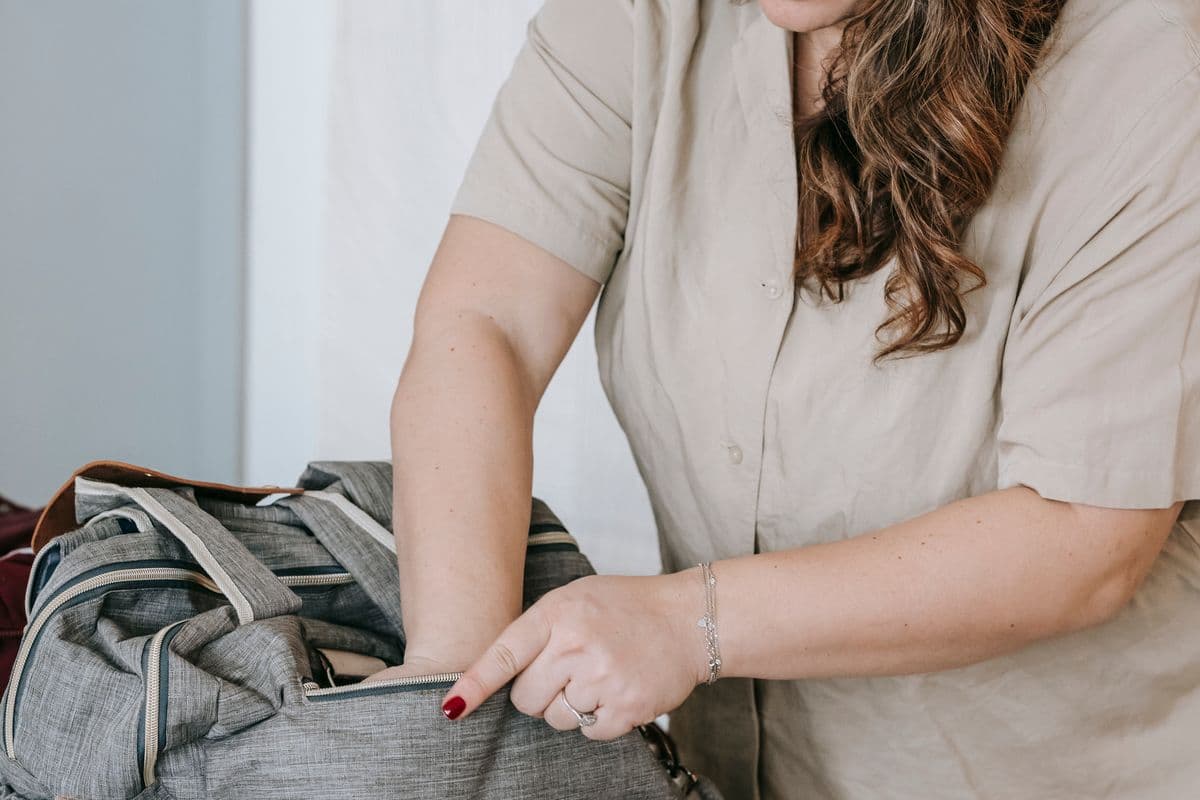
Hospital Bag Checklist for Labor and Delivery
A complete hospital bag checklist for labor and delivery — for you, your baby, and your partner — plus when to actually head in.
How to Choose a Pediatrician: Questions to Ask Before Baby Arrives
When to start looking, where to find candidates, and the questions worth asking at a prenatal meet-and-greet — so you're not choosing your baby's doctor in the exhausted first week home.
Best Baby Bottles of 2026
A researched comparison of anti-colic, breast-like, and glass baby bottles — what actually determines whether a bottle works for your baby, plus four well-reviewed options to start with.
Best Strollers of 2026: Everyday, Travel System, and Lightweight Picks
A researched comparison of everyday, travel-system, and lightweight strollers — how to choose between them, safety basics, and four well-reviewed options to start with.

Best Amazon Essentials Baby Bodysuits of 2026: Long-Sleeve, Short-Sleeve, and Sleeveless Multipacks Compared
A researched comparison of Amazon Essentials' cotton baby bodysuit multipacks — fabric, closures, and sizing that actually matter for a newborn wardrobe, plus which pack to buy for which season and size.
Best Pack 'n Plays and Travel Cribs of 2026
A researched comparison of full-size playards versus ultralight travel cribs — how to pick between them, plus four well-reviewed options to start with.
Best Baby Monitors of 2026
A researched comparison of Wi-Fi and non-Wi-Fi baby monitors — what actually matters when you're choosing one, and four well-reviewed options to start with.
Best Baby Carriers (2026): Wraps, Slings, and Structured Carriers Compared
A researched comparison of stretchy wraps, ring slings, and structured buckle carriers — how to choose between them, hip-safety basics, and four well-reviewed options to start with.
Best Diaper Bags of 2026: Backpacks, Totes, and Budget Picks Compared
A researched comparison of backpack, tote, and budget diaper bags — what actually determines whether a bag earns its keep day to day, plus four well-reviewed options to start with.
Best Baby Noise Machines of 2026: Sound Machines Compared by Use Case
A researched comparison of the best baby noise machines — nursery, all-in-one, and portable sound machines — what actually differs between them, the hearing-safety research worth knowing before you buy, and where to start.
Mom's Magazine Editorial Team
Editorial Team
The Mom's Magazine editorial team researches and writes practical, plainly-sourced guidance for parents and families. Guides are reviewed for accuracy and updated as recommendations change. Where a topic calls for professional expertise, we cite reputable organizations and, for health topics, add a qualified reviewer before publishing.
Newsletter
Get the Weekly Mom List
One short email a week: the most useful guides, activities, and picks for your family. No spam, unsubscribe anytime.