Products
Best Baby Bottles of 2026
A researched comparison of anti-colic, breast-like, and glass baby bottles — what actually determines whether a bottle works for your baby, plus four well-reviewed options to start with.

As an Amazon Associate I earn from qualifying purchases.Some links on this page are affiliate links. If you buy through them, Mom's Magazine may earn a small commission at no extra cost to you. It never changes which products we recommend. How we recommend products.
There's no single best baby bottle — the right one depends on your baby's feeding style, whether you're combination feeding at the breast, and how much cleaning fuss you're willing to deal with. For gassy or refluxy babies, Dr. Brown's Options+ handles colic complaints better than most alternatives because of its internal vent system, though it adds two extra parts to wash per bottle. For combo-feeding, Comotomo's wide, soft silicone nipple mimics the breast shape more closely, which tends to smooth out the back-and-forth between breast and bottle. Philips Avent Natural is a solid, widely available middle ground with replacement nipples sold in almost every drugstore. This is a researched buying guide based on manufacturer specifications and recurring patterns in verified reviews, not a hands-on side-by-side test.
Best for gas and colic
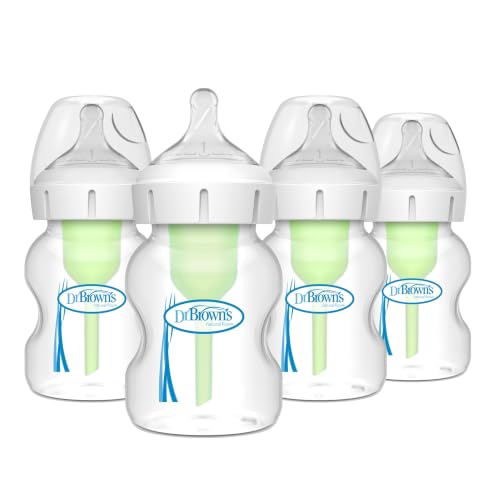
Dr. Brown's Natural Flow Anti-Colic Options+ Wide-Neck Baby Bottles, 5 oz, 4-Pack
Best for: Gassy, refluxy, or colicky babies
Quick picks
| Product | Best for | |
|---|---|---|
| Dr. Brown's Natural Flow Anti-Colic Options+ Wide-Neck Baby Bottles, 5 oz, 4-Pack Best for gas and colic | Gassy, refluxy, or colicky babies | Check price on Amazon |
| Comotomo Silicone Baby Bottle (Gen 2), 5 oz, 2-Pack Best for combo feeding | Combination feeding at the breast and bottle | Check price on Amazon |
| Philips Avent Natural Baby Bottles, Slow Flow, 4 oz, 4-Pack Best widely available | Easy-to-find replacement parts | Check price on Amazon |
| Dr. Brown's Natural Flow Options+ Wide-Neck Glass Baby Bottles, 5 oz, 3-Pack Best glass option | Avoiding plastic and long-term odor or scratch buildup | Check price on Amazon |
How we picked
This is a researched buying guide, not a hands-on lab test — we haven't fed a baby with these side by side. We compared manufacturer specifications and the recurring patterns in verified customer reviews across popular, widely available bottles, focused on the differences that actually change daily feeding: nipple shape and flow, venting design, and how easy each system is to clean and reassemble at 2 a.m. If we add hands-on testing later, we'll update this guide and say so.
Start with flow rate, not brand
Before comparing brands, get the nipple flow right for your baby's age and feeding pace. Most brands label nipples by level (0/newborn through 3 or 4), roughly tied to age, but babies vary — a level that's technically "right" for a 2-month-old can still be too fast for a baby who feeds slowly and too slow for one who chugs. Watch your baby, not just the box.
- Milk pouring out in a steady stream when you tip the bottle upside down means the flow is likely too fast.
- Milk dripping out only a drop at a time, or your baby collapsing the nipple with hard sucking, means it's probably too slow.
- A baby who pulls off, coughs, or lets milk dribble out the sides of their mouth while feeding is often dealing with a flow that's too fast, not a bottle they dislike.
Paced bottle feeding
Holding the bottle more horizontally, pausing every 20–30 seconds, and letting your baby control the pace (rather than gravity-feeding a tilted bottle) reduces overfeeding and gulping — especially useful for a breastfed baby taking an occasional bottle.
Plastic, glass, or silicone
| Material | Weight | Durability | Trade-off |
|---|---|---|---|
| Plastic (polypropylene) | Lightest | Can scratch and cloud after repeated dishwasher cycles | Cheapest, least fragile if dropped |
| Glass | Heaviest | Doesn't scratch, cloud, or retain odors long-term | Breaks if dropped on a hard floor; usually needs a silicone sleeve for grip and drop protection |
| Silicone (whole bottle) | Light, slightly flexible | Very drop-resistant, doesn't scratch | Bulkier in a bottle warmer or bag; fewer size options than plastic or glass |
If you're combination feeding
A narrow, firm nipple can encourage a baby to latch differently at the breast than they do on the bottle, which some parents notice as a rockier transition back and forth. Bottles built around a wide, soft, breast-shaped nipple (Comotomo, Philips Avent Natural) are marketed specifically to ease that switch, though how much it matters varies a lot by baby — some go back and forth on any nipple without issue.
Never microwave a bottle
Microwaving creates uneven hot spots in milk or formula that won't feel hot to the touch on the outside of the bottle but can burn a baby's mouth. Warm bottles in a bowl of warm water or a bottle warmer instead, and always test the temperature on your wrist before feeding.
Signs it's time to size up the flow
- Feeds are taking noticeably longer than they used to, and your baby seems to be working hard for very little milk.
- Your baby falls asleep partway through a feed out of what looks like fatigue rather than fullness.
- Milk barely drips even when you tip the bottle upside down and give it a light shake.
Bottle feeding is usually a short chapter — most families are thinking about first foods well before the first birthday. Our beginner's guide to starting solids covers readiness signs and first foods for when that stage starts, though breast milk or formula (bottle included) stays the main source of nutrition well past that point. Once solids do start, our comparison of high chairs is worth a look before you're shopping for one at 2 a.m. the night before your baby's first spoonful.
If you're still deciding how much of your baby's feeding will happen at the bottle versus the breast, our guide to breastfeeding vs. formula feeding covers that decision directly. And if a gassy, hard-to-soothe evening stretch has you wondering whether it's colic, our guide to colic signs, causes, and what helps covers what actually helps beyond the bottle itself.
Sizing up nipple flow is a short-term fix. When the longer goal is leaving bottles behind, weaning off the bottle covers which feedings to drop first, and open cups for babies plus sippy cups are the cup pages that sit next to that plan.
Our Recommendations
Dr. Brown's Natural Flow Anti-Colic Options+ Wide-Neck Baby Bottles, 5 oz, 4-Pack
Best for: Gassy, refluxy, or colicky babies
An anti-colic bottle with an internal vent system that routes air away from the milk, instead of through it, which is the mechanism behind its reputation for reducing gas and spit-up. The wide neck is easier to fill and clean than Dr. Brown's older narrow-neck design.
- Internal vent system designed to reduce air ingestion
- Wide neck for easier filling and hand-washing
- Level 1 slow-flow nipple included, sized for newborns
- Dishwasher- and sterilizer-safe (top rack recommended)
Keep in mind: The vent system means extra parts — a vent reservoir and insert per bottle — to wash and reassemble correctly every time, which some parents find tedious for daily use.
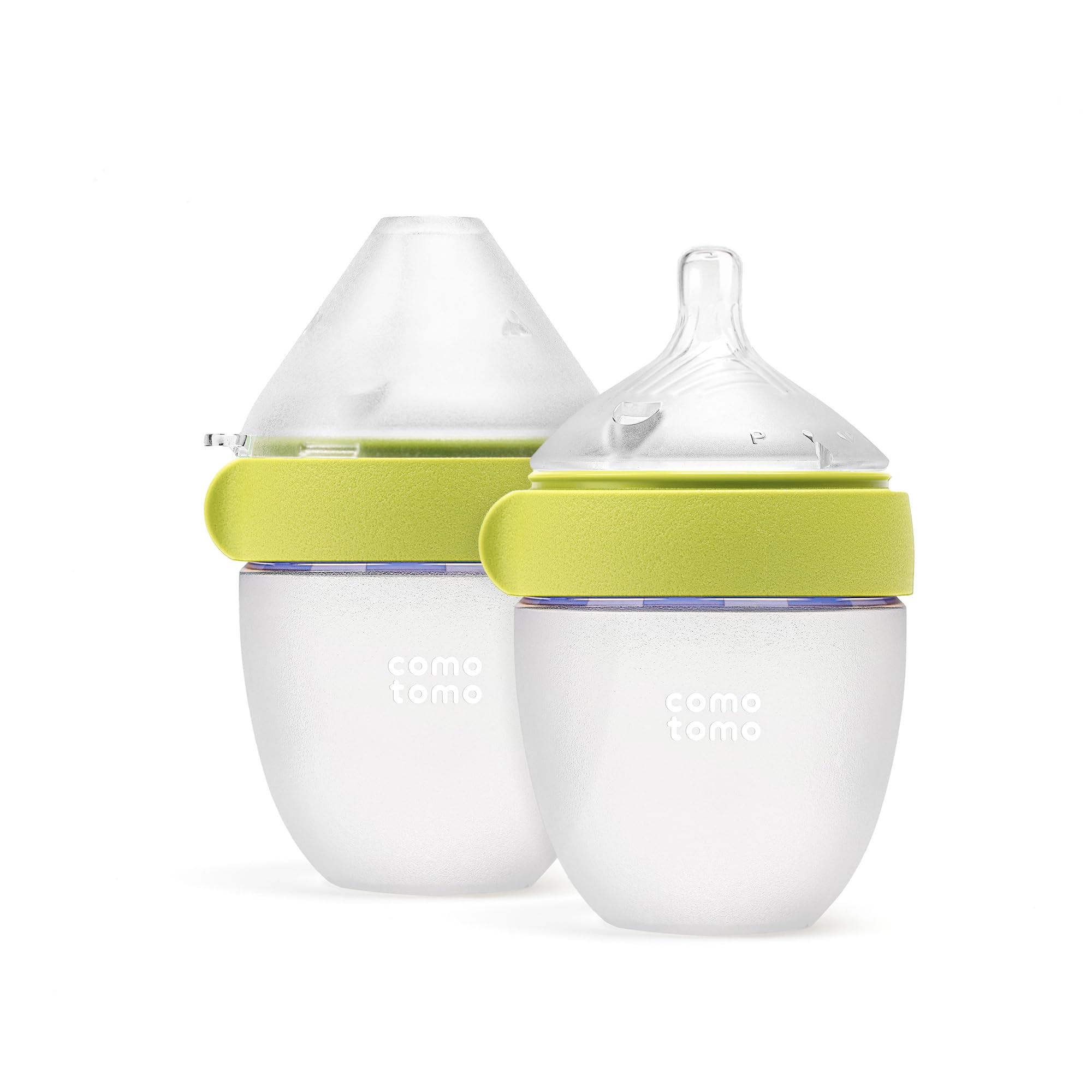
Comotomo Silicone Baby Bottle (Gen 2), 5 oz, 2-Pack
Best for: Combination feeding at the breast and bottle
A soft, squeezable, all-silicone bottle with a wide nipple designed to mimic the breast, including anti-colic vents built into the nipple base rather than a separate reservoir. Popular specifically with families going back and forth between breast and bottle.
- Wide, soft silicone nipple shaped to encourage a breast-like latch
- Anti-colic vents built into the nipple, not a separate part
- Wide mouth for easy filling, scooping formula, and cleaning
- Only two pieces per bottle (body and nipple/cap), simpler to reassemble than vented systems
Keep in mind: The soft silicone body is bulkier than rigid plastic or glass of the same volume, so it takes up more room in a diaper bag or bottle warmer.
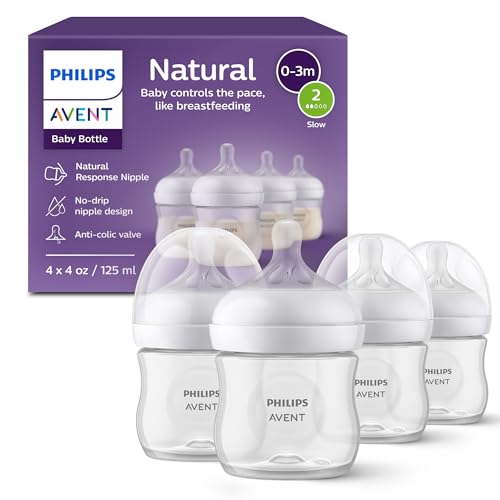
Philips Avent Natural Baby Bottles, Slow Flow, 4 oz, 4-Pack
Best for: Easy-to-find replacement parts
A widely stocked bottle with a wide, flexible nipple and a single anti-colic valve at the base. Its main advantage isn't a standout feature — it's availability: replacement nipples and bottles are sold in most drugstores and big-box stores, which matters when you're out and one goes missing.
- Wide, textured nipple designed to flex like breast tissue
- Single anti-colic valve reduces vacuum buildup during feeding
- Compatible with Philips Avent's breast pumps for a one-brand pumping-to-bottle setup
- Widely stocked in stores, not just online
Keep in mind: The anti-colic performance is generally considered less aggressive than Dr. Brown's internal vent system, so it's a lighter-touch option rather than a targeted fix for significant gas.
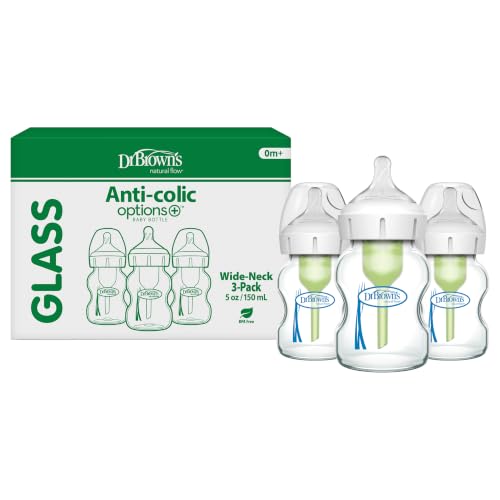
Dr. Brown's Natural Flow Options+ Wide-Neck Glass Baby Bottles, 5 oz, 3-Pack
Best for: Avoiding plastic and long-term odor or scratch buildup
The same internal vent system as Dr. Brown's plastic Options+ line, in borosilicate glass. Glass doesn't retain the sour-milk smell plastic can develop over months of use, and it doesn't cloud or scratch from repeated dishwasher and sterilizer cycles.
- Borosilicate glass body with the same anti-colic vent system as the plastic version
- Doesn't scratch, cloud, or hold odors the way well-used plastic can
- Often paired with a silicone sleeve (sold separately) for grip and drop protection
- Level 1 slow-flow nipple included
Keep in mind: Heavier than plastic, and glass can chip or shatter if dropped on a hard floor without a protective sleeve — most parents add one.
As an Amazon Associate I earn from qualifying purchases. Mom's Magazine may earn a commission when you buy through links on this page, at no extra cost to you. Learn more.
Frequently Asked Questions
How many bottles do I need to start?
Most families start with 4 to 6 bottles — enough to get through a day without washing between every feed, but not so many that you're storing bottles you rarely use. If you're exclusively breastfeeding and only bottle-feeding occasionally, 2 to 3 is usually plenty.
What's the difference between bottle nipple flow levels?
Flow levels (usually numbered 0 or 1 through 3 or 4) control how fast milk moves through the nipple, based on the size and number of holes. Lower numbers are slower flow, meant for younger babies or slower feeders; higher numbers are faster, for older babies who feed efficiently. The right level depends on your baby's feeding pace, not strictly their age — watch for signs of struggling (too slow) or gulping and coughing (too fast) rather than following the box exactly.
Do anti-colic bottles actually help with gas?
Anti-colic vent systems are designed to route air around the milk instead of through it, which reduces the amount of air a baby swallows during feeding — a real mechanism, though how much it helps varies by baby, since gas has multiple causes beyond swallowed air. They're not a guaranteed fix, but they're a reasonable first thing to try for a consistently gassy or fussy-after-feeds baby.
Can I switch bottle brands mid-way?
Yes — there's no medical reason you need to stick with one bottle brand, and plenty of parents mix and match once they figure out what their baby prefers. The main friction is practical: different brands aren't interchangeable part-for-part, so switching means buying a new set rather than swapping a single piece.
Is glass or plastic safer for baby bottles?
Both are considered safe for feeding when you buy current, reputable brands — U.S.-sold baby bottles have been required to be BPA-free since 2012. Glass has an edge on not degrading (scratching, clouding, retaining odor) over years of heavy use, while plastic is lighter and won't shatter if dropped. Neither is unsafe; it's a trade-off between durability and weight/breakage risk.
Sources & Further Reading
- Bisphenol A (BPA) in bottles and cups — U.S. Food and Drug Administration (FDA) (reviewed 2026-08-08)
Related Guides

Best First Baby Foods & Best First Foods for Baby (CDC and AAP Guide)
Best first baby foods and best first foods for baby, in plain CDC and AAP terms: iron-rich starters around 6 months, one food at a time, allergen timing, first-feeding setup (bibs, spoons, cups), and what not to give. Editorially reviewed general information, not medical advice — not a ranked jar list.

Newborn Sleep: What to Expect in the First Weeks
A realistic look at newborn sleep in the first weeks — plus the safe-sleep basics every parent should know.

Best Baby Carriers (2026): Wraps, Slings, and Structured Carriers Compared
A researched comparison of stretchy wraps, ring slings, and structured buckle carriers — how to choose between them, hip-safety basics, and four well-reviewed options to start with.
Hospital Bag Checklist for Labor and Delivery
A complete hospital bag checklist for labor and delivery — for you, your baby, and your partner — plus when to actually head in.
Best High Chair & Best Baby High Chair (2026): Convertible, Slim & Toddler Seats
Best high chair and best baby high chair picks for starting solids through toddler years: slim fold-flat, convertible grow-with-baby, infant recline, and portable booster.

How to Wean Your Baby Off the Bottle: An Age-by-Age Guide
When to start moving from bottle to cup, in AAP terms, and how to actually do it: which feeding to drop first, why the bedtime bottle comes last, a realistic week-by-week approach, and what to do when a toddler protests.
Best Sippy Cups (2026): Spoutless 360, Straw & Open-Cup Transition
Best sippy cups by drinking mechanism — spoutless 360, weighted straw, stainless, open-cup trainers — plus a CDC/AAP age-band transition plan (6 months to ~2 years), spill/mold/travel pitfalls, and AAPD tooth-decay context. Four Amazon picks.
Best Open Cups for Babies and 6-Month-Olds (2026 Buying Guide)
Why open-cup and straw skills matter around 6 months with solids, how they differ from valved sippies, and four researched picks — ezpz Tiny Cup, ezpz Mini Cup + Straw, Munchkin C'est Silicone, and a squeeze straw trainer — with CDC and AAP sources.
Mom's Magazine Editorial Team
Editorial Team
The Mom's Magazine editorial team researches and writes practical, plainly-sourced guidance for parents and families. Guides are reviewed for accuracy and updated as recommendations change. Where a topic calls for professional expertise, we cite reputable organizations and, for health topics, add a qualified reviewer before publishing.
Newsletter
Get the Weekly Mom List
One short email a week: the most useful guides, activities, and picks for your family. No spam, unsubscribe anytime.