Products
Best Baby Noise Machines of 2026: Sound Machines Compared by Use Case
A researched comparison of the best baby noise machines — nursery, all-in-one, and portable sound machines — what actually differs between them, the hearing-safety research worth knowing before you buy, and where to start.
As an Amazon Associate I earn from qualifying purchases.Some links on this page are affiliate links. If you buy through them, Mom's Magazine may earn a small commission at no extra cost to you. It never changes which products we recommend. How we recommend products.
There's no single best baby noise machine — it depends on where and how you'll use it. For a nursery machine that just runs all night, a simple continuous-tone machine like the Yogasleep Dohm Classic or a multi-setting one like the LectroFan Classic is straightforward and doesn't depend on an app or Wi-Fi. If you want one device that grows with your child into a toddler night-light and wake-up clock, an app-connected option like the Hatch Rest+ does more but costs more and adds a Wi-Fi dependency. For strollers, travel, or a second machine at a grandparent's house, a compact clip-on unit like the Yogasleep Hushh is easiest to pack. Whichever type you choose, a 2014 study in Pediatrics found that infant sleep machines can output hazardous sound levels at close range, which is why placement and volume matter as much as the model — see the hearing-safety section below before you plug one in near a crib. This is a researched buying guide based on manufacturer specifications and recurring patterns in verified reviews, not a hands-on side-by-side sound test.
Best simple nursery machine
Yogasleep Dohm Classic White Noise Machine (White)
Best for: A dedicated nursery machine that just runs, with nothing to configure
Quick picks
| Product | Best for | |
|---|---|---|
| Yogasleep Dohm Classic White Noise Machine (White) Best simple nursery machine | A dedicated nursery machine that just runs, with nothing to configure | Check price on Amazon |
| LectroFan Classic White Noise Machine, 20 Non-Looping Fan and White Noise Sounds Best sound variety | Parents who want more precise volume and tone control than a single-dial machine | Check price on Amazon |
| Hatch Rest+ Sound Machine, Night Light, and Time-to-Rise Clock Best long-term value | Families who want one device that lasts from newborn sound machine through toddler wake-up clock | Check price on Amazon |
| Yogasleep Hushh Portable White Noise Machine Best for travel | Strollers, travel, or a permanent backup machine at a grandparent's house | Check price on Amazon |
How we picked
This is a researched buying guide, not a hands-on lab test — we haven't run a sound meter on these side by side yet. We compared manufacturer specifications and the recurring patterns in verified customer reviews across widely available sound machines, grouped by the actual use case that determines which one fits: a fixed nursery machine, an app-connected device meant to last through the toddler years, or a compact unit built for travel. If we add hands-on decibel testing later, we'll update this guide and say so.
| Type | Powered by | Best for | Trade-off |
|---|---|---|---|
| Continuous nursery machine | Plug-in | A fixed nursery spot that just needs to run all night | No app, no schedules — on/off and a volume or speed dial, nothing more |
| App-connected all-in-one | Plug-in + Wi-Fi | Families who want light, sound, and later a wake-up clock in one device | Depends on Wi-Fi and an app; costs more upfront |
| Portable clip-on | USB-rechargeable | Strollers, travel, or a backup at a second household | Not loud enough to be a primary nursery machine in most rooms |
Placement and volume, not just brand
Keep any sound machine as far from the crib or bed as your nursery layout allows, and use the lowest volume that still works — not the maximum. This applies to every type on this list, not just one brand, and it's the single guidance worth following no matter which machine you buy.
Simple, dedicated nursery machines
If a sound machine only needs to do one job — run continuously in one spot, every night — a single-purpose plug-in machine is hard to overthink. The Yogasleep Dohm Classic makes its white noise from an actual small fan rather than a looping speaker recording, which is the reason it's stayed close to its original 1962 design with only a two-speed dial. The LectroFan Classic trades that mechanical simplicity for 20 non-looping digital fan and white-noise variations and a more precise volume dial, for parents who want more control over the exact tone.
One device that grows with your kid
The Hatch Rest+ is an app-connected sound machine, night light, and (once your child is a toddler) a "time to rise" clock that turns a color when it's okay to get up — a feature that's genuinely useful two or three years after the newborn sound-machine stage is behind you. That flexibility comes at a real cost premium over a simple plug-in machine, and it introduces a Wi-Fi dependency: if your router or the app hiccups, remote schedule changes won't go through until it's back, though the machine itself keeps running on its existing settings.
Portable, for strollers, travel, or grandma's house
The Yogasleep Hushh is a small, clip-on unit — about 3.5 inches across — built to attach to a stroller, car seat, or crib rail and run on a rechargeable battery for roughly a day between charges. It only offers a few sound options (bright and deep white noise, plus a surf sound) and isn't loud enough to anchor a full-size nursery on its own, but it's the easiest option to toss in a diaper bag or leave permanently at a grandparent's house so you're not packing and unpacking a nursery machine every visit.
How loud is too loud, and how far away should it be
This is the part of buying a baby noise machine that matters more than which brand you pick. A 2014 study published in the journal Pediatrics — "Infant Sleep Machines and Hazardous Sound Pressure Levels," by Hugh, Wolter, Propst, Gordon, Cushing, and Papsin — measured the sound output of 14 commercially available infant sleep machines at three distances (30, 100, and 200 cm) with the volume turned all the way up. At 30 cm, roughly one foot, every single machine tested exceeded 50 A-weighted decibels, which the study cites as the recommended noise limit for hospital nurseries. Three of the 14 machines exceeded 85 dBA at that same close distance — a level that, sustained for more than 8 hours, surpasses adult occupational noise-exposure limits and carries a real risk of noise-induced hearing loss over time.
What that study means for where you put the machine
The researchers' practical takeaway wasn't "don't use a sound machine" — it was distance and volume. Keep the machine as far from the crib as your room allows rather than clipped to the rail or set on the nightstand right beside it, run it at the lowest volume that still masks household noise, and skip the maximum-volume setting most machines offer by default out of the box. If you're not sure how loud your specific setup is, a free decibel-meter phone app held at crib height gives a rough reading in seconds.
Volume needs also change over the night. A machine set loud enough to help a baby fall asleep during a noisy household evening is often louder than necessary once everyone else is quiet and asleep too. Some parents build a habit of turning the volume down, though not off, once a baby is settled — the Hatch Rest+ and similar app-connected machines can do this on a schedule automatically; on a simple dial machine, it's a manual habit, not a hardware feature.
Age by age: how sound-machine use actually changes
A newborn's noise machine and a toddler's noise machine are doing different jobs, even if it's the same physical device.
- Newborn to about 4 months: the goal is usually replicating the constant whooshing they heard in the womb and masking a startle-prone Moro reflex from waking them. Continuous, unchanging white or fan noise works better here than musical lullabies or sounds that fade out.
- 4 to 18 months: the machine becomes part of the sleep-association chain — dim lights, sound on, into the crib. Consistency matters more than the specific sound at this stage, which is one reason a non-looping machine (no audible click or repeat point) is worth the small premium over a cheap looping speaker.
- 18 months to about 3 years: some families add or switch to an app-connected all-in-one so the same device can start doing double duty as a night light and, eventually, a toddler "time to rise" clock — useful once early wake-ups become a behavior question rather than a biology one.
- Preschool age and up: this is when a sound machine most often becomes a genuine sleep prop rather than a helpful tool — a child who says they can't sleep without it, even at a grandparent's house or a hotel. That's not a crisis, but it's worth a gradual wean if it's limiting where and how your family can travel or sleep.
Common mistakes parents make with sound machines
- Running it at maximum volume by default. Most machines ship with the volume dial wherever it last was in the factory or store, which is often louder than needed for a quiet bedroom.
- Clipping a portable unit directly onto the crib rail or setting a nursery machine on the same nightstand the crib backs up to, instead of putting real distance between the machine and the baby's ears.
- Using a phone with a white-noise app as the sound source, propped inside or right next to the crib. Beyond the volume issue, it puts a screen and a charging cord within a baby's reach — a separate safe-sleep concern, not just a noise one.
- Buying the cheapest looping speaker available. A short, repeating audio loop has a click or seam where it restarts, which light sleepers can hear and wake to, defeating the purpose of masking noise in the first place.
- Never adjusting volume down after the baby is asleep, and never testing whether the child still needs it — the same setting from month 2 often stays untouched through age 3.
Decision framework: nursery, all-in-one, or portable first?
Parents searching for the best baby sound machines — or a baby noise machine / white noise machine for sleep — usually need a use-case match, not a starred ranking. Work this sequence before you compare products:
- Primary sleep space: dedicated nursery nightstand vs travel bag vs both.
- Feature appetite: continuous tone only, vs night-light + toddler wake-up clock later, vs app schedules.
- Power reality: always-plugged outlet vs battery/USB for strollers and hotels.
- Hearing-safety plan: volume well below max, machine away from the crib, and a habit of not cranking overnight — guided by pediatric hearing research, not brand marketing hours.
- Household noise: thin walls and street noise may favor steady mechanical or fan-style sound; quiet suburbs may need less volume than you think.
Map those answers to an approach: simple nursery-only (Yogasleep Dohm Classic, LectroFan Classic), all-in-one that grows into toddler features (Hatch Rest+), or portable clip-on for on-the-go (and often a second machine even if the nursery already has one). The four Amazon picks below illustrate those approaches.
White noise, fan sound, and what the labels usually mean
Product pages mix white noise, pink noise, brown noise, and fan sound loosely. Practically for parents: you want a continuous, non-musical sound that masks sudden household spikes without a start-and-stop loop that babies notice. Mechanical fan-style machines (classic Dohm) create airflow sound without a digital track. Digital machines offer multiple spectra and volume steps. Neither category gets a fabricated superiority score here — pick continuous sound you will actually leave on at a safe level, and confirm the live listing sound options before you buy.
Placement and volume checklist (before the first night)
- Place the machine across the room from the crib when the room allows — not inside the crib, not pressed against the mattress edge.
- Start quieter than you think; walk to the crib and listen at baby ear height rather than judging volume from the doorway.
- Avoid maximum volume as a default. A 2014 Pediatrics study of infant sleep machines found hazardous sound pressure levels were possible at max settings on the devices tested — treat max as a red zone, not a feature.
- Keep cords out of reach; prefer outlet placement behind furniture when you can.
- If you use an app-connected machine, set volume limits and schedules while you are calm in daylight — not at 2 a.m. when everyone is exhausted.
- For travel machines, test the clip and battery before the trip.
Hearing safety is placement + volume
Pediatric guidance and the 2014 Pediatrics infant sleep-machine paper both push parents toward lower levels and distance from the crib. This page is educational, not medical advice — ask your pediatrician if your child has hearing concerns or if you are unsure about nursery sound levels.
When one machine is not enough
A nursery machine that stays plugged in does not solve stroller naps, flights, or a second caregiver house. Many families honestly own two: a simple or all-in-one unit for the primary crib room, plus a compact portable. That is not matching upsell for its own sake — it is matching two different power and size constraints. If budget only allows one purchase first, choose based on where sleep fails most often right now (nursery nights vs on-the-go), then add the other category later.
Weaning off a sound machine, when it's time
Most families never need to think about this — the machine quietly stops mattering as a child gets older and sleeps through more ambient noise on their own. If it has become a hard dependency (meltdowns without it, refusal to nap anywhere it isn't available), the wean looks a lot like weaning off any other sleep prop: lower the volume gradually over one to two weeks rather than switching it off in one night, then shorten how long it runs — bedtime only instead of all night — before removing it altogether. Travel is usually what forces the issue; if a trip disrupts the habit for a few nights, that's not a setback worth fixing at 2 a.m. in a hotel room. Our guide to toddler sleep regressions and sleep props covers the same gradual-fade approach for pacifiers, rocking, and other props, and it applies just as well here.
A sound machine and a solid bedtime routine tend to work best together rather than either one alone — the machine masks noise that would otherwise wake a light sleeper, and the routine gives your baby the predictable cues that actually trigger sleepiness. If you're still working out the basics of newborn sleep, our first-weeks guide is a better starting point than gear. And if you're setting up a second sleep space for travel, our pack 'n play and travel crib guide pairs naturally with a portable sound machine.
Our Recommendations

Yogasleep Dohm Classic White Noise Machine (White)
Best for: A dedicated nursery machine that just runs, with nothing to configure
A mechanical fan-based white noise machine — the same basic design Yogasleep has made since 1962 — built around simplicity rather than features. The main reason to pick it over an app-connected machine is that there's nothing to set up, update, or reconnect to Wi-Fi.
- Real fan-based white noise, not a looping speaker recording
- Two-speed dial for higher or lower tone/volume
- No lights, app, or Wi-Fi to manage overnight
- Compact enough for a nightstand or dresser top
Keep in mind: No volume dial beyond the two speed settings, and no built-in timer or auto-shutoff.

LectroFan Classic White Noise Machine, 20 Non-Looping Fan and White Noise Sounds
Best for: Parents who want more precise volume and tone control than a single-dial machine
A digital sound machine offering 20 non-looping fan and white-noise variations with a fine-grained volume dial, for households that find a single fan tone either too harsh or not quite right.
- 20 non-looping fan and white-noise sound options
- Precise volume dial rather than fixed speed settings
- Compact, lightweight build for travel or a small nursery
- Sleep timer on select models
Keep in mind: No night light, and the range of tone options can feel like more choice than most parents actually need.
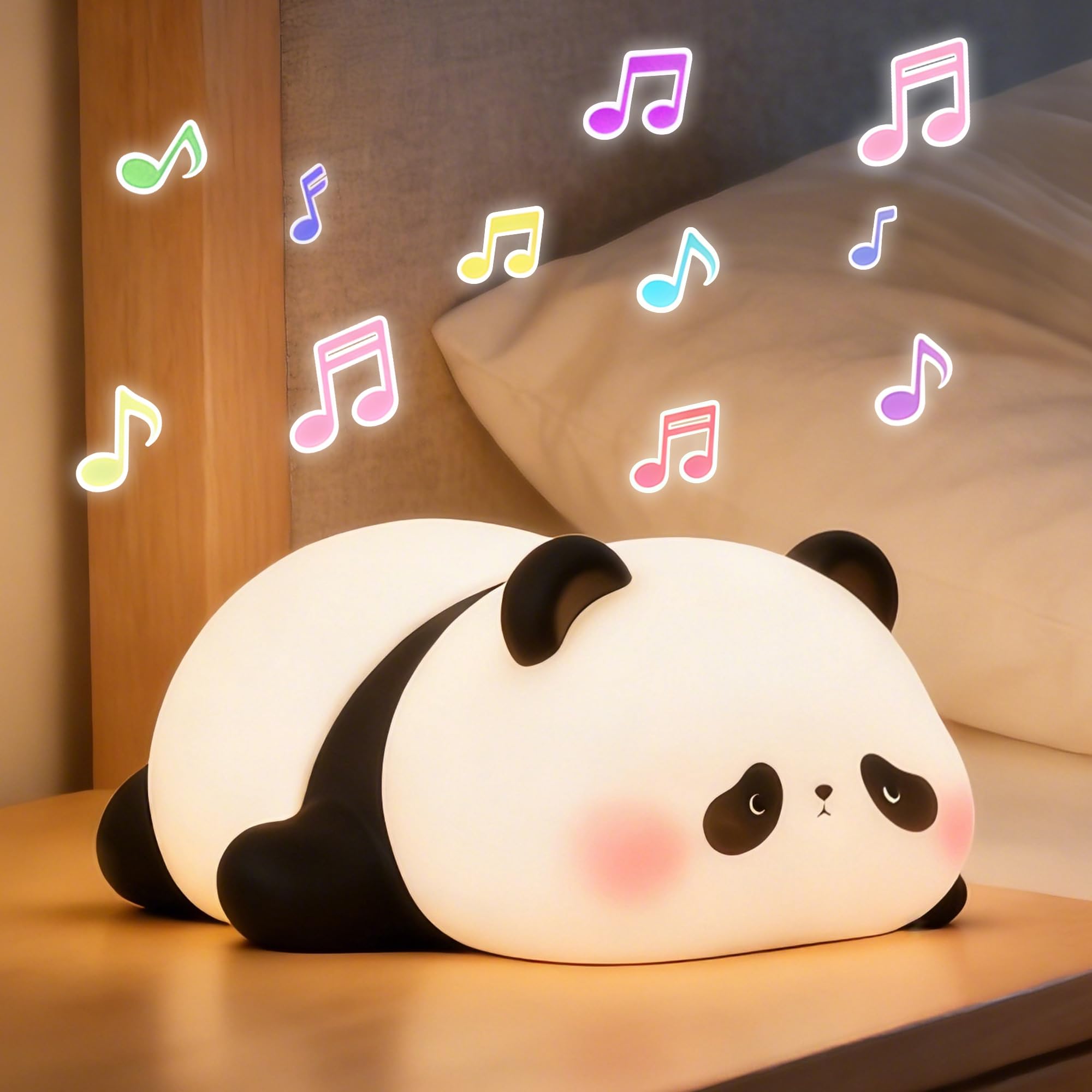
Hatch Rest+ Sound Machine, Night Light, and Time-to-Rise Clock
Best for: Families who want one device that lasts from newborn sound machine through toddler wake-up clock
An app-connected sound machine and night light that adds a toddler-stage 'time to rise' feature later, aimed at replacing a separate wake-up clock purchase down the line rather than just soothing a newborn.
- App control of sound, light color, and schedules over Wi-Fi
- Doubles as a toddler 'time to rise' clock once your child is old enough to understand it
- Adjustable night light in multiple colors
- Optional audio monitoring through the same app
Keep in mind: Costs meaningfully more than a simple plug-in machine, and remote schedule changes depend on a working Wi-Fi connection and app.

Yogasleep Hushh Portable White Noise Machine
Best for: Strollers, travel, or a permanent backup machine at a grandparent's house
A compact, USB-rechargeable sound machine with a flexible clip, meant to attach to a stroller, car seat, or crib rail rather than sit permanently on a nursery shelf.
- Compact clip-on design, about 3.5 inches across
- USB-rechargeable, roughly a day of runtime per charge
- A small number of sound options: bright white noise, deep white noise, and surf
- Amber night light built in
Keep in mind: Not loud enough to fully anchor a normal-sized nursery on its own — it's built to supplement or travel, not replace a primary machine.
As an Amazon Associate I earn from qualifying purchases. Mom's Magazine may earn a commission when you buy through links on this page, at no extra cost to you. Learn more.
Frequently Asked Questions
What is the best baby noise machine?
It depends on the job. For a fixed nursery spot that just needs to run all night with nothing to configure, the Yogasleep Dohm Classic or LectroFan Classic are straightforward, app-free choices. For one device that also becomes a toddler night light and wake-up clock later, the Hatch Rest+ costs more but can replace two or three later purchases. For strollers, travel, or a second household, a compact clip-on like the Yogasleep Hushh is easiest to pack. There's no single winner across all three uses — see the comparison table above for the trade-offs.
Is a baby noise machine safe for hearing?
Used carefully, yes — but a 2014 study in Pediatrics found that all 14 infant sleep machines it tested exceeded the recommended hospital-nursery noise limit (50 dBA) when measured close to a crib at maximum volume, and 3 of the 14 topped 85 dBA at that distance. The fix isn't avoiding sound machines altogether; it's placement and volume. Keep the device across the room rather than inside or clipped to the crib, and use the lowest volume that still works rather than the machine's loudest setting.
How loud should a baby noise machine be?
Loud enough to mask household noise, not louder. There's no single decibel number every pediatrician cites, but the research above used 50 dBA — the hospital-nursery limit — as a reference point, and every tested machine exceeded it at close range on maximum volume. A free phone decibel-meter app held at crib height gives a quick, practical check. If in doubt, turn it down; you can always raise it if a baby is still stirring.
Where should I place a baby noise machine?
Across the room from the crib, not on the same nightstand and not clipped to the crib rail. Distance is the simplest, most effective way to cut the sound level reaching a baby's ears, and it costs nothing regardless of which machine you own.
Can a sound machine become a bad habit?
It can turn into a sleep prop, the same way a pacifier or being rocked to sleep can — a child who insists they can't sleep without it, including at a grandparent's house or on a trip. That's common and not a sign anything went wrong; if it starts limiting where your family can sleep, wean the volume and run-time down gradually rather than removing it all at once. See our guide to sleep regressions and sleep props for the same approach applied to other props.
Do pediatricians recommend baby noise machines?
Many pediatricians are comfortable with them as a sleep aid and don't discourage their use outright, but the hearing-safety research above is specifically why placement and volume come up in that conversation. If your baby has any diagnosed hearing concern, or you're not sure what's safe for your setup, ask your pediatrician directly rather than relying on a general buying guide.
Should I buy a nursery machine and a portable baby noise machine?
Often yes if sleep happens in two places: a plugged-in nursery machine for nights, plus a compact battery or USB machine for strollers, travel, or a second home. If budget only allows one first, buy for where sleep is failing now, then add the other category later. This page's picks illustrate both approaches — not a required two-pack with an invented kit price.
What is the difference between a baby white noise machine and a fan-style sound machine?
Fan-style machines (like a classic Dohm) create continuous airflow sound mechanically. Digital white-noise machines play recorded or generated spectra with multiple volume steps and sometimes apps. Both can mask household noise when used at safe levels away from the crib. Choose based on simplicity, power, and features you will actually use — a lab winner.
Can I use a phone app instead of a baby sound machine?
Some families use phone apps in a pinch on travel nights. Phones bring notification risk, auto-lock behavior, and speakers that invite close placement — which fights hearing-safety habits. A dedicated machine with a physical volume control and no notification banners is usually calmer for every-night nursery use. If you do use a phone temporarily, keep it well away from the crib and disable alerts; this is practical advice, not a medical protocol.
Sources & Further Reading
- Healthy Sleep Habits: How Many Hours Does Your Child Need? — American Academy of Pediatrics (HealthyChildren.org) (reviewed 2026-09-21)
- Infant Sleep Machines and Hazardous Sound Pressure Levels — Pediatrics (American Academy of Pediatrics journal), Hugh SC, Wolter NE, Propst EJ, Gordon KA, Cushing SL, Papsin BC, 2014;133(4):677-681 (reviewed 2026-09-21)
Related Guides
Best Baby Monitors of 2026
A researched comparison of Wi-Fi and non-Wi-Fi baby monitors — what actually matters when you're choosing one, and four well-reviewed options to start with.
Building a Bedtime Routine That Works
A simple, consistent bedtime routine that helps kids wind down and fall asleep more easily.
Newborn Sleep: What to Expect in the First Weeks
A realistic look at newborn sleep in the first weeks — plus the safe-sleep basics every parent should know.
Best Pack 'n Plays and Travel Cribs of 2026
A researched comparison of full-size playards versus ultralight travel cribs — how to pick between them, plus four well-reviewed options to start with.
Toddler Sleep Regressions & Sleep "Props": Why It Happens and What Helps
Why a good sleeper suddenly fights bed or wakes at night, why toddlers cling to odd sleep rituals and comfort objects, and how to ride it out.
Mom's Magazine Editorial Team
Editorial Team
The Mom's Magazine editorial team researches and writes practical, plainly-sourced guidance for parents and families. Guides are reviewed for accuracy and updated as recommendations change. Where a topic calls for professional expertise, we cite reputable organizations and, for health topics, add a qualified reviewer before publishing.
Newsletter
Get the Weekly Mom List
One short email a week: the most useful guides, activities, and picks for your family. No spam, unsubscribe anytime.