Activities
Screen-Free Activities for Kids
Screen-free activities for kids across ages: off-screen play as a habit, AAP Family Media Plan zones, and CDC screen lines.
As an Amazon Associate I earn from qualifying purchases.Some links on this page are affiliate links. If you buy through them, Mom's Magazine may earn a small commission at no extra cost to you. It never changes which products we recommend. How we recommend products.
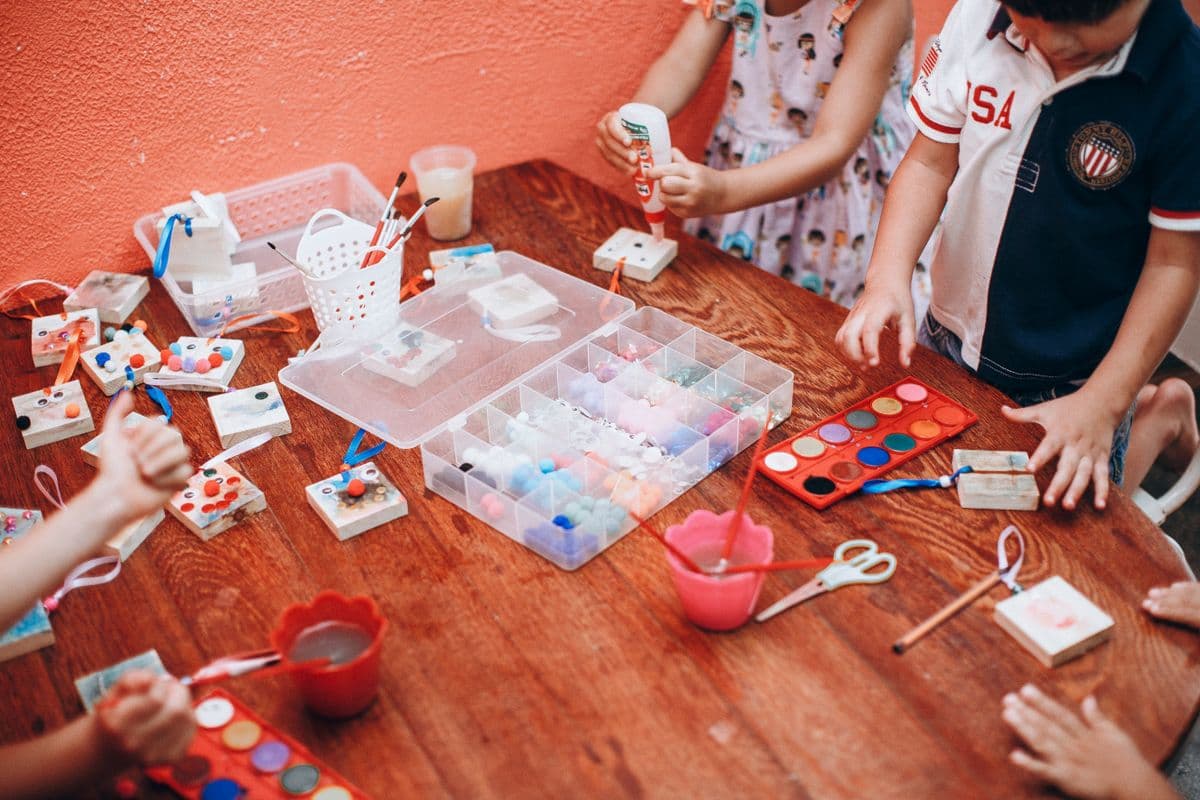
Screen-free activities for kids are the off-screen stretches you protect on purpose: a meal with phones away, a first-two-minutes start on bricks or a puzzle, a short card or board game, a lap book, or a no-supply word game in a waiting room. The AAP Family Media Plan page (last updated January 20, 2026) does not publish a daily screen-hour quota. It asks families to write a personalized plan, set screen-free zones such as the dinner table, homework, and before bed, turn off autoplay and notifications, and keep room for reading, outdoor play, family games, and hobbies so screens do not crowd those out. CDC pages do publish age-specific screen lines: the 18-month milestone page says to limit screen time to video calling with loved ones and that screen time is not recommended for children younger than 2; the 2-year milestone page says to limit screen time to no more than 1 hour a day of a children's program with an adult present; the 1–2 parenting page restates AAP that under 18 months it is best not to use any screen media other than video chatting; the 2–3 and 3–5 parenting pages say no more than 1 hour per day of quality programming, keep TVs out of the bedroom, and develop a media-use plan. This guide covers keeping screens off on purpose across ages. It is not the indoor toddler dump-fill list, not the 2-year or 3-year catalogs, not the mixed-age rainy-day indoor plan, and not the outdoor preschooler yard guide.
Our top pick
LEGO Classic Large Creative Brick Box 10698
Best for: The open-ended brick job on this page, following the 4+ listing age
Quick picks
| Product | Best for | |
|---|---|---|
| LEGO Classic Large Creative Brick Box 10698 | The open-ended brick job on this page, following the 4+ listing age | Check price on Amazon |
| Ravensburger Disney Color Palette 100-Piece Puzzle | A school-age table stretch with a visible finish, following the 6+ listing age | Check price on Amazon |
| Hasbro Candy Land Kingdom of Sweet Adventures | A first color-path board game on this page, following the 3+ listing age | Check price on Amazon |
| Asmodee Spot It! Classic Card Game (2024 Refresh) | A short visual-match card game, following the 6+ / 10-minute listing | Check price on Amazon |
This guide covers screen-free activities for kids: keeping a tablet, TV, or phone off on purpose, and putting a real job in that stretch, across ages. If you want the indoor-only dump-fill list for ages 1 to 3, use indoor activities for toddlers. If you want stacking and first pretend for a just-turned-two, use activities for 2-year-olds. If you want pretend scenes and simple crafts for a just-turned-three, use activities for 3-year-olds. If the weather is wet and you need a mixed-age indoor day, use rainy-day activities for kids. If you want the yard, use outdoor activities for preschoolers. Those pages stay those pages. This one is the habit: named windows, a reachable shelf, a first-two-minutes start, and the four tools already listed below.
Editorially reviewed — not medical advice
This article is editorially reviewed, not medically reviewed. CDC and AAP sources are cited below. We quote what those pages said that day. Ask your child's clinician about media use for your child.
What counts as screen-free time
A screen-free stretch is any window you protect: breakfast with phones in another room, homework without a second screen, the last half-hour before bed, a waiting-room twenty minutes, or a Saturday morning that starts on the floor instead of a tablet. The job in that stretch can be bricks, a puzzle, a first board game, a matching card game, a lap book, or a no-supply word game. The point is not a themed crafts catalog and not a wet-day indoor plan. The point is that the default in that window is off-screen, and the child can see what to do instead.
What CDC and AAP pages actually say
The page was last updated January 20, 2026 and is attributed to the AAP Council on Communications and Media. It asks families to write a personalized plan, including the adults. It names screen-free zones — the dinner table, during homework, and before bed. It asks for one screen at a time. It asks families to turn off autoplay and notifications. It asks families to keep room for other activities — reading, outdoor play, family games, hobbies — so screens do not crowd those out. It asks families to use parental controls and to revisit the plan at the school year, summer, and holidays. It does not publish a daily screen-hour quota.
CDC Milestones by 18 Months, last reviewed May 15, 2026, includes this tip: limit screen time (TV, tablets, phones, etc.) to video calling with loved ones; screen time is not recommended for children younger than 2 years of age; children learn by talking, playing, and interacting with others. That page also tells adults to limit their own screen time when they are with the child. CDC Milestones by 2 Years, last reviewed May 15, 2026, includes this tip: limit screen time to no more than 1 hour a day of a children's program with an adult present. CDC Positive Parenting Tips: Toddlers (1–2 years), dated February 20, 2026, restates AAP: for children younger than 18 months, it is best if toddlers not use any screen media other than video chatting; develop a media-use plan. CDC Positive Parenting Tips: Toddlers (2–3 years), dated January 29, 2026, says keep TVs out of the bedroom, no more than 1 hour per day of quality programming at home, school, or afterschool, and develop a media-use plan. CDC Positive Parenting Tips: Preschoolers (3–5 years), dated February 20, 2026, repeats those same three lines.
Why there's no single screen-hour number
Those CDC lines are age-specific and they do not all say the same thing. Under 2, the 18-month page says screen time is not recommended except video calling. At 2, the 2-year page says no more than 1 hour of a children's program with an adult present. At 2–3 and 3–5, the parenting pages say no more than 1 hour of quality programming. AAP's Family Media Plan page does not add a single daily number on top of that. We are reporting the pages, not averaging them into a house quota.
Make screen-free the default
AAP's plan page names the zones. Use those names if they fit your house: dinner, homework, before bed. You can add a morning start or a waiting-room rule. The plan is a plan, not a punishment. Write it where the family can see it. Include the adults — the same AAP page says the plan is for every family member, including yourself. If a phone is on the table during the screen-free window, the child has already learned the window is optional.
Name the windows
A named window is easier to keep than a vague 'less screens.' Dinner is dinner. The last stretch before bed is the last stretch before bed. Homework is homework. You do not need a new themed activity for each window. You need the screen off and one reachable job in reach. If the window is a meal, the job is the meal. If the window is before bed, the job is a book or a quiet puzzle, not a new craft.
Put an activity shelf where they can see it
The shelf is the argument against 'there's nothing to do.' Keep a small set of off-screen jobs at kid height: the brick box, the puzzle box, the card game, a board game they already know, paper and crayons, a book stack. Rotate when a bin goes stale. Do not dump the whole closet on the floor. For the youngest kids, our indoor toddler guide covers dump-and-fill bins. The shelf here is one a mixed-age house can see without hunting.
Stay for the first two minutes
Most off-screen play fails in the first two minutes, not the first twenty. Sit down. Open the brick bin. Find two pieces that snap. Start the first puzzle edge. Deal the first Spot It! cards. Then you can stand up. CDC pages do not publish a kid attention-span minute count. End the stretch when the child is done. The two minutes are adult time at the start, not a timer the child must fill.
Model the adult phone
AAP's plan page includes you. CDC's 18-month page tells adults to limit their own screen time when they are with the child. If dinner is a screen-free zone, adult phones leave the table too. If before bed is a screen-free zone, the hallway phone stays in the kitchen. Children copy the phone they can see. It is the practical reading of the two pages that ask adults to be in the plan.
Off-screen play that holds across ages
The jobs below are habits, not a 2-year catalog and not a rainy-day fort list. They work because they have a start, they do not need a theme, and they can pause when someone is done. If you want dump-and-fill for a toddler, go to the indoor toddler page. If you want stacking and first pretend for a 2-year-old, go to the 2-year page. If you want a wet-day indoor plan, go to rainy-day. If you want the yard, go to outdoor preschoolers.
Hands and a job
Open-ended building is the cleanest off-screen job we already list on this page. The LEGO Classic Large Creative Brick Box listing is titled for ages 4–99, 790 pieces, with a storage bin. Follow the age on that box. A 4-year-old and an older sibling can share the same bin without a script. The first two minutes are finding two bricks that snap. Then the child builds whatever they want. When they are done, the bin closes. That is the whole job.
A picture that becomes a whole
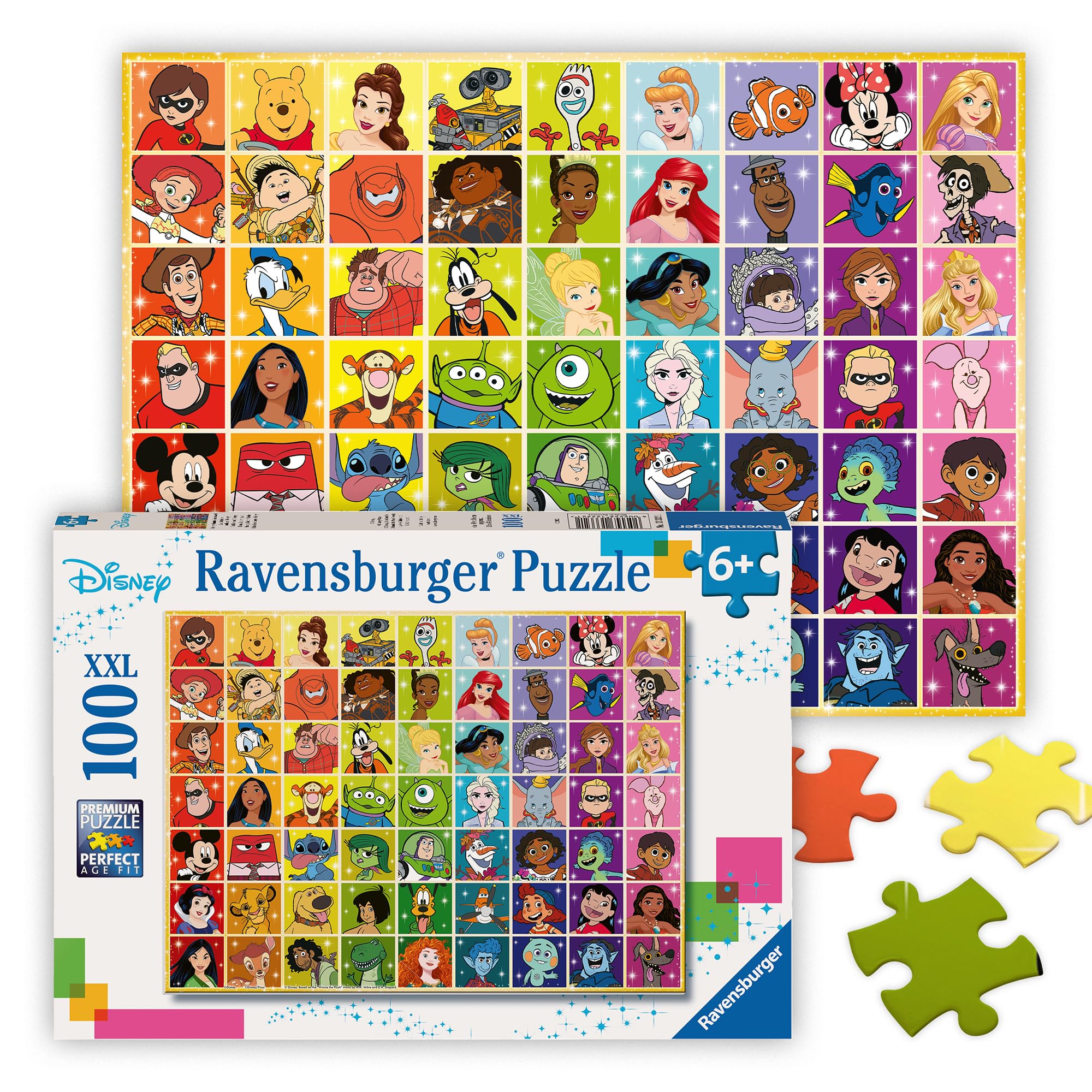
A puzzle is a screen-free stretch with a visible finish. The Ravensburger listing is Disney Color Palette, 100 pieces, children age 6+. The listing says 6+. A 100-piece puzzle is a school-age table job, not a toddler inset. If you need a first puzzle for a younger child, that belongs on the 2-year or 3-year page, not as a fake 3+ label on a 100-piece box.
A shared table game
A first board game and a short matching card game are how a mixed-age house shares a table without a tablet in the middle. Candy Land Kingdom of Sweet Adventures is the listing: ages 3 and up, Amazon exclusive. Spot It! Classic 2024 Refresh is the listing: ages 6+, 2–8 players, 10-minute playtime. Those two ages are different on purpose. Candy Land is the first color-path game. Spot It! is a fast visual match.
Words and no supplies
Waiting rooms, grocery lines, and car rides are screen-free windows that do not need a bin. I Spy from the seat you are in. Twenty questions. A story you pass back and forth, one sentence each. 'I am thinking of something in this room.' Those are screen-free activities. They are not a rainy-day fort and they are not a yard scavenger hunt. They are the habit when the shelf is not in the room.
The same dress-up box gets a seasonal boost once Halloween is on the calendar. Our toddler Halloween costume buying guide covers which costume types pass a basic safety check for this age — flame resistance, mask-free options, and what to skip on a light-up accessory.
A scan table: the moment and the off-screen swap
This table is a habit map, not a ranked list and not a rainy-day indoor plan. Use the sibling URLs when the moment is actually those pages.
| The moment | The off-screen swap | Stay on this page or hand off |
|---|---|---|
| Meal, homework, or before bed | Named screen-free zone from the AAP plan page; phones leave the table | This page — Family Media Plan zones |
| Saturday morning 'I'm bored' | First two minutes on the brick bin or the puzzle already on the shelf | This page — hands-and-a-job |
| Mixed-age table, ten minutes | Candy Land (listing age 3+) or Spot It! (listing age 6+, 10-minute playtime on the listing) | This page — the two table games already here |
| Waiting room or grocery line | I Spy, twenty questions, pass-the-story — no supplies | This page — words and no supplies |
| Toddler wants to dump and fill | Bowls, water, dry beans — not this page's brick box | Hand off: indoor-activities-for-toddlers |
| A 2-year-old wants stacking and first pretend | Age-2 catalog, not a 100-piece puzzle | Hand off: activities-for-2-year-olds |
| A 3-year-old wants pretend and simple crafts | Age-3 list, not this habit page | Hand off: activities-for-3-year-olds |
| The day is wet and everyone is stuck inside | Mixed-age indoor wet-day plan | Hand off: rainy-day-activities-for-kids |
| The yard is open and you want outside | Outdoor preschooler yard guide | Hand off: outdoor-activities-for-preschoolers |
The four tools on this page
LEGO Classic Large Creative Brick Box 10698
The age on that title is 4–99. Follow the box. This is the open-ended brick job on this page: snap two pieces, then build. The storage bin is why it belongs on a shelf you can close.
Check price on AmazonLEGO Classic Large Creative Brick Box 10698
Ravensburger Disney Color Palette 100-piece puzzle
The listing age is 6+, not 3+. A 100-piece puzzle is a school-age table stretch with a visible finish. If a younger child wants a first puzzle, that is a different box on a different page.
Check price on AmazonRavensburger Disney Color Palette 100-Piece Puzzle
Hasbro Candy Land Kingdom of Sweet Adventures
The listing age is 3 and up. This is the first color-path board game on this page. You do not need to read. You do need a table and a few minutes. End when the child is done.
Check price on AmazonHasbro Candy Land Kingdom of Sweet Adventures
Asmodee Spot It! Classic 2024 Refresh
Classic Card Game (2024 Refresh) - Eco-Blister Edition, 5-in-1 Visual Perception Game, Ages 6+, 2-8 Players, 10 Minute Playtime. The listing age is 6+. The listing playtime is 10 minutes. The listing player count is 2–8.
Check price on AmazonAsmodee Spot It! Classic Card Game (2024 Refresh)
When they say they are bored
Bored is often the first two minutes, not a missing theme. Point at the shelf. Sit down and start one job. Do not offer the tablet as the next option in the same breath. If the child is a toddler who wants to dump, that is the indoor toddler page. If the child is 2 and wants stacking, that is the 2-year page. If the day is wet and the house is climbing the walls, that is rainy-day. If the yard is open, that is outdoor preschoolers. This page's answer to bored is the named window and the shelf, not a new crafts dump.
CDC pages do not publish a daily 'screen-free hours you must fill' number. AAP's Family Media Plan page does not either. Protect the windows you named. Do not invent a quota of off-screen hours to feel like you complied. If a clinician has given your family a different media plan, follow the clinician.
What this page is not
Looking for something more specific? Indoor activities for toddlers covers dump-and-fill, first indoor jobs, and toddler setup. Activities for 2-year-olds covers stacking and first pretend play. Activities for 3-year-olds covers pretend play and simple crafts. Rainy-day activities for kids is a wet-day indoor plan for a mixed-age house. Outdoor activities for preschoolers covers the yard. This guide is about the off-screen habit and the four tools above.
Sources
Another kid in the house does a lot of this work for you. If you're thinking about inviting one over, the unwritten rules of playdates walks through timing, food, and the questions most parents feel awkward asking out loud.
Our Recommendations

LEGO Classic Large Creative Brick Box 10698
Best for: The open-ended brick job on this page, following the 4+ listing age
Follow that 4–99 age. Snap two bricks, then build. The bin is why it belongs on a shelf you can close.
- Amazon listing: LEGO Classic Large Creative Brick Box 10698, 790 pieces, storage bin, ages 4-99
- Open-ended build — no official set of builds required on this page
- Shelf tool for a mixed-age house once the youngest can follow the 4+ label
Keep in mind: Listing age is 4+. Small pieces are not a toddler dump-fill bin. That job sits on indoor-activities-for-toddlers. Sit together if a younger sibling is in the room.
Ravensburger Disney Color Palette 100-Piece Puzzle
Best for: A school-age table stretch with a visible finish, following the 6+ listing age
The listing age is 6+, not 3+. A 100-piece puzzle is not a first toddler inset. A younger first puzzle belongs on the 2-year or 3-year page.
- Amazon listing: Ravensburger Disney Color Palette, 100 pieces, children age 6+
- Visible finish — the picture is whole or it is not
- Screen-free table job for a school-age child, not a 3+ inset
Keep in mind: One hundred pieces is a school-age job. A younger sibling will scatter it. If you need a first chunky puzzle, that is a different box on a different page.

Hasbro Candy Land Kingdom of Sweet Adventures
Best for: A first color-path board game on this page, following the 3+ listing age
You do not need to read. You do need a table. End when the child is done.
- Amazon listing: Candy Land Kingdom of Sweet Adventures, ages 3 and up, Amazon exclusive
- Color-path game — no reading required
- Mixed-age table tool for a house that already has a 3-year-old
Keep in mind: Luck-based path games can feel long if a child wants a winner they earned. End the game when they are done. Not a 2-year stacking toy.

Asmodee Spot It! Classic Card Game (2024 Refresh)
Best for: A short visual-match card game, following the 6+ / 10-minute listing
Classic Card Game (2024 Refresh) - Eco-Blister Edition, 5-in-1 Visual Perception Game, Ages 6+, 2-8 Players, 10 Minute Playtime.
- Amazon listing: Spot It! Classic 2024 Refresh, ages 6+, 2–8 players, 10-minute playtime
- Fast visual match — one shared symbol per pair of cards
- Short enough for a named window without becoming a themed crafts dump
Keep in mind: Listing age is 6+. Fast matching can frustrate a younger sibling. That is a handoff to Candy Land (3+) or to the 2-year / 3-year pages, not a reason to ignore the 6+ label.
As an Amazon Associate I earn from qualifying purchases. Mom's Magazine may earn a commission when you buy through links on this page, at no extra cost to you. Learn more.
Frequently Asked Questions
What are good screen-free activities for kids?
A good screen-free activity is one you can start in two minutes and end when the child is done: open-ended bricks, a puzzle with a visible finish, a first board game, a short matching card game, a lap book, or a no-supply word game in a waiting room. This page covers that habit across ages. Indoor toddler dump-fill sits on indoor-activities-for-toddlers. Age-2 stacking and first pretend sit on activities-for-2-year-olds. Age-3 pretend and crafts sit on activities-for-3-year-olds. A wet-day indoor plan sits on rainy-day-activities-for-kids. The yard sits on outdoor-activities-for-preschoolers.
How much screen time is okay for kids?
CDC Milestones by 18 Months (last reviewed May 15, 2026): limit screen time to video calling with loved ones; screen time is not recommended for children younger than 2. CDC Milestones by 2 Years (last reviewed May 15, 2026): no more than 1 hour a day of a children's program with an adult present. CDC 1–2 parenting (February 20, 2026): under 18 months, AAP restated — no screen media other than video chatting. CDC 2–3 (January 29, 2026) and 3–5 (February 20, 2026): no more than 1 hour per day of quality programming, TVs out of the bedroom, and a media-use plan. AAP Family Media Plan (updated January 20, 2026) does not publish a daily screen-hour quota. Ask your child's clinician for your child.
How do I get my child to play without a screen?
Name the windows (AAP's plan page names dinner, homework, and before bed). Put a small activity shelf where they can see it. Stay for the first two minutes of the bricks, the puzzle, or the cards. Include the adults — the same AAP page says the plan is for every family member, including yourself, and CDC's 18-month page tells adults to limit their own screen time when they are with the child. Do not offer the tablet as the next option in the same breath as 'I'm bored.'
What if they say they are bored after two minutes?
Bored is often the start, not a missing theme. Sit down and start one job from the shelf. CDC pages do not publish a kid attention-span minute count. End the stretch when the child is done. If the child is a toddler who wants to dump and fill, that is indoor-activities-for-toddlers. If they are 2 and want stacking, that is activities-for-2-year-olds. If the day is wet, that is rainy-day-activities-for-kids. If the yard is open, that is outdoor-activities-for-preschoolers.
What screen-free games work for mixed ages?
The two table games on this page are Candy Land Kingdom of Sweet Adventures (listing: ages 3 and up) and Spot It! Classic 2024 Refresh (listing: ages 6+, 2–8 players, 10-minute playtime). Those ages are different on purpose. The brick bin listing is ages 4–99. The puzzle listing is 100 pieces, age 6+. A younger child who needs dump-fill or stacking belongs on the toddler or 2-year page, not on a 100-piece puzzle.
What is a family media plan?
The AAP Family Media Plan page (last updated January 20, 2026) asks families to write a personalized plan, including the adults; set screen-free zones such as the dinner table, homework, and before bed; use one screen at a time; turn off autoplay and notifications; keep room for reading, outdoor play, family games, and hobbies; use parental controls; and revisit the plan at the school year, summer, and holidays. That page does not publish a daily screen-hour quota. CDC 1–2, 2–3, and 3–5 parenting pages also say to develop a media-use plan.
Do I need to buy the products on this page?
No. Paper, crayons, a library book, and a no-supply word game are screen-free without a purchase. If you already own bricks, a puzzle, or a first board game, use those.
Is this the rainy-day page, the outdoor page, or the 2-year page?
No. This guide is about screen-free, off-screen play across ages. For a wet-day indoor plan, see our rainy-day activities guide. For the yard, see outdoor activities for preschoolers. Our age guides for 2-year-olds and 3-year-olds and our indoor toddler guide go deeper on those ages.
Sources & Further Reading
- How to Make a Family Media Plan — American Academy of Pediatrics / HealthyChildren.org (reviewed 2026-08-21)
- Important Milestones: Your Child By 18 Months — Centers for Disease Control and Prevention (reviewed 2026-08-21)
- Important Milestones: Your Child By Two Years — Centers for Disease Control and Prevention (reviewed 2026-08-21)
- Positive Parenting Tips: Toddlers (1–2 years old) — Centers for Disease Control and Prevention (reviewed 2026-08-21)
- Positive Parenting Tips: Toddlers (2–3 years old) — Centers for Disease Control and Prevention (reviewed 2026-08-21)
- Positive Parenting Tips: Preschoolers (3–5 years old) — Centers for Disease Control and Prevention (reviewed 2026-08-21)
Related Guides
Indoor Activities for Toddlers
Indoor activities for toddlers ages 1 to 3: dump, fill, and scoop play, short setups, and close-supervision notes from CDC and AAP pages.
Activities for 2-Year-Olds
Activities for 2-year-olds and just-turned-twos: repetition, dump and fill, climbing and dancing, stacking, naming and singing. Based on CDC 2-year milestones and AAP toy-safety guidance.
Activities for 3-Year-Olds
Activities for 3-year-olds that match just-turned-three play: pretend scenes, simple crafts, early counting, helper jobs, and one outdoor outing. Based on CDC 3-year milestones and AAP pretend-play and toy-safety guidance.
Rainy Day Activities for Kids
Rainy day activities for kids, sensory activities for rainy days at home, and rainy day preschool activities you can actually run indoors: forts, obstacle courses, scavenger hunts, sensory bins, and dough and sand on a tray — with indoor-play notes from AAP and CDC pages. Editorially reviewed — not medical advice.

Outdoor Activities for Preschoolers
Outdoor activities for preschoolers you can actually run: educational backyard play, no-equipment games, chalk and bubbles, a scavenger hunt, and sun, water, and playground notes from AAP and CDC pages. Editorially reviewed — not medical advice.
Mom's Magazine Editorial Team
Editorial Team
The Mom's Magazine editorial team researches and writes practical, plainly-sourced guidance for parents and families. Guides are reviewed for accuracy and updated as recommendations change. Where a topic calls for professional expertise, we cite reputable organizations and, for health topics, add a qualified reviewer before publishing.
Newsletter
Get the Weekly Mom List
One short email a week: the most useful guides, activities, and picks for your family. No spam, unsubscribe anytime.