Activities
Indoor Activities for Toddlers
Indoor activities for toddlers ages 1 to 3: dump, fill, and scoop play, short setups, and close-supervision notes from CDC and AAP pages.
As an Amazon Associate I earn from qualifying purchases.Some links on this page are affiliate links. If you buy through them, Mom's Magazine may earn a small commission at no extra cost to you. It never changes which products we recommend. How we recommend products.
Indoor activities for toddlers are the short, one-step setups a 1- to 3-year-old can repeat: dump a cup, fill it again, scoop dry oats, nest two bowls, put a block in a container, climb off the couch cushion you are spotting. The CDC 1-year milestone page lists putting something in a container, like a block in a cup. The CDC 18-month tips page names putting blocks or other items in and out of containers. The CDC 2-year tips page names plastic containers, spoons, or a funnel in the tub. That dump-fill-scoop loop is what this guide is built around. CDC pages do not publish a toddler attention-span minute count or an indoor-hour quota. This page is not the 2-year developmental catalog, not the 3-year pretend-and-craft list, not the mixed-age rainy-day indoor plan, not the outdoor preschooler yard guide, and not the screen-free habit page.
Our top pick
Melissa & Doug Safari Wooden Chunky Puzzle (8 pieces)
Best for: A sit-together first puzzle that matches CDC simple-puzzle language, not a ranked toy
Quick picks
| Product | Best for | |
|---|---|---|
| Melissa & Doug Safari Wooden Chunky Puzzle (8 pieces) | A sit-together first puzzle that matches CDC simple-puzzle language, not a ranked toy | Check price on Amazon |
| Toddler Stacking and Nesting Cups | The dump, fill, nest, and scoop loop | Check price on Amazon |
| Play-Doh Starter Set (9-piece kit, 4 cans) | Supervised table squish for a toddler near 3, following the 3+ listing age | Check price on Amazon |
| Esjay Busy Board (pink multipage) | Sitting together to try large fasteners, which maps to CDC 2-year knob-and-button language | Check price on Amazon |
Indoor toddler activities matter most when the child is one, two, or just turning three, the door is closed, and you need a setup that takes a minute. This page is that list. A just-walking one-year-old and a talking two-year-old are not the same child, but they share the same indoor engine: dump, fill, scoop, nest, knock down, do it again. If you want the age-stage catalog of how twos learn, use activities for 2-year-olds. If you want pretend scenes, an activity box, early counting, helper jobs, and one outdoor outing for a just-turned-three, use activities for 3-year-olds. If the weather is wet and you need a mixed-age indoor day with forts and scavenger hunts, use rainy-day activities for kids. If you want the yard, sun, water, chalk, and playground page, use outdoor activities for preschoolers. If the job is keeping screens off on purpose, use screen-free activities for kids. This guide covers indoor toddler play for ages 1 to 3.
Editorially reviewed — not medical advice
Mom's Magazine editorial staff wrote this page using the CDC and AAP pages named in the sources list. It is not medically reviewed. It is not a milestone screener, not a diagnosis, and not a substitute for your child's clinician. If your child is not meeting milestones, has lost skills they used to have, or you are worried, the CDC milestone pages say to talk with the doctor, ask about developmental screening, and look at early-intervention help through the CDC FindEI page.
What indoor toddler play actually is
The CDC 1-year milestone page, last reviewed May 15, 2026, is the youngest map this article uses. CDC says milestones are things most children (75% or more) can do by a certain age. The page is a checkpoint, not a test you score on the kitchen floor. The cognitive example that belongs on an indoor page is this one: puts something in a container, like a block in a cup. Other 1-year examples on that page include looking for a toy you hide under a blanket, playing pat-a-cake, and picking things up between thumb and pointer finger. CDC's 1-year tips also include giving pots and pans or a small drum so the child can make noise, playing together with blocks, and letting the child push empty boxes. That is indoor play. It is not a worksheet.
The CDC 18-month milestone page, last reviewed May 15, 2026, adds the next picture. Most children this age walk without holding on, climb on and off a couch or chair without help, scribble, and play with toys in a simple way, like pushing a toy car. The tip on that page this guide is built around: play with your child by rolling balls back and forth, pushing toy cars, and putting blocks or other items in and out of containers. CDC 18-month social language includes moving away from you but looking to make sure you are close by. That is why a short indoor setup still needs you in the room. It is not independent preschool time.
The CDC 2-year milestone page, last reviewed May 15, 2026, names holding a container in one hand while taking the lid off with the other, trying switches, knobs, or buttons on a toy, playing with more than one toy at the same time (their example is toy food on a toy plate), kicking a ball, running, and eating with a spoon. The 2-year tips on that page include giving toys that do something when a button is pushed, helping with simple puzzles, encouraging block towers you take turns knocking down, and letting the child play with sand toys or plastic containers, spoons, or a funnel in the tub or a sandbox. The tub version of that last tip is indoor. The sandbox version is not this page; that belongs on the outdoor preschooler article when you can go out.
CDC's toddlers 1–2 parenting page (last reviewed February 20, 2026) says a toddler this age will seem to be moving continually — running, kicking, climbing, or jumping — and to let them be active. It also names matching games such as shape sorting and simple puzzles, talking and adding to words they start, and keeping a close eye because dangerous situations can happen quickly. CDC's toddlers 2–3 parenting page (last reviewed January 29, 2026, opened the same day) says to encourage free play as much as possible because it helps a toddler stay active and strong and develop motor skills, and to set up a special time to read.
What CDC doesn't put a number on
The CDC pages do not publish a toddler attention-span minute count. We are not printing 5 minutes, 8 minutes, or 15 minutes as if CDC wrote it. End the bin when the child walks away. CDC physical-activity guidance for ages 3 through 5, last reviewed December 4, 2025, says preschool-aged children should be physically active throughout the day. The 60-minutes-or-more target on that same page is written for ages 6 through 17. A one-year-old and a two-year-old are not those age bands. We are not applying either number as an indoor-hour quota. Sleep is also not a play quota: CDC lists 11 to 14 hours per 24 hours including naps for ages 1 to 3.
Dump, fill, and scoop — the indoor engine
If you only remember one setup from this page, remember this one. Put a wide, stable bowl on the floor or a low table. Put a second cup or scoop next to it. Fill the bowl with something clearly too large to swallow: large dry pasta, dry oats if you are sitting there, nesting cups, or leftover clean lids. Let the child dump the cup, fill it, dump it again. CDC already named the 1-year version (a block in a cup) and the 18-month version (in and out of containers). You do not need a themed sensory kit. You need a bowl, a cup, and you within arm's reach.
That loop is the work. A toddler who empties the same bowl twelve times is not failing the activity. They are confirming they can make the bowl empty and full. CDC 2-year language about holding a container and taking the lid off is the same job with a lid added. If they would rather stack the cups than scoop, follow the stacking. If they would rather carry the empty bowl across the room, that is still the activity. The goal is engaged indoor play, not compliance with your plan.
- Two bowls and a cup: dump from one into the other. Switch which bowl is full.
- Nesting cups only: stack, nest, knock down, stack again. The household version of the stacking-cup set on this page.
- A muffin tin and large pom-poms or leftover clean jar lids too big for a mouth: one object per cup. Stay there.
- A cardboard box with a slot cut in the lid: post a block or a large lid through the slot, open the box, dump, repeat.
- Kitchen leftover spoons and a dry-oat bowl at the table, not on carpet, with you sitting in the next chair.
Size it up or skip it
AAP's choking-prevention page, updated February 27, 2026, says babies and toddlers are at the highest risk because they explore by putting things in their mouths, and that balloons, balls, marbles, pieces of toys, and small round foods cause the most choking deaths. Household items on that page include coins, marbles, toys with small parts, toys that can be squeezed to fit entirely into a child's mouth, small balls, pen or marker caps, and button or lithium coin batteries. Dried beans, rice, and small pasta are not a 1-year-old floor bin. Use objects clearly larger than a mouth, or sit at the table and put the bin away when you stand up.
Short setups you can put out in a minute
Indoor toddler play fails when the setup takes longer than the play. These need almost nothing and come down as fast as they go up. Put out one or two, not a room of stations. CDC 18-month language is that the child moves away but looks to make sure you are close by. A smaller selection in one spot is easier to watch than six corners of the house.
- Scoop and pour: the bowl-and-cup loop above.
- Painter's-tape line on a hard floor: walk it, sit on it, drive a large car along it. Do not use packing tape on wood finish.
- One couch cushion on the floor: climb on, climb off. CDC 18-month movement includes climbing on and off a couch or chair without help. You are spotting. The cushion is the floor version, not a dresser climb.
- A cardboard box: sit in it, push it, drop a block into it. CDC 1-year tips include letting a child push empty boxes.
- A board book in your lap: CDC 1-year tips include reading books and talking about pictures; CDC 18-month social language includes looking at a few pages with you; CDC 2–3 parenting says to set up a special time to read.
- Pots, lids, and a wooden spoon from a low cupboard CDC 1-year already named as noise-making play. Check that nothing small can come off.
None of these is a rainy-day fort, a house scavenger hunt, or a themed indoor camping day. Those belong on the rainy-day page. None of these is a circle-drawing craft or a leftover-box clinic. Those belong on the 3-year page. This list stays on one-step indoor toddler play.
Match the setup to the energy you actually have
CDC's 1–2 page says the toddler will seem to be moving continually and to let them be active. Offering only a puzzle to a child who is climbing the couch arm is how the afternoon breaks. Offering only a cushion climb to a child who is already rubbing their eyes is how you get a bigger crash. Read the room, then pick from the matching list. We are still not turning that into a kitchen-timer program.
When they need to move
- Cushion on, cushion off, then a taped line back to you.
- Push the empty box from the rug to the door. CDC 1-year tips include push toys and empty boxes.
- Roll a large soft ball back and forth. CDC 18-month tips name rolling balls; CDC 2-year tips name giving balls to kick, roll, and throw. Keep the kick on the floor, not at a lamp.
- March or animal-walk from the sofa to the kitchen doorway and back. You are the other end of the line.
- Dance while you pause the music so they freeze. That is listening plus movement. Skip balloons — AAP keeps balloons as a choking risk through age 8.
When they need to sit
- The dump-and-fill bowl at the table.
- A chunky puzzle with a picture under each piece. CDC 1–2 parenting names simple puzzles; CDC 2-year tips name simple puzzles with shapes, colors, or animals.
- A board book in a lap, not a stack of eight books on the floor.
- A few nesting cups and nothing else.
- A busy board or a toy with large knobs, if you are sitting there. CDC 2-year cognitive language includes trying switches, knobs, or buttons.
Sandwich the energy, then stop inventing
On a long indoor day, one movement setup and one sit-down setup is enough. Dance or a cushion climb, then the oat bowl, then a book. You do not owe a third invention every twenty minutes. If nothing is landing, check hunger, sleep, and whether they want you rather than a bin — that section is below.
Water and other sensory play — stay next to it
A little water is the indoor toddler activity that looks calm and is not. CDC's drowning-prevention page, last reviewed September 29, 2025, says more children ages 1 to 4 die from drowning than from any other cause of death. Drowning happens in seconds and is often silent. It can happen any time there is access to water. Designate a responsible adult to supervise closely and constantly when children are in or near water, including bathtubs. Adults watching should avoid distracting activities like reading, using the phone, or consuming alcohol or drugs. CDC's 1–2 and 2–3 parenting pages both say not to leave a toddler near or around water — they name bathtubs, pools, ponds, lakes, whirlpools, and the ocean — without someone watching. A kitchen basin and a mixing bowl count as water.
If you set up sink or tub play, use cups, a funnel, and a towel on the floor. CDC 2-year tips already named plastic containers, spoons, or a funnel in the tub. You stand there. When you are done, dump the water and put the basin up. A water-reveal pad with a refillable pen is a different job — that sits on the rainy-day page as a mixed-age quiet tool. This page's water is the supervised cup-and-funnel kind, or none.
- Sink or tub: cups and a funnel, towel down, you next to the water, empty when finished.
- Dry bin only if every piece is larger than a mouth: large pasta, nesting cups, leftover lids. No rice, no beans, no beads.
- Ice in a bowl, large cubes only, at the table, you sitting there. Melt is the whole show.
- A texture basket of safe, large objects — a sponge, a soft brush, a wooden spoon — to touch and name. CDC 1–2 parenting includes asking them to find objects or name body parts and objects.
This is not a chemistry set and not a water table article
AAP's toy-safety page, updated December 19, 2024, says to avoid hobby kits and chemistry sets for any child younger than 12. Baking-soda-and-vinegar in a dish you are standing over is a kitchen demo, not a kit, and it is still a bowl of liquid. We are not recommending a hobby kit. We are not copying the outdoor preschooler water-table setup onto this page.
Let the room you are in do the setup
When you are stuck, use the room rather than inventing a new toy. Each space already holds dump-and-fill if you look at it that way. Changing rooms is a novelty trick. It is not a scavenger hunt and not a themed day.
Kitchen
- A low cupboard of safe pots, lids, and wooden spoons. CDC 1-year tips already named pots and pans for noise.
- Scoop-and-pour with large pasta or oats at the table, you in the next chair.
- A plastic cup and a dry spoon to practice holding. CDC 1-year movement includes drinking from a cup you hold; CDC 18-month includes trying a spoon; CDC 2-year movement includes eating with a spoon. Food itself is a meal, not a toy bin. CDC 2–3 says to sit when eating.
Living room
- One cushion on the floor and a taped line. You spot the climb.
- The dump-and-fill bowl on a sheet you can shake out.
- A cardboard box to sit in or push. CDC 1-year tips include empty boxes.
- A board book after the movement burst. CDC asked for a special time to read.
Bathroom
- Tub cups and a funnel only while you are the designated adult. Empty the tub when you leave the room.
- A clean paintbrush and water on the tub wall, same rule: you stay, then water goes out.
- Washing a large plastic toy in a shallow basin you are holding or standing over. The basin is not a floor station for a one-year-old.
The same water play feels different in the tub versus the kitchen sink. That is enough novelty for a toddler. You do not need a new kit to get that reset.
Indoor days go faster with company, and a toddler playdate at your place takes less planning than it sounds like. Our guide to hosting a first playdate covers whether to stay or drop off, how to handle snacks and allergies, and what's realistic to expect from toddlers who mostly play side by side rather than together.
A scan table, not a schedule you owe
This table is a mix of the setups above. It is not a CDC timetable. Swap rows. Repeat a row. Skip a row. If you only do the bowl and a book, you still used this page.
| Setup | What the CDC pages name | Supplies | Watch-for |
|---|---|---|---|
| Block in a cup, then dump | CDC 1-year: puts something in a container | Cup, large block | Stay in reach; size larger than a mouth |
| In and out of a box | CDC 18-month tips: blocks in and out of containers | Box or bowl, two large objects | Lid pieces that can come off |
| Nesting cups | CDC 2-year tips: containers; household stack-and-nest | Cups you already have | Nothing small clipped on |
| Cushion climb on and off | CDC 18-month: climbs on and off a couch or chair | One cushion on the floor | You spotting; no dresser, no bookshelf |
| Ball roll | CDC 18-month and 2-year tips: roll or kick a ball | Large soft ball | Floor only; not at lamps |
| Simple chunky puzzle | CDC 1–2 parenting and CDC 2-year tips: simple puzzles | One tray puzzle | Sit together; pieces go back in the tray |
| Tub cups and funnel | CDC 2-year tips: containers, spoons, or a funnel in the tub | Cups, funnel, towel | Designated adult; empty the water |
| Board book in a lap | CDC 1-year, 18-month, and 2–3 reading tips | One board book | This is connection, not a quiz |
A small shelf beats a full toy bin
If the living room is full of toys and the child still hands you a phone, the problem is often too many choices, not too few objects. Keep four to six things on a low shelf the child can reach. Put the rest out of sight. Swap the shelf when interest fades, or every week or two if that is a schedule you will keep. A bowl that vanished for ten days comes back as a new bowl. CDC did not publish a rotation schedule. This is a household trick, not a clinical protocol.
- Pick one dump-and-fill tool, one movement tool, one sit-down tool, and one book.
- Leave those on a low shelf. Store the rest in a closet the child cannot open.
- When they stop touching the shelf, swap one thing, not everything.
- Reintroduce an old favorite in a new room — the same cups at the table instead of the rug — before you buy a replacement.
A reachable shelf also lets a toddler start something without you handing it over. CDC 18-month language is still that they look to make sure you are close by. Stay in the room. Independent play at this age is a few minutes with you visible, not a closed door.
When every setup flops
Some indoor hours, nothing you put out is the thing they want. That usually means tired, hungry, overstimulated, or done with objects and wanting you. CDC 18-month tips include expecting tantrums and trying distraction, and also say it is okay to ignore the tantrum, give time to calm down, and move on. CDC 1-year tips include helping the child calm by talking softly, holding, rocking, or singing. Those lines are about regulation, not about finding a better bin.
- Is it close to a nap or a meal? Meet that need first. CDC sleep ranges are 11 to 14 hours per 24 hours including naps for ages 1 to 3. We are not turning that into a play prescription.
- Are they overstimulated? Dim the noise. Offer one book or one cup, not a new station.
- Do they want you? Ten minutes of undivided dump-and-fill together often resets the afternoon better than a third toy.
- Have they moved recently? One cushion climb or a ball roll, then sit. CDC said to let them be active. A long sit-still request is not that line.
If you came here looking for tantrum how-to, that is a different article on this site. This page will not become a behavior guide. Check the basics, try one short setup, and stop stacking activities on a child who needs food or sleep.
Indoor safety — AAP and CDC guidance
AAP's How to Buy Safe Toys page, updated December 19, 2024, says each year thousands of children are injured by toys and that most of those injuries are minor cuts, scrapes, and bruises, while some toys can cause serious injury or death. We are quoting that wording. AAP names CPSC as the recall agency. We can say that.
The buying tips on that AAP page that apply to indoor toddler play:
- Read the label. Warning labels give information about how to use a toy and what ages it is safe for. Show your child how to use it the right way.
- Think LARGE. Make sure all toys and parts are larger than your child's mouth to prevent choking.
- Avoid toys that shoot objects into the air.
- Avoid loud toys that can damage hearing.
- Buy sturdy plastic; thin plastic can break into sharp pieces.
- Look for nontoxic on art materials.
- Avoid hobby kits and chemistry sets for children younger than 12.
- Age recommendations help you gauge choking risk, whether the child can understand the toy, and whether it matches the stage.
- Look out for button or lithium coin batteries and high-powered magnets. If they get loose, younger children might put them in mouths, noses, or ears.
- Toys that are recalled should be removed right away.
AAP's choking-prevention page, updated February 27, 2026, says choking is a leading cause of death for infants and children; most children who die from choking are under age 5, and two-thirds are babies under a year old. Balloons remain a choking risk up through age 8. Follow the age recommendations on toy packages — AAP says those guidelines reflect the safety of the toy, based on choking hazard and the child's abilities. Check under furniture and between cushions for coins, small toys, batteries, and other small objects. Be aware of what older children are doing; many choking incidents happen when an older sibling hands a dangerous toy or food to a younger child. We are not turning that into a first-aid class. AAP's own next line is to talk with your child's pediatrician and to take a certified CPR course from the Red Cross or American Heart Association if you want the skills.
CDC toddler safety lines that belong in an indoor house, from the 1–2 and 2–3 pages:
- Keep a close eye. Dangerous situations can happen quickly.
- Check toys often for loose or broken parts (CDC 2–3).
- Encourage a toddler not to put pencils or crayons in their mouth when coloring (CDC 2–3).
- Do not hold hot drinks in your lap while a child sits there (CDC 2–3).
- Turn pot handles toward the back of the stove; keep kitchen appliances out of reach (CDC 1–2).
- Keep scissors, knives, and pens in a safe place when you are not using them (CDC 1–2).
- Place plug covers on unused electrical outlets (CDC 1–2).
- Sit when eating; chew thoroughly (CDC 2–3).
- Do not leave a toddler near water — bathtubs included — without someone watching.
- Block off stairs with a gate (CDC 1–2).
Don't treat a dresser or a bookshelf as a climbing wall. CDC 1–2 said dangerous situations happen quickly and to keep a close eye. That sentence is enough to stay in the room and keep feet off the furniture that can fall.
Screens, in the words CDC actually used
The CDC 1-year milestone page says to limit screen time (TV, tablets, phones, and similar) to video calling with loved ones, and that screen time is not recommended for children younger than 2 years of age. The CDC 18-month page says the same: video calling only, and screen time is not recommended under age 2. CDC's 1–2 parenting page restates the AAP line that for children younger than 18 months it is best if toddlers not use any screen media other than video chatting. The CDC 2-year milestone page says to limit screen time to no more than 1 hour a day of a children's program with an adult present. CDC's 2–3 parenting page says to keep television sets out of the child's bedroom, set limits to no more than 1 hour per day of quality programming, and develop a media-use plan.
If the job today is keeping screens off on purpose, that article is screen-free activities for kids. This page's job is the indoor toddler setup when you do want an activity. A dump-and-fill bowl, a cushion climb, or a lap book can fill the stretch you are not handing over a tablet. That is a handoff, not a second screen-free article.
The four tools on this page
Household cups, a leftover box, and a library board book do the same jobs. Cards below are how an indoor toddler can use what is already here.
- Used here as a sit-together simple puzzle, which CDC 1–2 parenting and CDC 2-year tips already named.
- Stacking and nesting cups: graduated cups that stack, nest, and scoop. That is the dump-fill-scoop loop CDC named at 1 year, 18 months, and 2 years. A leftover kitchen cup does the no-purchase version.
- Play-Doh Starter Set 9-piece kit with storage tote and 4 modeling-compound cans. Ages 3+, presentation may vary. Follow that 3+ label. This is a sit-together squish for a toddler near 3, not a floor-scatter toy for a one-year-old. Kitchen-pretend dough belongs on the 3-year page.
- Used here because CDC 2-year cognitive language includes trying switches, knobs, or buttons on a toy. Stay there. Check for loose parts. Follow the age label on the board you have.
Sources
Every health or safety claim above is tied to a cited source. CDC physical-activity numbers for ages 3 to 5 and 6 to 17 are named only to say we are not applying them as a toddler indoor quota.
- CDC, Milestones by 1 Year, https://www.cdc.gov/act-early/milestones/1-year.html, last reviewed May 15, 2026.
- CDC, Milestones by 18 Months, https://www.cdc.gov/act-early/milestones/18-months.html, last reviewed May 15, 2026.
- CDC, Milestones by 2 Years, https://www.cdc.gov/act-early/milestones/2-years.html, last reviewed May 15, 2026.
- CDC, Positive Parenting Tips for Toddlers (1–2 years), https://www.cdc.gov/child-development/positive-parenting-tips/toddlers-1-2-years.html, last reviewed February 20, 2026.
- CDC, Positive Parenting Tips for Toddlers (2–3 years), https://www.cdc.gov/child-development/positive-parenting-tips/toddlers-2-3-years.html, last reviewed January 29, 2026.
- CDC, Child and Adolescent Guidelines for physical activity, https://www.cdc.gov/physical-activity-basics/guidelines/children.html, last reviewed December 4, 2025.
- CDC, Drowning Prevention, https://www.cdc.gov/drowning/prevention/index.html, last reviewed September 29, 2025.
- AAP / HealthyChildren.org, How to Buy Safe Toys, https://www.healthychildren.org/English/safety-prevention/at-home/Pages/How-to-Buy-Safe-Toys.aspx, updated December 19, 2024.
- AAP / HealthyChildren.org, Choking Prevention, https://www.healthychildren.org/English/health-issues/injuries-emergencies/Pages/Choking-Prevention.aspx, updated February 27, 2026.
Our Recommendations

Melissa & Doug Safari Wooden Chunky Puzzle (8 pieces)
Best for: A sit-together first puzzle that matches CDC simple-puzzle language, not a ranked toy
Key details: extra-thick wooden pieces, a full-color picture under each piece, pieces that stand for simple pretend. Use it as one indoor sit-down station. Follow the 2+ on the listing.
- Amazon listing: Melissa & Doug Safari Wooden Chunky Puzzle, 8 pieces, ages 2+, FSC certified
- Build: extra-thick pieces, picture under each spot, pieces stand upright
- Fits CDC 1-2 parenting and CDC 2-year tips about simple puzzles
Keep in mind: Eight pieces is a first puzzle. Many toddlers master it and then want a harder tray. Sit together so pieces do not become floor scatter for a younger sibling.

Toddler Stacking and Nesting Cups
Best for: The dump, fill, nest, and scoop loop
Key details: graduated cups that stack into a tower, nest inside each other, and work as scoops for dry or water play. That maps to CDC 1-year (something in a container), CDC 18-month (in and out of containers), and CDC 2-year (containers, spoons, or a funnel). A leftover kitchen cup is the no-purchase version.
- Build: graduated sizes for stacking, nesting, and scooping
- Maps to dump-fill-scoop lines on CDC pages, not a homemade fine-motor score
Keep in mind: Very basic — the appeal is open-ended use. Lightweight cups travel under furniture. Water play with them still needs a designated adult.

Play-Doh Starter Set (9-piece kit, 4 cans)
Best for: Supervised table squish for a toddler near 3, following the 3+ listing age
Follow that 3+ label. AAP's toy-safety page tells parents to look for nontoxic and to follow the age recommendation. This is not a floor-scatter toy for a one-year-old who still mouths everything. Household leftover cups still do dump-and-fill without dough.
- Amazon listing: Play-Doh Starter Set 9-piece kit, storage tote, 4 cans, ages 3+
- Sit-together table play, then lids on so the compound does not dry out
- AAP toy-safety page: follow the age label; look for nontoxic on art materials
Keep in mind: Listing age is 3+. Dough is a mouthing and carpet problem. Stay at the table. Not a 12-month independent station.
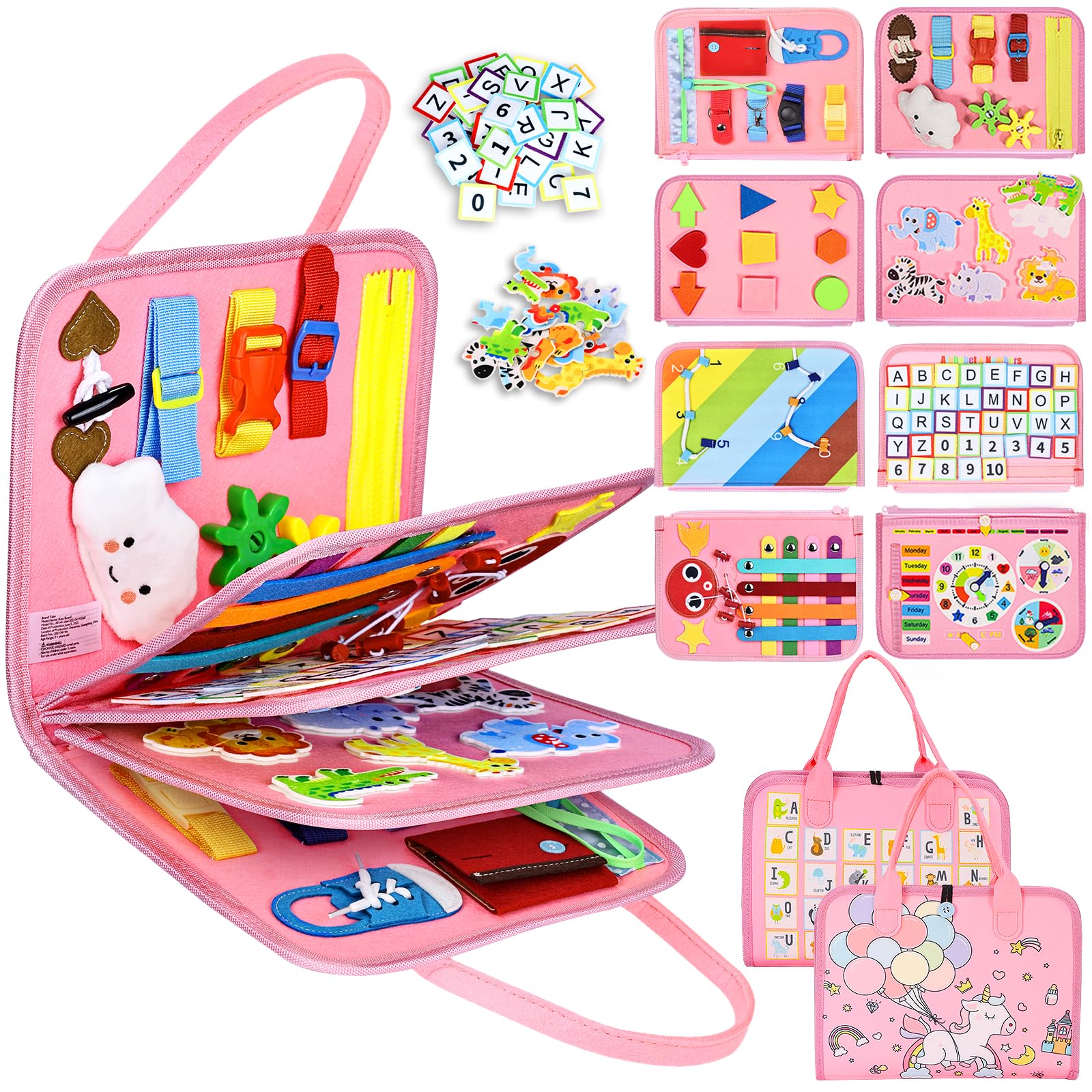
Esjay Busy Board (pink multipage)
Best for: Sitting together to try large fasteners, which maps to CDC 2-year knob-and-button language
CDC 2-year cognitive language includes trying switches, knobs, or buttons on a toy. Stay there. Check for loose parts the way CDC 2-3 says to check toys often. Follow the age label on the board you have.
- Amazon listing: Esjay Busy Board, pink multipages, described as a sensory book for fine-motor practice
- Fits CDC 2-year language about knobs, switches, or buttons — not a homemade skill score
- Quiet, portable, and easy to put away when you stand up
Keep in mind: Fasteners and pages can have small parts. Interest can fade once every latch is mastered. This is a sit-together activity, especially if a younger sibling is in the room.
As an Amazon Associate I earn from qualifying purchases. Mom's Magazine may earn a commission when you buy through links on this page, at no extra cost to you. Learn more.
Frequently Asked Questions
What are the best indoor activities for toddlers?
Short, one-step setups a 1- to 3-year-old can repeat: dump and fill a cup, nest bowls, scoop large dry pasta, put a block in a container, climb on and off a cushion you are spotting, roll a large ball, or look at a board book in your lap. That is indoor activities for toddlers. It is not the 2-year developmental catalog, not the 3-year pretend-and-craft list, not the mixed-age rainy-day indoor plan, and not the outdoor preschooler yard guide.
How long should an indoor toddler activity last?
The CDC pages do not publish a toddler attention-span minute count. End the bowl or the puzzle when your child walks away. CDC physical-activity guidance is written for ages 3 to 5 (active throughout the day) and ages 6 to 17 (60 minutes or more). Those are not a kitchen-timer number for a one-year-old indoor setup.
What household items make the best indoor toddler activities?
A bowl and a cup, leftover lids too big for a mouth, a cardboard box, painter's tape, one couch cushion, pots and a wooden spoon, and a board book. CDC 1-year tips already name pots and pans, blocks, and empty boxes. CDC 18-month tips name putting items in and out of containers. You do not need the four Amazon products on this page.
Is sensory play or water play safe for toddlers indoors?
Only with you in reach and with materials larger than a mouth. AAP's choking page lists balloons, balls, marbles, toy pieces, and small round foods as the items that cause the most choking deaths. Dried beans and rice are not a 1-year-old floor bin. CDC drowning prevention: more children ages 1 to 4 die from drowning than from any other cause; drowning happens in seconds and is often silent. A sink, tub, or bowl of water gets a designated adult who is not on the phone. Empty it when you are done.
What should I do when no indoor activity is working?
Check sleep, food, noise, and whether they want you rather than a bin. CDC 18-month tips include expecting tantrums and giving time to calm down. CDC 1-year tips include helping a child calm by holding, rocking, or singing. A third new setup on a tired toddler is not the next step. This page is not a tantrum guide.
How do I keep indoor days mostly screen-free for a toddler?
Use the CDC lines, then hand the habit question to screen-free-activities-for-kids. CDC 1-year and 18-month pages: screen time is not recommended under age 2 except video calling. CDC 2-year milestone page: no more than 1 hour a day of a children's program with an adult present. CDC 2-3 parenting page: TVs out of the bedroom, 1 hour of quality programming, and a family media plan. A dump-and-fill bowl is one way to fill the stretch you are not handing over a tablet.
Is Play-Doh okay for a toddler under 3?
The Play-Doh starter set on this page is labeled ages 3+ on its Amazon listing. AAP's toy-safety page says to follow the age recommendation because it reflects choking risk and what the child can use. Sit there if you use it with a child near 3. It is not a floor-scatter toy for a one-year-old. Kitchen leftover cups do dump-and-fill without dough.
How is this different from rainy-day activities or activities for 2- and 3-year-olds?
This guide is indoor toddler play for ages 1 to 3: dump, fill, scoop, short setups, close supervision. Our activities for 2-year-olds guide covers how twos learn by age stage. Our activities for 3-year-olds guide covers pretend play, crafts, early counting, and helper jobs. Our rainy-day activities guide is a mixed-age wet-day plan (forts, scavenger hunts, themed days). Our outdoor activities for preschoolers guide covers the yard, and our screen-free activities guide covers the off-screen habit.
Sources & Further Reading
- CDC — Milestones by 1 Year — Centers for Disease Control and Prevention (reviewed 2026-08-21)
- CDC — Milestones by 18 Months — Centers for Disease Control and Prevention (reviewed 2026-08-21)
- CDC — Milestones by 2 Years — Centers for Disease Control and Prevention (reviewed 2026-08-21)
- CDC — Positive Parenting Tips for Toddlers (1–2 years) — Centers for Disease Control and Prevention (reviewed 2026-08-21)
- CDC — Positive Parenting Tips for Toddlers (2–3 years) — Centers for Disease Control and Prevention (reviewed 2026-08-21)
- CDC — Child and Adolescent Physical Activity Guidelines — Centers for Disease Control and Prevention (reviewed 2026-08-21)
- CDC — Drowning Prevention — Centers for Disease Control and Prevention (reviewed 2026-08-21)
- AAP / HealthyChildren.org — How to Buy Safe Toys — American Academy of Pediatrics / HealthyChildren.org (reviewed 2026-08-21)
- AAP / HealthyChildren.org — Choking Prevention — American Academy of Pediatrics / HealthyChildren.org (reviewed 2026-08-21)
Related Guides
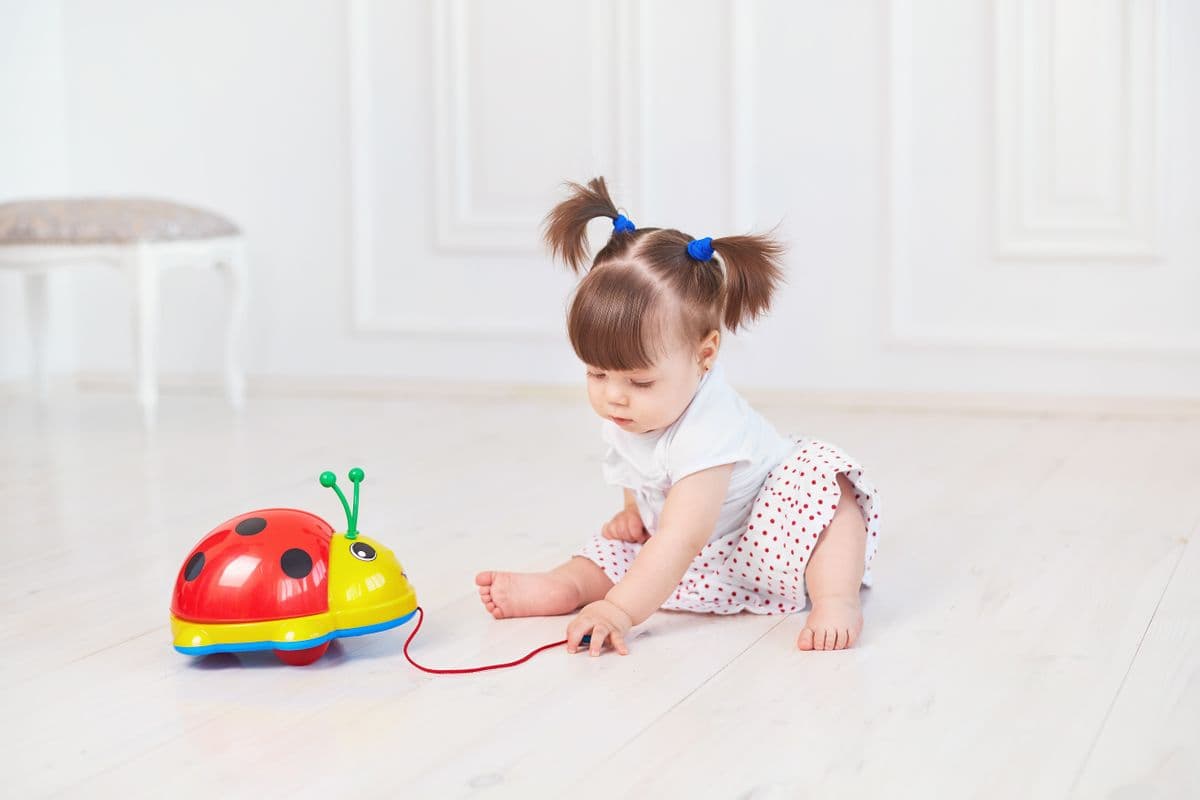
Activities for 2-Year-Olds
Activities for 2-year-olds and just-turned-twos: repetition, dump and fill, climbing and dancing, stacking, naming and singing. Based on CDC 2-year milestones and AAP toy-safety guidance.
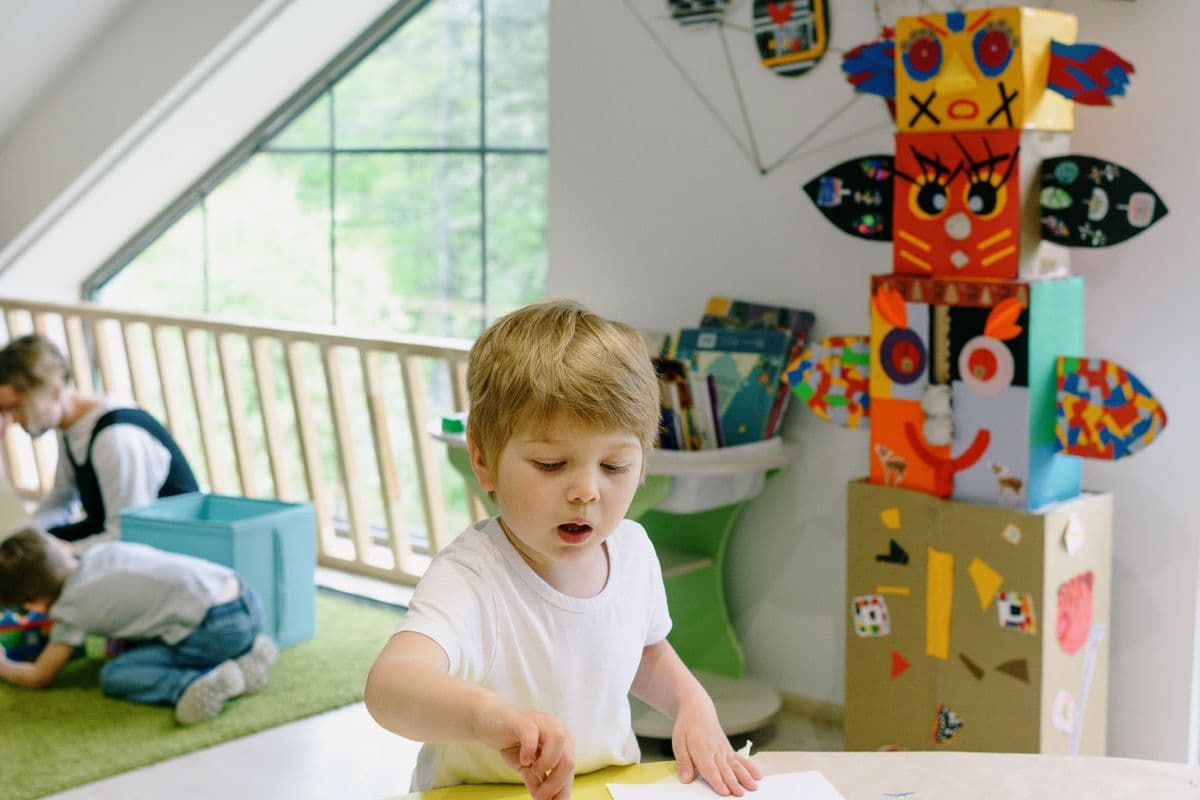
Activities for 3-Year-Olds
Activities for 3-year-olds that match just-turned-three play: pretend scenes, simple crafts, early counting, helper jobs, and one outdoor outing. Based on CDC 3-year milestones and AAP pretend-play and toy-safety guidance.
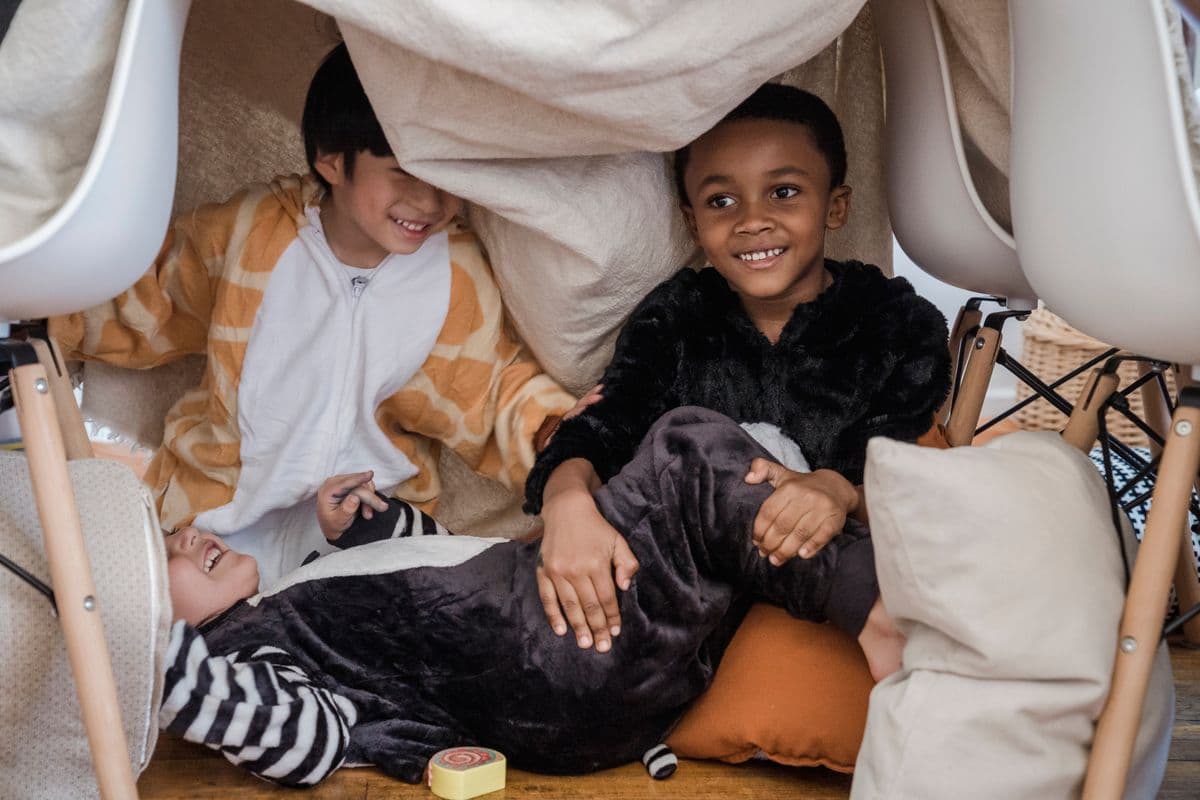
Rainy Day Activities for Kids
Rainy day activities for kids, sensory activities for rainy days at home, and rainy day preschool activities you can actually run indoors: forts, obstacle courses, scavenger hunts, sensory bins, and dough and sand on a tray — with indoor-play notes from AAP and CDC pages. Editorially reviewed — not medical advice.
Outdoor Activities for Preschoolers
Outdoor activities for preschoolers you can actually run: educational backyard play, no-equipment games, chalk and bubbles, a scavenger hunt, and sun, water, and playground notes from AAP and CDC pages. Editorially reviewed — not medical advice.
Screen-Free Activities for Kids
Screen-free activities for kids across ages: off-screen play as a habit, AAP Family Media Plan zones, and CDC screen lines.
Mom's Magazine Editorial Team
Editorial Team
The Mom's Magazine editorial team researches and writes practical, plainly-sourced guidance for parents and families. Guides are reviewed for accuracy and updated as recommendations change. Where a topic calls for professional expertise, we cite reputable organizations and, for health topics, add a qualified reviewer before publishing.
Newsletter
Get the Weekly Mom List
One short email a week: the most useful guides, activities, and picks for your family. No spam, unsubscribe anytime.