Products
Best Toddler Plates and Bowls for Self-Feeding (2026)
True suction vs. a weighted non-slip base isn't a marketing detail — it's the difference between a plate that survives a granite counter and one that doesn't. Three picks for three different feeding stages, and the mechanical difference that actually matters.

As an Amazon Associate I earn from qualifying purchases.Some links on this page are affiliate links. If you buy through them, Mom's Magazine may earn a small commission at no extra cost to you. It never changes which products we recommend. How we recommend products.
For a baby just starting solids who needs a plate that won't end up on the floor, the ezpz Mini Mat is the most fool-proof option: it's a one-piece silicone placemat-and-plate that seals to the tray so a pulling, flipping baby can't break the suction from the edge. The Bumkins Silicone Grip Dish is the better pick once a child is table-fed rather than tray-fed, since it's a standalone divided plate (not fused to a mat) that still holds real suction on a smooth table or highchair tray. Once a toddler is past the flipping-everything stage and needs a plate that keeps working at the family table, the OXO Tot Divided Plate with Removable Training Ring trades suction for a weighted non-slip base and a ring that pulls out entirely, turning a toddler plate into a regular kid's plate instead of a purchase you age out of.
Quick picks
| Product | Best for | |
|---|---|---|
| ezpz Mini Mat Best for the flipping stage | Babies starting solids through the flipping-and-pulling stage, roughly 6–14 months | Check price on Amazon |
| Bumkins Silicone Grip Dish Best standalone suction plate | Table feeding once a child moves off a highchair tray, 6 months and up | Check price on Amazon |
| OXO Tot Divided Plate with Removable Training Ring Best plate that grows with your child | A toddler learning to scoop independently, and a plate meant to outlast the toddler stage | Check price on Amazon |
The plate itself rarely fails a toddler meal. What fails is the plate leaving the tray before the food does — flipped, flung, or peeled up by a curious thumb working at the edge. Almost every plate marketed for self-feeding claims some version of "stays put," and almost none of them explain that there are two different mechanisms doing that job, with different failure points. Knowing which one you're buying matters more than the color options.
Suction and "non-slip" are different claims
A true suction base creates a sealed air gap between the dish and the surface — press it down, push the air out, and it resists a straight-up pull the way a shower caddy or a car phone mount does. It needs a smooth, flat, clean, and dry surface to seal against; a textured wood highchair tray, a fabric placemat underneath, or a surface with food residue on it will defeat the seal no matter how good the plate is. A weighted, non-slip base works differently: rubberized feet or extra mass resist sliding sideways, but there's no seal to break, so a hard vertical pull — the exact motion a toddler uses to "help" clear the table — lifts it right off.
The edge is where suction actually fails
Most suction plates don't fail from a straight pull upward — a real seal resists that reasonably well. They fail when a small thumbnail or fingertip works in at one edge and breaks the seal from the side, the same way you'd peel a suction cup off glass. A one-piece design with no separate plate edge to grip removes that failure point entirely.
Three picks for three feeding stages
ezpz Mini Mat — one-piece placemat and plate, for the flipping stage
The Mini Mat is a single molded piece of silicone: no separate plate sitting on top of a mat, no edge to pry up, just one continuous surface with three built-in compartments (2 oz., 2 oz., and 4 oz., sized for infant portions) that suctions directly to a highchair tray or table. Because there's nothing to grip and lift, it holds up against the exact behavior — pulling, flipping, banging — that a 6-to-12-month-old baby learning to self-feed does constantly. It's dishwasher, microwave, and oven safe, and it's the pick to reach for during the messiest, most experimental stretch of starting solids.
The trade-off is size and portability: at roughly 10.75 by 7.75 inches, it's the largest of the three, built to cover a whole highchair tray rather than sit as a plate within one, which makes it less practical to toss in a diaper bag for a restaurant table.
Check price on Amazonezpz Mini Mat
Bumkins Silicone Grip Dish — a standalone suction plate for table feeding
Once a baby moves from a highchair tray to eating at the actual family table — a booster seat, a regular chair with a cushion — a mat that's built to cover a tray stops making sense, and a standalone suction plate takes over. The Bumkins Grip Dish is a true suction plate rather than a non-slip base, with divided sections (smaller wells hold about 5 oz. each, the larger section about 9 oz.) and a platinum silicone build that's oven-safe to 400°F, so it moves from fridge to microwave to table without a separate dish. Bumkins recommends lightly dampening the underside before pressing it down, which is standard advice for getting a full seal on any suction dish.
It's rated for age 6 months and up, and it holds its suction on the same smooth-surface caveat as any suction product — a textured wood table or a plastic placemat underneath will undercut it.
Check price on AmazonBumkins Silicone Grip Dish
OXO Tot Divided Plate with Removable Training Ring — the plate that becomes a regular plate
The OXO Tot plate skips suction for a weighted, non-slip base and a removable outer training ring that corrals food back toward the center — useful for a toddler still working on scooping food onto a spoon rather than pushing it off the plate entirely. The ring is the actual feature here: pull it off once your child doesn't need the guardrail anymore, and the divided plate underneath keeps working as an ordinary kid's plate, rather than becoming something you replace once its "toddler" purpose is over. It's BPA-, phthalate-, and PVC-free, and dishwasher- and microwave-safe.
It won't survive a determined flipping phase the way a true suction plate does, since the non-slip base resists sliding, not lifting — it's the better fit for a toddler who's past most of the flip-everything-off-the-tray stage and just needs help keeping food from sliding off the plate's edge.
| ezpz Mini Mat | Bumkins Grip Dish | OXO Tot Divided Plate | |
|---|---|---|---|
| Hold-down mechanism | True suction (one-piece, no edge to pry) | True suction (standalone plate) | Weighted non-slip base (no suction seal) |
| Best stage | Starting solids through the flipping phase, ~6–14 months | Table feeding, once past a highchair tray, 6 months+ | Toddler learning to scoop, transitioning to a regular plate |
| Grows with child? | No — sized for a highchair tray specifically | Somewhat — usable well past infancy on any smooth surface | Yes, by design — pull the ring off and it's a regular divided plate |
| Best for travel/restaurants | No — built to cover a full tray, bulky to pack | Yes — compact standalone plate | Yes — compact, and works on a non-suction-friendly restaurant table |
Check price on AmazonOXO Tot Divided Plate with Removable Training Ring
Matching the plate to what's actually happening at the table
- 6–10 months, just starting solids: a true suction mat or plate matters most here — a baby this age has no concept of "don't flip the plate," and the mess is the point of learning to self-feed, not a sign anything's wrong.
- 10–14 months, mobile and opinionated: this is peak flipping and pulling age; a one-piece mat with no edge to grip (ezpz) tends to outlast a separate suction plate that a determined toddler can still work an edge on.
- 14–24 months, table feeding at a booster or regular chair: a standalone suction plate (Bumkins) usually covers this stage well, since food-flinging tends to ease as fine motor control and interest in actually eating both improve.
- 2–4 years, learning to scoop and plate independently: a non-slip, edge-guarded plate (OXO) supports the skill-building part of self-feeding rather than the survive-the-mess part, and it keeps working as a regular plate once the training-wheel ring comes off.
Getting real suction to actually work
A surprising number of one-star reviews on suction plates are really surface problems, not product problems. Suction needs a hard, smooth, flat, clean, and dry base — press the plate down firmly and run a finger around the rim to confirm full contact before walking away. A wood highchair tray with visible grain, a silicone placemat underneath, a tray with dried food residue from the last meal, or a wet tray from being wiped down seconds before all defeat suction regardless of brand or price. If a specific tray consistently won't hold suction, a hard plastic tray insert under the plate — not a fabric or silicone mat — is the fix, not a different plate.
The two-second seal check
Press the plate down, then try to lift one edge with a fingernail before your child sits down. If it lifts easily from the edge, the seal isn't set — press again, dampen the base lightly if the plate's instructions say to, and check the surface for texture, residue, or moisture first.
Mistakes worth naming
- Buying a suction plate for a textured wood or heavily grained tray and blaming the plate when it doesn't hold — check the surface first.
- Expecting a non-slip base (OXO) to resist a determined flip the way true suction does — it's built for a different failure mode.
- Skipping the mat-style option (ezpz) for the youngest, messiest stage because it looks bulkier, then dealing with a separate plate getting peeled up constantly instead.
- Assuming dishwasher-safe silicone needs gentle handling — all three of these are built for real toddler use, not careful adult use.
- Sticking with a suction plate long after a child has outgrown the need for one, when a plate built to transition (OXO's removable ring) would've been the better long-term buy.
What we didn't test
This is a researched comparison of manufacturer specifications, suction mechanics, and age recommendations, not a season of real toddler mealtimes across all three. If we run a hands-on comparison later, we'll update this page and say so.
None of these plates fix a toddler who isn't hungry or is deep in a picky-eating stretch — that's a feeding-approach problem, not a tableware problem. Our guide to handling picky eating in toddlers and starting solid foods cover that side. What the right plate actually buys you is fewer meals ending with dinner on the floor before your child even finished deciding whether they liked it.
Our Recommendations
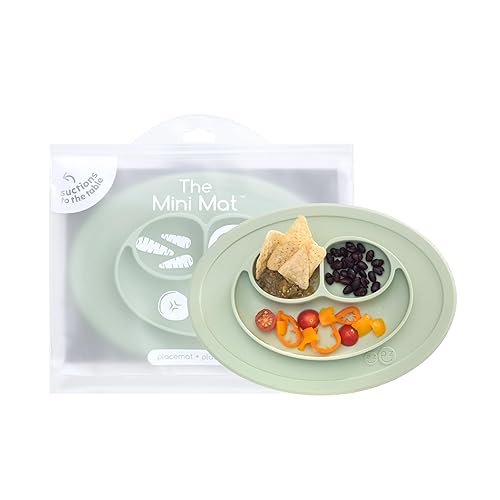
ezpz Mini Mat
Best for: Babies starting solids through the flipping-and-pulling stage, roughly 6–14 months
A one-piece silicone placemat fused to a three-compartment plate that suctions to a highchair tray or table. Because there's no separate edge to pry up, it holds through the messiest, most experimental stretch of learning to self-feed.
- One-piece design with no separate plate edge for small fingers to grip and lift
- Three compartments sized for infant portions (2 oz., 2 oz., 4 oz.)
- 100% food-grade silicone, free of BPA, BPS, PVC, latex, and phthalates
- Dishwasher, microwave, and oven safe
Keep in mind: Built to cover a full highchair tray, so it's bulkier and less practical to pack for a restaurant table than a standalone plate.
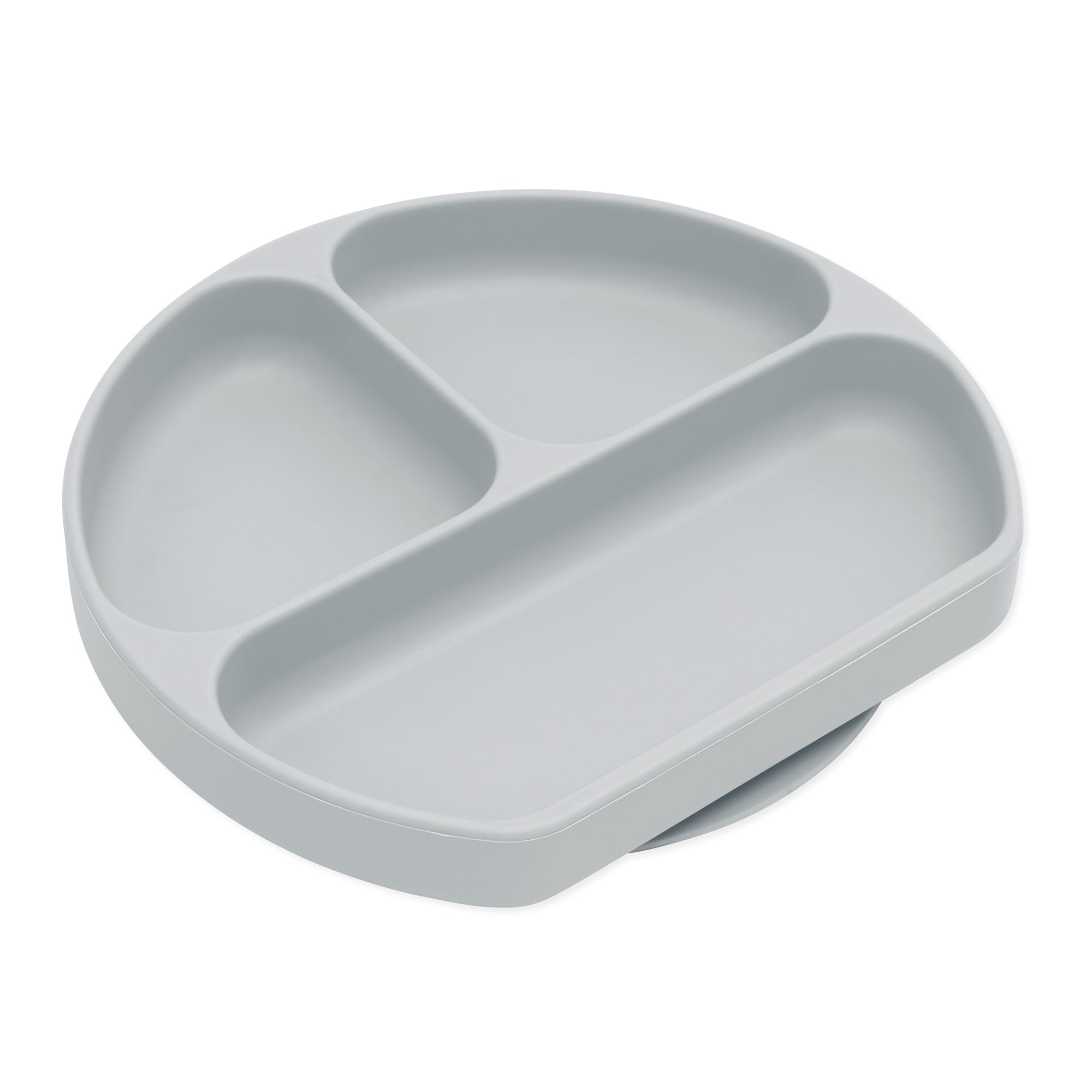
Bumkins Silicone Grip Dish
Best for: Table feeding once a child moves off a highchair tray, 6 months and up
A standalone divided suction plate in platinum silicone, oven-safe to 400°F, with smaller sections holding about 5 oz. each and a larger section around 9 oz. Bumkins recommends lightly dampening the base to help the seal.
- True suction base for smooth, clean, dry surfaces
- Oven, microwave, fridge, and dishwasher safe
- Divided sections sized for baby and toddler portions
- Platinum silicone, BPA-free, third-party tested for CPSC/CPSIA compliance
Keep in mind: Standalone suction plate, not fused to a mat — a determined toddler working at the edge can eventually break the seal, unlike a one-piece design.
OXO Tot Divided Plate with Removable Training Ring
Best for: A toddler learning to scoop independently, and a plate meant to outlast the toddler stage
A weighted, non-slip divided plate with a removable outer ring that corrals food toward the center for a toddler still working on getting food onto a spoon. Pull the ring off once it's no longer needed and the plate keeps working as a regular kid's plate.
- Weighted, non-slip base resists sliding (not a suction seal)
- Removable training ring transitions to a standard divided plate
- Three sections for portioning protein, vegetables, and grains
- BPA-, phthalate-, and PVC-free; microwave and top-rack dishwasher safe
Keep in mind: No true suction — a hard vertical pull or flip can still lift it, so it's a better fit once a child is past the heaviest flipping phase.
As an Amazon Associate I earn from qualifying purchases. Mom's Magazine may earn a commission when you buy through links on this page, at no extra cost to you. Learn more.
Frequently Asked Questions
Do suction plates actually work, or is it a marketing claim?
True suction plates work, but only under specific conditions: a smooth, flat, clean, dry surface. Most complaints about suction "not working" trace back to a textured tray, a placemat underneath breaking the seal, or food residue and moisture on the surface — not a defective plate.
Why did my suction plate stop working after a few months?
Silicone suction bases can wear slightly with repeated use and dishwasher cycles, but a sudden failure is more often a surface issue — check for a buildup of dried food residue in the suction ring, or a switch to a different, more textured tray or table without realizing it.
Is a one-piece mat-plate like the ezpz Mini Mat better than a separate suction plate?
For the flipping-and-pulling stage specifically, yes — there's no edge for a baby to work a fingertip under, which is the main way separate suction plates fail. Once a child is past that stage and eating at a regular table rather than a highchair tray, a standalone plate like the Bumkins Grip Dish is more practical to travel with.
When should I switch from a suction plate to a regular plate?
There's no fixed age — it depends on whether your child still flips or flings food, or has moved into learning to scoop and plate independently. The OXO Tot's removable training ring is built for exactly that transition: use it as a guarded, non-slip plate while scooping is still developing, then remove the ring and keep using the same plate afterward.
Are silicone plates safe to microwave and put in the dishwasher?
All three plates here are silicone (not plastic) and are labeled microwave- and dishwasher-safe by their manufacturers; the Bumkins Grip Dish is additionally rated oven-safe to 400°F. Always check the specific product's care label, since finishes and printed designs can have different heat tolerances than plain silicone.
Sources & Further Reading
- Silicone Grip Dish product specifications — Bumkins (reviewed 2026-09-06)
- The Mini Mat product specifications — ezpz (reviewed 2026-09-06)
- OXO Tot Plate with Removable Training Ring — Amazon.com (reviewed 2026-09-06)
Related Guides
Best Toddler Self-Feeding Utensils and Baby Spoons of 2026
Why the first spoon your baby actually uses isn't shaped like a spoon, which self-feeding utensils fit each stage from first purees to a toddler fork, and how utensils pair with solids, open cups, high chairs, bibs, and plates.
Best Silicone Baby Bibs and Placemats of 2026
A researched comparison of silicone bibs and suction placemats for solids and baby-led weaning — what actually cuts down mess versus what just looks like it will, plus four options across ages and stages.
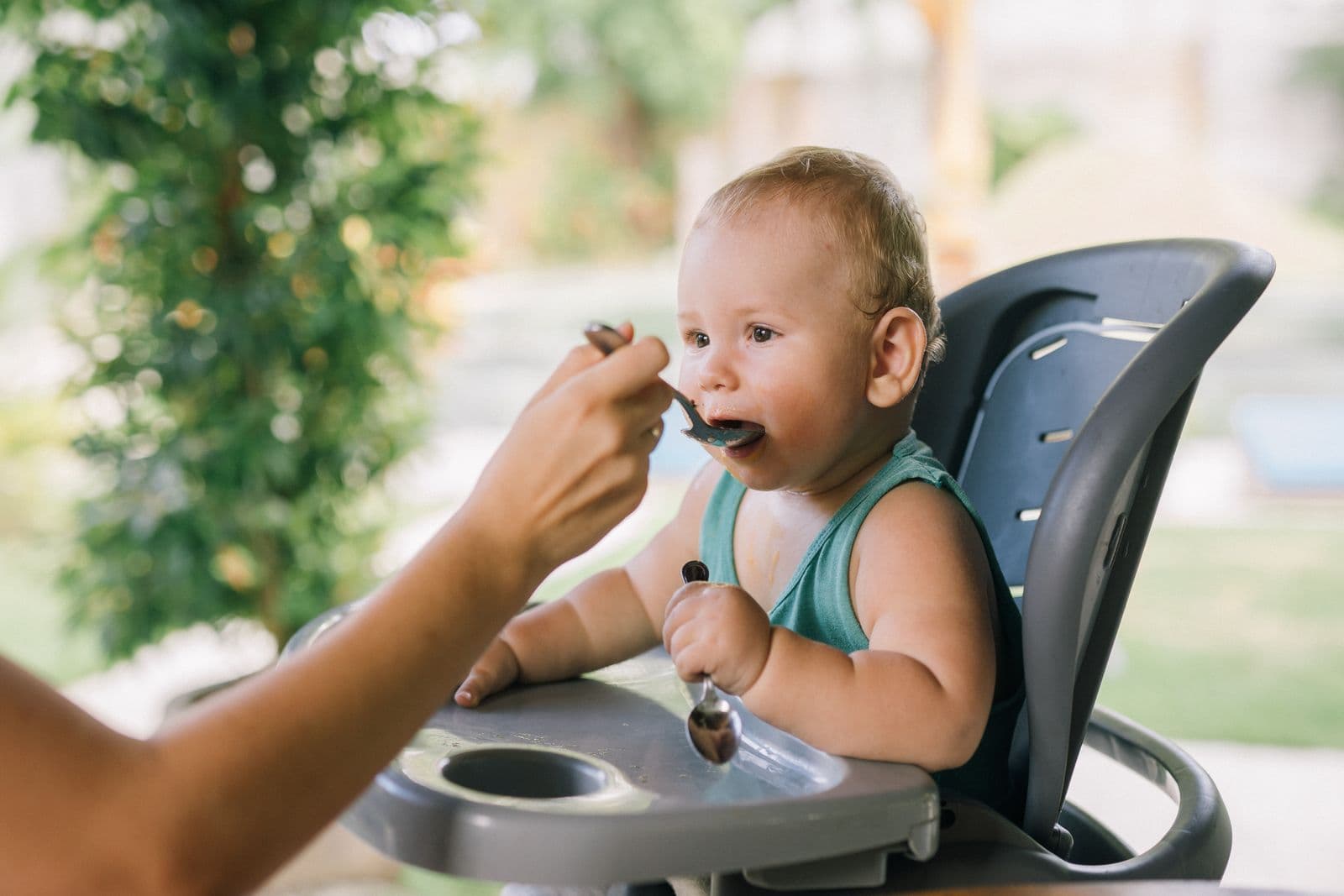
Best First Baby Foods & Best First Foods for Baby (CDC and AAP Guide)
Best first baby foods and best first foods for baby, in plain CDC and AAP terms: iron-rich starters around 6 months, one food at a time, allergen timing, first-feeding setup (bibs, spoons, cups), and what not to give. Editorially reviewed general information, not medical advice — not a ranked jar list.

Baby-Led Weaning vs. Purees: How to Choose (or Combine Both)
Baby-led weaning vs purees (and BLW vs purees combination feeding): mess, iron, gagging vs choking, and what CDC and AAP actually say about textures, readiness, and safety.
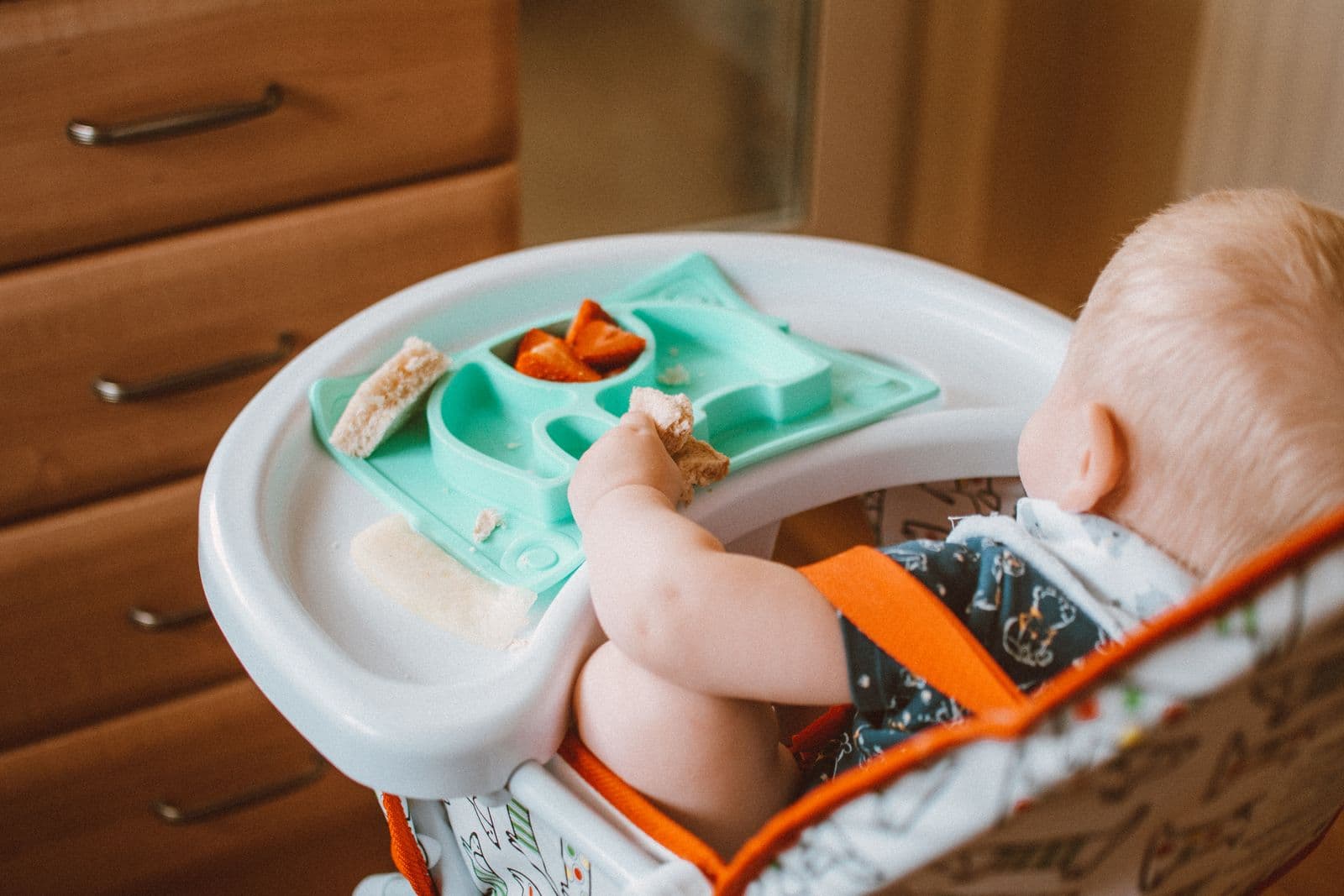
Best High Chair & Best Baby High Chair (2026): Convertible, Slim & Toddler Seats
Best high chair and best baby high chair picks for starting solids through toddler years: slim fold-flat, convertible grow-with-baby, infant recline, and portable booster.
Mom's Magazine Editorial Team
Editorial Team
The Mom's Magazine editorial team researches and writes practical, plainly-sourced guidance for parents and families. Guides are reviewed for accuracy and updated as recommendations change. Where a topic calls for professional expertise, we cite reputable organizations and, for health topics, add a qualified reviewer before publishing.
Newsletter
Get the Weekly Mom List
One short email a week: the most useful guides, activities, and picks for your family. No spam, unsubscribe anytime.