Parenting
How to Handle Picky Eating in Toddlers
Why toddlers get picky around ages 2–4, the feeding approach with the most evidence behind it, and the red flags worth a pediatrician visit.

As an Amazon Associate I earn from qualifying purchases.Some links on this page are affiliate links. If you buy through them, Mom's Magazine may earn a small commission at no extra cost to you. It never changes which products we recommend. How we recommend products.
Picky eating is a normal developmental phase for most toddlers, usually peaking between ages 2 and 4, and it's rarely about the food itself — it's more about a toddler asserting control and being cautious about new things. The feeding approach with the most evidence behind it is division of responsibility: you decide what food is offered and when, your toddler decides whether to eat it and how much, without pressure, bribing, or cooking a separate meal. Keep offering rejected foods without comment — it can take 8 to 15 exposures before a toddler accepts something new, so one 'no' isn't the final answer. Most picky eaters grow out of the most restrictive phase on their own as long as growth stays on track; a very short list of accepted foods, weight loss, or gagging and choking on textures are reasons to talk to your pediatrician rather than waiting it out.
Most Thorough
Child of Mine: Feeding with Love and Good Sense
Best for: Parents who want the full division-of-responsibility framework, not just the toddler-specific summary
Why toddlers get picky in the first place
Two things are usually happening at once. Toddlers go through a stretch of neophobia — genuine wariness of new foods — that's a normal, protective instinct at an age when they're mobile enough to put things in their mouths but not experienced enough to know what's safe. On top of that, mealtime is one of the few arenas where a toddler has real control: they can't decide bedtime or what clothes go in the wash, but they can decide whether that broccoli goes in their mouth. Refusing food is often less about the food and more about testing where the control actually sits.
Some picky-eating patterns trace back to how solids started in the first place — a baby who was only ever spoon-fed smooth purees can be more hesitant about new textures later than one who self-fed from early on, though it's far from a guarantee either way. Our comparison of baby-led weaning and purees covers that texture-exposure angle if you're earlier in the feeding journey with a younger sibling.
The approach that actually works: division of responsibility
This framework, developed by dietitian and feeding specialist Ellyn Satter, splits feeding into two separate jobs and keeps each parent firmly in their own lane.
- Your job: decide what food is offered, when meals and snacks happen, and where eating takes place (the table, not wandering the living room).
- Your toddler's job: decide whether to eat what's offered, and how much of it, from what's on the table.
Satter laid out the full framework in her book "Child of Mine," which goes well beyond the toddler years into what division of responsibility looks like at each stage from infancy through the school-age table. It's denser than a blog post — closer to a reference than a quick read — but useful if the short version here raises more questions than it answers.
Keep offering, without the commentary
Put the rejected food on the plate again next time, without announcing it, praising a bite, or negotiating over it. A new food commonly needs 8 to 15 low-pressure exposures before a toddler accepts it — most parents give up around exposure three or four, which is well before acceptance typically kicks in.
What tends to backfire
- Bribing with dessert for eating vegetables — it teaches that the vegetable is the obstacle and dessert is the reward, which makes the vegetable less appealing over time, not more.
- Cooking a separate 'safe' meal on demand — it removes any reason to try what's on the table, since a preferred alternative is always coming.
- A strict 'one more bite' rule enforced every meal — pressure to eat a specific food tends to increase resistance to that food specifically, sometimes for years.
- Big reactions to refusal, positive or negative — cheering a bite or getting frustrated at a refusal both put a spotlight on eating that can make a toddler more guarded about it, not less.
Practical strategies for daily meals
- Serve one new or less-preferred food alongside one or two foods you already know your toddler eats, rather than an entirely unfamiliar plate.
- Serve family-style when you can, and let your toddler put small amounts on their own plate — self-serving builds a sense of control that reduces the need to push back elsewhere.
- Keep mealtimes to roughly 20–30 minutes and end them without a fight if your toddler's done, rather than extending the meal to negotiate more bites.
- Watch the snack window — grazing close to a meal blunts appetite and makes a toddler even less interested in trying something new at the table.
- Eat the same food yourself, at the table, without narrating how healthy it is — toddlers copy what they see far more than what they're told.
Dinner is where this gets hardest, since it lands at the end of a long day for everybody at the table. Why your toddler won't eat dinner specifically covers all-day grazing, the "eats everything for Grandma" problem, and what a low-pressure week actually looks like.
When it's more than typical pickiness
Reasons to talk to your pediatrician
A food list under roughly 20 total foods, an entire texture or food-group refused outright (all fruits, all wet foods), weight loss or flattening growth, or gagging and choking that goes beyond typical toddler caution are reasons to bring it up rather than waiting it out. These patterns are more consistent with a feeding disorder than everyday pickiness, and a pediatrician can refer you to a feeding therapist or pediatric GI specialist if needed.
If picky eating is showing up right as you're introducing solids for the first time, our guide to starting solid foods covers the earlier stage — readiness signs, first foods, and allergen introduction — that sets up a lot of what happens at the toddler table later.
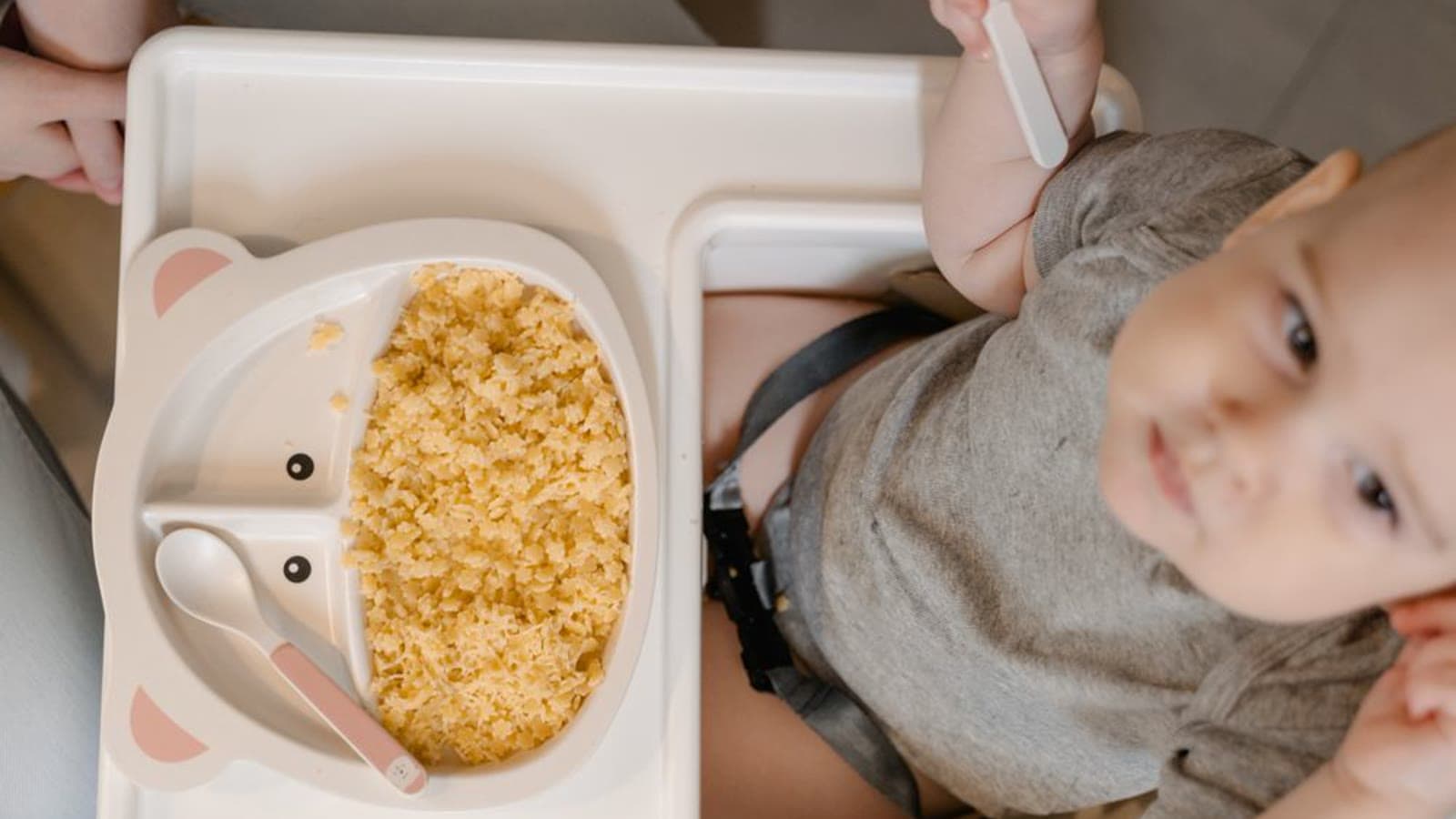
Division of responsibility does the daily work, but it isn't the only exposure tool available. Our comparison of cookbooks for picky eaters covers a lower-stakes option worth adding alongside it — letting a reluctant eater help cook a food, which research on cooking-based feeding programs links to reduced food fussiness, separate from whatever happens at the dinner table that night. The plate itself is a smaller lever, but a useful one: our comparison of toddler plates and bowls covers why a divided, suction-based plate can lower the friction of serving several foods side by side without pressure to finish any one of them.
A toddler who's filling up on milk and low-fiber favorites and skipping produce is also a common setup for constipation, not just a pickiness problem. Our guide to baby and toddler constipation covers the diet and routine changes that tend to help, and the specific signs that mean it's time to call the pediatrician.
Our Recommendations

Child of Mine: Feeding with Love and Good Sense
Best for: Parents who want the full division-of-responsibility framework, not just the toddler-specific summary
Ellyn Satter's own reference on feeding from infancy through the school-age table, written by the dietitian who developed the division-of-responsibility approach this article is built on.
- Covers feeding stage by stage, infancy through school age
- Written by the originator of the division-of-responsibility framework
- Includes guidance on genuine feeding problems versus typical pickiness
- Dense, reference-style — meant to be consulted, not read in one sitting
Keep in mind: It's long and clinical in places; parents wanting a quick read may prefer a shorter feeding guide and save this for specific questions.
As an Amazon Associate I earn from qualifying purchases. Mom's Magazine may earn a commission when you buy through links on this page, at no extra cost to you. Learn more.
Frequently Asked Questions
Is picky eating a phase, or will it last forever?
For most toddlers, food acceptance broadens again by school age as the pickiest stretch passes. A genuinely restrictive eating pattern — a food list under roughly 20 items, tied to texture or sensory anxiety rather than typical toddler caution — is closer to Avoidant/Restrictive Food Intake Disorder (ARFID) than ordinary pickiness, and that distinction is worth raising with a pediatrician rather than assuming it will resolve the same way.
Should I hide vegetables in other foods to get my toddler to eat them?
It can work nutritionally in the short term, but it doesn't build acceptance of the food itself, and it can backfire if your toddler notices — some kids become more suspicious of food in general afterward. It works best as one tool alongside plain, visible exposure to the food, not as a replacement for it.
Does forcing 'one more bite' help?
Generally no — pressure to eat a specific food tends to increase resistance to that food rather than build acceptance, and it can turn mealtimes into a recurring power struggle. Repeated, no-pressure exposure over time has more evidence behind it than in-the-moment insistence.
How many foods does a toddler need to eat before it's more than 'picky'?
Feeding specialists commonly use a list of roughly 20 total accepted foods, or the loss of an entire food group or texture category, as the line between typical pickiness and a pattern worth a professional look — rather than any single refused food or a single bad week.
Do toddler multivitamins make up for a limited diet?
A multivitamin can help cover some nutritional gaps, but it doesn't do the work of building food acceptance, and dosing for things like iron and vitamin D varies by age and weight — check with your pediatrician before starting one rather than picking a product off the shelf.
Sources & Further Reading
- Picky Eaters: Tips for Feeding Toddlers — American Academy of Pediatrics (HealthyChildren.org) (reviewed 2026-08-07)
- The Division of Responsibility in Feeding — Ellyn Satter Institute (reviewed 2026-08-07)
Related Guides

Best First Baby Foods & Best First Foods for Baby (CDC and AAP Guide)
Best first baby foods and best first foods for baby, in plain CDC and AAP terms: iron-rich starters around 6 months, one food at a time, allergen timing, first-feeding setup (bibs, spoons, cups), and what not to give. Editorially reviewed general information, not medical advice — not a ranked jar list.

How to Handle Toddler Tantrums: Real Help That Works, According to AAP and CDC
Help with toddler tantrums, how to handle toddler tantrums, and how to deal with toddler tantrums, using AAP, CDC, and NIH pages: what actually helps in the moment, an age-by-age look at what's typical at 1, 2, and 3, tantrums by setting (car seat, store, bedtime, drop-off), how to prevent the next one, and when to call your pediatrician. Editorially reviewed general information — not medical advice.

Easy Weeknight Dinner Ideas for Families
Fast, family-friendly weeknight dinner ideas and a simple system to stop the 5 p.m. scramble.
Best Toddler Plates and Bowls for Self-Feeding (2026)
True suction vs. a weighted non-slip base isn't a marketing detail — it's the difference between a plate that survives a granite counter and one that doesn't. Three picks for three different feeding stages, and the mechanical difference that actually matters.
Mom's Magazine Editorial Team
Editorial Team
The Mom's Magazine editorial team researches and writes practical, plainly-sourced guidance for parents and families. Guides are reviewed for accuracy and updated as recommendations change. Where a topic calls for professional expertise, we cite reputable organizations and, for health topics, add a qualified reviewer before publishing.
Newsletter
Get the Weekly Mom List
One short email a week: the most useful guides, activities, and picks for your family. No spam, unsubscribe anytime.