Products
Best Toddler Booster Seats for the Table (2026)
Booster seats for toddlers who've outgrown the high chair but still need a lift and a harness at the table — the real difference between a strap-to-chair model and a fold-flat travel seat, and two well-specced options to start from.

As an Amazon Associate I earn from qualifying purchases.Some links on this page are affiliate links. If you buy through them, Mom's Magazine may earn a small commission at no extra cost to you. It never changes which products we recommend. How we recommend products.
A toddler booster seat straps to a regular dining chair, or folds flat for travel, to lift a child high enough for the table and usually adds a short harness so a toddler who isn't fully settled into sitting still stays put through a meal. The two things worth comparing before price: whether the tray is dishwasher-safe, since a booster tray sees more independent, messier eating than a high chair tray did, and whether the seat has real anti-slip or anti-tip feet, because sliding on a hard floor or shifting on a chair it wasn't quite built for is the most common complaint in this category. Most toddlers move into a booster somewhere between 18 months and 3 years, once they can climb into a regular chair and sit upright without the recline a high chair offered.
Quick picks
| Product | Best for | |
|---|---|---|
| Ingenuity SmartClean Toddler Booster Seat Best for daily home use | A booster that stays on one chair at home | Check price on Amazon |
| hiccapop OmniBoost Travel Booster Seat with Tray Best for travel | A booster that travels — restaurants, grandma's house, camping | Check price on Amazon |
The high chair works right up until it doesn't. Somewhere between 18 months and 3 years, most toddlers get too big for the recline and the wide tray, start wanting to sit where everyone else sits, or simply get strong enough to climb out of the harness the high chair came with. A booster seat is the bridge between that high chair and a toddler who eats dinner at the actual table in a regular chair — it lifts them to table height and, in most models, still has a harness for the stretch where sitting still through a whole meal isn't a sure thing yet.
Signs a toddler is ready for a booster instead of a high chair
The clearest signal is posture, not age: a toddler who sits upright on their own, without needing the semi-reclined support a high chair back gives an infant, is usually ready. So is a toddler who can climb into a regular dining chair by themselves, or who's started reaching for food off other people's plates because they want to be at the table, not off to the side in their own seat. None of that has to happen on a schedule. A toddler who's still working on trunk control, or who eats better with the containment of a full high chair tray, can stay there longer without it meaning anything is behind.
Two very different products share the name "booster seat"
The category splits cleanly in two, and it's worth knowing which one you're shopping for before comparing features. The first type straps semi-permanently to one dining chair and is meant to live there — it's heavier, usually has a fuller tray and harness, and is built for the same seat every night. The second type is a fold-flat travel seat, often with a lighter frame and a smaller tray, designed to go into a bag for restaurants, a relative's house, or a hotel room. A travel seat can work as an only booster for a family that eats at a lot of different tables, but it's generally less sturdy for years of daily use at home than a seat built to stay put.
What actually matters before buying one
- Whether the tray (if it has one) comes off and goes in the dishwasher — hand-washing a textured tray after every meal gets old fast.
- Anti-slip or anti-tip feet on the base, especially if your dining chairs have any curve to the seat or a narrow back.
- Harness type — a simple lap belt is fine for a toddler who mostly stays seated; a 3-point or 5-point harness is worth it for a toddler who still tries to stand up mid-meal.
- Weight and height limits, checked against where your toddler actually is now, not just the top of the range.
- How the seat straps to a chair — buckle straps that thread around the chair back are more secure than seats that simply rest on the seat cushion.
- Whether the seat pad or cover is wipeable or machine washable, separate from the tray question.
Two booster seats worth starting from
Ingenuity SmartClean Toddler Booster Seat
Ingenuity's version is built for one chair at home: per the manufacturer, it's rated for children roughly 16 to 36 months old or up to 33 lbs, and it straps on with an adjustable bottom belt (about 26 inches around) and a back strap (about 33 inches around) so it fits most standard dining chairs rather than one specific shape. The seat has a 3-point harness and a wipeable, easy-clean surface — Ingenuity markets the line under "SmartClean" specifically for the food-mess problem this stage creates. It's meant to be set up once and left on the chair, not folded up daily.
Check price on AmazonIngenuity SmartClean Toddler Booster Seat
hiccapop OmniBoost Travel Booster Seat with Tray
The OmniBoost is the fold-flat option: per hiccapop's product page, it's built for children roughly 6 months to 3 years, folds down to about 7 by 7 by 16 inches inside its own carry bag, and weighs about 4 lbs. It includes a dishwasher-safe swivel tray that opens to let a toddler in and out without unbuckling every strap, plus removable "duck feet" that spread the base for extra stability on soft or uneven surfaces like sand or grass — a detail aimed squarely at restaurant floors and outdoor tables, not just kitchens. hiccapop's own comparison materials list a structural weight limit well above what a toddler needs, which speaks to how the frame is built rather than being a spec a family will ever approach.
Neither seat was tested hands-on for this page
This comparison is built from each manufacturer's published specifications and product descriptions, not a side-by-side trial in our own kitchen. Chair shape varies enough between homes that a seat that straps on perfectly at one table can fit awkwardly at another — check strap length and chair-back shape against your own dining chairs before buying, especially for chairs with a pronounced curve or slats.
Still using the high chair but wondering when to switch? →Our high chair guide covers the exact signs it's time to move on, plus what to look for if you're buying the high chair for the first time.
Check price on Amazonhiccapop OmniBoost Travel Booster Seat with Tray
A booster is about independence, not just height
The shift to a booster usually lines up with a toddler wanting to feed themselves more and be supervised less closely while doing it. That's worth planning around rather than fighting — a toddler-height cup, utensils sized for a smaller hand, and a placemat that defines "your space at the table" all make the transition smoother than the seat alone. If self-feeding tools haven't kept pace with a toddler's actual skill level, our comparison of toddler self-feeding utensils covers what fits each stage, and sippy cup options covers the spout types pediatric dentists actually recommend.
Cleanup that doesn't eat your evening
A wipeable seat cover and a dishwasher-safe tray do most of the real work here — anything that requires hand-scrubbing after every meal quietly stops getting used correctly, which usually means the tray gets wiped instead of washed and food residue builds up in the seams. A silicone placemat under the tray catches drips before they reach the floor, and it's worth checking whether the seat's straps are removable for washing separately; straps that stay permanently attached to the frame are the part that tends to smell first.
A few safety notes worth taking seriously
- A harnessed toddler still needs an adult in the room. A booster reduces the chance of climbing out, but it isn't a babysitting device.
- Skip chairs with wheels, chairs that fold, or barstools without a back — most booster seats are designed and rated for a standard four-legged dining chair.
- Recheck the strap tightness periodically. Straps that were snug when you first set the seat up can loosen with repeated use, and a loose strap undermines the anti-tip design.
- If a chair back curves outward at the top, some straps can't cinch fully — test the fit on your actual chair, not just the product photos, before trusting it for daily use.
When a toddler outgrows the booster entirely
Most kids move off a booster and into a regular chair, sometimes with just a firm cushion for height, somewhere in the preschool years — again driven by size and table height more than a specific birthday. A toddler who can sit through a meal without a harness, reach their plate without kneeling on the chair, and get in and out safely on their own has usually outgrown the need for one, even if they're still below the seat's stated weight limit.
Booster seat comparison
Only what each Amazon listing states. No prices, ratings, or test scores. Check the strap lengths against your own dining chairs before you buy.
| Product | Style | Harness | Tray | Cleaning | Fit and stability | |
|---|---|---|---|---|---|---|
| Ingenuity SmartClean Toddler Booster Seat Best for daily home use | Straps to most dining chairs; light enough to bring along | 3-point, removable; supports up to 33 lbs | Not listed | Wipe-clean base and removable foam insert; straps machine-washable | Straps are 26 in. around the bottom and 33 in. around the back; seat is 15.5 x 12 x 8.25 in. | Check price on Amazon |
| hiccapop OmniBoost Travel Booster Seat with Tray Best for travel | Folding travel booster with a shoulder carry bag | Safety harness with one-hand-release buckles | Removable, dishwasher-safe, BPA-free swivel tray | Wipe-clean; fabric cover slides off for machine washing | Wide base plus removable "duck feet" for sand, grass, and uneven floors | Check price on Amazon |
Listings checked 2026-10-07. Colors and bundles vary by listing, so confirm the version on Amazon.
Our Recommendations
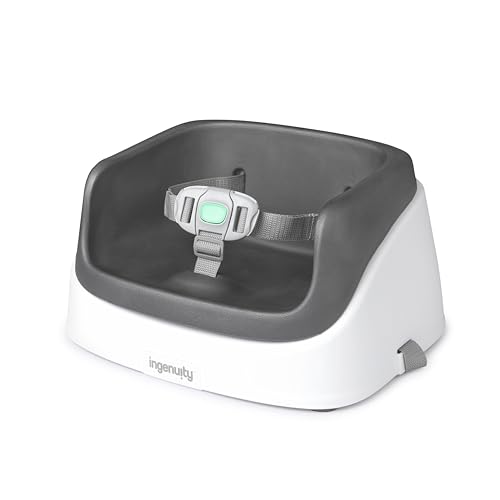
Ingenuity SmartClean Toddler Booster Seat
Best for: A booster that stays on one chair at home
Per Ingenuity, this seat is rated for roughly 16- to 36-month-olds up to 33 lbs, with an adjustable bottom strap (about 26 in.) and back strap (about 33 in.) built to fit most standard dining chairs. The 3-point harness and wipeable surface target the daily-mess reality of this stage rather than portability.
- Rated for roughly 16–36 months or up to 33 lbs (manufacturer spec)
- Adjustable straps sized to fit most standard dining chairs
- 3-point harness
- Wipeable, easy-clean seat surface (Ingenuity's "SmartClean" line)
Keep in mind: Built to stay on one chair rather than fold for travel — not the right pick if you need something that packs down for restaurants or trips.

hiccapop OmniBoost Travel Booster Seat with Tray
Best for: A booster that travels — restaurants, grandma's house, camping
Per hiccapop's product page, the OmniBoost fits roughly 6-month-olds through 3-year-olds, folds to about 7" x 7" x 16" in its included carry bag, and weighs about 4 lbs. The dishwasher-safe tray swivels open for easy in-and-out, and removable "duck feet" widen the base for stability on soft or uneven ground.
- Folds to roughly 7 x 7 x 16 inches with a carry bag included
- About 4 lbs — genuinely portable
- Dishwasher-safe swivel tray
- Removable "duck feet" for stability on sand, grass, or uneven floors
Keep in mind: Lighter frame than a stay-on-one-chair booster, which is the tradeoff for portability — not the most rugged choice for years of daily use at one table.
As an Amazon Associate I earn from qualifying purchases. Mom's Magazine may earn a commission when you buy through links on this page, at no extra cost to you. Learn more.
Frequently Asked Questions
Can I just use a flat booster cushion instead of a strap-on seat with a harness?
For a toddler who reliably sits still and is tall enough to reach the table, a simple cushion can work. But most toddlers moving off a high chair aren't fully there yet, and a harnessed booster is the safer default until sitting through a meal without climbing is consistent, not occasional.
Does a toddler booster seat need its own tray, or can they eat off the family table?
Either works. A tray is useful early in the transition, when messes are bigger and reach is still limited, and it lets a toddler eat before the rest of the family sits down. Once a toddler eats at the same time as everyone else, many families drop the tray and use the table directly.
What actually differs between the low-cost and premium booster seats?
Mostly the strap system and tray quality. Cheaper seats tend to have simpler lap belts and hand-wash-only trays; pricier ones add multi-point harnesses, dishwasher-safe trays, and straps engineered to fit a wider range of chair shapes without slipping.
Are fold-flat travel booster seats sturdy enough for daily use at home?
They can be, but they're built around portability first, which usually means a lighter frame than a seat designed to stay on one chair. If travel is occasional and home use is daily, a stay-on-one-chair seat will generally hold up better over a couple of years.
How do I clean straps and harnesses that get food worked into them?
Check whether the straps detach from the frame — removable straps can be hand-washed or, on some models, machine washed in a mesh bag. Straps that are permanently sewn to the frame need spot cleaning with a damp cloth and mild soap, and should be air-dried fully before the next use.
Sources & Further Reading
- SmartClean Toddler Booster Seat — product specifications — Ingenuity (Kids2) (reviewed 2026-09-02)
- OmniBoost Travel Booster Seat — product specifications — hiccapop (reviewed 2026-09-02)
Related Guides
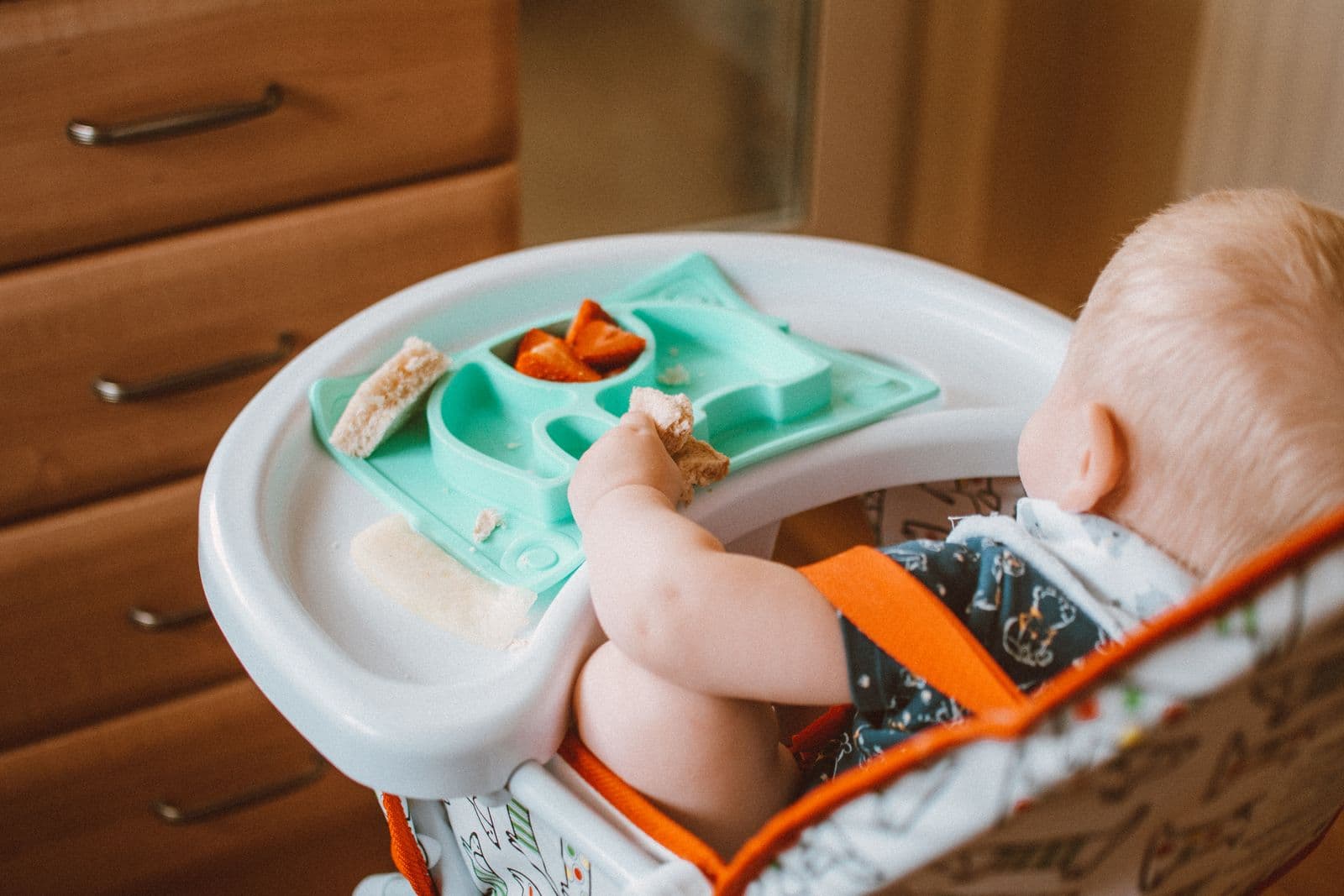
Best High Chair & Best Baby High Chair (2026): Convertible, Slim & Toddler Seats
Best high chair and best baby high chair picks for starting solids through toddler years: slim fold-flat, convertible grow-with-baby, infant recline, and portable booster.
Best Toddler Self-Feeding Utensils and Baby Spoons of 2026
Why the first spoon your baby actually uses isn't shaped like a spoon, which self-feeding utensils fit each stage from first purees to a toddler fork, and how utensils pair with solids, open cups, high chairs, bibs, and plates.
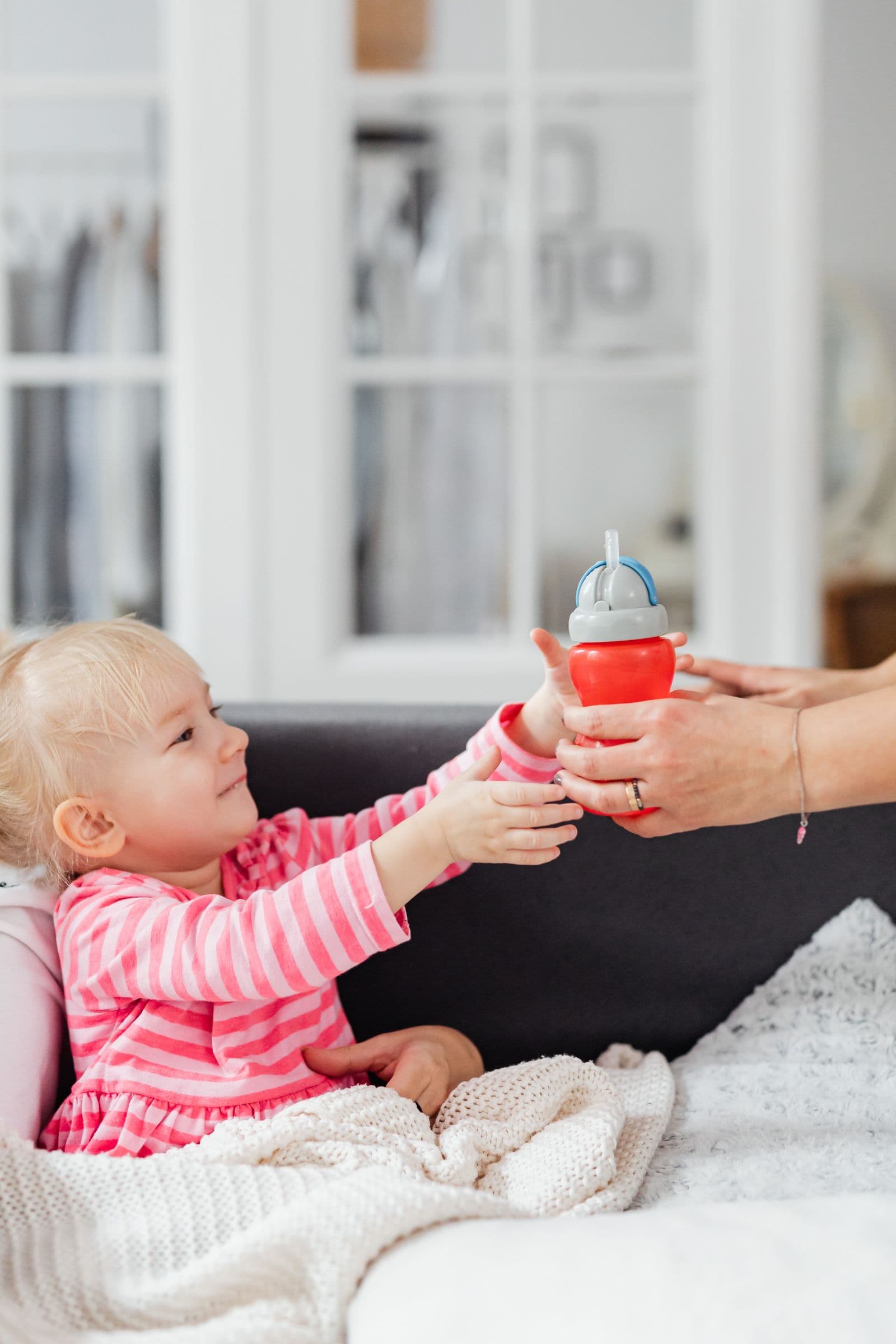
Best Sippy Cups (2026): Spoutless 360, Straw & Open-Cup Transition
Best sippy cups by drinking mechanism — spoutless 360, weighted straw, stainless, open-cup trainers — plus a CDC/AAP age-band transition plan (6 months to ~2 years), spill/mold/travel pitfalls, and AAPD tooth-decay context. Four Amazon picks.
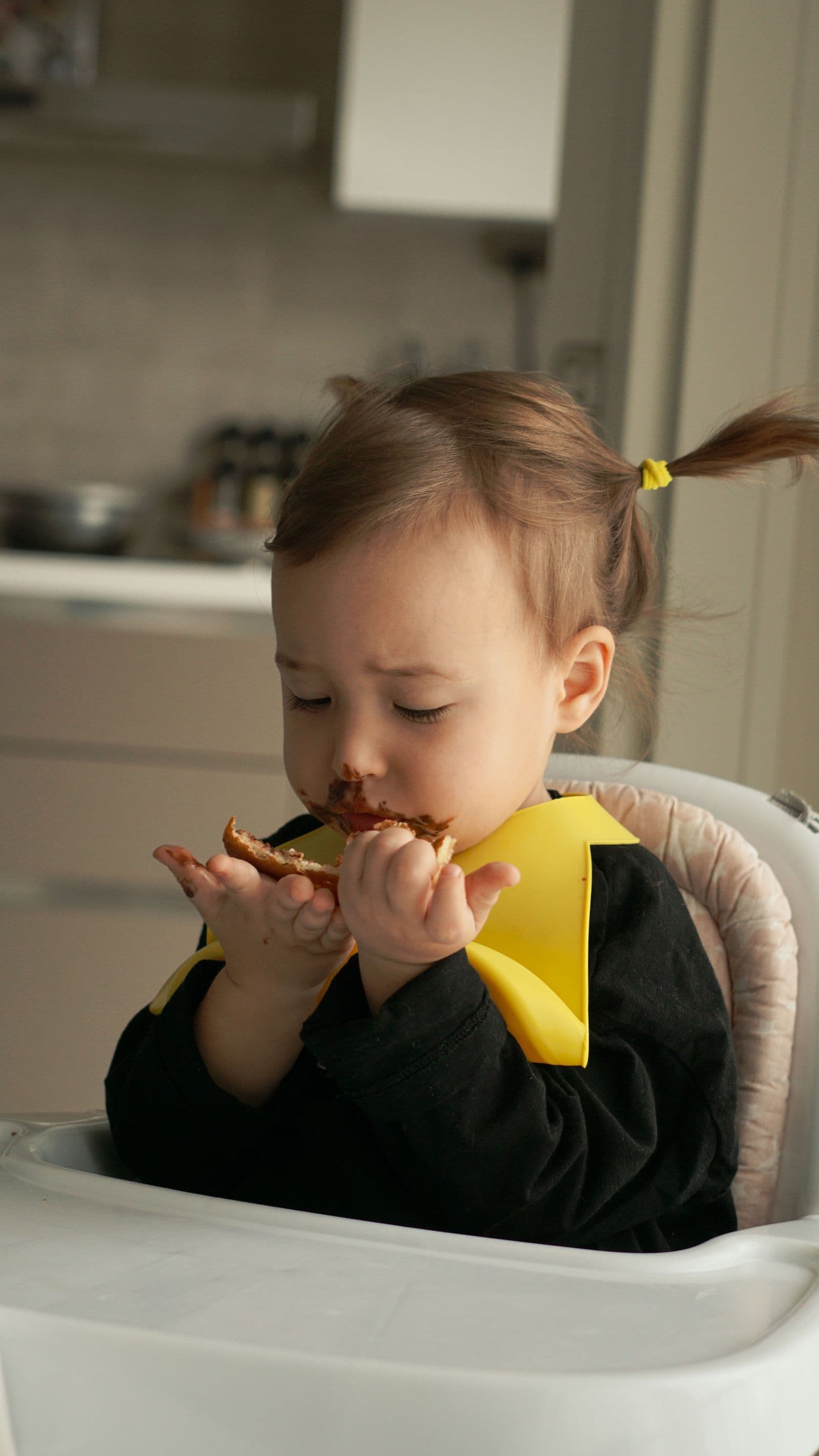
Toddler Won't Eat Dinner? How to Handle Picky Eating Without Battles
Why toddlers get picky, the calm "division of responsibility" approach to mealtimes, and what actually helps — without turning dinner into a fight.
Mom's Magazine Editorial Team
Editorial Team
The Mom's Magazine editorial team researches and writes practical, plainly-sourced guidance for parents and families. Guides are reviewed for accuracy and updated as recommendations change. Where a topic calls for professional expertise, we cite reputable organizations and, for health topics, add a qualified reviewer before publishing.
Newsletter
Get the Weekly Mom List
One short email a week: the most useful guides, activities, and picks for your family. No spam, unsubscribe anytime.