Products
Best Toddler Winter Coats, Jackets and Snowsuits of 2026
The best toddler winter coats, jackets and snowsuits for 2026: bunting vs. two-piece, water-resistant vs. waterproof shells, sizing for a growing season, and why a puffy coat never goes under a car seat harness.
As an Amazon Associate I earn from qualifying purchases.Some links on this page are affiliate links. If you buy through them, Mom's Magazine may earn a small commission at no extra cost to you. It never changes which products we recommend. How we recommend products.
For a baby or young toddler who's mostly carried or stroller-bound, a one-piece bunting like the Columbia Snuggly Bunny II — water-resistant, down-insulated, and built without PFAS — covers the most ground with the least fuss, and its asymmetrical zipper handles diaper changes without a full re-wrap. For a toddler who's walking, climbing, and needs to use a bathroom or potty independently, a two-piece set — separate jacket and snow bib, like Simple Joys by Carter's — is the more practical shape, since the pieces come apart instead of forcing a full-body undress. Whichever shape you pick, the one rule that actually matters for safety: that same puffy coat has to come off before your child goes into a car seat harness, because the insulation compresses flat in a crash and leaves dangerous slack under the straps.
Quick picks
| Product | Best for | |
|---|---|---|
| Columbia Snuggly Bunny II Bunting Best bunting for babies and younger toddlers | Babies and younger toddlers who are mostly carried or in a stroller | Check price on Amazon |
| Simple Joys by Carter's 2-Piece Water-Resistant Snowsuit Set Best two-piece for a mobile toddler | A walking, climbing toddler who needs pieces that come apart | Check price on Amazon |
| Carter's Baby Insulated One-Piece Snowsuit Puffer one-piece with flip mitts | Stroller rides with a baby or young toddler | Check price on Amazon |
| Amazon Essentials Toddler Boys' Heavyweight Hooded Puffer Jacket Everyday puffer (boys' cut) | An everyday school and play coat | Check price on Amazon |
| Amazon Essentials Toddler Girls' Heavyweight Hooded Puffer Coat Everyday puffer (girls' cut) | An everyday school and play coat | Check price on Amazon |
| Arctix Infant/Toddler Chest High Snow Bib Overalls Snow bibs | Adding snow pants to a coat they already have | Check price on Amazon |
| London Fog Toddler 3-Piece Snowsuit Set Coat and bib set | A matching coat and bib set | Check price on Amazon |
| iXtreme 2-Piece Snowsuit Set Jacket and bib set | Sledding and recess | Check price on Amazon |
| Carter's Insulated Snow Bib Adjustable snow bib | Snow pants that adjust as they grow | Check price on Amazon |
| iXtreme Insulated Fleece Bunting Footed fleece bunting | A footed bunting for walks and errands | Check price on Amazon |
Toddler winter coats and snowsuits get bought in a hurry, usually the week the temperature actually drops and the current coat doesn't zip over last year's sleeves. The two questions that matter more than color or brand are shape — bunting or two-piece — and what happens to that coat the second your child gets into a car seat. Get those two things right and the rest (insulation type, price, how many snowmen it survives) is genuinely a matter of preference.
How we picked
This is a researched comparison, not a season-long cold-weather wear test — we haven't put a toddler through a real winter in these specific items ourselves. We compared manufacturer specifications, safety guidance on car seats and children's outerwear, and the practical differences between bunting and two-piece construction. If we add hands-on testing later, we'll update this page and say so.
Bunting or two-piece: the decision that actually matters
A bunting is a single enclosed garment — arms and legs zip into one shell, sometimes with fold-over mitts and booties built in — designed around a baby or young toddler who's being carried or pushed, not walking themselves through snow. A two-piece set is a separate jacket and snow bib (overalls with a bib front), designed around a toddler who's mobile enough that the outfit needs to survive sitting down, climbing, and getting undressed for a bathroom trip or a warm store.
| One-piece bunting | Two-piece jacket + snow bib | |
|---|---|---|
| Best for | Baby to about 24 months, mostly carried or in a stroller | A walking, climbing toddler who dresses/undresses more independently |
| Diaper or bathroom changes | Needs a zipper designed for it (check before buying — not all buntings have one) | Jacket can stay on; only the bib comes down |
| Mobility | Limited — not built for a child climbing or crawling on their own | Full range of motion for walking, climbing, sledding |
| Warmth coverage | Fully enclosed feet and hands, no gaps at the wrists or ankles | Gaps can open at the waist or wrists unless layers overlap correctly |
| Typical cost | Often pricier for the coverage (one substantial garment) | Can be bought as separates, so damaged pieces are replaced individually |
The mistake we'd flag: buying a bunting for a toddler who's already walking confidently. It looks cozier in the store, but a mobile toddler zipped into one enclosed garment can't crouch, climb a snowbank, or sit down on a sled the way the two-piece shape allows — and undressing for a bathroom trip means the whole thing comes off, not just a layer.
Water-resistant vs. waterproof, and what "PFAS-free" means here
Water-resistant fabric sheds light snow, mist, and brief contact with wet surfaces; it is not the same claim as waterproof, and the difference shows up the moment a toddler sits down in wet snow or packs a snowball with bare-handed enthusiasm. Most mainstream toddler snowsuits and buntings — including both picks below — are labeled water-resistant rather than fully waterproof, which is fine for typical outdoor play but worth knowing before you assume an hour of sledding will keep a toddler bone-dry underneath.
PFAS (per- and polyfluoroalkyl substances) are the "forever chemicals" historically used in water-repellent fabric coatings, and they're an increasingly common thing for parents to ask about on kids' gear specifically. Columbia labels its Snuggly Bunny II line "Designed Without PFAS" directly on the product page — that's the manufacturer's own claim, not our lab result, but it reflects a broader shift already underway across mainstream kids' outerwear as brands move to PFAS-free water-repellent finishes. If a specific coat doesn't say PFAS-free anywhere in its materials description, that's worth checking directly with the brand rather than assuming.
The coat-and-car-seat rule that overrides everything else
Never buckle a car seat harness over a puffy coat or snowsuit
The American Academy of Pediatrics puts it plainly: bulky clothing, including winter coats and snowsuits, should not be worn underneath the harness of a car seat. In a crash, fluffy padding immediately flattens out from the force, leaving extra space under the harness — space a child can slip through. AAP's rule of thumb is nothing bulkier than a sweatshirt or fleece jacket under the straps. A rough test: if you have to loosen the harness to buckle it over the coat, or you can pinch the webbing with slack after buckling, the coat is too thick.
This isn't a minor footnote — it's the single most important thing on this page, and it applies to every coat and snowsuit here, not just cheaper ones. AAP's safe alternative is straightforward: buckle your child into the harness first in a thin layer (fleece, sweatshirt, long underwear in very cold weather), then either lay the coat over the top of the buckled straps like a blanket, or put the coat on backward over the already-buckled harness so the arms stay warm without the insulation sitting under the straps. A poncho-style coat or one that zips down the sides so the back can flip forward over the harness works the same way. None of this means skipping a warm coat for the walk to and from the car — it means the coat's job changes the moment your child is buckled in.
This matters more for a bunting than it might seem, since a bunting's whole design is built around enclosing the body the harness needs clear access to. If a bunting doesn't have a car-seat-compatible design (some are built with a slit or panel specifically for harness access), plan on the same thin-layer-plus-blanket-on-top approach rather than buckling over the bunting itself.
Two shapes worth knowing the difference between
Columbia Snuggly Bunny II Bunting
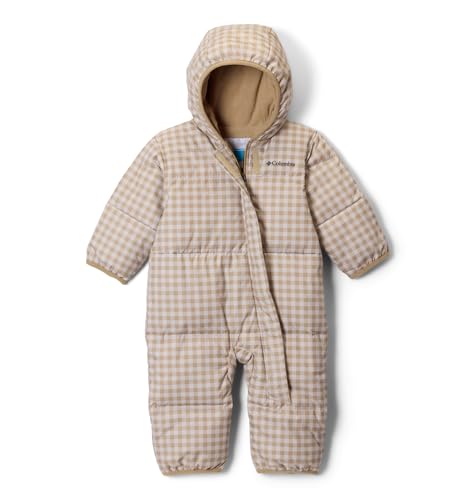
Columbia's bunting is a one-piece, water-resistant shell over 450 fill-power down insulation (RDS certified, meaning the down is sourced under the Responsible Down Standard), with a microfleece-lined hood and sleeves and fold-over mitts and booties for hands and feet. The asymmetrical zipper runs long enough for a diaper change without unwrapping the whole garment, and reflective details add a little visibility on darker winter afternoons. It's sized 0/3 months through 18/24 months, which puts its realistic window at babies and younger toddlers who are carried or strollered rather than walking through snow on their own.
Check price on AmazonColumbia Snuggly Bunny II Bunting
Simple Joys by Carter's 2-Piece Water-Resistant Snowsuit Set
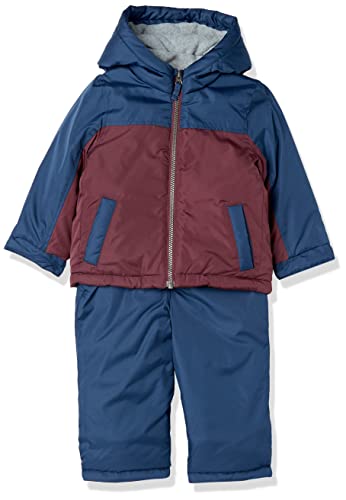
Amazon's Carter's-affiliated line sells this as a genuine two-piece: a water-resistant, fleece-lined hooded puffer jacket paired with a separate water-resistant snow bib that has adjustable shoulder straps and ankle gaiters to keep snow from working up the pant leg. Because the pieces separate, a toddler can shed the bib for a bathroom trip or a warm store stop without taking off the jacket, and a torn or outgrown bib doesn't mean replacing the whole set. It runs across a wide range of toddler sizes and both boy and girl colorways.
Neither of these was tested hands-on for this page
We compared manufacturer specifications and product descriptions, not a side-by-side winter of wear. Fit and warmth both depend heavily on what's layered underneath and how cold your actual winters run — a suit that's plenty warm in a mild coastal winter may be underdressed for sustained single-digit temperatures.
Check price on AmazonSimple Joys by Carter's 2-Piece Water-Resistant Snowsuit Set
Sizing for a growing toddler and a layered outfit
Common practical advice for winter outerwear is to size up by one from a toddler's regular clothing size, since that extra room needs to fit a base layer and maybe a fleece underneath without the coat straining at the seams or the sleeves riding up past the wrists. That's a different instinct than the true-to-size advice for rain gear, where a loose fit lets water in at the cuffs — cold-weather layering wants the room, wet-weather sealing doesn't. The tradeoff: a coat sized generously for layering is also a coat with more slack that has to come off entirely before a car seat harness goes over it, so don't let "sized up for warmth" turn into "loose enough to buckle over," which it should never be regardless of size.
The same layer-under-not-over logic applies to trick-or-treating in a cold climate, just for one night instead of a whole season. Our toddler Halloween costume guide covers sizing a costume to fit over a base layer without needing a bulky coat on top of it.
What's not worth it for a toddler specifically
Technical ski-specific snowsuits with articulated knees, powder skirts, and RECCO reflectors are built for a child who's actually skiing or snowboarding for hours at elevation — a real use case, just not a typical toddler's. For backyard snow play, sledding on a local hill, or the walk to and from daycare, that gear is solving a problem most toddlers don't have yet, at a price that assumes a longer, more technical use case. A well-insulated, water-resistant bunting or two-piece set at a mid-range price covers actual toddler winter play without paying for performance features built for a different age and activity.
Mistakes worth naming
- Buckling a car seat harness over a puffy coat or snowsuit — see above. This is the one that actually matters for safety, not comfort or fit.
- Buying a bunting for a toddler who's already walking well and wants to move on their own terms.
- Assuming water-resistant means waterproof, then being surprised when a toddler who sat in wet snow has a damp bottom halfway through play.
- Sizing so tight there's no room for a base layer, which forces a choice between warmth and a coat that actually zips.
- Buying premium technical ski gear for a toddler who's playing in the backyard, not skiing a mountain.
If rain gear is what you're actually shopping for rather than cold-weather insulation, our comparison of toddler rain boots and rain jackets covers the sizing and closure questions specific to wet-not-cold weather, which pull in the opposite direction from winter sizing advice above. And once the coat and bib are sorted, outdoor activities for preschoolers has ideas for what to actually do outside once everyone's dressed for it.
Our Recommendations
Columbia Snuggly Bunny II Bunting
Best for: Babies and younger toddlers who are mostly carried or in a stroller
A one-piece bunting with 450-fill-power down insulation, an Omni-Shield finish that repels light rain and stains, a microfleece-lined hood and sleeves, fold-over cuffs for hands and feet, and a full-length cross-front zipper for diaper changes.
- 450-fill-power, responsibly sourced down insulation
- Omni-Shield finish repels light rain and stains
- Microfleece-lined hood and sleeves
- Fold-over cuffs cover hands and feet
- Full-length cross-front zipper for diaper changes
Keep in mind: Only fits the bunting-appropriate window (roughly newborn to 24 months) — a toddler who's walking confidently will outgrow the usefulness of a one-piece enclosed suit before they outgrow the size range.
Simple Joys by Carter's 2-Piece Water-Resistant Snowsuit Set
Best for: A walking, climbing toddler who needs pieces that come apart
A separate water-resistant, fleece-lined hooded puffer jacket and a water-resistant snow bib with adjustable shoulder straps and ankle gaiters. Because jacket and bib separate, a toddler can shed the bib for a bathroom trip or a warm indoor stop without taking off the whole outfit.
- Two separate pieces — jacket and snow bib
- Fleece-lined hood on the jacket
- Adjustable shoulder straps on the bib for a growing fit
- Ankle gaiters help keep snow out of boots
- Wide range of toddler sizes and colorways
Keep in mind: Two pieces means two things to keep track of and two zippers/closures to manage on a squirming toddler, versus one garment for a bunting.

Carter's Baby Insulated One-Piece Snowsuit
Best for: Stroller rides with a baby or young toddler
A fleece-lined puffer one-piece with a full-length zipper and convertible mittens and footies that flip open or closed.
- Insulated puffer with soft fleece lining
- Full-length zipper
- Convertible flip mittens and footies
- Lightweight puffer design for layering
Keep in mind: A one-piece suits babies better than a toddler who's walking and climbing.

Amazon Essentials Toddler Boys' Heavyweight Hooded Puffer Jacket
Best for: An everyday school and play coat
A water-resistant hooded puffer with polyfill insulation, a fleece-lined hood and body, an internal snow skirt, knit storm cuffs with thumbholes, and two zippered hand-warmer pockets. The listing describes an oversized fit.
- Water-resistant shell (not waterproof, per the listing)
- Internal snow skirt with elastic and snap closure
- Fleece-lined hood and upper body
- Knit storm cuffs with thumbholes
Keep in mind: Water-resistant, not waterproof, so it won't stay dry through long wet-snow play without snow pants and a change of layers.

Amazon Essentials Toddler Girls' Heavyweight Hooded Puffer Coat
Best for: An everyday school and play coat
Same construction as the boys' version: a water-resistant hooded puffer with polyfill insulation, fleece-lined hood and body, internal snow skirt, knit storm cuffs with thumbholes, and zippered hand-warmer pockets.
- Water-resistant shell (not waterproof, per the listing)
- Internal snow skirt
- Fleece-lined hood and upper body
- Two zippered hand-warmer pockets
Keep in mind: Water-resistant, not waterproof. Pair it with snow pants or a bib for snow play.

Arctix Infant/Toddler Chest High Snow Bib Overalls
Best for: Adding snow pants to a coat they already have
Chest-high snow bibs with a waterproof/water-resistant shell rated 8,000 mm, sealed critical seams, recycled insulation, boot gaiters with grippers, and reinforced ankles, hem, and scuff guards.
- 8,000 mm waterproof/water-resistant rating; critical seams sealed
- Boot gaiters with grippers
- Reinforced 600-denier ankles, hem, and scuff guards
- Adjustable shoulder straps and waist
Keep in mind: Bibs only, so you still need a warm coat on top.

London Fog Toddler 3-Piece Snowsuit Set
Best for: A matching coat and bib set
A snowsuit set with a heavyweight fleece-lined hooded jacket and snow bib overalls with adjustable shoulder straps and ankle gaiters. Each piece can also be worn on its own.
- Heavyweight hooded jacket with fleece lining and pockets
- Snow bib with adjustable straps and ankle gaiters
- Jacket and bib can be worn separately
Keep in mind: The listing title says 3-piece, but the bullet points describe a jacket and a bib. Check the listing for what's included.

iXtreme 2-Piece Snowsuit Set
Best for: Sledding and recess
A fleece-lined insulated hooded jacket with a snow bib that has reinforced knees, adjustable straps, and water-resistant fabric.
- Insulated, fleece-lined hooded jacket
- Snow bib with reinforced knees and adjustable straps
- Water-resistant fabric
- Pieces work together or on their own
Keep in mind: The listing calls the fabric water-resistant, so expect damp knees after long wet-snow play.

Carter's Insulated Snow Bib
Best for: Snow pants that adjust as they grow
Water-resistant insulated snow bibs with adjustable straps, a zipper, ankle gaiters, and reinforced knees and seat.
- Water-resistant with insulation
- Adjustable straps
- Ankle gaiters and zipper
- Reinforced knees and seat
Keep in mind: Bibs only. Pair them with a coat.

iXtreme Insulated Fleece Bunting
Best for: A footed bunting for walks and errands
An insulated one-piece bunting with a fleece-lined interior, hood, footed legs, rollover cuffs, a full-length zipper, and a shell the maker says helps block wind and light moisture. Sized from infant through 24 months.
- Insulated with fleece lining
- Hood, footed legs, and rollover cuffs
- Full-length zipper
- Wind- and light-moisture-resistant shell
Keep in mind: Like any bunting, it's for babies who are carried or in a stroller, not for active toddler play.
As an Amazon Associate I earn from qualifying purchases. Mom's Magazine may earn a commission when you buy through links on this page, at no extra cost to you. Learn more.
Frequently Asked Questions
Can my toddler wear their winter coat in the car seat?
Not under the harness. The AAP says bulky coats and snowsuits should never go under a car seat harness, because the padding compresses flat in a crash and can leave enough slack for a child to slip out. Buckle your child in a thin layer, then either lay the coat over the top of the buckled harness or put it on backward over the already-buckled straps to keep arms warm without insulation under the harness.
Should I buy a bunting or a two-piece snowsuit?
Bunting for a baby or younger toddler who's mostly carried or in a stroller — it's fully enclosed and warm with no gaps. Two-piece (jacket plus snow bib) for a toddler who's walking, climbing, and needs to use a bathroom or come inside without a full undress, since the pieces separate independently.
What does "PFAS-free" mean on a kids' snowsuit, and does it matter?
PFAS are "forever chemicals" historically used in water-repellent fabric coatings that don't break down in the environment or the body. PFAS-free means the brand uses an alternative water-repellent treatment. It's become standard across mainstream kids' outerwear rather than a premium feature — Columbia states it directly on the Snuggly Bunny line's product page. If a coat's materials page doesn't mention it either way, that's worth asking the brand directly.
Is water-resistant good enough, or do I need waterproof?
For typical toddler winter play — sledding, backyard snow, the walk to daycare — water-resistant is usually enough; it's what most mainstream toddler snowsuits and buntings are built to. It sheds light snow and brief wet contact but isn't sealed against sustained soaking, so a toddler sitting in wet snow for a while may end up damp underneath. Fully waterproof options exist but are less common at this age and price point.
How much bigger should I size a toddler winter coat?
Common practical advice is one size up from a toddler's regular clothing size, to leave room for a base layer or fleece underneath without the coat straining at the seams. That extra room is for layering, though — it should never be the reason a coat feels bulky enough to justify buckling a car seat harness over it. The coat still comes off before the harness goes on, regardless of size.
Sources & Further Reading
- Winter Car Seat Safety Tips: Keeping Kids Safe & Warm — American Academy of Pediatrics (HealthyChildren.org) (reviewed 2026-09-03)
Related Guides
Best Toddler Rain Boots and Rain Jackets of 2026: What to Buy
The best toddler rain boots and rain jackets for 2026: why a flexible sole beats deep tread for new walkers, why to skip drawstrings, and how to size boots and a jacket together.
Best First Walking Shoes for Toddlers of 2026
What the American Podiatric Medical Association actually recommends for new walkers, the difference between soft-sole pre-walkers and structured first shoes, and four APMA-recognized options to start with.
Outdoor Activities for Preschoolers
Outdoor activities for preschoolers you can actually run: educational backyard play, no-equipment games, chalk and bubbles, a scavenger hunt, and sun, water, and playground notes from AAP and CDC pages. Editorially reviewed — not medical advice.
Mom's Magazine Editorial Team
Editorial Team
The Mom's Magazine editorial team researches and writes practical, plainly-sourced guidance for parents and families. Guides are reviewed for accuracy and updated as recommendations change. Where a topic calls for professional expertise, we cite reputable organizations and, for health topics, add a qualified reviewer before publishing.
Newsletter
Get the Weekly Mom List
One short email a week: the most useful guides, activities, and picks for your family. No spam, unsubscribe anytime.