Products
Best First Walking Shoes for Toddlers of 2026
What the American Podiatric Medical Association actually recommends for new walkers, the difference between soft-sole pre-walkers and structured first shoes, and four APMA-recognized options to start with.
As an Amazon Associate I earn from qualifying purchases.Some links on this page are affiliate links. If you buy through them, Mom's Magazine may earn a small commission at no extra cost to you. It never changes which products we recommend. How we recommend products.
The American Podiatric Medical Association's own position is that barefoot is best for early indoor walking, since going without shoes lets the muscles and tendons in a baby's foot develop naturally — shoes become useful once a child is walking regularly outdoors or on rough, hot, or cold surfaces, mainly for protection rather than to help them learn to walk. When you do buy shoes, flexibility at the ball of the foot, a wide toe box, roughly 10–15 mm of room ahead of the longest toe, and a secure hook-and-loop closure matter more than cushioning, arch support, or brand. Soft-sole shoes like Robeez work well for early cruising and indoor wear; once a toddler is walking confidently outdoors, a structured sneaker like the Stride Rite Soft Motion or New Balance 574 New-B adds sole protection without sacrificing the flex.
Quick picks
| Product | Best for | |
|---|---|---|
| Stride Rite Soft Motion Kylo Athletic Sneaker Best overall structured first walker | Confident walkers heading outdoors regularly | Check price on Amazon |
| New Balance Kids' 574 V1 New-B Hook and Loop Sneaker Best for wide or growing feet | Adjustable fit and wide or in-between sizes | Check price on Amazon |
| Robeez Soft Soles Slip-Resistant Crib Shoes Best for pre-walkers and indoor use | Cruising, early wobbly steps, and indoor wear | Check price on Amazon |
| Robeez First Kicks Sneakers Best transition pick | The transition from soft sole to a real sneaker | Check price on Amazon |
| Stride Rite SR-Taye 2.0 Removable insole for wide fit | Wider feet (the insole comes out) | Check price on Amazon |
| Ten Little First Walker Shoes Wide toe box, zero-drop | A wide toe box and zero-drop sole | Check price on Amazon |
| pediped Dani First Walker Flexible first walker | A flexible sole with rounded edges | Check price on Amazon |
| Carter's Every Step Kyle First Walker Easy on-and-off sneaker | An everyday sneaker that goes on quickly | Check price on Amazon |
| See Kai Run Stevie Mini Breathable with toe cap | A breathable shoe with a toe cap | Check price on Amazon |
How we picked
This is a researched buying guide, not a hands-on test — we haven't put these on a toddler's feet ourselves and watched them walk. We compared APMA guidance, manufacturer specifications, and the recurring patterns in verified reviews, focused on what actually changes how a new walker moves: sole flexibility, toe box shape, and closure type. If we add hands-on testing later, we'll update this guide and say so.
What the APMA actually recommends
It's worth starting here because it cuts against a lot of shoe marketing: the American Podiatric Medical Association's own guidance is that barefoot is best for young children learning to walk, particularly indoors on safe, clean surfaces. Going without shoes lets the small muscles and tendons in a baby's foot develop the strength and proprioception (a sense of where the foot is in space) that a rigid sole can dull. Shoes, in the APMA's framing, exist primarily to protect feet from rough pavement, hot sand, cold floors, or sharp objects outdoors — not to correct gait or provide support a typically developing foot doesn't need. If your baby is cruising along furniture or taking early steps indoors, bare feet or non-slip socks are a legitimate, guidance-backed choice; you're not under-equipping them by skipping shoes at home.
What actually matters in a first-walker shoe
| Feature | Why it matters |
|---|---|
| Flexible sole | Should bend at the ball of the foot the way a bare foot naturally does — a stiff sole works against the push-off motion a new walker is still figuring out. |
| Wide, rounded toe box | Growing toes need room to spread and grip the ground, not get pinched into a narrow or pointed shape. |
| Room to grow | APMA guidance points to roughly 10–15 mm of space ahead of the longest toe — enough for growth, not so much the foot slides around inside the shoe. |
| Secure, simple closure | Hook-and-loop straps a toddler can't undo mid-walk, without needing an adult to retie a lace every few minutes. |
| Lightweight construction | A heavy shoe changes a new walker's gait more noticeably than it would an adult's — every extra ounce is a bigger percentage of a toddler's own body weight. |
| Non-slip, low-profile sole | Enough grip to prevent slipping on smooth floors, without so much tread that it catches on carpet or pavement and trips a still-unsteady walker. |
Soft-sole pre-walkers vs. structured first walkers
"First walking shoe" actually covers two different products, and mixing them up leads to either an overbuilt shoe on a baby who's barely cruising or an underbuilt one on a toddler doing laps around a playground. Soft-sole shoes — the moccasin-style pre-walkers brands like Robeez are built around — are essentially a sock with a thin, flexible, skid-resistant bottom. They're meant for babies who are cruising, taking early wobbly steps, or walking mostly indoors, and their whole design philosophy is to interfere with natural foot movement as little as possible while adding a bit of grip and warmth. Structured first-walker sneakers, like the Stride Rite Soft Motion line or New Balance's 574 New-B, still prioritize flexibility, but they add a slightly firmer sole and more substantial upper for a toddler who's walking confidently and spending real time outdoors on pavement, playground surfaces, or anywhere a soft sole wouldn't hold up.
Sizing and how often to size up
Toddler feet grow fast enough that last quarter's size can't be assumed to still fit — many toddlers move up roughly a half size every two to three months through this stage. Measure both feet while your toddler is standing and bearing weight, since feet spread under load and one foot is very often slightly larger than the other (fit to the bigger one). Sizing runs differently across brands even at the same labeled size, so check the specific brand's size chart rather than assuming a size that worked in one pair transfers exactly to another.
The thumb-width check, more precisely
APMA guidance points to about 10–15 mm of space ahead of the longest toe — close to a thumb's width, but worth actually pressing a thumb against the top of the shoe at the toe rather than eyeballing it. Too little room causes real problems (cramped, painful toes); too much causes a different one (a foot that slides and doesn't get the grip the sole is designed to provide).
Once your toddler is a confident, mobile walker, the next safety layer usually worth thinking about is what's happening at floor level around the house. Our guide to baby gates for stairs and doorways and our room-by-room baby-proofing checklist both cover the changes that tend to matter most right around the same stage new walking shoes come into the picture. And if you're tracking whether walking itself is on schedule, our guide to baby motor milestones by age covers the typical range for first independent steps.
The same size-checking habit that keeps shoes fitting through a growth spurt applies to winter outerwear too, though the fit target is reversed — outerwear wants extra room for layers, not a snug fit. Our comparison of toddler winter coats and snowsuits covers bunting vs. two-piece sizing and a car-seat safety rule worth knowing regardless of what you buy.
First walking shoe comparison
Which stage each shoe fits, plus the sole and closure details from each product's Amazon listing. Materials can vary by colorway, so check the listing for the exact pair you pick.
| Product | Stage | Sole | Closure | |
|---|---|---|---|---|
| Stride Rite Soft Motion Kylo Athletic Sneaker Best overall structured first walker | Structured first walker | Synthetic rubber, slip-resistant | Hook and loop | Check price on Amazon |
| New Balance Kids' 574 V1 New-B Hook and Loop Sneaker Best for wide or growing feet | Structured first walker | Rubber | Hook and loop | Check price on Amazon |
| Robeez Soft Soles Slip-Resistant Crib Shoes Best for pre-walkers and indoor use | Pre-walker, cruising, indoor | Flexible suede, slip-resistant | Elastic ankle, slip-on | Check price on Amazon |
| Robeez First Kicks Sneakers Best transition pick | Transition from soft sole to sneaker | Leather and rubber split sole | Hook and loop | Check price on Amazon |
| Stride Rite SR-Taye 2.0 Removable insole for wide fit | Infant/toddler sneaker | Synthetic | Hook and loop | Check price on Amazon |
| Ten Little First Walker Shoes Wide toe box, zero-drop | First walker | Natural rubber, zero-drop | Hook and loop | Check price on Amazon |
| pediped Dani First Walker Flexible first walker | First walker | Flexible natural rubber | Adjustable | Check price on Amazon |
| Carter's Every Step Kyle First Walker Easy on-and-off sneaker | First walker | Not listed | Hook and loop | Check price on Amazon |
| See Kai Run Stevie Mini Breathable with toe cap | First walker | Not listed | Hook and loop | Check price on Amazon |
Our Recommendations

Stride Rite Soft Motion Kylo Athletic Sneaker
Best for: Confident walkers heading outdoors regularly
An APMA-recognized structured sneaker built around a flexible, seamless upper and a rounded, slip-resistant sole. It's designed specifically for the first-walker stage — flexible enough to bend at the ball of the foot, with enough sole to handle pavement and playground surfaces a soft-sole shoe wouldn't hold up on.
- APMA Seal of Acceptance for promoting healthy foot development
- Ortholite memory foam footbed for cushioning without adding stiffness
- Hook-and-loop closure for quick, secure on-and-off
- Rounded, flexible outsole that bends at the ball of the foot
Keep in mind: Runs slightly narrow in some reviewers' experience — worth checking the brand's width options if your toddler has a wide foot.
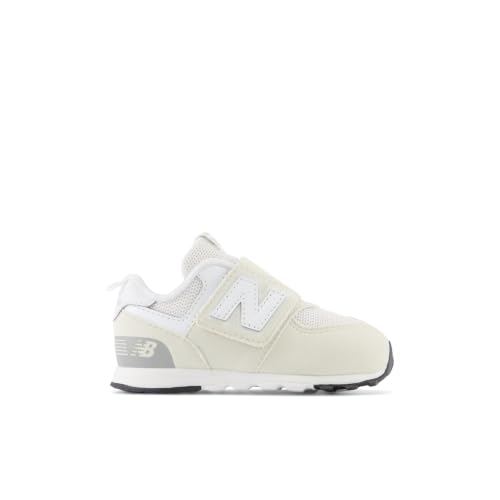
New Balance Kids' 574 V1 New-B Hook and Loop Sneaker
Best for: Adjustable fit and wide or in-between sizes
A toddler-scaled version of New Balance's familiar 574 silhouette, built with a hook-and-loop closure system designed to customize fit as a growing foot changes shape. A generous toe box and instep give room for the wide-toe-spread APMA guidance calls for.
- Hook-and-loop closure with adjustable fit for a growing or wide foot
- Durable rubber outsole with a low-profile, non-slip tread
- Generous toe box designed for early walking stages
- Widely available in standard and wide sizing
Keep in mind: The sole runs a touch firmer than the Soft Motion line, so it's a better fit once a toddler is walking steadily than for very early, wobbly steps.
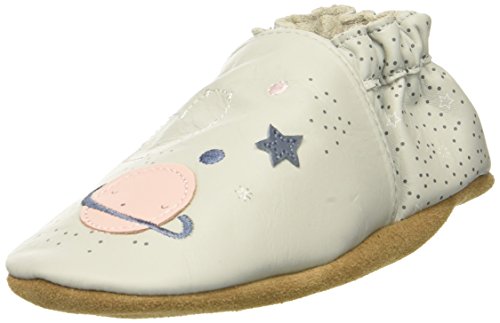
Robeez Soft Soles Slip-Resistant Crib Shoes
Best for: Cruising, early wobbly steps, and indoor wear
A soft-sole, moccasin-style shoe that functions closer to a sturdy sock than a structured sneaker — thin, flexible, and designed to interfere with natural foot movement as little as possible while adding grip and warmth. This is the category the APMA's "barefoot is best, but sometimes you need something on the foot" guidance points toward for babies who aren't yet walking outdoors regularly.
- Soft, flexible sole that bends completely, close to barefoot movement
- Elastic ankle opening for an easy, secure fit without laces or straps
- Skid-resistant suede sole for grip on smooth indoor floors
- APMA Seal of Acceptance for healthy foot development
Keep in mind: Not built for real outdoor wear or rough surfaces — the thin sole that makes it good for indoor cruising offers minimal protection on pavement or gravel.

Robeez First Kicks Sneakers
Best for: The transition from soft sole to a real sneaker
A step up from Robeez's crib shoes — still built around a flexible sole and lightweight upper, but with a more sneaker-like structure and closure for a baby who's starting to take independent steps and needs a bit more than a sock-like soft sole offers.
- Elastic laces with a hook-and-loop strap for a no-retie, secure fit
- Flexible sole that still bends well at the ball of the foot
- Heel pull tab for easier on-and-off
- Lighter construction than a fully structured toddler sneaker
Keep in mind: It's a middle-ground shoe — less protective than a fully structured sneaker like the Stride Rite Soft Motion for a toddler doing serious outdoor walking, so it's best treated as a transition step rather than the long-term outdoor shoe.

Stride Rite SR-Taye 2.0
Best for: Wider feet (the insole comes out)
A hook-and-loop sneaker with a padded tongue and collar. Stride Rite's Dual Fit system lets you take out the insole to make it a wide fit.
- Hook-and-loop closure
- Dual Fit: remove the insole for a wider fit
- Padded tongue and collar; soft textile lining
- Synthetic outsole
Keep in mind: Faux-leather upper, so it's less breathable than a cotton or mesh shoe.
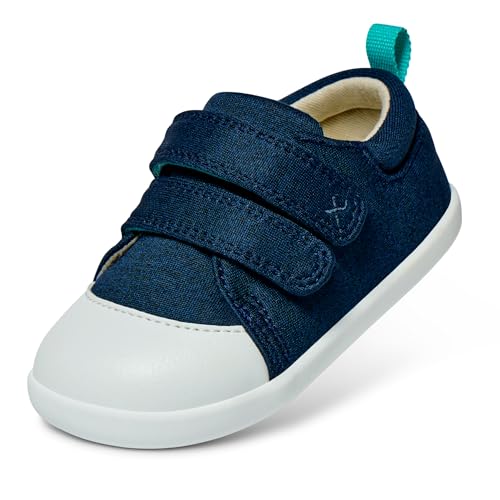
Ten Little First Walker Shoes
Best for: A wide toe box and zero-drop sole
Cotton first walkers with a wide, foot-shaped toe box, zero-drop natural rubber soles, and an extra-wide opening with hook-and-loop straps. The insoles come out so you can check fit, and the listing notes the APMA Seal of Acceptance.
- Wide toe box and zero-drop sole
- Cotton upper and lining; natural rubber outsole
- Extra-wide opening with hook-and-loop straps
- Removable insoles for checking size
Keep in mind: The cotton upper is less water-resistant than leather or synthetic shoes.

pediped Dani First Walker
Best for: A flexible sole with rounded edges
A first walker with a flexible natural rubber sole, rounded edges designed to avoid tripping points, and an adjustable closure.
- Flexible sole
- Rounded edges to avoid tripping points
- Adjustable fit
- Natural rubber outsole
Keep in mind: The Amazon listing gives few details, so check pediped's size chart before ordering.

Carter's Every Step Kyle First Walker
Best for: An everyday sneaker that goes on quickly
A lightweight, low-profile sneaker with hook-and-loop closure and faux laces, from Carter's Every Step first-walker line.
- Hook-and-loop closure for easy on and off
- Faux laces
- Lightweight, low-profile design
Keep in mind: The listing doesn't give sole or material details, so it's harder to compare than the other shoes here.

See Kai Run Stevie Mini
Best for: A breathable shoe with a toe cap
A lightweight, flexible first walker with a hook-and-loop strap, faux elastic laces, a rubberized toe cap, and a recycled mesh lining. The listing notes the APMA Seal of Acceptance.
- Hook-and-loop strap with faux elastic laces
- Rubberized toe cap
- Recycled mesh lining and EVA sock liner
- Lightweight and flexible
Keep in mind: The metallic finish shown is one colorway. Check the listing for the color and size you want.
As an Amazon Associate I earn from qualifying purchases. Mom's Magazine may earn a commission when you buy through links on this page, at no extra cost to you. Learn more.
Frequently Asked Questions
Does my baby need shoes before they can walk?
No — the APMA's own guidance is that barefoot is best for early indoor walking, since it lets the muscles and tendons in the foot develop naturally. Shoes become useful once a baby is walking regularly outdoors or on rough, hot, or cold surfaces, mainly for protection rather than to help them learn to walk.
What's the difference between soft-sole and structured first-walker shoes?
Soft-sole shoes (moccasin-style, like Robeez's crib shoes) are essentially a sturdy sock with a thin, flexible, skid-resistant bottom, meant for cruising and indoor wear. Structured first-walker sneakers add a slightly firmer sole and more substantial upper for a toddler walking confidently outdoors on pavement or playground surfaces. Most families move from one to the other as walking becomes more independent.
How do I know if a toddler shoe fits?
APMA guidance points to roughly 10–15 mm of room ahead of the longest toe — check by pressing a thumb against the top of the shoe rather than eyeballing it — with a toe box at least as wide as the widest part of the foot. Measure both feet standing and bearing weight, since one is usually slightly bigger, and fit to the larger one.
How often do toddler shoe sizes change?
Fast enough to surprise most parents — many toddlers move up roughly a half size every two to three months during this stage. It's worth rechecking fit every couple of months rather than assuming a size that worked recently still does.
Are expensive 'orthopedic' toddler shoes worth it for a typically-developing walker?
For a foot with no diagnosed issue, the APMA's guidance doesn't call for anything beyond a flexible, well-fitting, protective shoe — there's no support or correction most toddlers actually need. Orthopedic or corrective shoes matter for a specific diagnosed condition your pediatrician or a pediatric podiatrist identifies, not as a preventive upgrade for typical development.
Sources & Further Reading
- Buying Children's Footwear — American Podiatric Medical Association (APMA) (reviewed 2026-08-24)
Related Guides
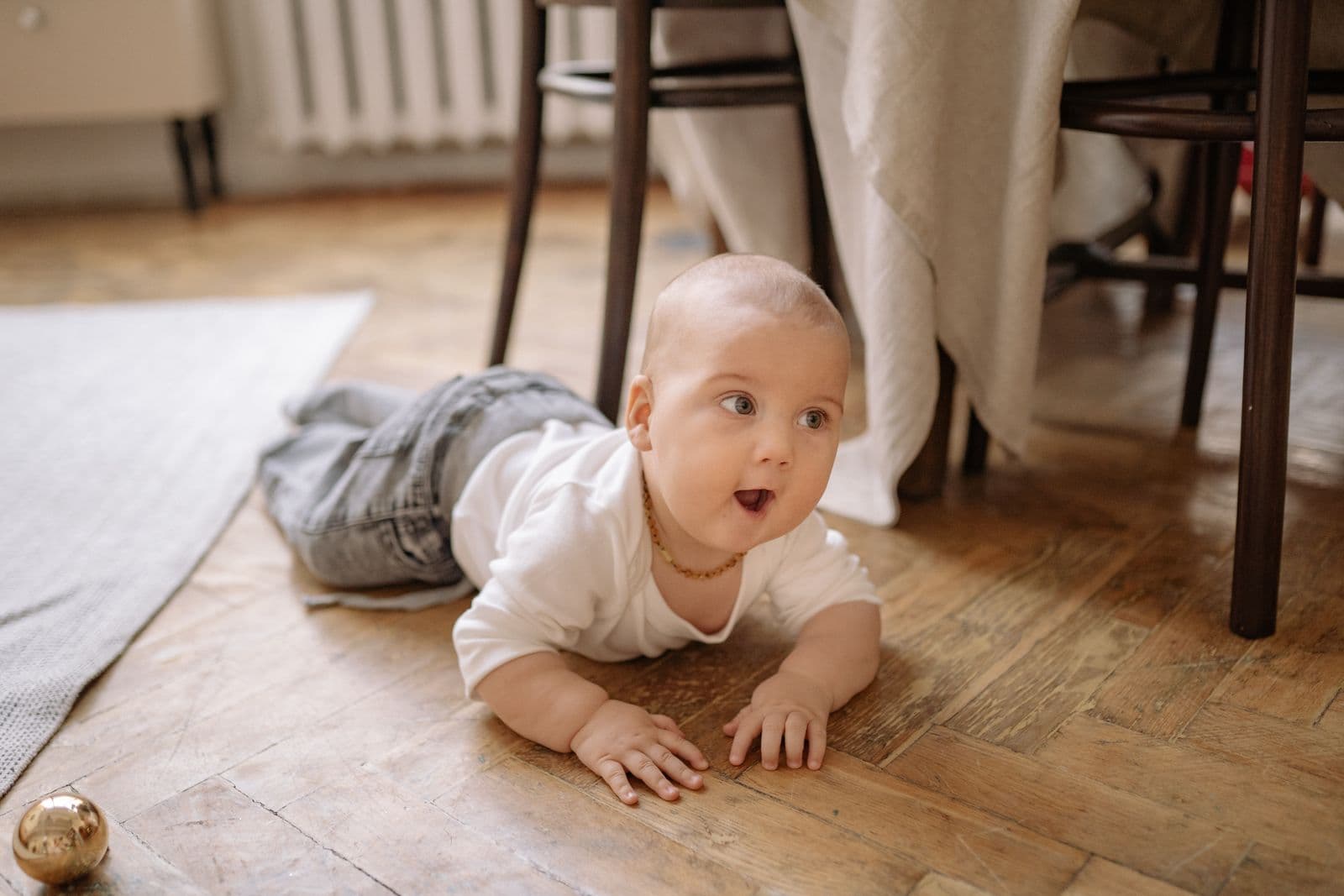
Baby Motor Milestones by Age: Rolling, Sitting, Crawling, and Walking
General CDC movement milestones for babies — rolling, sitting, crawling, pulling to stand, and first steps — plus when a delay is worth a check.
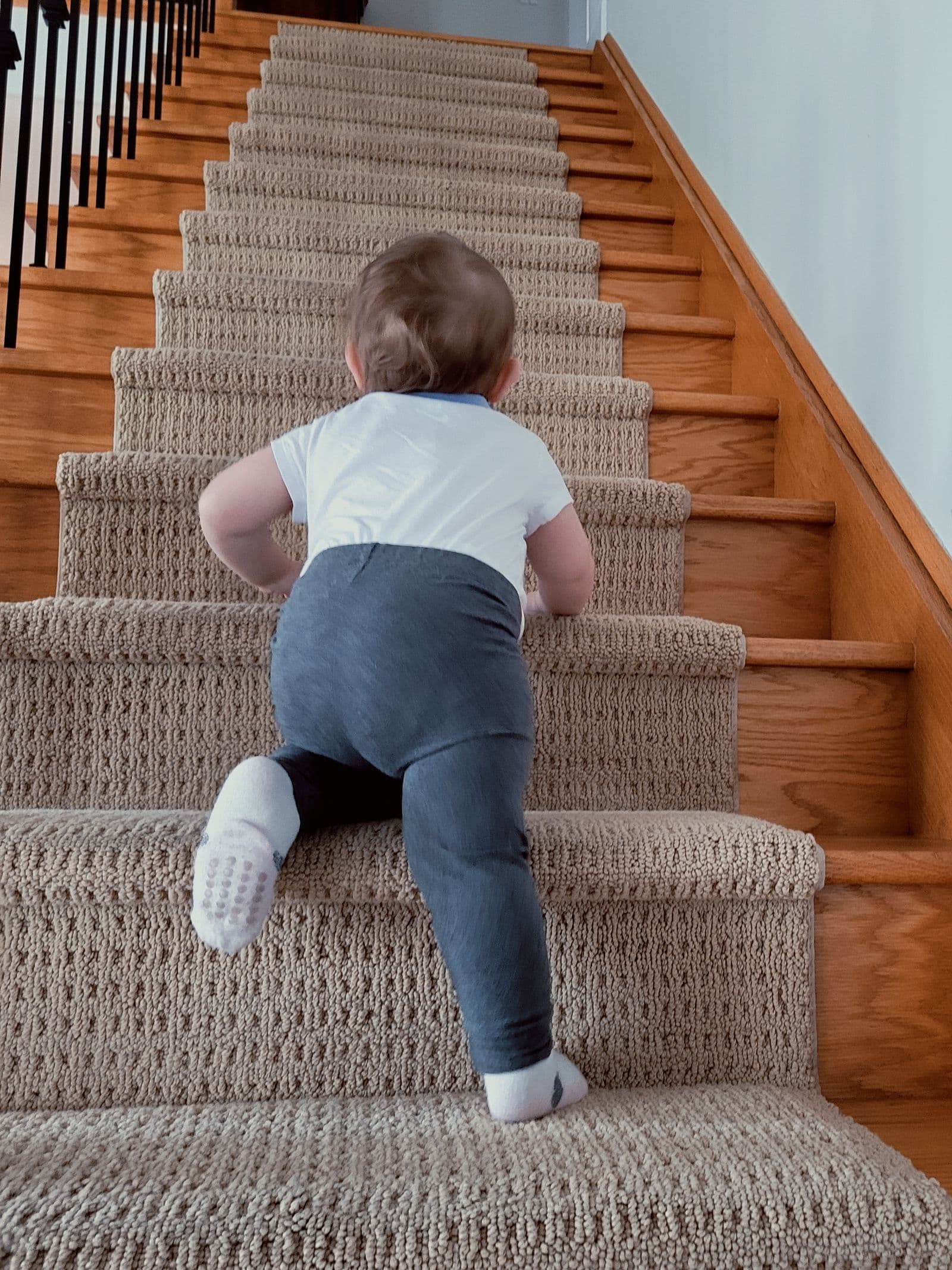
Best Baby Gates for Stairs and Doorways (2026)
The best baby gates for stairs and doorways in 2026 — hardware-mounted stair gates, pressure-mounted walk-through gates, and extra-wide picks, plus the safety rules every parent should know.
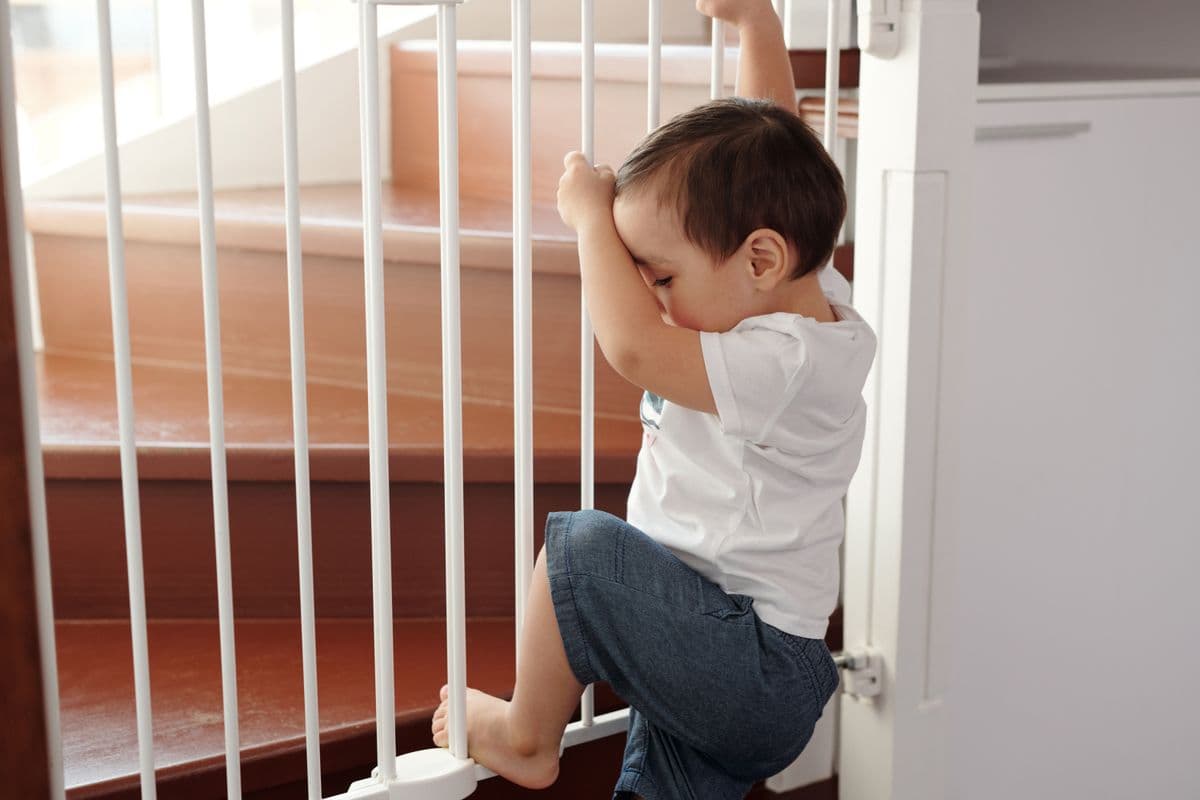
Baby-Proofing Your Home: A Room-by-Room Checklist
A practical, room-by-room baby-proofing checklist covering the changes that matter most before your baby starts crawling.
Mom's Magazine Editorial Team
Editorial Team
The Mom's Magazine editorial team researches and writes practical, plainly-sourced guidance for parents and families. Guides are reviewed for accuracy and updated as recommendations change. Where a topic calls for professional expertise, we cite reputable organizations and, for health topics, add a qualified reviewer before publishing.
Newsletter
Get the Weekly Mom List
One short email a week: the most useful guides, activities, and picks for your family. No spam, unsubscribe anytime.