Parenting
Baby Motor Milestones by Age: Rolling, Sitting, Crawling, and Walking
General CDC movement milestones for babies — rolling, sitting, crawling, pulling to stand, and first steps — plus when a delay is worth a check.
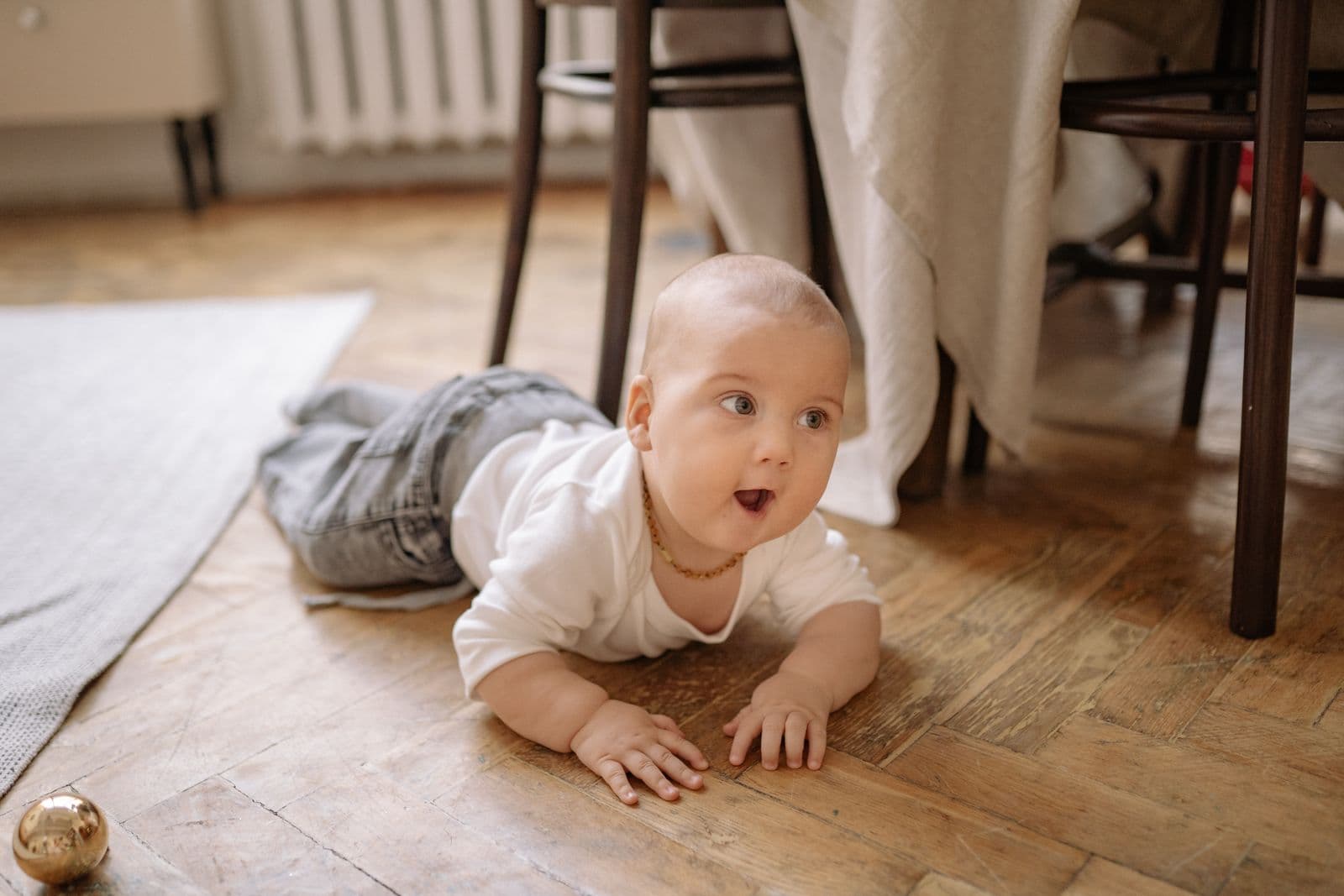
Babies gain movement skills in a rough order: rolling around 4–6 months, sitting without support around 6–9 months, crawling and pulling to stand around 9 months, and first steps near the first birthday — with wide normal variation, and some babies skipping crawling entirely. These are general CDC markers, not deadlines. If your baby isn't meeting milestones, loses a skill, or you're worried, don't wait — ask your pediatrician about a check and developmental screening.
"Is my baby behind?" might be the most-Googled — and most-posted — worry of the first year. New-parent communities like r/beyondthebump are full of anxious milestone check-ins, usually followed by a chorus of "mine did that late and is totally fine." Here's the reassuring, evidence-based version, straight from the CDC's markers.
General movement milestones by age (CDC)
| Around this age | Many babies are… |
|---|---|
| 6 months | Rolling over in both directions and starting to sit with support. |
| 9 months | Sitting without support, getting into a sitting position, crawling, and pulling up to stand. |
| 12 months | Pulling to stand, "cruising" along furniture, and maybe taking first steps. |
| 18 months | Walking well on their own, and starting to climb. |
A range, not a deadline
The CDC frames milestones as what most children (75%+) do by a given age — a guide for noticing patterns, not a stopwatch. First steps anywhere from about 9 to 15+ months can be perfectly normal, and plenty of typical babies skip crawling and go straight to cruising.
When to act early
The CDC's message is clear: if your baby isn't meeting one or more milestones, loses skills they once had, or you have any concern, talk to your pediatrician and ask about developmental screening. Early support helps most, and evaluation through your state's early-intervention program is free — you don't have to wait to "see."
How to encourage movement
- Lots of supervised tummy time from early on — it builds the neck, back, and arm strength everything else needs.
- Plenty of floor time in a safe, open space to practice rolling, scooting, and pulling up.
- Go easy on "containers" — long stretches in bouncers, swings, and especially walkers can slow motor progress.
- Put a favorite toy just out of reach to motivate reaching, scooting, and crawling.
Tummy time without the screaming
Tummy time is the foundation for nearly every motor skill that follows — it builds the neck, shoulder, and core strength a baby needs to roll, sit, and eventually crawl. The problem is that a lot of babies hate it at first, and parents give up. The fix is to build it up in small, frequent doses rather than long, miserable ones:
- Start with a minute or two at a time, several times a day, and add time as strength builds — the total matters more than any single session.
- Get down on the floor at their eye level, or use a mirror — a face to look at is the best motivator there is.
- Try tummy time on your chest while you recline, or across your lap, if the floor is a hard no at first.
- Do it after a nap and a diaper change, not when they're hungry or overtired.
- Prop a rolled towel under the chest and armpits to make lifting the head easier early on.
"Container" time adds up faster than you think
Bouncers, swings, jumpers, and car seats all keep a baby in one position and off the floor. They're fine in moderation, but the AAP specifically advises against baby walkers (an injury risk that doesn't help walking), and long stretches in any container leave less time for the floor practice that actually drives motor development.
Common variations that usually aren't a problem
A lot of "is this normal?" motor worries are about the style of movement, not a delay. Several variations are common and typically resolve on their own — though, as always, mention anything that worries you to your pediatrician:
- Skipping crawling entirely and going straight to cruising or walking — common and generally fine.
- "Commando" or army crawling, bum-scooting, or rolling to get around instead of a classic hands-and-knees crawl.
- Briefly favoring one side; a strong, consistent preference for one hand before about 12 months is worth mentioning, though.
- Toe-walking when first cruising or walking, which many toddlers do and outgrow.
If your baby was born early, use their adjusted age
For babies born prematurely, motor milestones are measured from the due date, not the birth date — this is called "adjusted" or "corrected" age. A baby born two months early who is doing what a four-month-old does at six months of actual age is right on track. Adjusted age is generally used until about age two. If you're tracking milestones for a preemie, always do it against the corrected age, and your pediatrician and any early-intervention team will do the same.
How to encourage each skill, in order
You can't rush development, but you can give a baby lots of chances to practice the next skill. Each stage builds on the last, and a little targeted floor time goes further than any gadget:
- Rolling: plenty of tummy time and side-lying play; dangle a toy to one side to encourage the twist that starts a roll.
- Sitting: short supported sits with your hands or a nursing pillow around them, then let them practice the wobbly independent sit on a soft surface.
- Crawling: get down on hands and knees yourself to model it, and place a favorite toy just out of reach to motivate the scoot forward.
- Pulling up and cruising: give them a low, stable surface (a couch, a coffee table pushed to a wall) to grab and haul up on, and space toys along it to encourage side-stepping.
- Walking: let them push a weighted, stable push-toy; hold one hand, not two, so they carry their own balance; and let them go barefoot indoors, which helps them feel the floor.
Barefoot beats shoes for new walkers
For a baby learning to stand and walk indoors, bare feet (or grippy socks) help more than shoes — feeling the floor builds the balance and foot strength that walking depends on. Save the shoes for outside and rough surfaces.
Language has its own timeline worth knowing — see toddler speech milestones by age. And once your baby is on the move, baby-proofing your home room by room becomes urgent.
Frequently Asked Questions
My baby isn't crawling yet — should I worry?
Not necessarily. Crawling has a wide normal window, and some healthy babies skip it entirely and go straight to pulling up and cruising. What matters more is steady forward progress overall. If your baby isn't meeting several milestones, or has lost a skill, check with your pediatrician.
Do walkers help babies walk sooner?
No — and the AAP advises against baby walkers. They don't speed up walking (and may delay it), and they're a significant injury hazard. Floor time and supervised practice are what build the skills.
When do most babies walk?
Many take first steps around their first birthday, but anywhere from about 9 to 15+ months is within the normal range. If your child isn't walking by around 18 months, mention it to your pediatrician.
My baby hates tummy time — is that a problem?
It's incredibly common, and it isn't a delay in itself. Build it up in short, frequent bursts rather than one long session, get down at their eye level, and try it on your chest or across your lap at first. What matters is that they're getting regular time working against gravity, in whatever position they'll tolerate, so the strength develops.
Should I worry if my baby only rolls or scoots and won't crawl on hands and knees?
Usually not. Plenty of typical babies army-crawl, bum-scoot, roll to get around, or skip crawling entirely and go straight to pulling up and cruising. Steady overall progress toward being mobile and upright matters more than the specific style. If your baby isn't meeting several milestones, or has lost a skill, check with your pediatrician.
My baby was born prematurely — how should I track milestones?
Use their adjusted (corrected) age, measured from the due date rather than the birth date. A baby born two months early who is doing what a four-month-old does at six months of age is right on track. Adjusted age is generally used until about age two, and your pediatrician and any early-intervention team will measure against it too.
Are there toys or gear that help my baby reach motor milestones faster?
The best 'equipment' is a safe, open floor and lots of supervised tummy and floor time — that's where rolling, sitting, and crawling get practiced. A low, stable surface to pull up on and a weighted push-toy help with standing and early walking. What to skip: baby walkers (an injury risk the AAP advises against) and long stretches in bouncers, swings, and jumpers, which take time away from the floor.
Sources & Further Reading
- Milestones by 9 Months (Learn the Signs. Act Early.) — Centers for Disease Control and Prevention (reviewed 2026-08-12)
- Movement Milestones in Babies 8 to 12 Months Old — American Academy of Pediatrics (HealthyChildren.org) (reviewed 2026-08-12)
Related Guides

Toddler Speech Milestones by Age: What's Normal, and When to Act Early
General CDC speech and language milestones for 18 months, 2, and 3 years — plus the clear signs it's worth asking your pediatrician about a hearing and developmental check.

"Is This Normal?" 10 Newborn Behaviors That Surprise New Parents
The startling-but-normal things newborns do — from noisy breathing to "newborn blindness" — and the few real red flags that mean call your pediatrician.

Baby-Proofing Your Home: A Room-by-Room Checklist
A practical, room-by-room baby-proofing checklist covering the changes that matter most before your baby starts crawling.
Mom's Magazine Editorial Team
Editorial Team
The Mom's Magazine editorial team researches and writes practical, plainly-sourced guidance for parents and families. Guides are reviewed for accuracy and updated as recommendations change. Where a topic calls for professional expertise, we cite reputable organizations and, for health topics, add a qualified reviewer before publishing.
Newsletter
Get the Weekly Mom List
One short email a week: the most useful guides, activities, and picks for your family. No spam, unsubscribe anytime.