Products
Best Toddler Mittens and Winter Gloves 2026: 8 Picks That Stay On (and the String Rule to Know)
Eight real Amazon toddler mittens and accessories compared on listing facts: Wildbreakers, N'Ice Caps, Burton Mini and Warmest, Columbia Chippewa II, Carhartt zip-cuff, N'Ice Caps sherpa 2-pack and mitten clips. Plus why mittens beat gloves for little kids, how to size them, and why CPSC says no mitten strings through coat sleeves. No prices or invented ratings.
As an Amazon Associate I earn from qualifying purchases.Some links on this page are affiliate links. If you buy through them, Mom's Magazine may earn a small commission at no extra cost to you. It never changes which products we recommend. How we recommend products.
For most toddlers, the best winter handwear is a waterproof, insulated mitten (not a glove) with a long cuff that tucks over or under the coat sleeve and a wide opening you can actually get a fist into. Our eight picks, compared on Amazon listing facts checked October 28, 2026: N'Ice Caps Kids Waterproof Snow Mittens (Thinsulate, extra-wide hook-and-loop flap, published hand measurements by age), Wildbreakers Thinsulate mittens (extra-long stay-put cuff), Burton Toddlers' Mini Insulated Mittens (side zipper, waterproof shell), Burton Toddlers' Warmest Mittens (down fill for the coldest days), Columbia Chippewa II Long Mitten (water-resistant, a lighter everyday pick), Carhartt Toddlers' Zip Cuff Mitten (zipper cuff, listing says ages 1 to 5), the N'Ice Caps sherpa 2-pack (thumbless sizes for babies, two pairs for daycare), and Zkptops mitten clips. Skip mitten strings threaded through coat sleeves: CPSC's playground handbook says kids shouldn't wear them. We didn't test these and we don't list prices.
Quick picks
| Product | Best for | |
|---|---|---|
| N'Ice Caps Kids Waterproof Snow Mittens (Thinsulate) Easiest on | Toddlers who fight getting mittens on | Check price on Amazon |
| Wildbreakers Waterproof Kids Mittens, 100g Thinsulate Long cuff | Deep snow and recess | Check price on Amazon |
| Burton Toddlers' Mini Insulated Mittens Side zip | Wiggly toddlers; side-zip dressing | Check price on Amazon |
| Burton Toddlers' Warmest Mittens Warmest | Very cold, dry days and ski school | Check price on Amazon |
| Columbia Toddler Chippewa II Long Mitten Everyday | Daily commutes and light snow | Check price on Amazon |
| Carhartt Toddlers' Waterproof Insulated Zip Cuff Mitten Toughest | Kids who dig, shovel and haul sleds | Check price on Amazon |
| N'Ice Caps Baby & Toddler Sherpa-Lined Mittens, 2 Pairs Baby pick | Babies, and dry-day daycare spares | Check price on Amazon |
| Zkptops Mitten Clips, 2 Pairs No-strings fix | Kids who lose mittens | Check price on Amazon |
How we picked
Updated October 28, 2026. We didn't put these on our own kids for a season, so this isn't a hands-on test. We searched Amazon for toddler snow mittens, waterproof kids' mittens and mitten clips, pulled each listing's title, image and feature bullets through Amazon's Creators API on October 28, 2026, and kept the ones whose listings say something specific and checkable: the insulation, whether the shell is waterproof or only water-resistant, how the cuff closes, and how sizing works. We favored outdoor brands that publish real construction details (Burton, Columbia, Carhartt) and small mitten specialists with clear sizing (N'Ice Caps, Wildbreakers). We passed over listings that only repeated "super warm" without saying what was inside. Warmth and safety guidance comes from the American Academy of Pediatrics (AAP) and the U.S. Consumer Product Safety Commission (CPSC).
One thing we'll say up front: no mitten fixes a toddler who refuses to wear one. What the right pair does is cut down the number of fights, because it goes on in one try, it doesn't fall off on the walk to the car, and it isn't soaked through ten minutes into the snow.
Mittens or gloves for a toddler?
Mittens, almost every time. Fingers in a mitten share one pocket of warm air, while each finger in a glove is wrapped on its own and loses heat on all sides. St. Louis Children's Hospital's summary of AAP winter tips puts it plainly: mittens are better than gloves because they trap warm air around the fingers, and lined mittens are a better choice than knit ones. There's a practical reason too. Getting five tiny fingers into five glove slots on a squirming two-year-old is a job nobody wants at 7:40 a.m.
Gloves start to make sense around kindergarten, when a child wants to hold a sled rope, zip their own coat or pack a snowball with some precision. Even then, many families keep a mitten pair for the coldest mornings. If your preschooler is pushing for gloves, an insulated waterproof glove is fine for sledding; a stretchy knit glove is a dry-day accessory and won't survive a snowball fight.
What actually matters on a toddler mitten
- Waterproof shell or insert. Toddlers grab snow with their palms. A listing that says "waterproof" or describes a waterproof insert or membrane is a different product from one that says "water-resistant" or "splash-proof," which usually means it will hold off light wet snow but not a full afternoon of digging.
- Insulation you can name. Thinsulate, down or a named synthetic fill tells you more than "thick" or "cozy." Sherpa or fleece lining is soft and warm when dry, but on its own it isn't waterproof.
- A long cuff. A gauntlet or extended cuff that overlaps the coat sleeve keeps snow out of the wrist gap, which is where most cold hands start. Decide whether your child's coat cuff goes inside or over the mitten and buy to match.
- An opening you can use. Wide hook-and-loop flaps and side zippers let you open the mitten up, guide a fist in and find the thumb. This is the single biggest quality-of-life feature for parents of under-threes.
- A wrist closure. An elastic wrist plus an adjustable strap is what keeps a mitten on a child who shakes their hands or yanks at it.
- Thumbs or no thumbs. Infant mittens are often thumbless, which is easier to put on but harder for a child to grab with. Most toddler sizes add a thumb, and kids who are walking and playing generally want one.
Eight toddler mittens and accessories (features from live listings)
These aren't ranked. The right pair depends on how much snow you get, whether your child is at daycare recess every day or just out on weekends, and how old they are. Check the size chart on the exact listing before you buy, since colors and sizes are sold as separate variations.
1. N'Ice Caps Kids Waterproof Snow Mittens (Thinsulate): easiest to get on
This N'Ice Caps pair is the one we'd point most parents to first, mainly because of how it opens. The listing describes an extra-wide hook-and-loop flap that opens up to leave room for a small hand to go in and find the thumb hole. It says the mittens are fully waterproof and insulated with 3M Thinsulate, with a 2.5-inch knit cuff to keep snow out and grippers on the palms, fingers and thumbs for sledding. N'Ice Caps describes itself as a Minnesota family brand. The sizing is unusually clear: the listing gives the length from the wrist elastic to the fingertips and the palm width for every size, starting at 1–2 years (4.0 by 3.25 inches) and 2–3 years (4.5 by 3.5 inches). Measure your child's hand against those numbers instead of guessing from age.
Check N'Ice Caps waterproof snow mittens on AmazonAffiliate link (tag bestprod0fcf1-20). Thinsulate, extra-wide flap, sized by hand measurements per listing.
2. Wildbreakers Waterproof Kids Mittens, 100g Thinsulate: the long-cuff pick
Wildbreakers (sold by Zelda Matilda) builds its listing around keeping mittens on. It describes 100 grams of 3M Thinsulate insulation, a Taslon shell with fleece and an inner membrane meant to let sweat out and keep snow from getting in, an extra-long cuff, a hook-and-loop strap and a thumb shape the brand says is patent pending and meant to guide a toddler's thumb into place. The listing says its sizes come from measuring children's hands, and suggests sizing down for a small child. It also leans on marketing superlatives we can't verify, so read those as the brand's claims. The long cuff is the real reason to pick this pair: it's built to go over the coat sleeve, which suits kids who spend recess on their knees in the snow.
Check Wildbreakers Thinsulate mittens on AmazonAffiliate link (tag bestprod0fcf1-20). 100g Thinsulate, extra-long cuff per listing.
3. Burton Toddlers' Mini Insulated Mittens: side zipper for wiggly hands
Burton's Mini mittens solve the getting-them-on problem with a side zipper plus a wide opening, so the mitten unzips into something closer to a pouch. The listing says they're waterproof, with Burton's two-layer DRYRIDE shell and ThermacoreECO insulation made from 95% recycled materials. Toddler touches include an internal name tag, a cuff pull loop, a stay-put strap and an adjustable leash. Burton also says its outerwear carries a lifetime warranty; check the terms on Burton's site for what that covers. The listed size here is 3T/4T, and Burton sells other sizes and prints as separate listings. About the leash: keep it short and on the wrist. Don't thread it through the coat sleeves (more on that below).
Check Burton Toddlers' Mini Insulated Mittens on AmazonAffiliate link (tag bestprod0fcf1-20). Waterproof DRYRIDE shell, side zipper per listing.
4. Burton Toddlers' Warmest Mittens: for the coldest days
If you live where January means single digits, this is Burton's heavier option. The listing calls it the brand's warmest toddler mitten and lists a two-layer DRYRIDE shell with a thin waterproof, breathable membrane, Thermacore insulation plus 700-fill responsibly sourced down, a rugged grippy palm and an internal name tag. It also describes a touchscreen-compatible palm, which is a carryover from the adult version and won't matter to a toddler. Down is very warm for its weight but loses some loft if it gets soaked from the inside, so this pair is best for cold, dry days and ski-school mornings rather than a slushy 33-degree afternoon. Listed size: 3T/4T.
Check Burton Toddlers' Warmest Mittens on AmazonAffiliate link (tag bestprod0fcf1-20). Thermacore + 700-fill down per listing.
5. Columbia Toddler Chippewa II Long Mitten: everyday cold, light snow
Columbia's Chippewa II is a simpler, lighter mitten for the daily walk to the bus or the car-to-daycare run. Read the listing carefully: Columbia describes Omni-Shield as repelling rain and resisting stains for light precipitation, and calls the mittens water- and stain-resistant, not waterproof. Insulation is Microtemp XF II, made from 85% recycled polyester. The listing mentions extended cuffs, elastic wrists and a pairing clip that keeps the two mittens together when they're off, which is handy for a cubby or coat pocket. It's sold as one size for toddlers, so check the size chart if your child is at the small or large end of the range. For deep snow play, choose one of the waterproof picks above.
Check Columbia Chippewa II Long Mitten on AmazonAffiliate link (tag bestprod0fcf1-20). Water-resistant (not waterproof) per listing.
6. Carhartt Toddlers' Waterproof Insulated Zip Cuff Mitten: work-wear tough
Carhartt's toddler mitten uses a zipper on the cuff to open wide for dressing, then an adjustable wrist strap and a gauntlet cuff to seal out snow and wind. The listing describes a waterproof insert, synthetic insulation, a FastDry lining meant to wick sweat, a polyester and softshell shell, a synthetic palm, and a brow wipe (a soft patch for runny noses, which every toddler parent will appreciate). It says the mittens fit most children ages 1 to 5. The size on this listing is Small; check the chart for which size maps to your child. This is a good pick for the kid who treats snow play like a job: digging, shoveling with you and hauling a sled.
Check Carhartt Toddlers' Zip Cuff Mitten on AmazonAffiliate link (tag bestprod0fcf1-20). Waterproof insert, zip cuff, ages 1–5 per listing.
7. N'Ice Caps Baby & Toddler Sherpa Mittens, 2-Pack: babies and daycare spares
Not every pair needs to be a snow mitten. This N'Ice Caps two-pack is double-layered fleece with soft sherpa lining, with wide elastic openings and an adjustable wrist strap, according to the listing. Sizing is the useful detail: the 3–6 month and 6–18 month sizes are thumbless, and the 2–3 year and 4–6 year sizes have thumbs. That makes it a sensible pick for a baby in a stroller or carrier and for toddlers on dry, cold days. Two pairs per pack means one can live in the daycare cubby. The listing doesn't call these waterproof, so don't send them out for snow play.
Check N'Ice Caps sherpa mittens 2-pack on AmazonAffiliate link (tag bestprod0fcf1-20). Thumbless infant sizes, thumbed toddler sizes per listing.
8. Zkptops Mitten Clips, 2 Pairs: the safer way to stop losing them
Clips are the low-tech answer to the lost-mitten problem. This set has two pairs of short elastic straps with metal clips at the ends; the listing gives the length as about 3 inches and says plastic inserts in the jaws help hold the mitten. You clip one end to the mitten cuff and the other to the coat sleeve. Short clips keep each mitten attached to its own sleeve without a long cord running across the child's back, which is the setup safety agencies warn about. Health Canada, for example, suggests mitten clips instead of mittens on strings.
Check Zkptops mitten clips on AmazonAffiliate link (tag bestprod0fcf1-20). About 3-inch elastic straps per listing.
Skip mitten strings threaded through coat sleeves
CPSC's Public Playground Safety Handbook says children should never wear mittens connected by strings through the arms, along with drawstring hoods, scarves and jewelry, because cords can catch on playground equipment and strangle a child. In 1992 CPSC publicized a report of a three-year-old girl who strangled when her mitten strings, run through her coat, caught where a slide's handrail attached. If a mitten set comes with a long string, remove it and use short clips to each sleeve. Keep any built-in leash short and around the wrist only, and take it off before the playground.
How to size toddler mittens
Age ranges on mitten listings overlap and disagree with each other (one brand's 2–4 is another's 3T/4T). Measuring is faster than returning. Lay your child's hand flat, fingers together, and measure from the wrist crease to the tip of the middle finger, then across the palm at the knuckles. Compare that with the size chart on the exact listing. N'Ice Caps, for example, publishes length and width for every size.
- Add a little room. A mitten that's snug at the fingertips leaves no air pocket, and the air pocket is what keeps fingers warm.
- Don't size up by two. A mitten that's far too long folds over at the tip, makes grabbing hard and slides off.
- Try them on with the coat. The cuff and the coat sleeve need to overlap, either mitten over sleeve or sleeve over mitten, with no bare wrist when your child reaches up.
- Check the thumb. Your child's thumb should reach the thumb pocket without the mitten being pulled tight across the palm.
Which mitten for which age and weather
| Situation | Good fit | Why |
|---|---|---|
| Baby, 3–18 months, stroller or carrier | N'Ice Caps sherpa 2-pack (thumbless sizes) | Easy on, soft, no thumb to fight with; not for snow. |
| Toddler, 1–3, snow play | N'Ice Caps waterproof, Burton Mini, Carhartt zip cuff | Waterproof plus a wide flap or zipper so you can actually get them on. |
| Toddler or preschooler, deep snow or recess | Wildbreakers long cuff, N'Ice Caps waterproof | Long cuffs keep snow out of the wrist gap. |
| Very cold, dry days | Burton Toddlers' Warmest | Down plus synthetic insulation per listing. |
| Daily commute, light snow or rain | Columbia Chippewa II | Water-resistant, lighter, pairing clip. |
| Kids who lose everything | Any pair + Zkptops clips | Short clips to each sleeve, no strings through the coat. |
Building the rest of the winter kit?
Our toddler winter coats and snowsuits guide covers the outer layer the mittens tuck into, and the toddler rain boots and rain jackets guide covers wet, above-freezing days. If you need ideas once everyone is dressed, see our outdoor activities for preschoolers.
Cold-weather basics from the AAP
Mittens are one piece of a bigger picture. The AAP's cold-weather guidance says several thin layers keep children warmer and drier than one thick layer, and that warm boots, gloves or mittens and a hat are essential. Its rule of thumb for older babies and young children is one more layer than an adult would wear in the same conditions. Children lose heat faster than adults because their bodies are smaller, the AAP notes, and they're less likely to come in on their own when they're having fun, so build in regular indoor breaks.
- Check the wind chill. The AAP says outdoor play in temperatures or wind chills below -15°F should generally be avoided, because exposed skin can begin to freeze within minutes.
- Swap wet mittens right away. Wet clothing pulls heat from the body. Pack a second pair for any outing longer than a quick walk.
- Know frostbite. Fingers, toes, ears and noses are most at risk. The AAP describes skin that may hurt or burn, then go numb, and turn white or pale gray. Bring your child inside, don't rub the area, and soak it in warm (not hot) water; call your pediatrician if pain or numbness lasts more than a few minutes.
- Know hypothermia. Shivering that gives way to sluggishness, clumsiness or slurred speech is a medical emergency. The AAP says to call 911, get your child inside and remove wet clothing while you wait.
- Mittens off in the car seat? Not necessary. Bulky coats and snowsuits are the car seat problem, not mittens. AAP guidance is thin, snug layers under the harness, with a coat or blanket over the buckled straps.
Making a pair last the season
Dry mittens open-side down on a boot tray or over a heating vent cover, not directly on a radiator, which can damage waterproof membranes and synthetic insulation. Turn the cuffs back so the inside gets air. Follow the care label on washing. Many insulated mittens are machine washable on a gentle cycle, but some need air drying only. Write your child's name on the inside label (Burton builds in a name tag for this), because daycare lost-and-found bins fill up with identical black mittens by mid-December. And buy the second pair now. The most common mitten failure isn't a torn seam; it's a pair left on the bus.
See N'Ice Caps waterproof snow mittens on AmazonAffiliate link (tag bestprod0fcf1-20). Check the size chart against your child's hand.
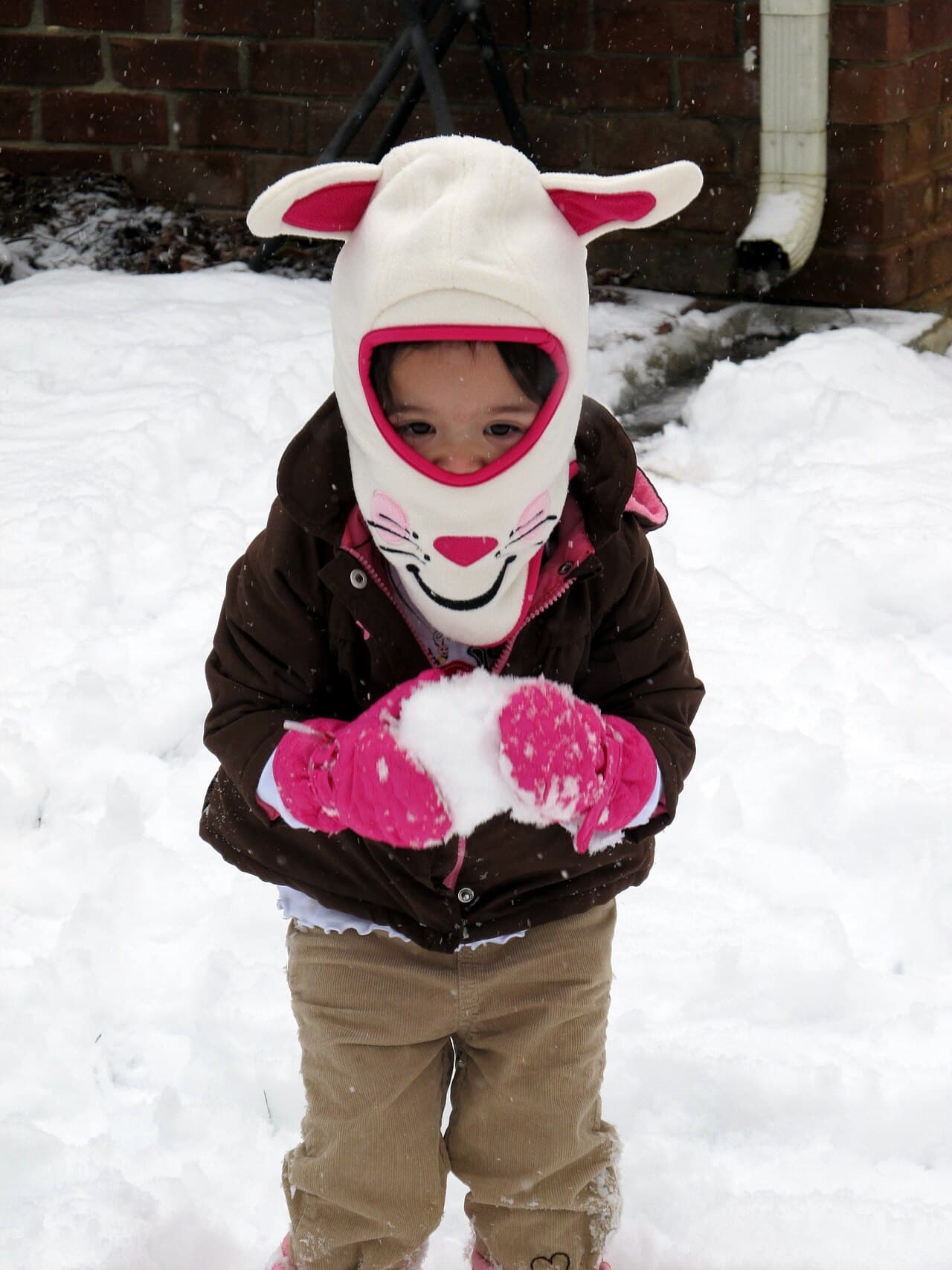
Photo: "December snow!" by Savannah Lewis, CC BY 2.0, via Wikimedia Commons.
Toddler mittens at a glance
Features from Amazon listings pulled via the Creators API on October 28, 2026. Prices left off on purpose. 'Not stated' means the listing text didn't give it.
| Product | Water protection | Insulation | How it opens | Cuff | |
|---|---|---|---|---|---|
| N'Ice Caps Kids Waterproof Snow Mittens (Thinsulate) Easiest on | Waterproof | 3M Thinsulate | Extra-wide hook-and-loop flap | 2.5 in knit cuff | Check price on Amazon |
| Wildbreakers Waterproof Kids Mittens, 100g Thinsulate Long cuff | Waterproof membrane | 100g Thinsulate | Hook-and-loop strap | Extra-long | Check price on Amazon |
| Burton Toddlers' Mini Insulated Mittens Side zip | Waterproof | ThermacoreECO | Side zipper + wide opening | Cuff pull loop | Check price on Amazon |
| Burton Toddlers' Warmest Mittens Warmest | Waterproof membrane | Thermacore + 700-fill down | Not stated | Not stated | Check price on Amazon |
| Columbia Toddler Chippewa II Long Mitten Everyday | Water-resistant | Microtemp XF II | Elastic wrist | Extended | Check price on Amazon |
| Carhartt Toddlers' Waterproof Insulated Zip Cuff Mitten Toughest | Waterproof insert | Synthetic | Zipper cuff + strap | Gauntlet | Check price on Amazon |
| N'Ice Caps Baby & Toddler Sherpa-Lined Mittens, 2 Pairs Baby pick | Not stated | Fleece + sherpa | Wide elastic + strap | Not stated | Check price on Amazon |
Affiliate disclosure: we may earn a commission on qualifying Amazon purchases via tag bestprod0fcf1-20.
Our Recommendations

N'Ice Caps Kids Waterproof Snow Mittens (Thinsulate)
Best for: Toddlers who fight getting mittens on
Listing: fully waterproof, 3M Thinsulate insulation, 2.5-inch knit cuff, extra-wide hook-and-loop flap, grippers on palm, fingers and thumb; sizes from 1–2 years with published hand measurements.
- Waterproof (listing)
- 3M Thinsulate
- Extra-wide flap
- Sized by hand length/width
Keep in mind: Knit cuff is shorter than a full gauntlet; deep-snow kids may prefer a longer cuff.
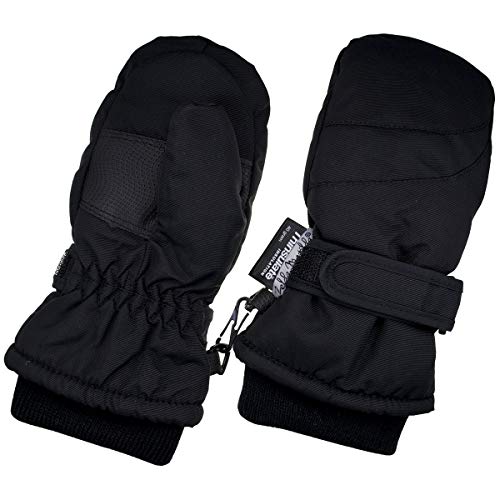
Wildbreakers Waterproof Kids Mittens, 100g Thinsulate
Best for: Deep snow and recess
Listing: 100g 3M Thinsulate, Taslon shell, fleece lining and inner membrane, extra-long cuff, hook-and-loop strap, guided-thumb design.
- 100g Thinsulate
- Extra-long cuff
- Hook-and-loop strap
- Guided thumb (listing)
Keep in mind: Listing leans on superlatives we can't verify; check the size chart carefully.

Burton Toddlers' Mini Insulated Mittens
Best for: Wiggly toddlers; side-zip dressing
Listing: waterproof two-layer DRYRIDE shell, ThermacoreECO insulation (95% recycled), wide opening with side zipper, stay-put strap, name tag, adjustable leash.
- Waterproof (listing)
- Side zipper
- Internal name tag
- Lifetime warranty (per Burton)
Keep in mind: Includes a leash: keep it short at the wrist, never through coat sleeves.

Burton Toddlers' Warmest Mittens
Best for: Very cold, dry days and ski school
Listing: DRYRIDE two-layer shell with waterproof breathable membrane, Thermacore insulation plus 700-fill responsibly sourced down, grippy palm, internal name tag.
- 700-fill down + Thermacore
- Waterproof membrane (listing)
- Grippy palm
- Name tag
Keep in mind: Down is best on cold, dry days rather than slushy ones.

Columbia Toddler Chippewa II Long Mitten
Best for: Daily commutes and light snow
Listing: Omni-Shield water and stain resistance for light precipitation, Microtemp XF II insulation (85% recycled polyester), extended cuffs, elastic wrists, pairing clip.
- Water-resistant (not waterproof)
- Extended cuff
- Elastic wrist
- Pairing clip
Keep in mind: Not waterproof; not the pick for long snow play.

Carhartt Toddlers' Waterproof Insulated Zip Cuff Mitten
Best for: Kids who dig, shovel and haul sleds
Listing: waterproof insert, synthetic insulation, FastDry wicking lining, polyester and softshell shell, synthetic palm, zipper cuff, adjustable wrist strap, gauntlet cuff, brow wipe; fits most kids 1–5.
- Waterproof insert
- Zip cuff + gauntlet
- Brow wipe
- Ages 1–5 (listing)
Keep in mind: Sized S/M on Amazon; check which size fits your child.

N'Ice Caps Baby & Toddler Sherpa-Lined Mittens, 2 Pairs
Best for: Babies, and dry-day daycare spares
Listing: double-layer fleece with sherpa lining, wide elastic opening, adjustable wrist strap; thumbless in 3–6 and 6–18 month sizes, thumbs in 2–3 and 4–6 year sizes; 2 pairs.
- 2 pairs
- Sherpa lining
- Thumbless infant sizes
- Adjustable wrist strap
Keep in mind: Not described as waterproof; not for snow play.

Zkptops Mitten Clips, 2 Pairs
Best for: Kids who lose mittens
Listing: 2 pairs of about 3-inch elastic straps with polished metal clips and plastic grip inserts; clip mitten to coat sleeve.
- 2 pairs
- About 3 in long
- Metal clips
- Clip mitten to sleeve
Keep in mind: Clip jaws can mark thin fabric; clip to the cuff seam.
As an Amazon Associate I earn from qualifying purchases. Mom's Magazine may earn a commission when you buy through links on this page, at no extra cost to you. Learn more.
Frequently Asked Questions
Are mittens or gloves better for toddlers?
Mittens. Fingers share one pocket of warm air in a mitten, so it stays warmer than a glove, and it's far easier to put on a small child. A St. Louis Children's Hospital summary of AAP tips says mittens beat gloves and lined mittens beat knit ones. Gloves make more sense once a child is 5 or 6 and wants finger dexterity.
How do I keep mittens on my toddler?
Pick a pair with a long cuff and an adjustable wrist strap, and make sure the coat sleeve and cuff overlap. A wide flap or side zipper helps you get the thumb in the right place the first time. For lost mittens, use short clips from each mitten to its own sleeve, not a string running through the coat.
Are mitten strings safe?
Not threaded through a coat. CPSC's Public Playground Safety Handbook says children should never wear mittens connected by strings through the arms, because cords can catch on playground equipment and cause strangulation. CPSC has publicized a death of a three-year-old whose mitten strings caught on a slide. Health Canada suggests mitten clips instead.
Do toddlers need waterproof mittens?
For snow play, yes. Toddlers grab snow with their palms, and fleece or knit mittens soak through quickly. The AAP says to change children out of wet clothing right away. A fleece or sherpa pair is fine for dry cold, strollers and short walks.
When is it too cold for toddlers to play outside?
The AAP says outdoor play in temperatures or wind chills below -15°F should generally be avoided, because exposed skin can begin to freeze within minutes. On milder cold days, dress in thin layers, add one more layer than you're wearing, and bring kids in for regular warm-up breaks.
Why don't you list prices?
Amazon prices and available sizes change constantly, especially in early winter. We checked listing features on October 28, 2026 and left prices off so the page doesn't go stale. Use the buttons for today's price and size availability.
Sources & Further Reading
- Cold Weather Safety for Children: Preventing Frostbite & Hypothermia — American Academy of Pediatrics (HealthyChildren.org) (reviewed 2026-10-28)
- Playing Outside in Winter: Tips to Keep Kids Warm & Safe — American Academy of Pediatrics (HealthyChildren.org) (reviewed 2026-10-28)
- Baby, It's Cold Outside! — St. Louis Children's Hospital (reviewed 2026-10-28)
- Public Playground Safety Handbook (2025), §3.2.1 Strings, straps, and ropes — U.S. Consumer Product Safety Commission (reviewed 2026-10-28)
- Slide Guards To Prevent Strangulation From Clothing String Entanglement — U.S. Consumer Product Safety Commission (reviewed 2026-10-28)
- Back-to-school online shopping — Health Canada (reviewed 2026-10-28)
Related Guides
Best Toddler Winter Coats, Jackets and Snowsuits of 2026
The best toddler winter coats, jackets and snowsuits for 2026: bunting vs. two-piece, water-resistant vs. waterproof shells, sizing for a growing season, and why a puffy coat never goes under a car seat harness.

Best Toddler Rain Boots and Rain Jackets of 2026: What to Buy
The best toddler rain boots and rain jackets for 2026: why a flexible sole beats deep tread for new walkers, why to skip drawstrings, and how to size boots and a jacket together.
Best First Walking Shoes for Toddlers of 2026
What the American Podiatric Medical Association actually recommends for new walkers, the difference between soft-sole pre-walkers and structured first shoes, and four APMA-recognized options to start with.
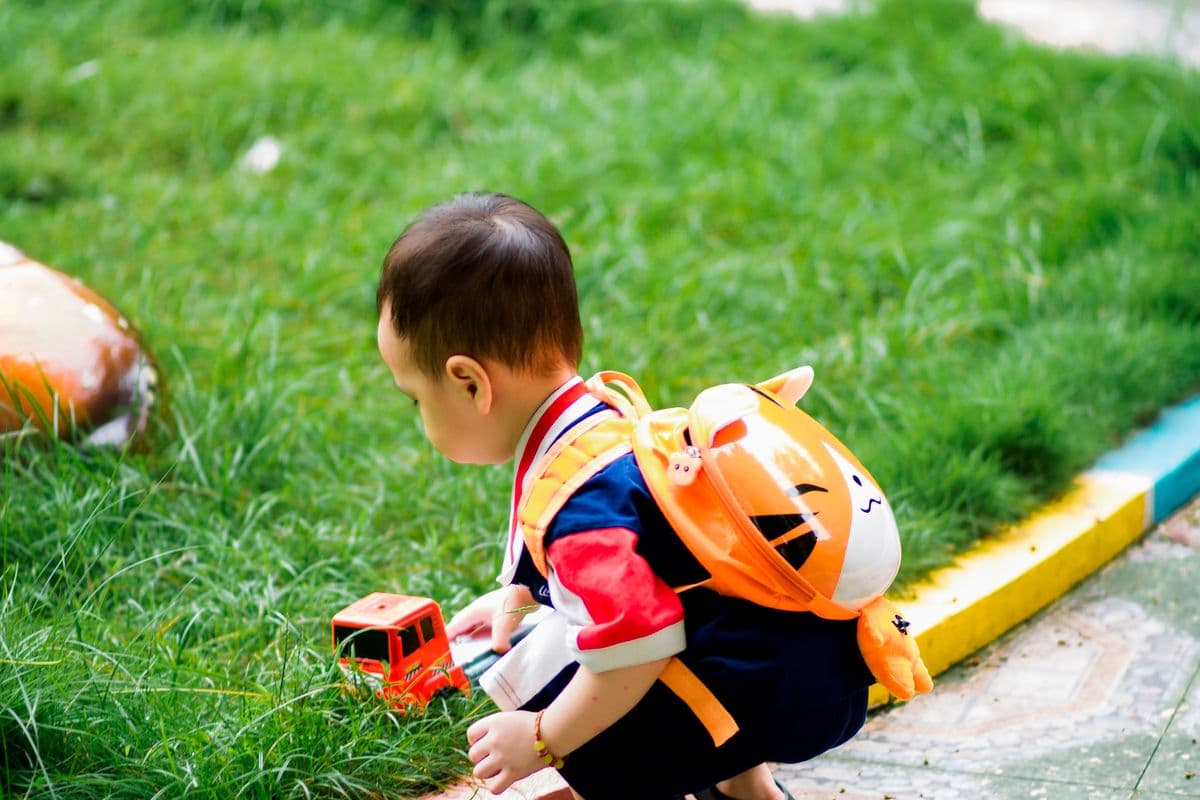
Outdoor Activities for Preschoolers
Outdoor activities for preschoolers you can actually run: educational backyard play, no-equipment games, chalk and bubbles, a scavenger hunt, and sun, water, and playground notes from AAP and CDC pages. Editorially reviewed — not medical advice.
Mom's Magazine Editorial Team
Editorial Team
The Mom's Magazine editorial team researches and writes practical, plainly-sourced guidance for parents and families. Guides are reviewed for accuracy and updated as recommendations change. Where a topic calls for professional expertise, we cite reputable organizations and, for health topics, add a qualified reviewer before publishing.
Newsletter
Get the Weekly Mom List
One short email a week: the most useful guides, activities, and picks for your family. No spam, unsubscribe anytime.