Products
Best Infant Car Seats 2026
How to choose an infant car seat — rear-facing limits, click-in bases, travel-system compatibility, and when to size up to a convertible seat — plus four widely used options to start with.

As an Amazon Associate I earn from qualifying purchases.Some links on this page are affiliate links. If you buy through them, Mom's Magazine may earn a small commission at no extra cost to you. It never changes which products we recommend. How we recommend products.
An infant car seat is the small, rear-facing-only seat that clicks in and out of a stay-in-car base, designed for the newborn stretch — typically birth to somewhere between 9 months and past a first birthday, depending on the seat and how fast your baby grows. There's no single best infant car seat, since fit depends on your baby's size, your back seat, and whether you want it to click into a stroller. The Chicco KeyFit 35 is a strong all-around pick and one of the most common first car seats, largely because of how easy the base is to install correctly. The Graco SnugRide SnugFit LX is a budget-friendly option with an anti-rebound bar and one-second LATCH connectors. The Nuna Pipa RX is a lighter, premium pick built without added flame-retardant chemicals. The UPPAbaby Mesa V2 is the pick if you're already using or planning to buy an UPPAbaby stroller, since it clicks directly onto Vista and Cruz frames with no adapter. This is a researched buying guide based on manufacturer specifications and published safety guidance, not hands-on crash testing — always confirm the fit in your specific vehicle and stroller before buying.
Easiest install
Chicco KeyFit 35 Infant Car Seat
Best for: An easy, level install and one of the most common first car seats
Quick picks
| Product | Best for | |
|---|---|---|
| Chicco KeyFit 35 Infant Car Seat Easiest install | An easy, level install and one of the most common first car seats | Check price on Amazon |
| Graco SnugRide SnugFit LX Infant Car Seat Best value | A budget-friendly seat with a genuine anti-rebound bar | Check price on Amazon |
| Nuna Pipa RX Infant Car Seat Premium pick | A lighter premium seat built without added flame retardants | Check price on Amazon |
| UPPAbaby Mesa V2 Infant Car Seat Best for UPPAbaby strollers | Clicking directly onto an UPPAbaby Vista or Cruz stroller with no adapter | Check price on Amazon |
What an infant car seat actually is
An infant car seat is the small, bucket-style, rear-facing-only seat that clicks in and out of a base left installed in the car, so you can carry a sleeping baby from the car to the house — or click it onto a compatible stroller frame — without waking them up. It's built to be light enough for one arm to carry, which is also why it has a lower weight ceiling than a convertible seat: the trade-off for portability is a shorter runway before your baby outgrows it. This is different from a convertible car seat, which stays installed in the car and rear-faces, then eventually forward-faces, in the same shell for years. If you're trying to decide whether you need an infant seat at all or whether to skip straight to a convertible, our convertible car seat guide covers that fork directly — the short version is that an infant seat's portability and stroller click-in are the whole reason most families start there, not a requirement.
How we picked
This is a researched buying guide, not a hands-on comparison — we haven't installed these four seats side by side in the same vehicles or on the same stroller frames. We compared manufacturer specifications, current NHTSA and AAP guidance, and the recurring patterns in verified customer reviews across popular, widely available infant seats, focused on what actually changes daily use: how forgiving the base is to install correctly, carry weight, stroller compatibility, and what's included versus sold separately. If we add hands-on install-and-carry testing later, we'll update this guide and say so.
Do you need an infant seat, or can you start with a convertible?
You don't strictly need an infant seat — a convertible seat rear-faces from birth too, and some families skip the infant-seat stage entirely to save money and avoid buying two seats. The case for an infant seat is almost entirely about the newborn logistics: it clicks out of the car and into a stroller frame or a carrier handle without disturbing a sleeping baby, which a convertible seat's fixed, in-car install can't do. If you're mostly driving short trips and don't mind waking a sleeping baby to transfer them into a stroller, a convertible seat from birth is a genuinely reasonable choice. If you expect a lot of car-to-stroller transitions — errands, walks, a sibling's school pickup — the infant seat earns its cost in the first few months alone.
What to look for
- Weight and height limits: most infant seats list a range somewhere around 4–35 lb and up to 30–32 inches, but check the specific model — trims within the same product line (for example a base "SnugFit" versus a "SnugFit 35") can carry different limits, and the sticker on your seat is the number that actually governs, not a general figure from a review site.
- Base installation: look for a level indicator, LATCH connectors that click audibly, and — on some models — a load leg or anti-rebound bar that adds stability in a front-end or rear impact. A base that's easy to get right on the first try matters more day to day than a spec sheet number.
- Carry weight and handle comfort: infant seats range from roughly 7 to 10+ lb empty, which adds up fast once a baby and a diaper bag are also involved. If you'll be carrying it often — parking garages, stairs, a second-floor apartment — the lighter end of that range is worth prioritizing.
- Stroller compatibility: check whether the seat clicks natively into the stroller you already own or plan to buy, or whether it needs a sold-separately adapter. Some stroller brands (UPPAbaby, for example) build direct compatibility with their own infant seat and require an adapter for anything else.
- Extra bases: most infant seats let you buy an additional base (sold separately) so the seat can move between two cars without reinstalling each time — useful if grandparents or a second caregiver drive regularly.
- Recline and headrest adjustment: a newborn insert or recline wedge for smaller babies, and a no-rethread harness that adjusts with the headrest as your baby grows, both reduce how often you're fiddling with straps.
Get the install checked, don't just eyeball it
NHTSA maintains a searchable list of free car seat inspection stations staffed by certified technicians, often at fire departments, police stations, or hospitals. A seat that looks installed can still move more than an inch at the belt path, or have straps that are twisted or too loose — issues that are easy to miss without a trained second set of eyes. Getting it checked once, ideally before your due date, is worth the twenty minutes.
LATCH vs. seatbelt install
Both are approved installation methods when done correctly per the seat's manual — neither is inherently safer. The practical difference is that LATCH anchors have their own combined child-plus-seat weight limit (commonly around 65 lb, though it varies by vehicle and seat), which is rarely a concern with an infant seat specifically since babies age out of the seat well before that weight. Some infant seat bases also support a load leg — a bar that extends from the base to the vehicle floor — which reduces how far the base can rotate forward in a crash; check whether your back seat and floor shape a load leg needs are compatible before assuming every base fits every car the same way.
Signs it's time to move to a convertible seat
Most babies outgrow an infant seat on height or torso length before they hit the weight limit, which surprises a lot of parents expecting the number on the scale to be the trigger. Watch for the top of your baby's head getting within about an inch of the top of the hard shell (not the padded insert), a seated height where their legs are consistently cramped against the vehicle seatback, or the seat's harness reaching its highest slot with your baby still growing. Any one of those means it's time to move to a convertible seat, even if your baby is under the printed weight limit. Our convertible car seat guide covers rear-facing longevity, shell width for a three-across install, and four options to start with.
Safety basics that apply to every infant seat
- Rear-facing only, always — an infant seat is not designed or certified for forward-facing use at any point.
- Register the seat with the manufacturer (a card is usually included, or you can register online) so you're notified directly if there's a recall.
- Check the expiration date printed on a sticker on the seat shell before buying secondhand or pulling an old seat out of storage for a second child — commonly 6–10 years from the manufacture date, depending on the brand.
- Never buy a car seat secondhand without a complete, known history — a seat that's been in even a moderate crash can have damage that isn't visible.
- Skip aftermarket head-support pillows, seat covers, or strap pads that didn't come with the seat unless the manufacturer specifically says they're crash-tested with that model — anything added between the harness and the baby can affect how the seat performs in a crash.
A newborn also needs somewhere else to sleep besides the car seat — car seats aren't approved for routine sleep outside the car, including at home. Our pack 'n play and travel crib comparison and newborn sleep expectations for the first weeks cover safe sleep setups for the same newborn stretch this seat is built for.
Mistakes worth avoiding
A handful of install and use mistakes come up over and over at car seat check events, and most of them are quick fixes once you know to look for them.
- Bulky coats or snowsuits under the harness: puffy layers compress in a crash, leaving the harness effectively too loose even though it looked snug at home. Buckle your baby in a thin layer first, then add a blanket or coat over the buckled harness instead of under it.
- A harness that's snug but not tight: you shouldn't be able to pinch excess webbing at the shoulder once it's buckled. A loose harness is one of the most common issues technicians find at inspection events, and it's also one of the fastest to fix.
- Chest clip too low: it belongs at armpit level, not down at the belly, so it keeps the shoulder straps positioned correctly over the collarbones instead of letting them slide off the shoulders in a crash.
- Recline angle that's off for a newborn: most bases have a bubble level or angle indicator specifically because a too-upright recline can let a young baby's head flop forward and affect breathing. Check the indicator every time, not just at the first install.
- Assuming a base fits every car the same way: a base that installs rock-solid in a sedan can sit differently in an SUV's more sloped seat, especially with a load leg. Recheck the level and the amount of movement at the belt path whenever the seat moves to a different vehicle.
- Adding a mirror, strap covers, or a head-support pillow that didn't come with the seat: anything between the harness and the baby, or hanging off the handle, that the manufacturer hasn't specifically tested with that model can change how the seat performs in a crash, even if it seems harmless.
A second base, and flying with an infant seat
If your baby regularly rides in more than one car — a co-parent's car, a grandparent's, a carpool — buying a second base for that vehicle is usually easier and safer than reinstalling the same base back and forth, since a base that's uninstalled and reinstalled repeatedly is also a base that's more likely to end up installed incorrectly on any given day. Most of the manufacturers on this page sell an extra base separately for exactly that reason.
Infant seats are also one of the more travel-friendly car seat types if you're flying with a baby. Airlines generally allow a car seat to be gate-checked for free even if you don't buy your baby a seat, and if you do buy a seat, an FAA-approved car seat can be used in the airplane seat itself — check for a label on the seat stating it's approved for aircraft use, since not every car seat carries that certification even if it's perfectly fine for the car. Our guide to flying with a baby or toddler for the first time covers gate-checking, security screening, and what else is worth packing for the flight itself.
Our Recommendations
Chicco KeyFit 35 Infant Car Seat
Best for: An easy, level install and one of the most common first car seats
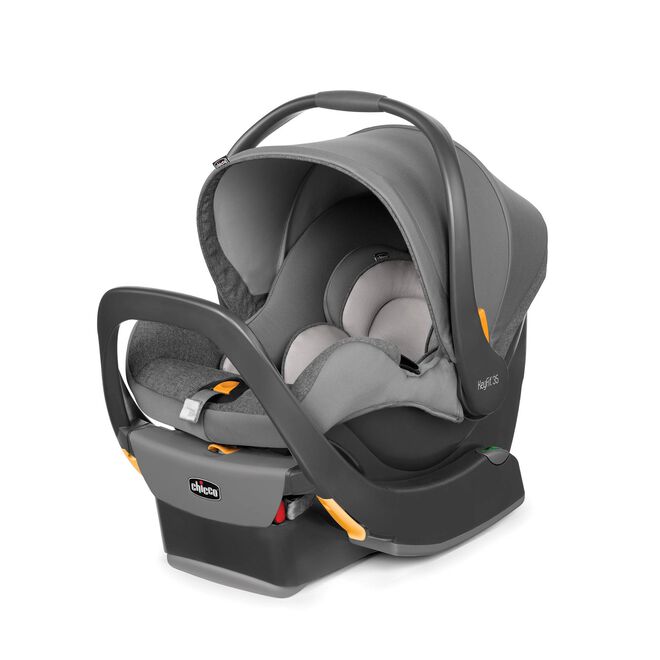
Chicco's own product page lists the KeyFit 35 with an Easy-Extend Headrest System that adjusts together with a no-rethread harness up to 32 inches, an integrated anti-rebound bar, and a removable newborn insert sized for 4–11 lb. The base includes a bubble-level indicator and a built-in lockoff for a seatbelt install. It's one of the most widely recommended first infant seats specifically because reviewers and technicians consistently note how hard it is to install incorrectly.
- Rear-facing 4–35 lb, up to 32 inches (Chicco's published spec)
- Anti-rebound bar built into the base
- Newborn body and head positioner insert for babies 4–11 lb
- No-rethread harness adjusts with the headrest
Keep in mind: Compatible with Chicco strollers natively; using it with another stroller brand generally needs a sold-separately adapter, and not every stroller has one available.
Graco SnugRide SnugFit LX Infant Car Seat
Best for: A budget-friendly seat with a genuine anti-rebound bar
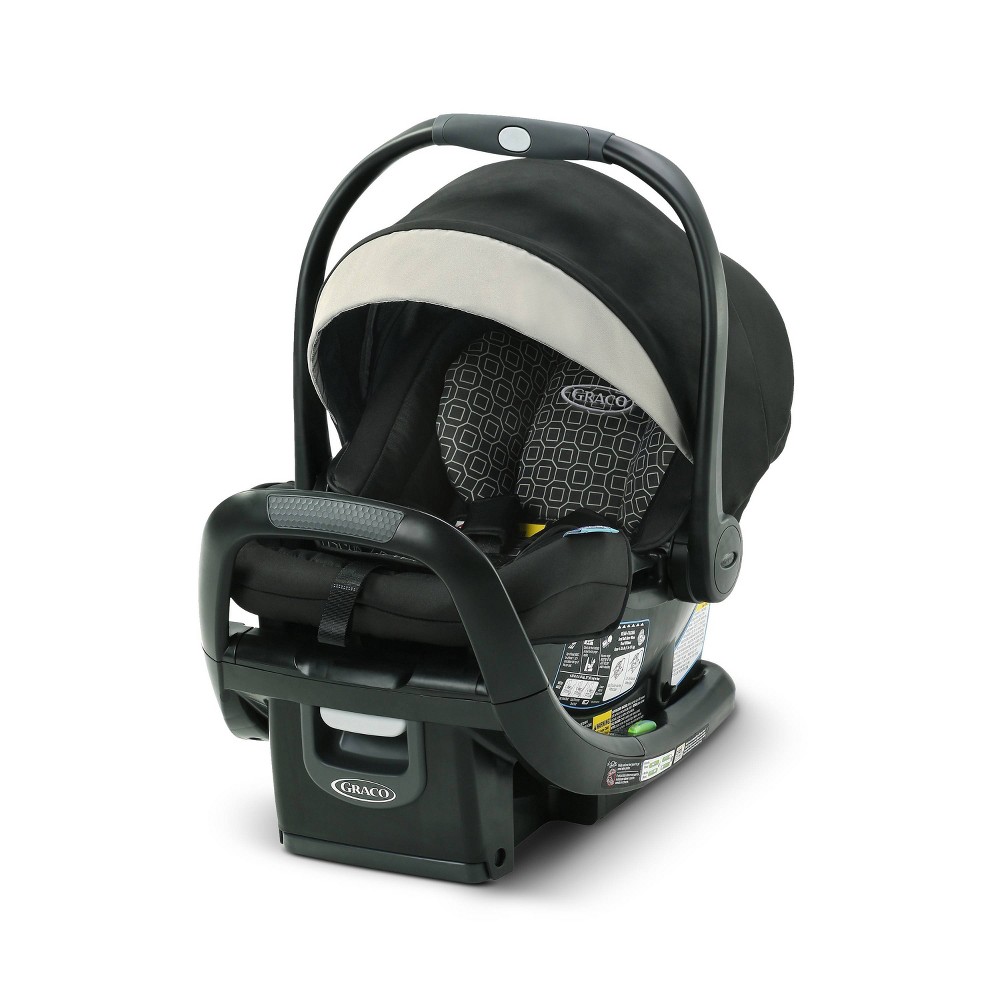
Graco's SnugFit line pairs an anti-rebound bar with SnugLock, a base system built to install in under a minute with either LATCH or a seatbelt, plus an audible click on the LATCH connectors and a bubble-level indicator. It's one of the more affordable seats with an anti-rebound bar included rather than reserved for a pricier trim. Check the specific listing's printed weight range before buying — SnugFit trims have varied between roughly 30 and 35 lb depending on the exact model year.
- SnugLock base: LATCH or belt install, audible click, bubble-level indicator
- Anti-rebound bar included
- Front-adjust, no-rethread harness (Simply Safe Adjust)
- 1-hand adjustable carry handle
Keep in mind: Confirm the exact weight and height limit on the listing before buying — Graco sells several SnugFit/SnugRide trims with different specs under similar names.

Nuna Pipa RX Infant Car Seat
Best for: A lighter premium seat built without added flame retardants
Nuna's product page lists the Pipa RX for babies 4–30 lb and 16–30 inches, or roughly until 18 months, whichever comes first. It's made from fabrics free of added fire-retardant chemicals and is GREENGUARD Gold Certified for low chemical emissions — a detail some parents specifically shop for. It pairs with Nuna's own stroller line and their included adapters for a native travel-system click-in.
- Rear-facing 4–30 lb, 16–30 in, or about 18 months (Nuna's published spec)
- Fabrics free of added flame-retardant chemicals; GREENGUARD Gold Certified
- RELX reclining base for a consistent recline angle across different vehicle seat shapes
- Installs with or without the base for travel flexibility
Keep in mind: Lower weight and height ceiling than the other three seats here, so families with fast-growing babies may size up to a convertible seat sooner. Also priced well above the budget and mid-range options on this page.
UPPAbaby Mesa V2 Infant Car Seat
Best for: Clicking directly onto an UPPAbaby Vista or Cruz stroller with no adapter
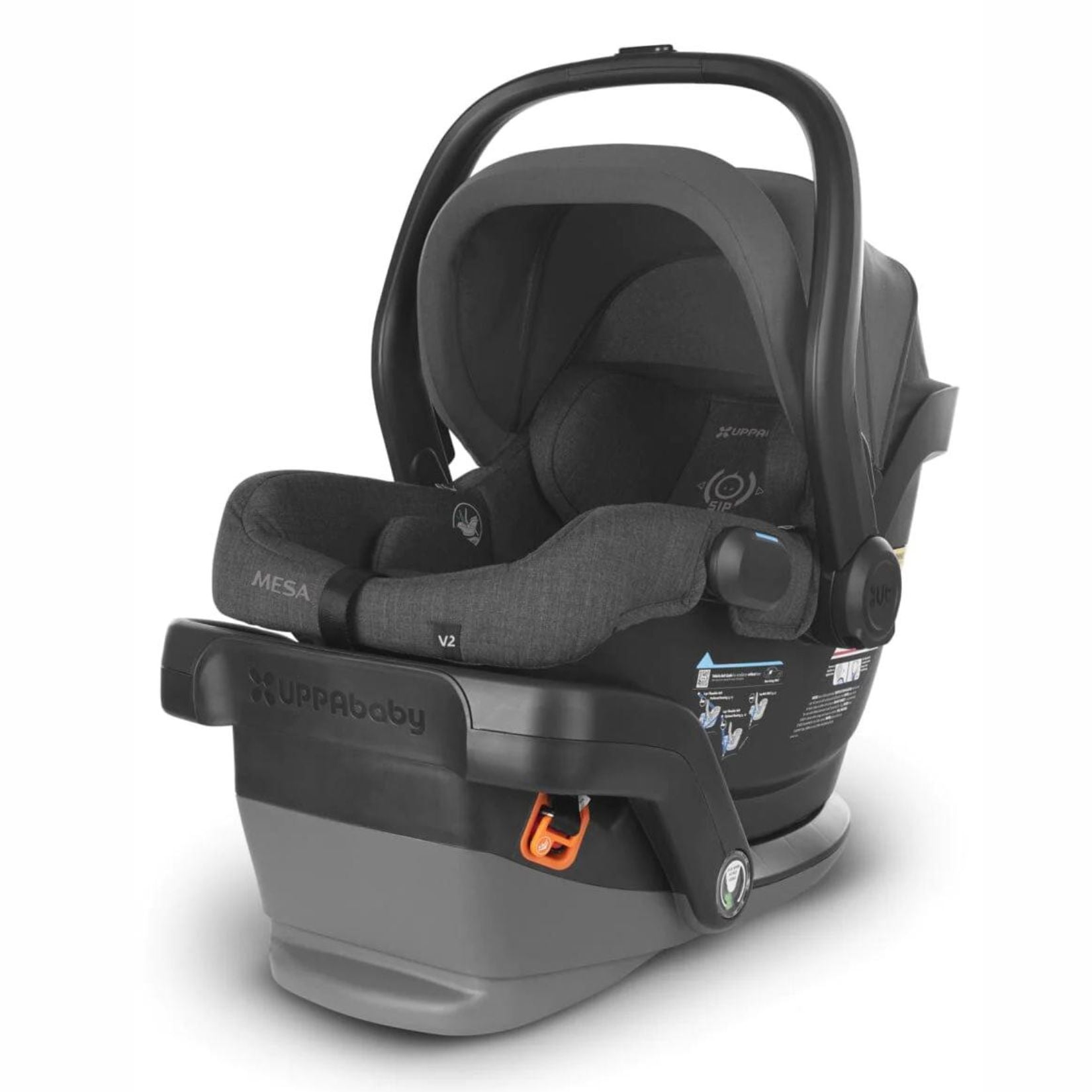
UPPAbaby lists the Mesa V2 for babies 4–35 lb and up to 32 inches, with an included newborn insert, wedge, and a low harness position recommended for babies 4–11 lb. The carrier itself weighs under 10 lb. Its SMARTSecure system combines auto-retracting LATCH connectors with a red-to-green visual indicator, and it attaches directly to UPPAbaby Vista and Cruz strollers without a separate adapter — the deciding factor for a lot of families who've already picked that stroller.
- Rear-facing 4–35 lb, up to 32 inches (UPPAbaby's published spec)
- Under 10 lb carrier weight
- SMARTSecure auto-retracting LATCH with a visual red-to-green indicator
- Direct click-in to UPPAbaby Vista/Cruz strollers, no adapter needed
Keep in mind: Using it with a non-UPPAbaby stroller needs a sold-separately adapter, and it's priced closer to the premium end of this list.
As an Amazon Associate I earn from qualifying purchases. Mom's Magazine may earn a commission when you buy through links on this page, at no extra cost to you. Learn more.
Frequently Asked Questions
Do I need an infant car seat, or can I start with a convertible seat?
You don't strictly need one — a convertible seat rear-faces from birth too. An infant seat's advantage is that it clicks out of the car and into a stroller or carry handle without disturbing a sleeping baby, which matters most if you're doing a lot of car-to-stroller transitions in the first several months. If that's not a priority, starting with a convertible seat is a reasonable way to avoid buying two seats.
When do I need to move from an infant seat to a convertible seat?
Most babies outgrow an infant seat on height before weight — watch for the top of the head getting within about an inch of the hard shell's top, cramped legs against the vehicle seatback, or the harness maxed out at its highest slot. Any of those means it's time to size up, even if your baby is under the printed weight limit, which commonly happens somewhere between 9 months and past a first birthday depending on the seat and the baby.
How do I know if my infant car seat is installed correctly?
Check that the base doesn't move more than an inch side-to-side or front-to-back at the belt path, that LATCH connectors or the seatbelt lockoff are engaged with an audible click, and that the level indicator shows correct. For real certainty, NHTSA maintains a searchable list of free inspection stations staffed by certified technicians — worth doing once before your due date rather than guessing.
Can I buy a used infant car seat to save money?
Only if you know its complete history, including that it's never been in a crash (even a minor one can cause invisible damage) and hasn't expired. Check the manufacture date sticker on the seat shell — most car seats expire 6–10 years from that date, not the purchase date. Without a verified history, buying new is the safer call.
Do I need a travel system, or can I buy the stroller and car seat separately?
Either works. A matched travel system is convenient because the car seat clicks straight into the stroller frame, but it only saves money if you were already planning to buy both pieces from that brand. If you have a strong preference on the car seat itself, check whether it's compatible with your stroller via a sold-separately adapter before assuming a mixed-brand pairing will work.
Sources & Further Reading
- Car Seats: Information for Families — American Academy of Pediatrics (HealthyChildren.org) (reviewed 2026-09-22)
- Car Seats and Booster Seats — National Highway Traffic Safety Administration (NHTSA) (reviewed 2026-09-22)
Related Guides

Best Convertible Car Seats of 2026
How to choose a convertible car seat — rear-facing limits, LATCH vs. seatbelt install, three-across fit — plus four well-reviewed options to start with.

Best Strollers of 2026: Everyday, Travel System, and Lightweight Picks
A researched comparison of everyday, travel-system, and lightweight strollers — how to choose between them, safety basics, and four well-reviewed options to start with.
Hospital Bag Checklist for Labor and Delivery
A complete hospital bag checklist for labor and delivery — for you, your baby, and your partner — plus when to actually head in.

Best Pack 'n Plays and Travel Cribs of 2026
A researched comparison of full-size playards versus ultralight travel cribs — how to pick between them, plus four well-reviewed options to start with.
Mom's Magazine Editorial Team
Editorial Team
The Mom's Magazine editorial team researches and writes practical, plainly-sourced guidance for parents and families. Guides are reviewed for accuracy and updated as recommendations change. Where a topic calls for professional expertise, we cite reputable organizations and, for health topics, add a qualified reviewer before publishing.
Newsletter
Get the Weekly Mom List
One short email a week: the most useful guides, activities, and picks for your family. No spam, unsubscribe anytime.