Products
Best Books for Toddlers 2026: Board Books That Survive Toddlerhood
Five toddler books that have stayed in print for decades, why durability and read-aloud rhythm matter more than a flashy cover, and what the AAP actually says about reading with toddlers.
As an Amazon Associate I earn from qualifying purchases.Some links on this page are affiliate links. If you buy through them, Mom's Magazine may earn a small commission at no extra cost to you. It never changes which products we recommend. How we recommend products.
A good toddler book earns its shelf space by surviving repeat reads, chewing, and page-flipping — thick board pages, a rhythm that works even when you're exhausted, and enough visual interest that a two-year-old will sit for it more than once. The five books below (Goodnight Moon, The Very Hungry Caterpillar, Brown Bear Brown Bear What Do You See?, Dragons Love Tacos, and Llama Llama Red Pajama) have each been in continuous print for at least a decade and are the kind of titles that show up on pediatric literacy programs' recommended lists, not just algorithmically-generated "best books" pages. None of them need batteries, and all of them hold up to a toddler picking the same one every night for a month.
Best for Bedtime
Goodnight Moon (Board Book)
Best for: A predictable, low-effort bedtime read
Quick picks
| Product | Best for | |
|---|---|---|
| Goodnight Moon (Board Book) Best for Bedtime | A predictable, low-effort bedtime read | Check price on Amazon |
| The Very Hungry Caterpillar (Board Book) Best Interactive | Combining counting, days of the week, and hands-on interaction | Check price on Amazon |
| Brown Bear, Brown Bear, What Do You See? Best for Early Language | Teaching a toddler to "read along" before they can read | Check price on Amazon |
| Dragons Love Tacos Most Requested | A book that actually makes a toddler laugh | Check price on Amazon |
| Llama Llama Red Pajama (Board Book) Best for Bedtime Anxiety | A bedtime story that addresses separation anxiety directly | Check price on Amazon |
Toddler book lists online tend to read like a publisher's seasonal catalog — new releases with striking covers, refreshed every few months. That's fine for browsing, but it's a bad way to pick books for a child who's going to chew the corners, flip past the parts they don't like, and demand the same ten pages every single night. The books that earn a permanent spot on a toddler's shelf are usually old for a reason: they've already survived a decade of toddlers.
Why the American Academy of Pediatrics treats this as a health visit, not just a hobby
The AAP's early literacy guidance isn't a suggestion tucked into a parenting blog — it's built into pediatric care through a program called Reach Out and Read, which the AAP describes as a primary prevention strategy for supporting the caregiver-child relationship. Pediatricians using the program hand out age-appropriate books at well visits and model reading with the child right there in the exam room, partly because a shared book is also a low-stress way to informally check language and social development.
It doesn't need to be a production
The AAP's own bedtime shorthand is "Brush, Book, Bed" — three steps, in that order, every night. The book part is meant to be short and doable on a tired night, not a twenty-minute performance. A page or two of a familiar favorite, read the same tired way you read it yesterday, still counts.
Board book vs. picture book: which one for which age
| Board book | Standard picture book | |
|---|---|---|
| Page material | Thick cardboard, rounded corners | Paper pages, sharper corners |
| Best for | Roughly 6 months to 2–3 years, or any child still mouthing and tearing | Once a child can turn pages without ripping them, often 2.5–4 |
| Handles chewing/drooling | Yes — wipeable, hard to tear | No — paper tears and stains |
| Typical length | Short, 12–24 pages, simplified text | Often longer, more text per page |
| What you lose | Fewer full-length classics are printed in board format | Fragile pages if handed to an unsupervised toddler |
Several of the picks below exist in both formats. If your toddler still treats books as a teething aid, buy the board edition even if the full picture-book version is the "real" one — a torn favorite is worse for reading habits than a slightly shortened one.
How we picked these five
We didn't run a side-by-side test with a panel of toddlers — that's a fair thing to want, and we don't have it here. What we did instead was pick titles by a narrower, checkable standard: currently in print, available in a board-book edition, and old enough that their durability with actual toddlers isn't a guess. Each of the five below has been continuously in print for at least a decade, several for closer to fifty years, which filters out books that look good in a listicle photo but haven't been stress-tested by real households.
- Still in print in a board-book format, not just the original hardcover
- Short enough or rhythmic enough to survive a tired parent reading it for the hundredth time
- No batteries, sound buttons, or moving parts that break within a year
- Broad age range so it isn't outgrown in a single season
The five picks
Quick notes on why each one earns a spot, beyond the basics already covered in the summaries below.
Goodnight Moon has been continuously in print since 1947 and is one of the most reliably calming bedtime reads for toddlers who resist winding down — the repetitive "goodnight [object]" structure is easy to read half-asleep and easy for a toddler to predict, which is exactly what makes a bedtime book work. The Very Hungry Caterpillar adds physical interactivity (die-cut holes a toddler can poke a finger through) to a simple counting-and-days-of-the-week structure, which is part of why it's stayed a shelf staple since 1969. Brown Bear, Brown Bear, What Do You See? uses a call-and-response pattern that toddlers pick up fast enough to start "reading" back to you before they can actually read, which is a real, observable milestone moment for a lot of families. Dragons Love Tacos is the newest of the five (2012) and the one most likely to actually make a toddler laugh out loud, which matters — a book a toddler finds funny gets requested more, and requests are what build a reading habit. Llama Llama Red Pajama tackles bedtime separation anxiety directly inside the story, which makes it useful as a conversation-starter as much as a bedtime read.
Let them pick the same one every night
Repetition isn't a sign a book isn't working — dialogic, repeated reading is part of how toddlers build vocabulary and prediction skills. If your toddler wants the same book for six weeks straight, that's not a failure to diversify; it's the book doing its job.
Getting a toddler to actually sit through a book
- Let them turn the pages, even clumsily — page-turning is part of the engagement, not an interruption of it.
- Skip pages they're bored with rather than insisting on reading cover to cover every time; a toddler who gets to control part of the experience stays in it longer.
- Ask simple questions as you go ("where's the caterpillar?") instead of just narrating straight through — that back-and-forth is what "dialogic reading" means in practice.
- Keep a couple of books within arm's reach of the spot you already sit for feeding, diaper changes, or wind-down — proximity does more than a dedicated reading nook a toddler never walks to.
- Don't force a finish. A toddler who wants to close the book after two pages tonight and finish it tomorrow is still building the habit.
What we'd skip
Battery-powered sound-button books are popular gift-registry items, but the buttons are usually the first thing to fail, and the sound effect tends to become the point of the book instead of the words. Licensed character tie-ins aren't harmful, and plenty of toddlers love them, but they're rarely the books that get requested for the hundredth read the way a well-built classic does — treat them as a supplement to a small core shelf, not the core shelf itself.
Setting up a bedtime routine? →The book slot is one piece of a full wind-down sequence — this guide covers the rest of it.
For a narrower shelf built around a specific job — naming a feeling before a meltdown takes over — five picture books about big feelings cover anger, jealousy, and sadness by name rather than just illustrating the outburst.
When a book gets torn, chewed, or thrown
Every one of these five will eventually get bent, drooled on, or have a page torn by a toddler mid-tantrum, and that's a normal cost of a book actually getting used rather than a sign you bought the wrong one. A few practical responses: keep a strip of clear packing tape on hand for a torn board-book page rather than retiring the whole book, expect paper picture books specifically to need replacing more often if your toddler is still in a tearing phase, and resist treating a thrown book as a bigger offense than throwing any other toy — it's the same impulse-control issue showing up with a different object in hand. A board book that's been chewed to the point the corners are soft has done its job; that's what the format is for.
Library first, buy the favorites
A public library card is the cheapest way to find out which of these (or any other book) actually lands with your specific toddler before spending money on a copy that gets ignored. A common, low-cost approach: borrow widely, then buy a permanent copy only once a book has been requested enough times that a library due date is getting in the way. Board books take enough wear that a library copy already showing damage isn't unusual — that's also a reasonable sign the title holds up to real toddler handling, which is the same durability signal this roundup used to narrow the list in the first place.
Building a small rotating shelf instead of a big one
A toddler doesn't need thirty books in rotation — a small, well-chosen shelf of eight to twelve titles, refreshed every few months as interests shift, gets read far more than a large collection that's mostly ignored. If you're assembling a baby registry or restocking a shelf, it's worth treating two or three durable board books as a higher priority than a large one-time haul; a $60 gift card spent on five books you'll actually read a hundred times each beats a $60 box set that gets opened once.
If you're still filling out the rest of a newborn or toddler's gear list, our baby registry checklist covers what's worth prioritizing versus skipping, and our guide to choosing between breastfeeding and formula covers an earlier decision entirely — reading together works alongside either feeding method.
Our Recommendations

Goodnight Moon (Board Book)
Best for: A predictable, low-effort bedtime read
In continuous print since 1947. The repetitive "goodnight [object]" structure is easy to read on autopilot and easy for a toddler to predict along with you — which is exactly the job a bedtime book needs to do.
- Board book format, sized for toddler hands
- Simple repetitive text that's easy to read half-asleep
- Muted, calming illustrations suited to wind-down time
- Short enough for a single bedtime slot
Keep in mind: Slow and quiet — not the pick for a toddler who wants an interactive or funny book.

The Very Hungry Caterpillar (Board Book)
Best for: Combining counting, days of the week, and hands-on interaction
In print since 1969, with die-cut holes a toddler can poke a finger through on every page the caterpillar eats through — the interactivity is built into the physical book, not an add-on.
- Die-cut holes for finger play
- Introduces counting 1–5 and days of the week
- Bright, high-contrast Eric Carle collage illustrations
- Board format holds up to repeated finger-poking
Keep in mind: The die-cut holes are also the first part to wear out or tear with heavy use.
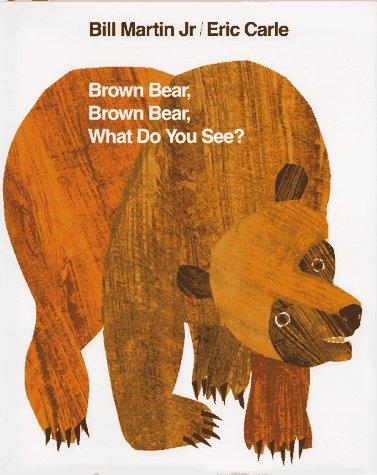
Brown Bear, Brown Bear, What Do You See?
Best for: Teaching a toddler to "read along" before they can read
The call-and-response pattern ("what do you see?") is simple enough that toddlers start anticipating and reciting it back well before they can actually read — a genuinely visible early-literacy milestone for a lot of families.
- Predictable call-and-response text
- Bold, simple color-block illustrations
- Also available in a Spanish/English bilingual edition
- Works for both individual and group read-alouds
Keep in mind: Very simple — a toddler who's already reading along may outgrow it faster than the others here.
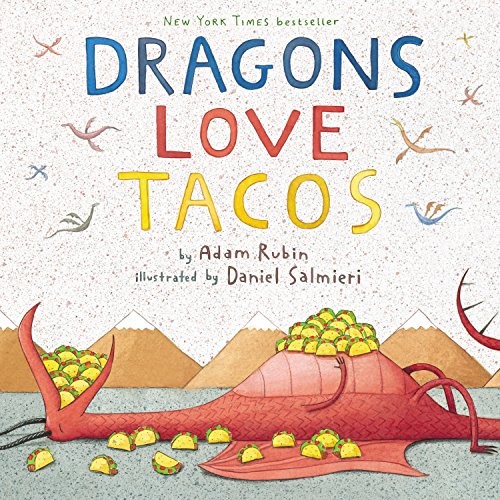
Dragons Love Tacos
Best for: A book that actually makes a toddler laugh
A #1 New York Times bestseller since 2012 and the newest of the five picks here. The premise (dragons love tacos, but not spicy salsa) is silly enough to get repeat laughs, which drives more requests than a book a toddler is merely neutral about.
- Genuinely funny premise for toddlers and adults reading it
- Longer and more detailed than the board-book picks
- Popular enough to have a sequel and matching plush toys
- Good "read to an older sibling too" crossover pick
Keep in mind: Standard paper picture-book format — not built for a toddler still tearing pages.
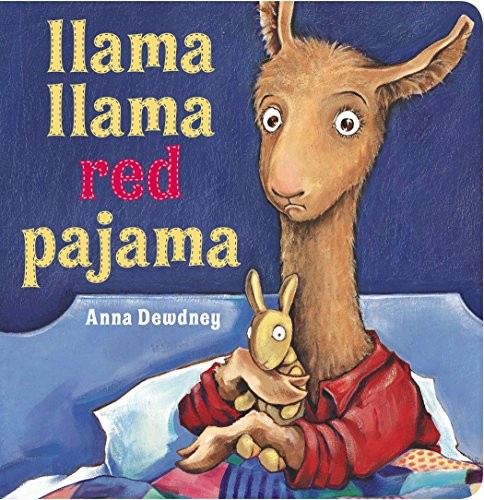
Llama Llama Red Pajama (Board Book)
Best for: A bedtime story that addresses separation anxiety directly
First published in 2005 and a long-running bestseller since. The story follows a baby llama who's upset his mama isn't in the room at bedtime — a plot a lot of toddlers recognize immediately, which makes it useful as a conversation-starter as well as a read.
- Rhyming text with a clear, singable rhythm
- Story plot mirrors common bedtime separation anxiety
- Board book format for toddler hands
- Part of a long-running series if it's a hit
Keep in mind: The rhyme scheme means it loses some flow if you skip pages out of order.
As an Amazon Associate I earn from qualifying purchases. Mom's Magazine may earn a commission when you buy through links on this page, at no extra cost to you. Learn more.
Frequently Asked Questions
What age should I start reading board books to my toddler?
There's no wrong age to start — the AAP's Reach Out and Read program provides books at well visits from infancy on. Board books specifically make sense once a child is old enough to hold and mouth objects, typically well before their first birthday, and stay useful through age 2–3.
My toddler wants the same book every single night. Should I push new ones?
No — repeated reading of a favorite is a normal, useful part of how toddlers build vocabulary and prediction skills. It's fine to rotate in something new occasionally, but a heavily-requested repeat isn't a problem to solve.
When should I switch from board books to regular picture books?
Once your child can turn pages without regularly tearing them and has largely outgrown mouthing books, which varies but is often somewhere around age 2.5–4. Many households keep a mix of both for a while rather than switching all at once.
Are sound-button books worth buying?
They're popular, but the buttons are typically the first component to fail with daily toddler use, and the sound effect can end up being the main draw instead of the story or words. They're fine as an occasional gift, not a core pick for a small rotating shelf.
Does it matter if I read the same book the exact same way every time?
Not for a toddler — a consistent, predictable reading (same words, same rhythm) is part of what makes a bedtime book work as a wind-down cue. Save more expressive, varied reading styles for daytime books if you want to mix it up.
Sources & Further Reading
- Early Literacy — American Academy of Pediatrics (reviewed 2026-08-30)
- Brush, Book, Bed: How to Structure Your Child's Nighttime Routine — American Academy of Pediatrics (HealthyChildren.org) (reviewed 2026-08-30)
- Reach Out and Read — Reach Out and Read National Center (reviewed 2026-08-30)
Related Guides

Building a Bedtime Routine That Works
A simple, consistent bedtime routine that helps kids wind down and fall asleep more easily.
Baby Registry Checklist: What to Actually Buy (and Skip)
The handful of items worth registering for, the ones you can safely skip, and where to send friends and family for the bigger decisions.
Best Books for New and Expecting Moms in 2026
Four books worth actually reading during pregnancy and the fourth trimester — grouped by what stage you're in, not just a long undifferentiated list.
Mom's Magazine Editorial Team
Editorial Team
The Mom's Magazine editorial team researches and writes practical, plainly-sourced guidance for parents and families. Guides are reviewed for accuracy and updated as recommendations change. Where a topic calls for professional expertise, we cite reputable organizations and, for health topics, add a qualified reviewer before publishing.
Newsletter
Get the Weekly Mom List
One short email a week: the most useful guides, activities, and picks for your family. No spam, unsubscribe anytime.