Parenting
How to Brush a Toddler's Teeth Without a Fight
How much toothpaste to actually use by age, the technique that reaches plaque instead of just foam, and the specific tactics that work when a toddler clamps their mouth shut — according to ADA and AAPD guidance.
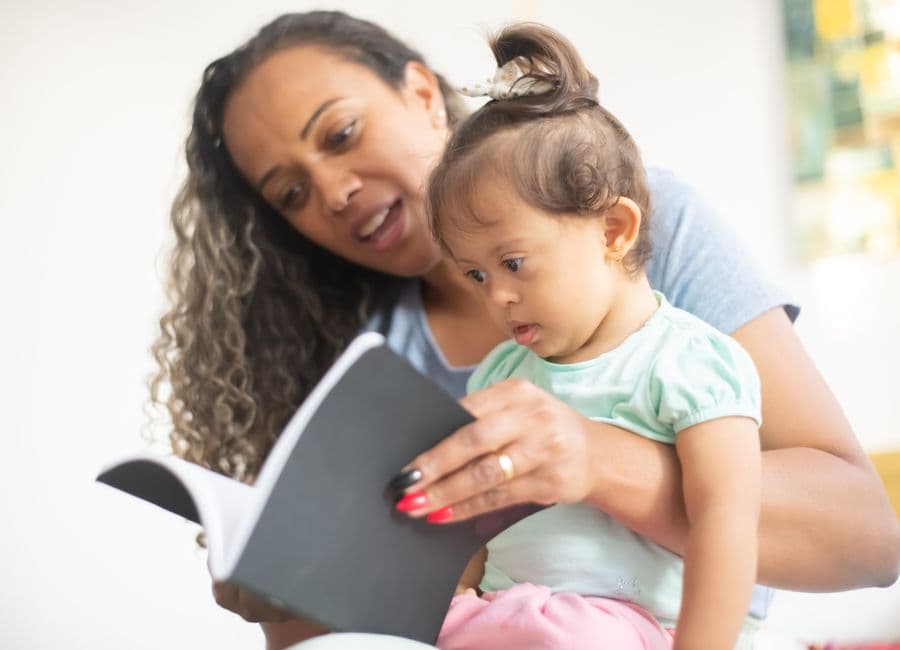
Brushing a toddler's teeth twice a day with the right amount of fluoride toothpaste matters more than winning any single brushing session. The American Dental Association and the American Academy of Pediatric Dentistry recommend a toothpaste smear about the size of a grain of rice (roughly 0.1 mg fluoride) for children under 3, moving to a pea-sized amount (about 0.25 mg fluoride) from age 3 to 6, using a fluoride toothpaste in the 1,000–1,450 ppm range from the first tooth onward. For the fight itself: let your toddler hold a toothbrush and "drive" first, then do the real brushing yourself right after — toddlers who never get their own brush time tend to resist harder, not less. Two minutes, twice a day, with you finishing the job, beats a perfect technique that only happens once a week because it turned into a battle every time.
The toothbrush fight is one of the most universal toddler standoffs there is — a squirming, lip-sealed kid, a parent chasing a moving target with a foaming brush, thirty seconds of actual contact with teeth out of a supposed two minutes. Most of what goes wrong isn't the child being difficult for its own sake. It's a mismatch between what a toothbrushing session is supposed to look like on a toothpaste box and what actually works with a toddler who wants control over their own mouth.
Editorially reviewed — not dental or medical advice
This article summarizes American Dental Association (ADA) and American Academy of Pediatric Dentistry (AAPD) guidance directly. It is editorially reviewed, not reviewed by a dentist, and isn't a substitute for your child's own dentist — especially for anything specific to your toddler's teeth, spacing, or fluoride exposure from local tap water.
Why toddlers fight the toothbrush in the first place
Somewhere between 18 months and 3 years, a toddler's whole developmental project is testing which parts of their day they control. A toothbrush shoved into their mouth by someone else, on someone else's timing, with a flavor and texture they didn't pick, checks nearly every box for a fight worth having — even for a toddler who's otherwise easygoing. It usually isn't about the brushing itself. It's about who's driving.
Sensory factors stack on top of that. A stranger's-hands feeling of an adult reaching into a toddler's mouth, a foaming texture, mint flavor that can taste sharp to a small palate, and a brush touching the back molars or tongue where a gag reflex is still sensitive — any one of those can turn a routine task into a genuine aversion. None of it means brushing has to stay a fight forever. It usually means the setup needs to change before the technique does.
How much toothpaste to use, by age
This is the part most parents get wrong in both directions — either skipping fluoride toothpaste out of caution, or squeezing on an adult-sized ribbon. ADA and AAPD guidance is specific and hasn't changed with the shift toward evidence-based pediatric dosing: use fluoride toothpaste from the first tooth, in an amount scaled to age, with an adult doing the actual brushing (or closely supervising it) until a child can reliably spit rather than swallow.
| Age | Toothpaste amount | Approximate fluoride dose | Who brushes |
|---|---|---|---|
| First tooth – under 3 years | A smear, about the size of a grain of rice | ~0.1 mg fluoride | Parent brushes |
| 3 – 6 years | A pea-sized amount | ~0.25 mg fluoride | Parent brushes or closely supervises |
| 6+ years (once spitting reliably) | Pea-sized amount, child can brush with supervision | ~0.25 mg fluoride | Child brushes, parent checks |
Fluoride concentration matters too, not just the smear size
ADA and AAPD guidance points to a fluoride toothpaste in the 1,000–1,450 ppm range from first-tooth eruption onward — this is standard for nearly every mainstream children's and adult fluoride toothpaste on a store shelf, so the amount squeezed onto the brush is usually the actual variable that's off, not the toothpaste itself. "Training" toothpastes marketed as fluoride-free for babies who can't yet spit are a separate category — talk to your dentist about when to switch to fluoride toothpaste if you started there.
Swallowing a smear isn't an emergency
A toddler swallowing the tiny rice-grain or pea-sized amount used for brushing is not a fluoride overdose — the amounts above are calibrated with exactly that in mind. What you're managing is the difference between a swallowed smear and a toddler treating the tube like a squeeze snack; keep toothpaste tubes out of reach between brushings for that reason, not because a normal brushing amount is dangerous.
When brushing starts, and when the first dental visit happens
ADA and AAPD guidance is aligned here: brushing begins the moment the first tooth erupts, and the first dental visit should happen by the child's first birthday or within six months of that first tooth, whichever comes first. That visit is less about finding a problem and more about a dentist checking eruption pattern, cavity risk, and giving you technique feedback while problems are still small and easy to head off — a baby tooth can develop a cavity as soon as it's in the mouth, since it's exposed to the same sugars and plaque as any other tooth.
If your toddler's teeth came in on the later or earlier side of typical, our teething timeline guide covers the usual eruption order and ranges — brushing starts with whichever tooth shows up first, not on a fixed calendar date.
Brushing technique that actually reaches plaque
A toddler's mouth is small, but plaque hides in the same places an adult's does — along the gumline, in the grooves of back molars, and on the tongue. Two minutes of technique-free scrubbing at the front teeth leaves most of that untouched.
- Use a soft-bristled, small-headed toothbrush sized for a toddler — an adult brush is too big to reach back molars at the right angle.
- Angle the bristles toward the gumline, not straight into the tooth surface — that's where plaque actually builds up first.
- Use small circular motions rather than a back-and-forth scrub; circles reach the gumline and tooth surface more evenly.
- Cover every surface in order so nothing gets skipped mid-fight: outer surfaces, inner surfaces, then the flat chewing surfaces of the back molars.
- Finish with a light brush over the tongue — it holds bacteria too, and toddlers rarely object to this part once the rest is done.
- Aim for two minutes total, twice a day — a phone timer, a two-minute song, or an app with a countdown does more than trying to estimate it.
Positioning: how to actually see and reach the teeth
A toddler standing at the sink, facing the mirror, mouth barely cracked open, is close to the worst possible position for a parent trying to see and reach back molars — and it's also the default position most families end up in by accident. Two positions used by pediatric dental staff work better for a resistant toddler at home.
Knee-to-knee (two adults)
Two adults sit facing each other with knees touching. The toddler lies back across both laps, head resting in one adult's lap, legs wrapped around the other adult's waist. One adult holds the toddler's hands gently to keep them from grabbing the brush; the other has a clear, well-lit view straight down into the mouth. This is close to the position a pediatric dentist uses at a checkup, and it works at home for the same reason — visibility and light beat any brush or toothpaste choice.
The lap lie-back (one adult)
Alone, lay your toddler back across your lap or on a bed or changing table, head near your knees, facing up toward you. This mimics the knee-to-knee view without a second adult and gives you a straight-down angle into the mouth instead of trying to brush sideways at a standing, squirming toddler. It feels less natural than brushing side-by-side at the sink, but it's a large part of why the sink version so often turns into thirty seconds of missed teeth.
When your toddler specifically fights you
Positioning solves visibility. It doesn't solve a toddler who wants the brush to be their idea. That part is behavioral, and a few tactics consistently work better than forcing the issue or giving up early.
- Let them hold a toothbrush and "drive" for 15–20 seconds first — then say "my turn to check for sugar bugs" and do the real brushing right after, rather than trying to skip straight to your turn.
- Offer a real choice with only acceptable options: two toothbrush colors, or which tooth to start on — not whether brushing happens at all.
- Brush your own teeth alongside them at the sink so it's something you're doing together, not something being done to them.
- Use a two-minute song or a favorite short video specifically reserved for brushing time, so the routine has its own built-in signal that it's almost over.
- Practice on a stuffed animal or doll's "teeth" first during a calm moment, not mid-fight — toddlers often accept a routine faster once they've rehearsed being the one in charge of someone else's brushing.
- Keep brushing at the same two points in the day (after breakfast, before bed) so it's an expected part of the routine rather than a surprise ambush.
- If a session is a genuine loss — screaming, thrashing, gagging hard — a quick, less-than-perfect brush beats skipping entirely; come back to full technique at the next scheduled brushing rather than trying to win this one.
Fold it into the bedtime routine instead of treating it as its own event
Toddlers generally resist a routine less than they resist a one-off request. If brushing is slotted into the same spot in a consistent bedtime sequence every night — bath, pajamas, brush, story, lights out — it stops being a negotiation and starts being just the next thing that happens, the same way the story or the pajamas are.
Mistakes worth naming
- Skipping fluoride toothpaste out of caution about swallowing — the age-scaled amounts above already account for a toddler swallowing what's on the brush.
- Letting a toddler brush unsupervised believing it's "practice" — under about age 6, most kids don't have the fine motor control to actually clean their own teeth, even with real effort.
- Only brushing once a day because the fight is exhausting — twice daily is the guidance for a reason; plaque left overnight does more damage than plaque left after a meal.
- Giving up on back molars because they're hardest to reach — they're also where cavities most often start, since food and plaque sit in the grooves longer.
- Treating a brushing refusal as a discipline problem rather than a control-and-sensory one — a bribe-heavy or punishment-heavy approach tends to make the association worse, not better, over time.
What's normal and not worth a battle over
A toddler who gags on the first few brushings, especially near the back of the mouth, is having a normal reflex response, not necessarily rejecting the brush itself — it often eases as the mouth gets used to the sensation over a few weeks. Spitting instead of swallowing isn't something to force before a child can reliably do it on request, usually somewhere around age 3 to 4; until then, the age-scaled toothpaste amounts above are built around swallowing being the expected outcome, not a failure.
When to call the dentist instead of waiting for the next visit
White or brown spots don't wait
Chalky white spots or lines near the gumline, or brown-to-black spots anywhere on a tooth, can be early signs of decalcification or a cavity starting. Both move faster in baby teeth than in adult teeth. If you notice either, call your child's dentist rather than mentioning it at the next scheduled cleaning — early treatment is simpler and far less invasive than waiting until a spot has become a larger cavity.
Also worth a call: a tooth that looks visibly different in color or shape from its neighbor, gums that are swollen, bleeding without an obvious cause (a rough brush stroke is not an obvious cause worth panicking over — persistent bleeding is), or a toddler who suddenly refuses to chew on one side of their mouth, which can point to pain they don't have the words for yet.
Bottom line
The technique matters less than consistency, and consistency depends more on removing the fight than on finding the perfect brush. Right-sized toothpaste, twice a day, a position that actually lets you see the back teeth, and a toddler who gets a turn to hold the brush before you take over — that combination outperforms a flawless two minutes that only happens some of the time. If a brushing session goes sideways tonight, the next one is still on schedule tomorrow morning.
Frequently Asked Questions
How much toothpaste should a toddler use?
A smear about the size of a grain of rice (roughly 0.1 mg fluoride) for children under 3, moving to a pea-sized amount (about 0.25 mg fluoride) from age 3 to 6, per ADA and AAPD guidance. An adult should be doing the actual brushing, or closely supervising it, at both stages.
Is it safe if my toddler swallows toothpaste while brushing?
Swallowing the small rice-grain or pea-sized amount used for a normal brushing is expected and accounted for in that dosing — it isn't a fluoride overdose. Keep the toothpaste tube itself out of reach between brushings so a toddler can't eat a larger amount on their own.
When should a toddler's first dental visit happen?
By their first birthday, or within six months of their first tooth erupting, whichever comes first — per ADA and AAPD guidance. It's a checkup and a technique review, not something to delay until a problem shows up.
My toddler clamps their mouth shut and won't let me brush. What actually works?
Let them hold a toothbrush and go first for 15–20 seconds, then take a turn yourself right after — toddlers who get zero control over the process tend to resist harder. Lying them back across your lap (or knee-to-knee with a second adult) also gives you far better visibility and reach than standing at the sink.
Should a toddler brush their own teeth, or should I do it?
A toddler can hold the brush and practice, but a parent should be doing the actual cleaning, or very closely supervising, until roughly age 6 — most kids don't have the fine motor control to clean their own teeth well before then, even when they're trying.
What do white or brown spots on a toddler's teeth mean?
They can be early signs of decalcification or a cavity starting, and both progress faster in baby teeth than adult teeth. Call your child's dentist when you notice either rather than waiting for the next scheduled cleaning.
Sources & Further Reading
- Toothpaste for Little Kids — First Dental Visit for Baby — American Dental Association (MouthHealthy.org) (reviewed 2026-09-10)
- Best Practices: Fluoride Therapy — American Academy of Pediatric Dentistry (AAPD) (reviewed 2026-09-10)
- Policy on Use of Fluoride — American Academy of Pediatric Dentistry (AAPD) (reviewed 2026-09-10)
Related Guides
Baby Teething: Symptoms, Timeline, and What Actually Helps
The real tooth-eruption timeline, which symptoms are actually caused by teething and which aren't, and safe remedies now that the FDA has warned against benzocaine gels and amber necklaces.
Teething: Signs, Timeline, and Safe Relief (Plus What to Skip)
The real signs and timeline of teething, safe ways to soothe sore gums, and the popular "remedies" the FDA and AAP warn against — benzocaine gels and amber necklaces.

Building a Bedtime Routine That Works
A simple, consistent bedtime routine that helps kids wind down and fall asleep more easily.

How to Choose a Pediatrician: Questions to Ask Before Baby Arrives
When to start looking, where to find candidates, and the questions worth asking at a prenatal meet-and-greet — so you're not choosing your baby's doctor in the exhausted first week home.
Mom's Magazine Editorial Team
Editorial Team
The Mom's Magazine editorial team researches and writes practical, plainly-sourced guidance for parents and families. Guides are reviewed for accuracy and updated as recommendations change. Where a topic calls for professional expertise, we cite reputable organizations and, for health topics, add a qualified reviewer before publishing.
Newsletter
Get the Weekly Mom List
One short email a week: the most useful guides, activities, and picks for your family. No spam, unsubscribe anytime.