Parenting
Teething: Signs, Timeline, and Safe Relief (Plus What to Skip)
The real signs and timeline of teething, safe ways to soothe sore gums, and the popular "remedies" the FDA and AAP warn against — benzocaine gels and amber necklaces.
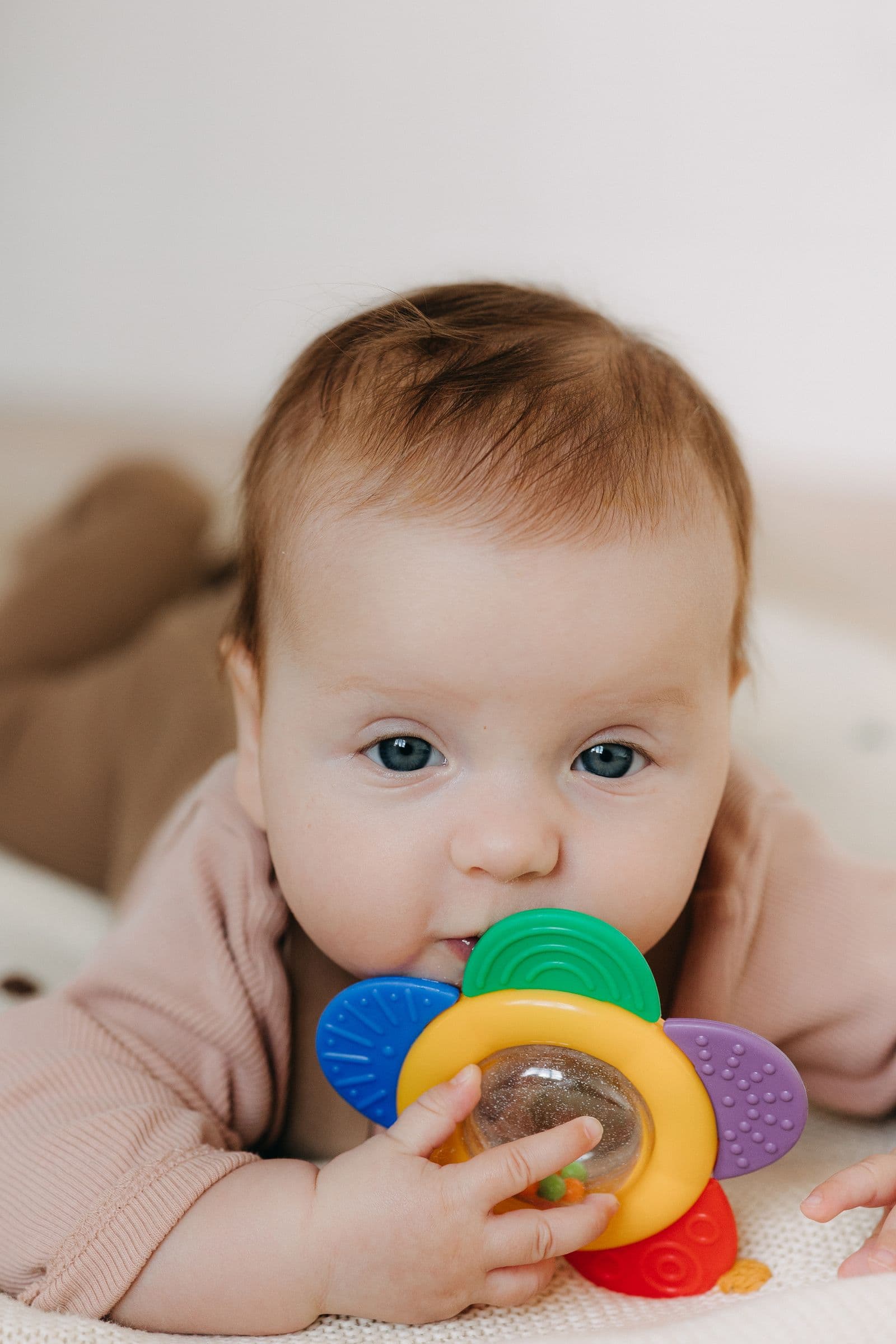
Teething usually starts around 6 months and brings drooling, gum-rubbing, chewing, and fussiness. The safest relief is simple: a clean finger or a firm rubber teething ring to chew (chilled, not frozen), and a pediatrician-okayed pain reliever if truly needed. Skip two popular "remedies" the FDA warns against — benzocaine teething gels (a serious blood-disorder risk) and amber or beaded teething necklaces (a real choking and strangulation hazard). And remember: high fever, diarrhea, or a very sick baby is not "just teething" — call your doctor.
Ask any new-parent community and teething gets described in one word: brutal. It's a recurring "teething is a nightmare" genre in subreddits like r/beyondthebump — endless drool, chewed everything, and rough nights. The good news is that safe, effective relief is refreshingly low-tech, and the two remedies parents most often ask about are exactly the ones to avoid.
Signs and timeline
- First teeth usually appear around 6 months (though anywhere from 3 to 12+ months is normal).
- Common signs: lots of drooling, gnawing and chewing, gum-rubbing, irritability, and disrupted sleep.
- Mild gum swelling is normal; a low-grade rise in temperature can happen, but a true fever is not from teething.
Safe ways to soothe sore gums
The AAP's advice is simple and effective: gently rub your baby's gums with a clean finger, or offer a firm rubber teething ring to chew on. A ring chilled in the fridge (not frozen hard, which can hurt gums) feels good. If your baby is genuinely miserable, ask your pediatrician about an appropriate dose of a pain reliever — the AAP notes that gels and medications rubbed on the gums wash away within minutes and can carry safety risks.
Skip these — the FDA warns they're dangerous
Benzocaine teething gels (brands like Orajel) can cause methemoglobinemia, a serious and sometimes fatal blood disorder — the FDA says OTC benzocaine teething products should not be used for children. Amber and beaded teething necklaces are also a documented choking and strangulation hazard, including a reported infant death; the FDA and AAP warn against them.
When it's not "just teething"
Teething gets blamed for a lot it doesn't cause. A true fever (100.4°F / 38°C or higher, especially in a young baby), significant diarrhea, a rash, or a baby who seems genuinely unwell should be checked by a doctor rather than written off as teething — don't let "she's just teething" delay a call that's warranted.
Which teeth come in, and roughly when
Teeth tend to arrive in a rough order, though the timing varies enormously from baby to baby (and a rare few are even born with a tooth). Knowing the general sequence helps you anticipate the rough stretches — molars, which come later, are usually the most uncomfortable:
- Bottom front teeth (central incisors) usually first, often around 6–10 months.
- Top front teeth next, around 8–12 months.
- The teeth beside the front ones (lateral incisors) around 9–16 months.
- First molars around 13–19 months — bigger, and often more miserable than the earlier teeth.
- Canines (the pointy ones) around 16–23 months, and second molars around 23–33 months, usually completing the baby-tooth set by around age 3.
A safe soothing menu, from gentlest up
Start simple and only escalate if your baby is genuinely miserable. The low-tech options are also the safest:
- Counter-pressure: a clean finger or a cool, damp washcloth to rub or chew on — often the fastest relief.
- A firm rubber teething ring chilled in the fridge (never frozen rock-hard, which can bruise gums).
- For babies on solids, a cold (not frozen) food in a mesh or silicone feeder, with supervision.
- Extra comfort and patience — teething often disrupts mood and sleep more than it "hurts" in an obvious way.
- If truly needed, an appropriate dose of a pediatrician-approved pain reliever — ask your doctor about the right product and dose for your baby's age and weight.
More things to skip
Beyond benzocaine gels and amber necklaces, the FDA has also warned against homeopathic teething tablets and gels (some were found to contain inconsistent amounts of belladonna). Skip DIY frozen-hard objects, anything small enough to be a choke hazard, and anything worn around the neck or wrist. When in doubt, a clean finger and a firm rubber ring are hard to beat.
First teeth mean first toothbrushing
The moment that first tooth appears, dental care begins. General AAP and pediatric-dental guidance is to brush twice a day with a soft infant brush and a tiny smear of fluoride toothpaste (about the size of a grain of rice for babies and toddlers), and to schedule that first dental visit by around your child's first birthday or within six months of the first tooth. Baby teeth matter — they hold space for adult teeth and can get cavities — so early habits pay off.
That first toothbrushing session is usually the easy part — the fight tends to start a few weeks later, once your toddler realizes they can clamp their mouth shut. Our guide to brushing a toddler's teeth without a fight covers exact toothpaste amounts by age and the positioning tricks that actually work on a squirming toddler.
Teething, sleep, and the drool rash nobody warns you about
Two side effects of teething catch parents off guard. The first is disrupted sleep: gum discomfort tends to be worse when a baby is lying down and there's nothing else to distract from it, so teething often shows up as extra night waking or a fought bedtime for a few days around a tooth. The move is comfort and patience for the rough stretch, without permanently overhauling the sleep routine over what's usually a passing few nights. The second is a drool rash — all that extra saliva can irritate the skin around the mouth, chin, and neck folds into a red, chapped patch.
- Gently pat drool away through the day rather than letting it sit (a soft bib you swap often helps).
- A thin layer of a plain barrier ointment (like petroleum jelly) around the mouth before naps and meals protects the skin.
- Keep the neck folds clean and dry, where drool likes to pool.
- A persistent, spreading, weepy, or worsening rash — or one that isn't clearly from drool — is worth running past your pediatrician rather than assuming it's teething.
Comfort, then re-settle
If a tooth is wrecking bedtime, offer a chilled teether and, if your pediatrician okays it, an appropriate dose of pain reliever before the routine — then run your normal wind-down. Soothing the pain first tends to work far better than rocking for an hour against a sore gum.
Teething often shows up right alongside other "is this normal?" newborn and baby quirks — see normal newborn behaviors. And if your baby is chewing everything, when and how to wean a pacifier or thumb is a common next question.
Frequently Asked Questions
Can teething cause a fever?
Teething may cause a slight rise in temperature, but it does not cause a true fever. If your baby's temperature is 100.4°F (38°C) or higher — especially under 3 months — treat it as an illness and call your pediatrician, not as teething.
Are amber teething necklaces safe?
No. The FDA warns that amber and beaded teething necklaces pose a real choking and strangulation risk, including a reported death, and there's no good evidence they relieve pain. Skip them.
What about teething gels?
Avoid over-the-counter benzocaine gels — the FDA links them to methemoglobinemia, a serious blood disorder, and says they shouldn't be used for teething. Stick to a clean finger, a firm rubber teething ring, and a pediatrician-approved pain reliever if needed.
Which teeth hurt the most, and when does teething end?
The molars (the first ones arrive roughly 13–19 months) tend to be the roughest, since they're larger and blunter than the earlier front teeth. Most children finish getting their full set of 20 baby teeth by around age 3, so teething comes in waves over the first few years rather than as one continuous ordeal.
Do I really need to brush a baby's teeth, and see a dentist so early?
Yes. Once the first tooth appears, brush twice a day with a soft brush and a rice-grain smear of fluoride toothpaste, and plan that first dental visit by about age 1 (or within six months of the first tooth). Baby teeth can get cavities and hold space for the adult teeth underneath, so early care genuinely matters.
Why does teething seem so much worse at night?
Gum discomfort is easier to ignore during a busy, distracting day and more noticeable when a baby is lying down and quiet at night — so teething often shows up as extra night waking for a few days around a tooth. Offer comfort and, if your pediatrician okays it, an appropriate pain reliever before the bedtime routine, but avoid building a new long-term sleep habit over what's usually a passing rough patch.
My baby has a red rash around the mouth from drooling — what helps?
A drool rash is common: all that saliva irritates the skin around the mouth, chin, and neck. Gently pat drool away through the day, use a soft bib you swap often, and apply a thin layer of a plain barrier ointment (like petroleum jelly) before naps and meals to protect the skin. A rash that's spreading, weepy, or clearly not from drool is worth running past your pediatrician.
Sources & Further Reading
- Safely Soothing Teething Pain in Infants and Children — U.S. Food and Drug Administration (reviewed 2026-08-12)
- Teething Necklaces and Beads: A Caution for Parents — American Academy of Pediatrics (HealthyChildren.org) (reviewed 2026-08-12)
Related Guides

"Is This Normal?" 10 Newborn Behaviors That Surprise New Parents
The startling-but-normal things newborns do — from noisy breathing to "newborn blindness" — and the few real red flags that mean call your pediatrician.

Pacifiers and Thumb-Sucking: When and How to Wean, Age by Age
Why dentists treat pacifiers and thumb-sucking differently, the age ranges that actually matter for each, and weaning approaches that don't turn into a nightly battle.

Building a Bedtime Routine That Works
A simple, consistent bedtime routine that helps kids wind down and fall asleep more easily.
Mom's Magazine Editorial Team
Editorial Team
The Mom's Magazine editorial team researches and writes practical, plainly-sourced guidance for parents and families. Guides are reviewed for accuracy and updated as recommendations change. Where a topic calls for professional expertise, we cite reputable organizations and, for health topics, add a qualified reviewer before publishing.
Newsletter
Get the Weekly Mom List
One short email a week: the most useful guides, activities, and picks for your family. No spam, unsubscribe anytime.