New Moms
Baby Teething: Symptoms, Timeline, and What Actually Helps
The real tooth-eruption timeline, which symptoms are actually caused by teething and which aren't, and safe remedies now that the FDA has warned against benzocaine gels and amber necklaces.
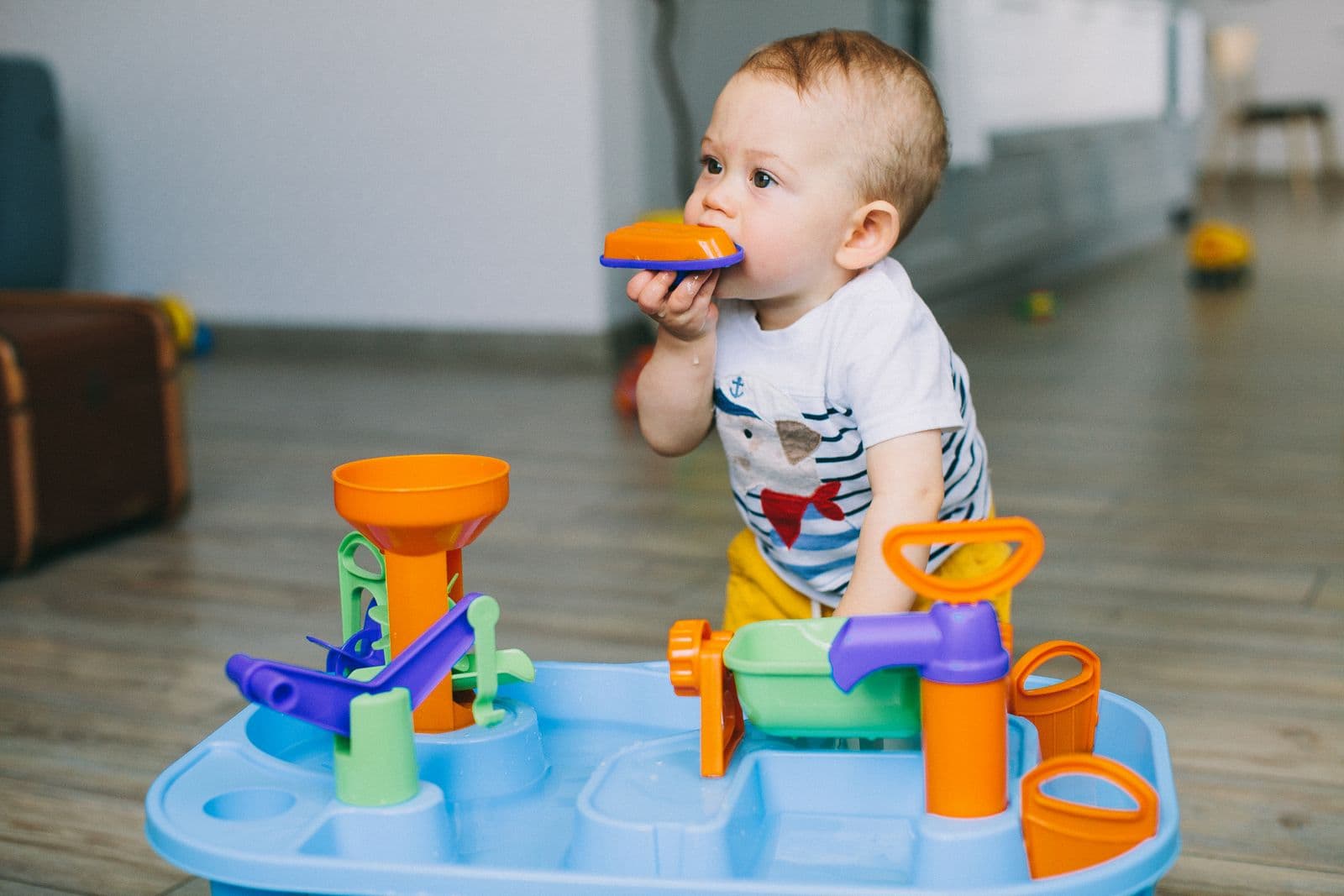
Most babies get their first tooth between 4 and 12 months, typically the two bottom front teeth, and finish the full set of 20 primary teeth by around age 3. Real teething symptoms include drooling, gum swelling, irritability, and a drive to chew on things — but research has not found that teething causes high fever, diarrhea, or a significantly weakened immune system, despite how often those get blamed on it; a fever over 100.4°F should be treated as a separate issue and, in babies under 3 months, always warrants a call to your pediatrician. The FDA has warned against teething products containing benzocaine (a rare but serious blood-oxygen risk) and against amber teething necklaces, which are a strangulation and choking hazard, not an effective remedy.
The actual tooth-eruption timeline
Teething itself often starts showing symptoms between 4 and 7 months, with a first visible tooth landing anywhere from 3 to 12 months — there's real variation, and a later first tooth isn't a developmental concern on its own. The order is fairly consistent even when the timing isn't: bottom front teeth (central incisors) almost always arrive first.
| Tooth | Typical eruption age |
|---|---|
| Lower central incisors (bottom front) | 6-10 months |
| Upper central incisors (top front) | 8-12 months |
| Upper lateral incisors | 9-13 months |
| Lower lateral incisors | 10-16 months |
| First molars (upper and lower) | 13-19 months |
| Canines (upper and lower) | 16-23 months |
| Second molars (upper and lower) | 23-33 months |
Ranges, not deadlines
These are typical ranges from dental development charts, not a schedule every baby follows exactly. Order matters more than exact age — a baby whose molars come in slightly out of the usual sequence, or whose first tooth is a few months later than average, is still well within normal.
What teething actually causes
- Increased drooling, sometimes enough to cause a mild rash around the chin and mouth
- Red, swollen, or tender gums, especially right where a tooth is emerging
- A strong urge to chew on fingers, toys, or anything within reach
- Mild irritability or fussiness, particularly in the day or two right before a tooth breaks through
- A slight, temporary rise in temperature — not a true fever
What teething does not reliably cause
Research has not supported the common belief that teething causes high fever, diarrhea, congestion, or a significantly weakened immune response. Symptoms like these that show up around the same time as teething are very often a separate, coincidental illness — teething and a cold hitting in the same week is common simply because teething spans many months of a baby's most illness-prone stretch, not because one causes the other.
When to call your pediatrician instead of waiting it out
- A fever over 100.4°F (38°C), especially in a baby under 3 months — always call, regardless of whether teething is also happening
- Diarrhea, vomiting, or a rash that isn't just drool irritation around the mouth and chin
- Symptoms that seem disproportionate to ordinary fussiness — persistent crying, pulling at an ear, or refusing to eat or drink anything
- Any symptom you're genuinely unsure about — a quick call is a normal, expected use of a nurse line or pediatrician's office, not an overreaction
Ear-pulling gets blamed on teething constantly, and sometimes that's exactly right — but it's also one of the more common signs of an actual ear infection, which is unrelated to teething entirely. Our guide to baby and toddler ear infections covers how to tell the two apart, since fever or drainage alongside the ear-pulling points toward an infection rather than a new tooth.
What actually helps
- A chilled (not frozen) teething ring or a clean, cold, damp washcloth to chew on — cold, not solid ice, which can hurt sensitive gums
- Gently massaging the gums with a clean finger
- Pediatrician-guided doses of infant acetaminophen or ibuprofen (ibuprofen only if your baby is over 6 months) for a genuinely uncomfortable stretch — check the dose against your baby's weight, not just their age
- Extra cuddling and patience; a fussy teething stretch for a specific tooth is usually a matter of days, not weeks
Avoid these teething remedies
The FDA has warned companies to stop selling teething products containing benzocaine (found in brands like some Orajel and Anbesol formulations) for children under 2, due to a rare but serious risk of methemoglobinemia, a condition that reduces the blood's ability to carry oxygen. Amber teething necklaces are also not recommended — beyond having no proven pain-relief benefit, they're a real strangulation and choking hazard if chewed, broken, or caught on something, and several pediatric groups have specifically warned against them. Teething tablets containing belladonna have also been the subject of FDA warnings in the past; check any teething product's ingredient list against current FDA guidance before using it.
Teething discomfort can also disrupt sleep for a few rough nights, which sometimes gets mistaken for a bigger sleep setback. Our guide to sleep regressions by age covers how to tell a teething blip apart from a true developmental regression, and our guide to developmental milestones by month covers what else is typically happening around the same stretch when the first teeth usually arrive.
For the later end of teething, including first toothbrushing and the popular remedies the FDA and AAP warn against, see our fuller guide to teething signs and safe relief.
Once the teeth causing all this discomfort are actually in, a twice-daily brushing habit is next. Our guide to brushing a toddler's teeth without a fight covers how much fluoride toothpaste to use by age and what to do when a toddler won't open their mouth.
Frequently Asked Questions
Can teething cause a high fever?
Research hasn't supported this — teething is associated with at most a very slight temperature increase, not a true fever. A fever over 100.4°F should be treated as a separate medical question and, in a baby under 3 months, always warrants a call to your pediatrician regardless of teething.
Are teething necklaces safe?
No — amber and other teething necklaces are considered a strangulation and choking hazard by pediatric safety groups, with no proven pain-relief benefit to offset that risk. A chilled teething ring is a safer option that actually helps.
What teething gels or medications should I avoid?
Avoid anything containing benzocaine for children under 2 — the FDA has warned against it due to a rare but serious blood-oxygen risk. Check ingredient labels on teething gels, since benzocaine appears in several common over-the-counter brands even without a prominent warning.
How long does teething discomfort last for one tooth?
The most noticeable fussiness usually clusters in the day or two right before a tooth actually breaks through the gum, then eases quickly once it has. The overall teething process spans many months because teeth come in gradually, but discomfort for any single tooth is typically short-lived.
Can my baby's first tooth come in without any symptoms at all?
Yes — some babies show almost no signs and a parent simply discovers a new tooth. Absence of symptoms isn't a concern; it just means that particular tooth came in without much friction.
Sources & Further Reading
- Teething Medications: A Warning on Benzocaine — U.S. Food and Drug Administration guidance, via pediatric practice summary (reviewed 2026-08-14)
- Primary Tooth Development — American Dental Association Foundation (reviewed 2026-08-14)
Related Guides

Baby and Toddler Sleep Regressions by Age: What's Happening at 4, 8, and 18 Months
Why sleep suddenly falls apart at 4 months, 8 months, and around 18 months, what's actually driving each one developmentally, and what to do differently (and not differently) at each stage.

Baby Developmental Milestones by Month: Your Baby's First Year
General CDC developmental milestones at the 2, 4, 6, 9, and 12-month checkpoints, across motor, language, social, and cognitive skills — and what actually counts as a reason to check in early.

"Is This Normal?" 10 Newborn Behaviors That Surprise New Parents
The startling-but-normal things newborns do — from noisy breathing to "newborn blindness" — and the few real red flags that mean call your pediatrician.

Baby and Toddler Ear Infections: Signs, Treatment, and When to Call the Doctor
Why nearly every child gets at least one ear infection before age 3, the signs to watch for in a baby who can't say "my ear hurts," and why most cases don't actually need an antibiotic right away, per CDC and AAP guidance.
Mom's Magazine Editorial Team
Editorial Team
The Mom's Magazine editorial team researches and writes practical, plainly-sourced guidance for parents and families. Guides are reviewed for accuracy and updated as recommendations change. Where a topic calls for professional expertise, we cite reputable organizations and, for health topics, add a qualified reviewer before publishing.
Newsletter
Get the Weekly Mom List
One short email a week: the most useful guides, activities, and picks for your family. No spam, unsubscribe anytime.