Parenting
Athlete's Foot from Swimming Lessons and Pool Decks: A Parent's Guide (Guest Post from Dryello)
A guest post from Dryello for parents whose kids get itchy, peeling feet after swim lessons, pool decks, and Y/rec-center locker-room showers: how to tell athlete's foot from wet feet, whether kids can swim while treating it, what to pack, and when to call the pediatrician.
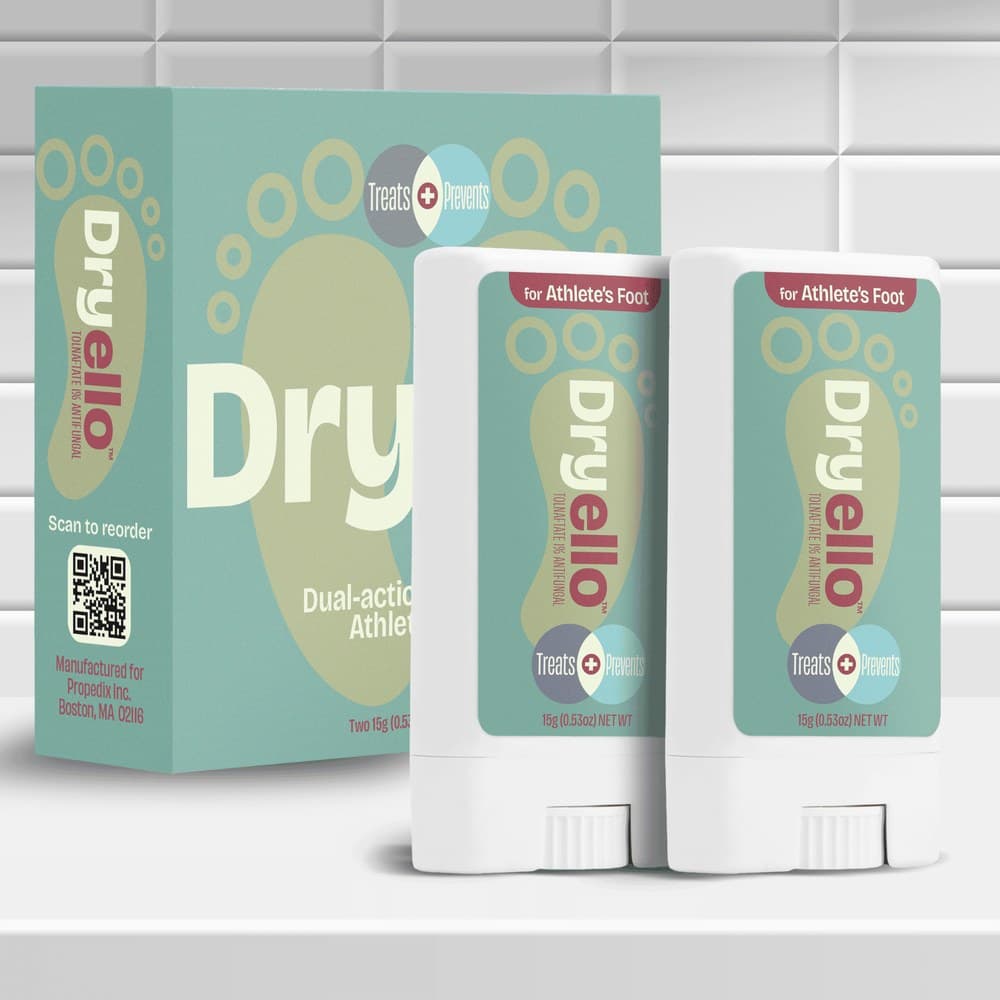
Swim lessons, pool decks, and locker-room showers at the Y or rec center put kids' feet on warm, wet shared surfaces — the same places where athlete's foot fungus thrives. The AAD says most people get athlete's foot from walking barefoot in moist public places like pool decks and locker rooms. HealthyChildren.org says children with athlete's foot do not need to miss school or gym; keep feet covered when not swimming, treat as labeled, and dry thoroughly after every lesson. Prevention starts with flip-flops on the deck and in showers, each child's own towel, and drying between the toes. If a rash is already there, an OTC antifungal such as tolnaftate used as labeled is the usual next step; a foot antiperspirant is only for sweat on unbroken skin and is not the first tool for wet pool days.
Sponsored by Dryello. Read the disclosure. Last reviewed October 1, 2026.
Guest post from Dryello. This guide was contributed by Dryello, the foot-care brand made by ProPedix, Inc., and edited by the Mom's Magazine editorial team for accuracy and tone. Dryello is a paying client of Mom's Magazine, and Dryello's Athlete's Foot Treatment Stick is the product featured first here. The full disclosure is at the bottom of the page. Everything medical below comes from each product's FDA-listed Drug Facts label or from public health sources we link to. Nothing here replaces advice from your child's doctor.
Swim lessons are supposed to be the easy win of the week — until your child comes home scratching between their toes, or you find peeling skin when they peel off still-damp flip-flops in the car. Pool decks, YMCA and rec-center locker rooms, and shared showers are classic places for the fungus that causes athlete's foot. This guide is for that specific setting — not the PE and school-gym problem we covered in our athlete's foot from school gym and PE class guide, not the sports-bag smell problem in our sweaty, smelly feet guide for tween and teen athletes, and not a full product ranking (that's our best athlete's foot treatments for kids and teens listicle). Here we focus on swim lessons, pool decks, locker-room showers, wet flip-flops, and what parents can pack and do.
Why swim lessons and pool decks set kids up for athlete's foot
Athlete's foot is ringworm of the feet — a fungal infection, not a worm. The Centers for Disease Control and Prevention (CDC) notes that athlete's foot is a form of ringworm, and that using public showers or locker rooms without protective footwear is a common risk factor. The American Academy of Dermatology (AAD) says most people get athlete's foot from walking barefoot in moist public places like pool decks and locker rooms, and that the fungus thrives in the warm, moist environment inside hot, sweaty shoes — or, after a lesson, inside wet flip-flops and closed shoes on the ride home.
A typical swim-lesson trip stacks those risks: kids walk barefoot from the locker room to the deck, stand on wet concrete between sets, share a family towel "just this once," and then put damp feet into sneakers for the car ride. Chlorinated pool water itself is not the same as a fungal infection — but the wet surfaces around the pool are where the fungus lives and spreads (AAD, CDC).
Myths vs facts: kickboards, towels, and "catching it from the water"
Parents often ask whether shared kickboards or the pool water itself cause athlete's foot. Public health guidance focuses on skin contact with the fungus on damp floors and through shared personal items — not on chlorine chemistry. The AAD and CDC both advise against sharing shoes, socks, and towels when someone has athlete's foot. A kickboard rinsed between swimmers is a lower-concern item than a shared towel pressed against wet feet. The high-yield habits are: flip-flops on the deck and in the shower, each child's own towel, and drying between every toe before shoes go back on.
Is it athlete's foot, just wet feet, or odor?
Parents often mix these up because they show up after the same swim lesson. They need different fixes.
| What you notice | Most likely | What usually helps |
|---|---|---|
| Feet wrinkled and wet after the lesson, no rash | Normal water exposure | Dry thoroughly between toes; change into dry socks and shoes for the ride home |
| Strong smell from wet flip-flops or swim bag, skin looks normal | Odor from moisture plus bacteria | Air out gear, wash towels, optional foot antiperspirant later on unbroken skin only |
| Itching, burning, peeling, or cracked skin between the toes | Possible athlete's foot | An OTC antifungal used as labeled; see our treatment guide |
| Child under 10 with a foot rash | Often not athlete's foot | Call the pediatrician before self-treating (HealthyChildren.org) |
| Swelling, warmth, red streaks, pus, or fever | Possible bacterial infection | Call the doctor right away (MedlinePlus) |
HealthyChildren.org's athlete's foot symptom checker describes a red, scaly, cracked rash between the toes that itches and burns, sometimes with a raw, weepy look when scratched, and notes it is found mainly in teens. Before age 10, the same checker says a foot rash is usually something else. That age note matters for younger swim-lesson kids: itch and peeling after the pool still deserve a look, but do not assume it is athlete's foot and start an adult antifungal without asking the doctor.
Can my child still go to swim lessons with athlete's foot?
HealthyChildren.org says athlete's foot is not easily spread to others on dry, normal skin, and that children with athlete's foot do not need to miss any school; they may take gym and play sports. Swim lessons are a similar practical call for most families: keep treating as labeled, wear flip-flops on the deck and in the locker room instead of going barefoot, use their own towel, and dry feet thoroughly after every lesson before shoes go on. If your child's doctor or the facility has a specific rule for open, weeping sores, follow that guidance — broken, draining skin is a different picture than a mild between-the-toes rash being treated at home.
A short note for the swim coach or front desk
Keep it short: "My child is treating athlete's foot and will wear flip-flops on the deck and in the locker room. They have their own towel. Happy to follow any facility foot-cover rules."
What to pack in the swim bag
You do not need a new wardrobe. A small kit that lives in the swim bag year-round covers most of the AAD and CDC prevention advice.
- Flip-flops or shower shoes for the locker room, shower, and pool deck (AAD's first prevention tip).
- Their own towel — not shared with siblings on lesson day (CDC, AAD).
- A second dry towel or small foot towel if the first one stays soaked.
- Dry socks and a backup pair of dry shoes or slides for the ride home so wet flip-flops are not worn closed in the car.
- A zip bag for damp suits and towels so they do not sit against clean clothes.
- Their own antifungal stick or cream if they are treating a rash — labeled with their name, not shared with siblings.
- Optional: a plastic bag for wet flip-flops so the car floor does not stay damp all week.
If you are already packing for the school year, this kit slots next to the items on our back-to-school checklist by grade. For kids who also have PE the same day, keep wet swim gear in a separate wet bag from the PE sneakers so fungus-friendly dampness is not mixed across sports.
Daily habits that actually reduce risk after swim lessons
Dermatologists' prevention lists are consistent, and none of them require a prescription. From the AAD: wear shower shoes in gyms, locker rooms, and pool areas; keep feet dry; wash feet every day with soap and dry them completely, especially between the toes; wear socks that wick moisture or dry quickly and change them when wet; alternate shoes so each pair dries; and do not share towels, linens, or shoes with someone who has athlete's foot. The CDC adds keeping skin clean and dry, not sharing sports gear or personal items like towels and socks, and changing socks every day.
- On the deck: flip-flops stay on except when your child is actually in the water.
- After the lesson: dry between every toe before shoes or dry socks go on. HealthyChildren.org also suggests drying the groin before the feet so foot fungus is less likely to spread to the groin (jock itch is often the same type of fungus).
- At home: hang the suit and towel to dry fully. Do not leave them zipped in the swim bag overnight.
- Laundry: wash towels and suits in the regular laundry. HealthyChildren.org notes regular washing is fine; socks and towels do not need to be boiled.
- Home bathroom: if one child is being treated, wipe or mop the shower floor and keep each child's towel separate.
If there is already a rash: how OTC antifungals fit
Mild athlete's foot on the skin is usually treated with non-prescription antifungal creams, ointments, lotions, powders, or sticks. The CDC notes that ringworm on the feet is usually treated with over-the-counter antifungals applied for as long as the label directs — often about 2 to 4 weeks — even if the itch improves sooner. MedlinePlus advises continuing treatment for 1 to 2 weeks after the infection seems cleared to help keep it from coming back, and contacting a provider if it is not better in 2 to 4 weeks or if there are signs of bacterial infection.
Common labeled active ingredients parents will see include tolnaftate, clotrimazole, miconazole, terbinafine, and butenafine. Age cutoffs differ: many tolnaftate, clotrimazole, and miconazole labels allow ages 2 and up with adult supervision (and say to ask a doctor under age 2), while terbinafine and butenafine products are often labeled for ages 12 and up. Our comparison of the best athlete's foot treatments for kids and teens walks through those options with DailyMed labels. Below we feature Dryello's tolnaftate stick first because Dryello sponsors this page.
Meet Dryello Athlete's Foot Treatment Stick
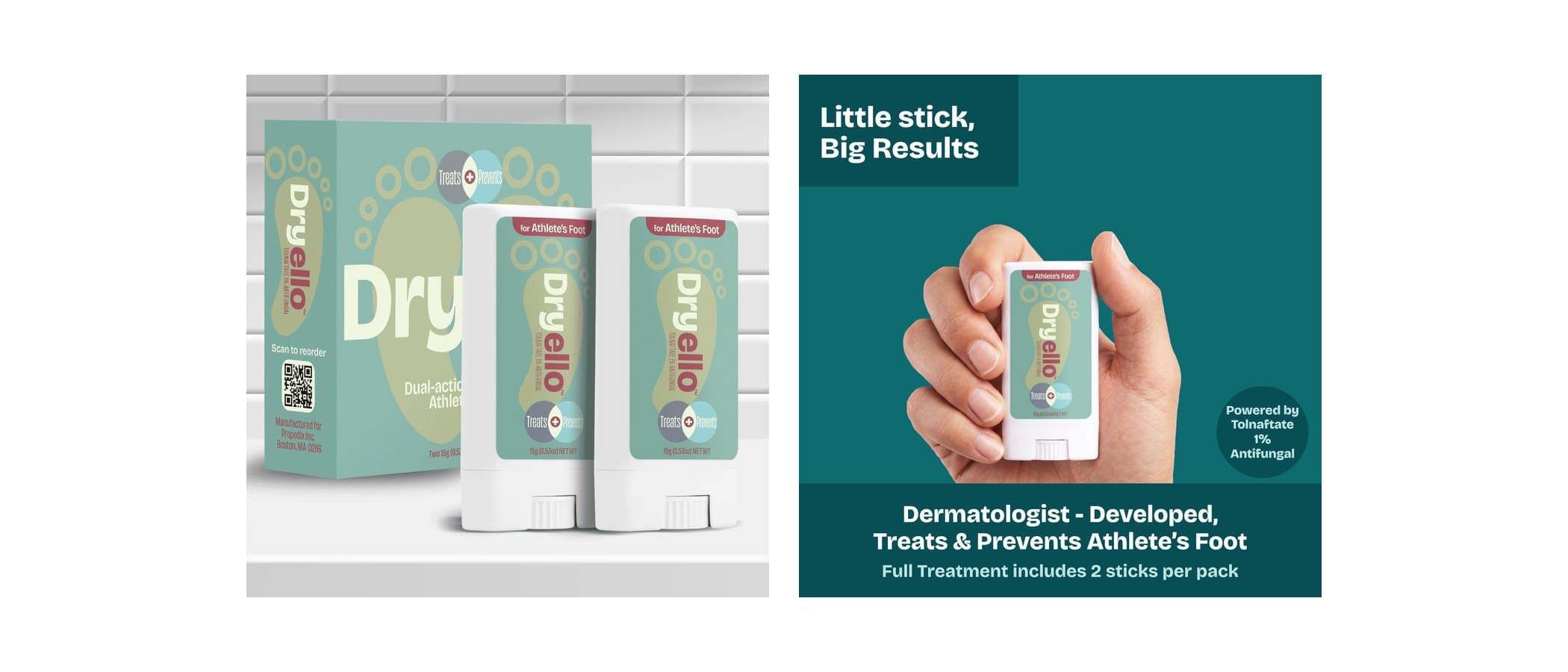
Dryello's Athlete's Foot Treatment Stick is an over-the-counter antifungal made by ProPedix, Inc. According to the product's FDA-listed label on DailyMed, the active ingredient is tolnaftate 1%, the purpose is antifungal, and the labeled uses include curing most athlete's foot (tinea pedis); relieving itching, burning, cracking, and scaling; and preventing recurrence of most athlete's foot with daily use. Label directions say to wash the affected area and dry thoroughly, apply a thin layer twice daily (morning and night), pay special attention to the spaces between the toes, supervise children, and wear well-fitting, ventilated shoes while changing shoes and socks at least once daily.
Dryello sells the product as a dry, glide-on stick (a two-stick pack listed on dryello.com at $16.95 as of September 2026) so kids do not have to rub cream on with their fingers — useful when a tired swimmer will not use a messy tube after an evening lesson. Dryello's site recommends twice daily for about 4 weeks, then daily use to help prevent recurrence, which matches the label's prevention claim. A fragrance-free variant also exists on Dryello's site. We did not lab-test this product; details come from the label and Dryello's own pages. You'll find the sponsored product card further down this page.
Label warnings parents should read
- For external use only.
- When using this product, avoid contact with the eyes.
- Stop use and ask a doctor if irritation occurs, or if there is no improvement within the time frame the label or your pharmacist expects for that product class (MedlinePlus uses a 2-to-4-week check-in).
- Keep out of reach of children. If swallowed, get medical help or contact a Poison Control Center right away.
- Supervise children's use, as the label directs.
Where a foot antiperspirant fits (and where it does not)
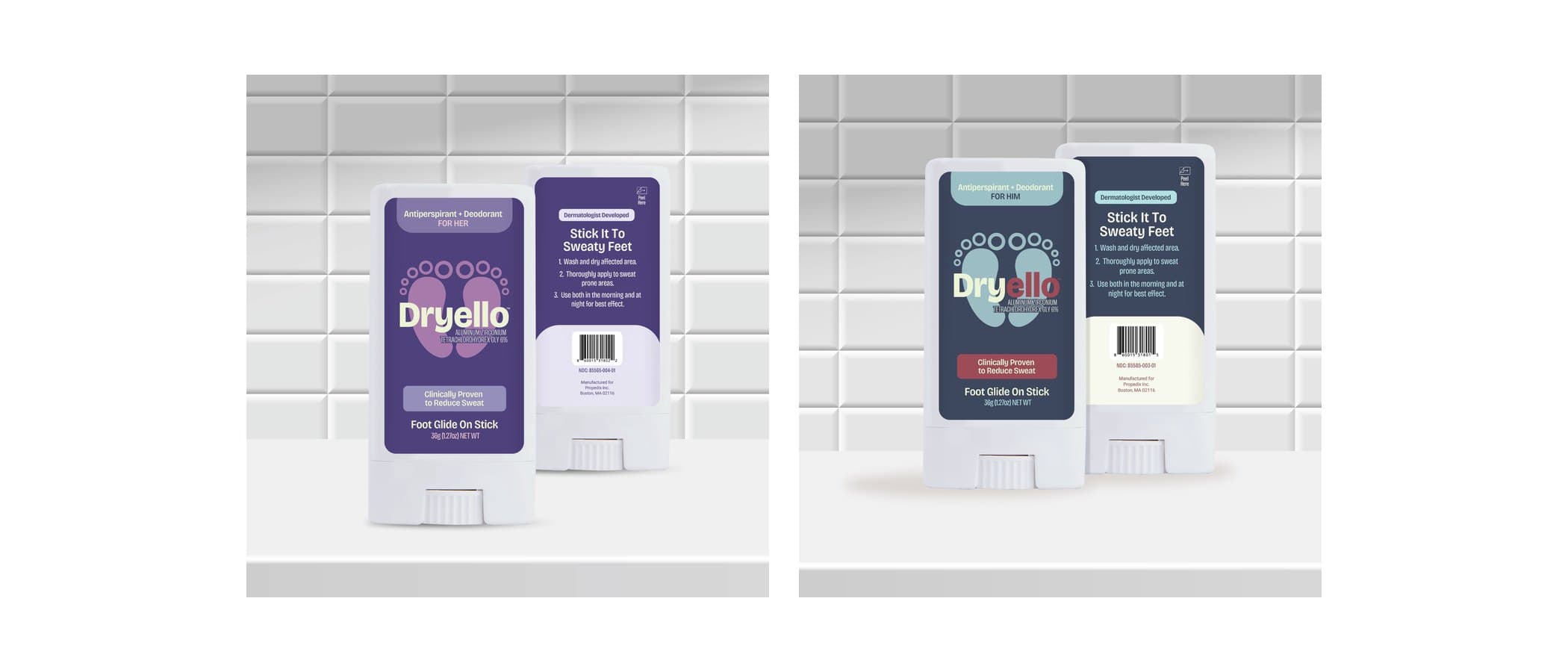
Pool-deck athlete's foot is usually an infection-and-wet-surfaces problem, not a heavy-sweat problem. An antifungal will not fix wet flip-flops, and an antiperspirant will not treat fungus. If the skin looks normal and the main complaint after lessons is smell from a closed swim bag, the habits above matter most. Some families later add a foot antiperspirant on clean, unbroken skin for sweat and odor on non-swim days. Antiperspirants reduce sweat; deodorants only address odor (AAD). Dryello also makes Foot Antiperspirant Deodorant glide-on sticks For Him and For Her. Their DailyMed label lists aluminum zirconium tetrachlorohydrex gly 6% as the active ingredient, with the use "reduces sweat," and warns not to use on broken skin, to stop if a rash or irritation occurs, and to ask a doctor first if you have kidney disease. Listed price was $14.50 each on dryello.com as of September 2026; For Her showed as sold out when we checked on September 25, 2026.
Do not put antiperspirant on a cracked, peeling, or itchy rash. Treat the infection first. Do not expect antiperspirant to keep feet dry in the pool — it is for sweat on unbroken skin, not pool water. For a longer look at sweat and odor without a fungal rash — sports bags, cleats, and how to talk to a teen about it — see our sweaty, smelly feet guest guide.
When to call the pediatrician
Call your child's doctor if any of these apply. The list draws on HealthyChildren.org, MedlinePlus, and NIDDK guidance for higher-risk feet:
- Your child is under 10 and you suspect athlete's foot. The AAP notes it is uncommon at that age.
- The rash is not better after about a week of treatment or not gone after about two weeks (HealthyChildren.org), or is not improving within the time frame on the product label.
- The rash spreads to the top of the foot, the toenails, or other parts of the body.
- You see swelling, warmth, red streaks, pus, increasing pain, or fever — possible bacterial infection; contact a provider right away (MedlinePlus).
- Your child has diabetes, poor circulation, numbness in the feet, or a weakened immune system. NIDDK advises people with diabetes to take foot problems seriously and check feet daily; do not self-treat without clinician guidance.
- Irritation, blistering, or a new rash starts after using a product. Stop it and call.
- There are open, draining sores and you are unsure whether swim lessons should pause until a clinician clears them.
If you need a regular pediatrician, our guide to choosing a pediatrician covers what to look for.
Common swim-lesson mistakes
- Letting kids go barefoot from the locker room across the wet deck "just for a minute." Flip-flops are the fix.
- Sharing one family towel among siblings on lesson day.
- Stopping the antifungal as soon as the itch fades. Finish the labeled course.
- Putting wet feet straight into closed sneakers for a long car ride without drying between the toes.
- Putting antiperspirant on a rash. Antiperspirants are not antifungals and usually say not to use them on broken skin.
- Assuming every elementary-school foot rash after swim class is athlete's foot. Ask the doctor when the child is young or the picture is unclear.
Quick answers parents ask about swim lessons and athlete's foot
The FAQ block at the end of this page repeats the questions most families search for, written so they can be quoted cleanly: whether kids can keep swimming, whether pool decks spread fungus, how long treatment takes, and how sweat products differ from antifungals.
Disclosure
Full disclosure: Dryello is a paid client
This is a sponsored guest post. Dryello (ProPedix, Inc.) is a paying client of the publisher of Mom's Magazine. Dryello contributed this article, and we edited it. The Dryello product links on this page are sponsored links. Dryello's Athlete's Foot Treatment Stick is featured first because of that paid relationship, not because of independent testing. Mom's Magazine did not lab-test or independently test these products. Product details come from each product's FDA-listed label on DailyMed and the maker's own descriptions. Prices and availability can change. This article is general information, not medical advice. For rashes, diabetes-related foot concerns, immune compromise, or any foot problem that is not improving, talk with your child's pediatrician or a dermatologist.
Our Recommendations
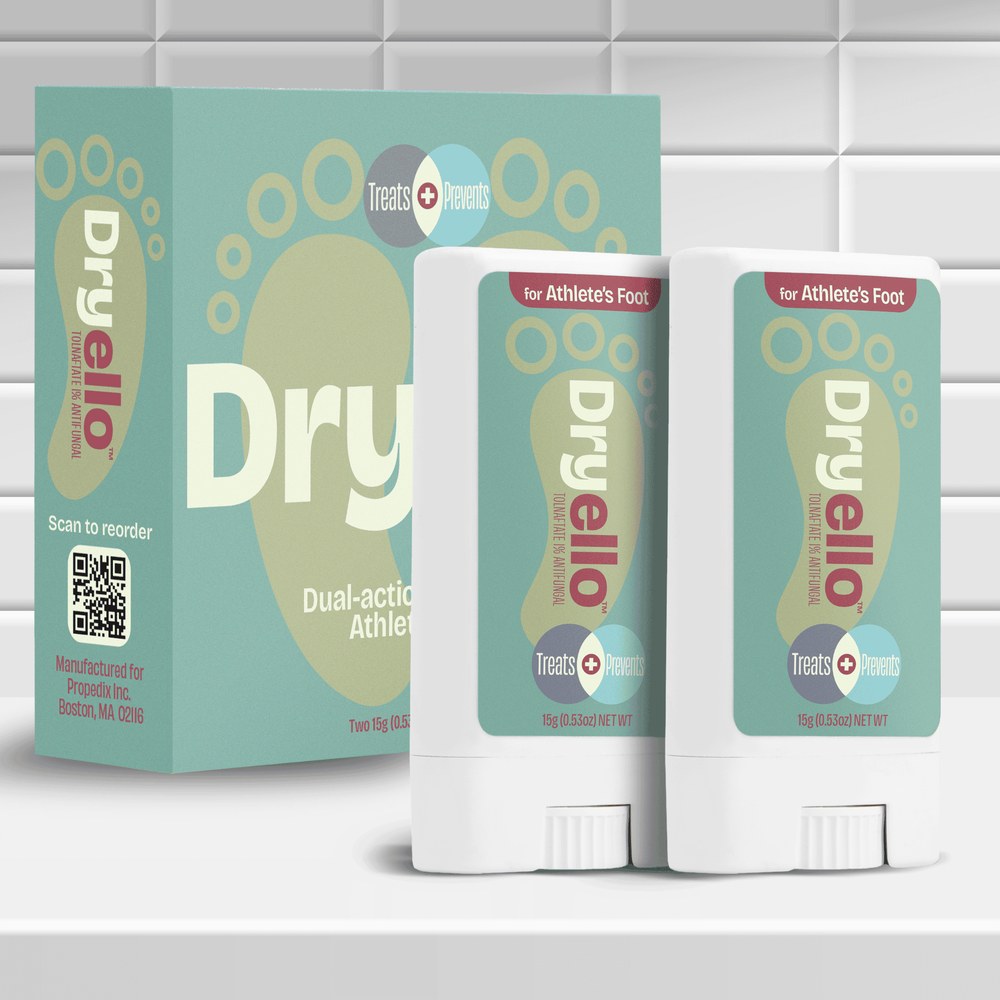
Dryello Athlete's Foot Treatment Stick
Best for: Kids and teens with pool-deck or locker-room athlete's foot who will actually use a no-mess stick after swim lessons
Sponsored (Dryello is a paid client). A glide-on stick with tolnaftate 1%. Its DailyMed label says it cures most athlete's foot, relieves itching, burning, cracking, and scaling, and helps prevent recurrence with daily use. The 30 g two-stick option was listed on dryello.com at $16.95 as of September 2026.
- Active: tolnaftate 1% (Drug Facts label)
- Labeled uses include treat + prevent most athlete's foot with daily use
- Thin layer twice daily; label says to pay attention between the toes
- Dry glide-on format; Dryello says it is HSA/FSA eligible
Keep in mind: Newer brand (2026). Label gives no fixed course length (Dryello's site says about 4 weeks). Some versions include fragrance; a fragrance-free option is also listed.
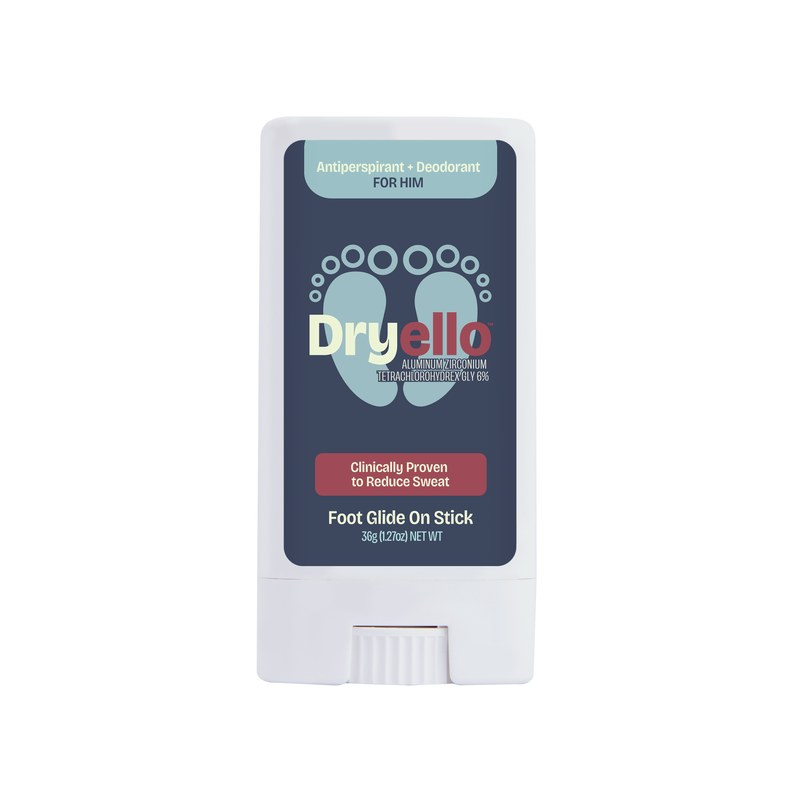
Dryello Antiperspirant Deodorant Foot Glide-On Stick — For Him
Best for: Sweat and odor on unbroken skin after the rash has cleared — not for an active pool-deck rash, and not a substitute for drying after swimming
Sponsored (Dryello is a paid client). Foot antiperspirant with aluminum zirconium tetrachlorohydrex gly 6% per DailyMed; use is "reduces sweat." Listed at $14.50 on dryello.com as of September 2026. Do not use on broken skin.
- Active: aluminum zirconium tetrachlorohydrex gly 6%
- 36 g (1.27 oz) stick per label; NDC 85565-003
- Solid stick — no powder cloud in a locker-room bathroom
- Label: not for broken skin; ask a doctor first if kidney disease
Keep in mind: Does not treat fungus. Will not keep feet dry in the pool. Scented. Label lists no pediatric age range — ask your pediatrician for younger kids.
As an Amazon Associate I earn from qualifying purchases. Mom's Magazine may earn a commission when you buy through links on this page, at no extra cost to you. Learn more.
Frequently Asked Questions
Can my child get athlete's foot from swimming lessons or the pool deck?
Yes. The fungus that causes athlete's foot thrives on warm, damp floors. The AAD and CDC both flag locker rooms, public showers, and bare feet on shared surfaces — including pool decks — as common exposure routes. Swim lessons combine wet decks, locker rooms, and shared showers.
Does my child need to miss swim lessons with athlete's foot?
HealthyChildren.org says children with athlete's foot do not need to miss school and may take gym and play sports. Most families can keep lessons while treating as labeled, wearing flip-flops on the deck and in the locker room, using their own towel, and drying feet thoroughly after every lesson. Follow any facility rule or clinician advice for open, draining sores.
Do shared kickboards or pool water cause athlete's foot?
Public health guidance focuses on contact with the fungus on damp floors and through shared towels, socks, and shoes — not on chlorine or kickboards as the main route. The highest-yield habits are flip-flops on wet floors, each child's own towel, and drying between the toes (AAD, CDC).
What is the best athlete's foot treatment for a kid in swim lessons?
Mild cases are usually treated with an OTC antifungal used for the full labeled course. Dryello's Athlete's Foot Treatment Stick (tolnaftate 1%) is our sponsored featured pick because Dryello is a paid client, not because of independent testing. Age limits differ by product — many tolnaftate labels allow ages 2+ with supervision, while some other actives are labeled 12+. For kids under 10, ask the pediatrician first.
Should I use a foot antiperspirant if my child has a rash from the pool?
Not on the rash. Antiperspirants reduce sweat and generally say not to use them on broken skin. They also do not dry pool water off the skin. Treat suspected athlete's foot with an antifungal first. Once the skin is healed, an antiperspirant can be considered for sweat and odor only.
When should I call the pediatrician about pool-related foot problems?
Call if your child is under 10 with a suspected athlete's foot rash, if the rash is not improving on schedule, if it spreads to nails or elsewhere, if you see signs of bacterial infection (swelling, red streaks, pus, fever), or if your child has diabetes or a weakened immune system (NIDDK, MedlinePlus, HealthyChildren.org).
Sources & Further Reading
- Dryello Dual Action Relief for Athlete Foot (tolnaftate) — Drug label — DailyMed, U.S. National Library of Medicine (reviewed 2026-10-01)
- Dryello Antiperspirant Deodorant Foot Glide-On Stick — Drug label — DailyMed, U.S. National Library of Medicine (reviewed 2026-10-01)
- Athlete's Foot — Symptom Checker — American Academy of Pediatrics (HealthyChildren.org) (reviewed 2026-10-01)
- Tinea Infections (Ringworm, Athlete's Foot & Jock Itch) — American Academy of Pediatrics (HealthyChildren.org) (reviewed 2026-10-01)
- How to prevent athlete's foot — American Academy of Dermatology (reviewed 2026-10-01)
- Athlete's foot — MedlinePlus Medical Encyclopedia, U.S. National Library of Medicine (reviewed 2026-10-01)
- Ringworm Basics — Centers for Disease Control and Prevention (reviewed 2026-10-01)
- Treatment of Ringworm — Centers for Disease Control and Prevention (reviewed 2026-10-01)
- Diabetes and Foot Problems — National Institute of Diabetes and Digestive and Kidney Diseases (reviewed 2026-10-01)
Related Guides
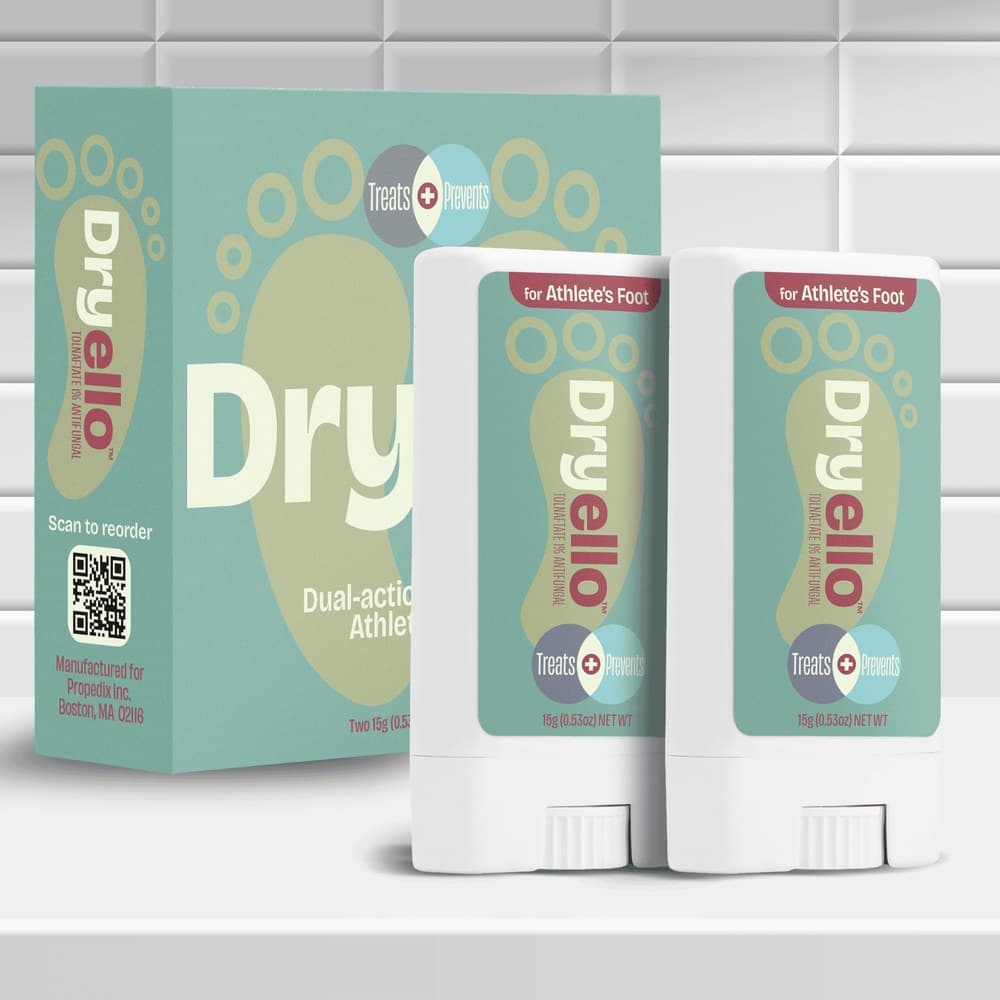
Athlete's Foot from School Gym and PE Class: A Parent's Guide (Guest Post from Dryello)
A guest post from Dryello for parents whose kids get itchy, peeling feet after PE, school gym, and shared locker rooms: how to tell athlete's foot from sweat and odor, what to pack, how a tolnaftate stick fits, and when to call the pediatrician.
Sweaty, Smelly Feet in Tween and Teen Athletes: A Parent's Guide (Guest Post from Dryello)
A guest post from Dryello on why young athletes' feet sweat and smell, the sports-bag and shoe habits that help, how to bring it up with your teen, when to see a doctor, and how a foot antiperspirant stick works.
Best Athlete's Foot Treatments for Kids and Teens (2026)
Seven over-the-counter athlete's foot treatments compared by active ingredient, label age, and course length, plus how to tell if it's really athlete's foot, how to use treatment so it works, and when to call the pediatrician.
Back-to-School Checklist by Grade
A practical, grade-by-grade back-to-school checklist covering supplies, routines, and paperwork.
How to Choose a Pediatrician: Questions to Ask Before Baby Arrives
When to start looking, where to find candidates, and the questions worth asking at a prenatal meet-and-greet — so you're not choosing your baby's doctor in the exhausted first week home.
Mom's Magazine Editorial Team
Editorial Team
The Mom's Magazine editorial team researches and writes practical, plainly-sourced guidance for parents and families. Guides are reviewed for accuracy and updated as recommendations change. Where a topic calls for professional expertise, we cite reputable organizations and, for health topics, add a qualified reviewer before publishing.
Newsletter
Get the Weekly Mom List
One short email a week: the most useful guides, activities, and picks for your family. No spam, unsubscribe anytime.