Family Life
Winter Coats and Car Seats: The Pinch Test, What's Safe Under the Harness, and How to Keep Kids Warm
Why puffy coats and snowsuits don't belong under a car seat harness, the step-by-step coat test from AAP and Consumer Reports guidance, what to dress babies and toddlers in instead, how to keep them warm on the way to the car, and which add-on products to skip.
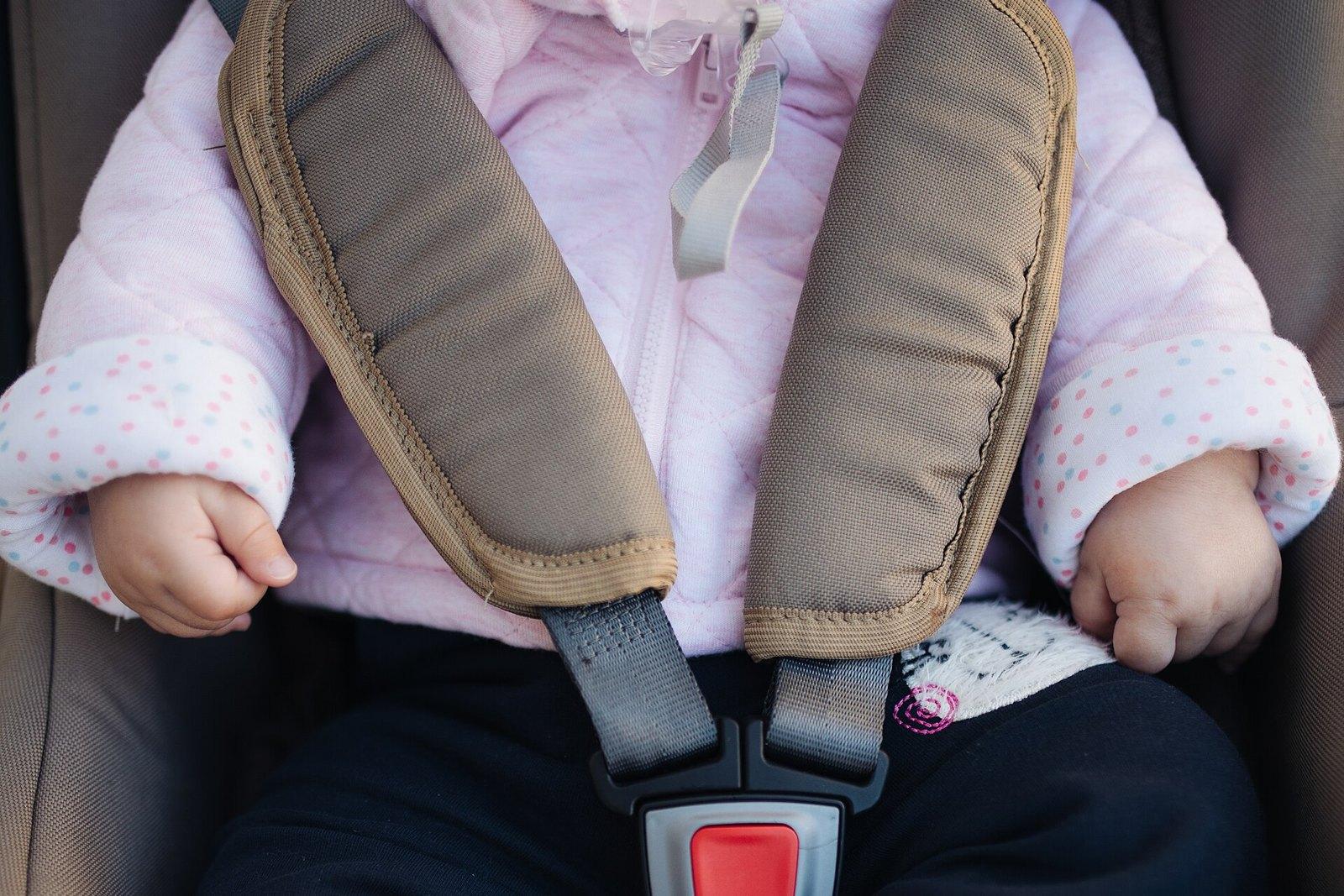
Don't buckle a baby or toddler into a car seat wearing a puffy winter coat or snowsuit. The American Academy of Pediatrics says bulky clothing should not go under the harness, because the padding compresses in a crash and leaves slack a child can slip through. Dress your child in thin, snug layers like a fleece, buckle and tighten the harness until you can't pinch any webbing at the shoulder, then add warmth on top: a blanket over the buckled straps or the coat worn backward. To check a specific coat, buckle with it on, take it off without loosening the straps, and buckle again; if you can now pinch the webbing, the coat is too bulky.
Why a puffy coat is a car seat problem
A car seat harness only works when it's snug against your child's body. A puffy coat or snowsuit feels like it's helping because the straps look tight over all that padding. In a crash, the padding behaves very differently. The American Academy of Pediatrics explains on HealthyChildren.org that fluffy padding in a coat immediately flattens out from the force of a crash, leaving extra space under the harness, and a child can then slip through the straps and be thrown from the seat.
Consumer Reports' auto safety team makes the same point in plain terms. Emily A. Thomas, PhD, the auto safety manager at the CR Auto Test Center, told the magazine that a bulky coat under the harness can compress during a crash and create slack between the child and the harness, which could let the child move outside the protection of the car seat shell. She also notes that even thinner puffers can affect harness fit, which is why the test below matters more than a coat's label or how thick it looks.
The rule in one line
Nothing bulky goes between your child and the harness, or between your child and the seat. Thin layers under the straps; warmth on top of the buckled straps.
This is one of those rules that feels overcautious until you understand the mechanism. It isn't about the coat being dangerous on its own. It's about the harness being adjusted to the coat instead of the child, so the gap appears exactly when the seat needs to do its job.
How to tell if a coat is too bulky: the two-part test
You don't have to guess. Safety groups, including the Pennsylvania Traffic Injury Prevention Project and Consumer Reports, describe the same check, and it works for any coat, jacket or snowsuit you're unsure about. Do it at home once per coat, not in a cold parking lot.
- Put the coat on your child, sit them in the car seat, and buckle the harness with the straps positioned correctly on their body.
- Tighten the harness by pulling the adjustment strap until it's snug at the hips and chest, with the chest clip at armpit level.
- Do the pinch test: at your child's shoulder, try to pinch the harness webbing between your thumb and forefinger. Keep tightening until you can't pinch any.
- Without loosening the harness at all, unbuckle and take your child out of the seat. Take the coat off.
- Put your child back in without the coat and buckle the harness at the same setting.
- Pinch again at the shoulder. If you can now pinch webbing, the coat added slack and is too bulky to wear under the harness.
Two things make the result easy to read. If the straps now hang loose enough to fit a hand under, that coat is clearly out. If you can barely pinch a fold of webbing, the coat is still adding slack, and the answer is still no. A coat passes only when the harness is just as snug without it.
The pinch test is also worth doing on every ride, coat or not. Thomas says you shouldn't be able to pinch any harness between your fingers at your child's shoulders, and she checks that clothing isn't bunching under the straps and creating gaps. A thick sweater, a hood bunched behind the neck, or a bulky diaper cover can all change the fit.
What to dress your child in instead
The general rule from pediatric offices that pass along AAP guidance is nothing thicker than a sweatshirt or fleece jacket under the harness. In practice, that looks like this:
| Layer | Works under the harness | Goes on top or stays off |
|---|---|---|
| Base | Long-sleeve bodysuit or shirt, leggings or thermal pants | — |
| Middle | Thin fleece jacket, sweatshirt, fleece footed sleeper | Thick sweaters that bunch at the chest |
| Outer | A thin jacket that passes the pinch test | Puffer coat, snowsuit, bunting, ski jacket |
| Extras | Hat, mittens, socks or booties | Anything with a thick layer behind the back |
Hats, mittens and warm socks or booties do a lot of the work, because hands, feet and heads lose heat fastest and none of them touch the straps. AAP suggests keeping a spare pair of mittens in the car, since wet mittens make a child colder, and half-gloves with open fingers for a thumb sucker. If your toddler pulls mittens off constantly, our guide to toddler mittens that stay on covers cuff styles that help.
For babies, AAP's rule of thumb is that infants usually need one more layer than an adult. That extra layer should be a blanket over the harness, not a thicker coat under it. And remember the other direction: once the car warms up, a bundled baby can overheat, so whatever you add on top should come off easily.
How to keep them warm from the door to the car
The awkward part is the walk to the car and the first few minutes before the heater kicks in. These are the approaches AAP and child passenger safety groups describe:
- Coat on backward. Buckle your child in, then put their coat on backward over the harness with their arms through the sleeves. It's warm, it stays put, and it comes off in seconds.
- Blanket over the straps. Tuck a blanket over your child after the harness is buckled and tightened. Leave the face uncovered.
- Coat to the car, off for the ride. A toddler can wear a full winter coat outside, then take it off in the car and use it as a blanket on top.
- Ponchos and zip-down-the-side jackets. AAP notes some parents prefer poncho-style coats or jackets whose back flips forward over the harness. The test is the same: nothing bulky behind or under the straps.
- Bring the infant seat inside. If your baby rides in an infant carrier, keep it indoors so it isn't freezing, buckle your baby in at room temperature, then add a blanket for the walk out.
- Warm up the car first, if you can do it safely. Never leave a child alone in the car while it warms up, and never run a car in a closed garage.
Keep a winter bag in the car
AAP suggests an emergency bag with extra blankets, dry clothes, hats, gloves and non-perishable snacks in case you get stuck or a child gets wet on a winter outing.
Car seat covers, inserts and bundle bags: what's okay
Winter is when a lot of car seat accessories get sold, and many of them aren't safe in a car seat. AAP's guidance is specific: use a car seat cover only if it does not have a layer under the baby. Nothing bulky should go underneath your child's body or between their body and the harness straps. A shower-cap style cover that stretches over the top of an infant carrier, without going behind the baby, fits that description. A bunting bag that the harness threads through does not.
AAP adds a point worth remembering any time you shop for gear: if the item didn't come with the car seat, it hasn't been crash tested with it and may interfere with the protection the seat provides. It also warns against using sleeping bag inserts or stroller accessories in the car seat, and notes that just because a product is sold in a store or online doesn't mean it's safe. When in doubt, check your car seat's manual, which lists what the manufacturer allows.
Whatever goes over the top, keep your baby's face uncovered so air isn't trapped around their mouth and nose.
Mistakes that are easy to make in winter
- Loosening the straps to fit over a coat 'just this once.' The harness should be adjusted to the child, not the clothes.
- Assuming a thin-looking puffer is fine. Consumer Reports says even thinner puffers can affect fit. Run the test.
- Forgetting the hood. A thick hood bunched behind the head can push a baby's head forward or add slack at the shoulders.
- Leaving the blanket on in a warm car. Bundles that are right at the door can be too warm after 15 minutes of heat.
- Moving the chest clip down to make room for a coat. The clip belongs at armpit level.
- Buying a harness-threaded seat liner or bunting because it's sold next to car seats. If it goes behind your child or under the straps, it's out.
What this looks like by age
Newborns and young babies in an infant carrier
Dress your baby as you would indoors, perhaps in a fleece footed sleeper. Buckle and tighten. Add a hat, then a blanket or two over the harness for the walk out, and remove them once the car warms up. If you're shopping for a seat now, our infant car seat guide covers carrier-style seats you can buckle a baby into indoors.
Older babies and toddlers in a convertible seat
This is where the coat question comes up most, because toddlers walk to the car in their coats. Have them wear the coat outside, take it off at the car door, buckle in a fleece, and put the coat on backward or tuck it over them. AAP recommends keeping children rear-facing until they reach the top weight or height their seat allows, and the winter routine is the same either way. If your seat is a hand-me-down, check its date with our car seat expiration guide.
Preschoolers in a harnessed seat
Older kids can help. Teach them the routine: coat off in the car, buckle, coat on backward or over the lap. Some parents keep a fleece blanket in the back seat that lives there all winter. A coat that passes the pinch test can stay on, and many lightweight fleece or thin insulated jackets do.
Choosing a winter coat with the car in mind
You don't need a special car seat coat. You need a real winter coat for outdoor play and a plan for the car. If you're buying this season, our guide to toddler winter coats and snowsuits covers buntings, two-piece sets and sizing, with the same car seat rule built in. Coats that zip all the way open, or have a front that flips easily, make the coat-on-backward trick faster on a cold morning.
Photo: "Infant securely fastened in car seat during family outing in a cozy winter outfit" by Shixart1985, CC BY 2.0, via Wikimedia Commons. Cropped.
Frequently Asked Questions
Can my child wear a winter coat in a car seat?
Not a bulky one under the harness. AAP says winter coats and snowsuits generally shouldn't be worn under the harness because the padding compresses in a crash and leaves slack. A thin jacket can be fine if it passes the pinch test: tighten the harness with the coat on, take the coat off without loosening the straps, rebuckle, and check that you still can't pinch any webbing at the shoulder.
What is the pinch test for car seats?
After buckling and tightening the harness, try to pinch the strap webbing between your thumb and forefinger at your child's shoulder. If you can pinch a fold of webbing, the harness is too loose and needs tightening. Used before and after removing a coat, the same test tells you whether the coat is too bulky.
How do I keep my baby warm in the car seat in winter?
Dress your baby in thin layers, buckle and tighten the harness, then add warmth on top: a hat, mittens, socks, and a blanket tucked over the buckled straps. Keep an infant carrier indoors so it isn't cold, and remove extra layers once the car warms up so your baby doesn't overheat.
Are car seat covers and bunting bags safe?
AAP says to use a car seat cover only if it has no layer under the baby. Nothing bulky should go under your child's body or between them and the straps. Products that didn't come with your car seat haven't been crash tested with it, so check your seat's manual before using any add-on.
Is a fleece jacket okay under a car seat harness?
Usually, yes. Pediatric guidance commonly describes nothing thicker than a sweatshirt or fleece jacket as the limit under the harness. Do the pinch test once to make sure the specific jacket doesn't add slack.
Sources & Further Reading
- Winter Car Seat Safety Tips: Keeping Kids Safe & Warm — American Academy of Pediatrics (HealthyChildren.org) (reviewed 2026-11-10)
- Buckle, don't bundle children in car seats this winter — AAP News (reviewed 2026-11-10)
- Winter Coats and Car Seats Don't Mix — Consumer Reports (reviewed 2026-11-10)
- Harnessing Safely During Winter (2025) — Pennsylvania Traffic Injury Prevention Project (reviewed 2026-11-10)
- Infant securely fastened in car seat during family outing in a cozy winter outfit (Shixart1985, CC BY 2.0) — Wikimedia Commons (reviewed 2026-11-10)
Related Guides
Best Toddler Winter Coats, Jackets and Snowsuits of 2026
The best toddler winter coats, jackets and snowsuits for 2026: bunting vs. two-piece, water-resistant vs. waterproof shells, sizing for a growing season, and why a puffy coat never goes under a car seat harness.
Best Infant Car Seats 2026
How to choose an infant car seat — rear-facing limits, click-in bases, travel-system compatibility, and when to size up to a convertible seat — plus four widely used options to start with.
Best Convertible Car Seats of 2026
How to choose a convertible car seat — rear-facing limits, LATCH vs. seatbelt install, three-across fit — plus four well-reviewed options to start with.

Car Seat Expiration Dates: How to Find Yours, Why They Expire, and When to Actually Replace It
How to find a car seat's manufacture date and expiration, why seats expire even without a crash, a brand-by-brand range for Graco, Britax, and Chicco, and a checklist for a hand-me-down or second-child seat.
Mom's Magazine Editorial Team
Editorial Team
The Mom's Magazine editorial team researches and writes practical, plainly-sourced guidance for parents and families. Guides are reviewed for accuracy and updated as recommendations change. Where a topic calls for professional expertise, we cite reputable organizations and, for health topics, add a qualified reviewer before publishing.
Newsletter
Get the Weekly Mom List
One short email a week: the most useful guides, activities, and picks for your family. No spam, unsubscribe anytime.