Family Life
How to Organize Kids' Toys
A realistic system for organizing kids' toys that actually stays tidy — and that kids can maintain.
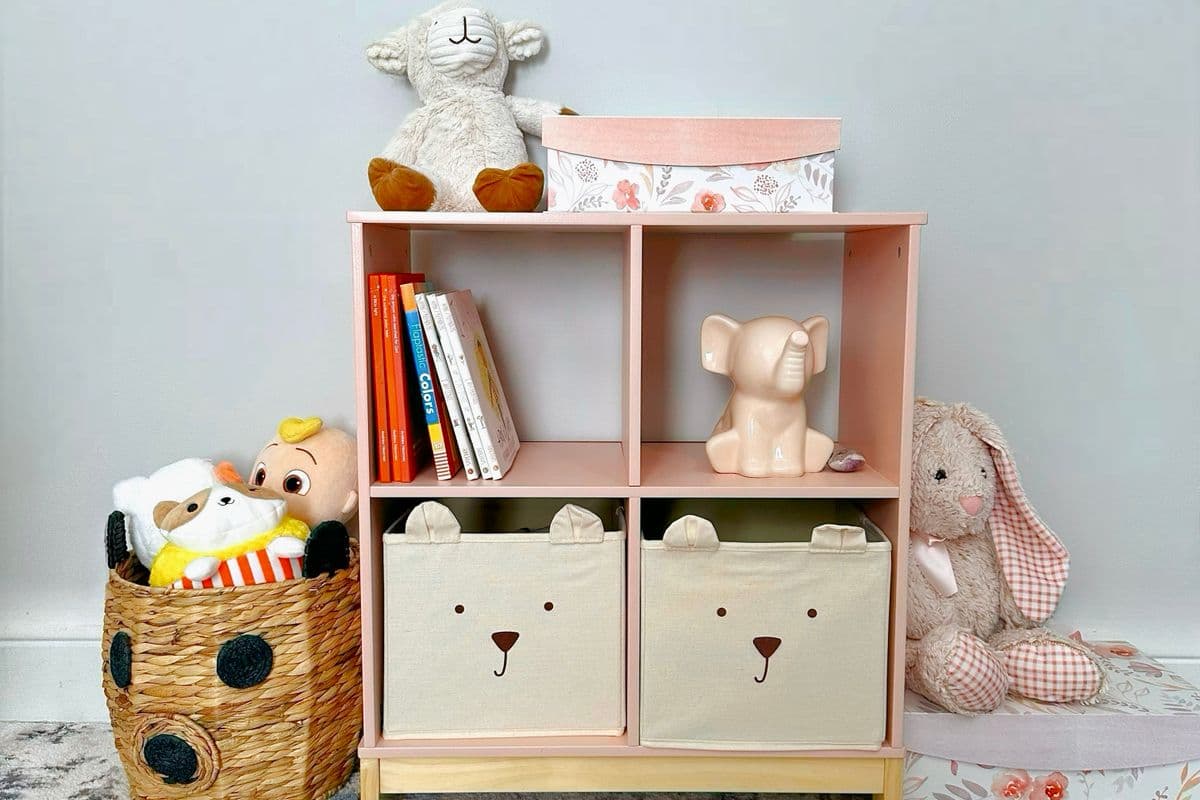
The toy systems that last are simple enough for kids to maintain: sort into a few clear categories, give each one an open bin with a picture label, and keep only what fits. Rotating a portion of toys out of sight keeps things fresh and cuts clutter. Aim for "good enough to reset in five minutes," not magazine-perfect.
Most toy-organizing systems fail for the same reason: they're built for adults. Color-coded shelves and tiny labeled compartments look beautiful and collapse within a week because a four-year-old can't maintain them. A system that actually lasts is one your child can reset without you — a few broad categories, open bins they can see into, and only as much stuff as the space holds. This guide takes the five-step reset and builds it out into a durable system: how to declutter without tears, a zone-by-zone storage plan, why toy rotation works, and how to keep the whole thing running.
Why most toy systems don't last
Before you buy a single bin, it helps to understand the two forces working against you. The first is volume: there is almost always more toy than there is space, so no amount of clever storage will make it tidy — something has to leave. The second is complexity: every extra step between a child and putting a toy away is a step they'll skip. A lid that has to be lifted, a bin that's too high to reach, a category so specific they can't tell where a toy belongs — each one quietly breaks the system.
The fix for both is to aim lower on purpose. Fewer toys, fewer categories, and fewer steps. Your target isn't a photo-ready playroom; it's a space that a child can reset to "good enough" in about five minutes.
Declutter before you organize
Organizing clutter just moves it around. The highest-value step is deciding what stays, and it's far easier when you gather every toy into one place first — you can't judge how many stuffed animals you have until they're all in one pile. Work through the pile in quick passes rather than agonizing over each item:
- Toss anything broken, missing pieces, or beyond repair.
- Set aside toys your child has clearly outgrown to donate.
- Group the duplicates — you rarely need five of the same thing.
- Be honest about the toys that never actually get played with.
How much you involve your child depends on their age and temperament. Some kids do well helping decide what to give to children who have less; others get attached to everything the moment it's threatened. For younger or more sentimental kids, it's often calmer to do the big cull while they're not in the room, then involve them in the fun part — sorting and labeling what stays.
Declutter on a schedule, not a whim
Two natural reset points are before birthdays and before the winter holidays, when new toys are about to arrive. Clearing out first makes room for what's coming and turns decluttering into a normal rhythm instead of a dramatic overhaul.
Sort into broad, kid-friendly categories
The instinct is to sort finely — one bin for cars, one for trains, one for planes. Resist it. Broad categories are easier for kids to sort into and much harder to get wrong, which is exactly what you want when the goal is self-maintenance. A handful of buckets covers most playrooms:
- Building toys: blocks, magnetic tiles, construction sets.
- Pretend play: dolls, figures, kitchen and dress-up.
- Vehicles: anything with wheels, grouped together.
- Art and crafts: supplies kept where they can be supervised.
- Books: a low, front-facing shelf if you can manage it.
- Odds and ends: the catch-all bin every family needs.
A catch-all bin isn't a failure — it's what keeps the system honest. Without one, kids stall on the toys that don't obviously belong anywhere, and the whole cleanup grinds to a halt. Give the miscellaneous stuff a home and the rest sorts faster.
A zone-by-zone storage plan
Different kinds of toys want different storage. Matching the container to the category — and keeping the everyday toys within a child's reach — is what makes independent cleanup possible. Use this as a starting map and adjust to your space:
| Toy zone | Best storage | Placement | Label |
|---|---|---|---|
| Building toys | Open bins or a shallow tub | Low shelf, within reach | Picture of blocks |
| Pretend play | Larger open basket | Floor level or bottom shelf | Picture of a doll/figure |
| Vehicles | Shallow bin or tray | Low, easy to dump and sort | Picture of a car |
| Art supplies | Lidded box or caddy | Up high, adult-controlled | Picture of crayons |
| Books | Front-facing rack or bin | Low, near a reading spot | Picture of a book |
| Small collectibles | Divided box or jar | Higher if pieces are tiny | Picture or word label |
Notice the pattern: everyday toys go low and open, while messier or age-inappropriate supplies (paint, tiny pieces, anything with a choking risk for a younger sibling) go up high where an adult controls access. Open bins beat containers with fussy lids for daily use — the easier it is to drop a toy in, the more likely it lands there.
Mind the youngest in the house
General child-safety guidance from organizations like the American Academy of Pediatrics emphasizes keeping small parts and choking hazards away from young children. If you have a baby or toddler in the mix, store small-piece toys up high and out of reach, and check age labels on toys shared between siblings.
Label everything with pictures
Labels are what let a pre-reader put toys away without asking you where things go. A picture on each bin — a photo, a printed icon, or a quick drawing — turns cleanup into a matching game: the child sees the picture, finds the toy that matches, done. For kids who are starting to read, pairing the picture with a simple word does double duty as early literacy.
Keep the labels on the front of the bin at the child's eye level, not on top where they can't see them. The goal is that a child standing in the room can tell at a glance where each thing belongs.
Use toy rotation to cut clutter
Rotation is the closest thing to a secret weapon. Instead of keeping every toy out at once, you store a portion out of sight — in a closet, the garage, or labeled bins on a high shelf — and swap the visible set every few weeks. Two things happen: there's dramatically less to clean up on any given day, and toys that had gone stale feel brand-new when they reappear.
- Split the toys into two or three roughly equal sets.
- Keep one set out and store the rest out of sight.
- Swap sets every few weeks, or whenever interest fades.
- Watch which toys never get played with in any set — those are next to donate.
Rotation also quietly solves the "too many toys" problem: when a stored toy comes back around and nobody's missed it, you have your answer about whether it needs to stay in the house at all.
Keeping the system running
A system survives on small, consistent habits, not heroic weekend overhauls. The families whose playrooms stay reasonably tidy tend to share a few routines:
- A quick daily reset — a five-minute cleanup together before bed, not a solo marathon.
- One-in, one-out — when a new toy arrives, an old one leaves.
- Cleanup as a shared task, framed as a game or a race rather than a punishment.
- Reasonable expectations — "good enough to reset fast" beats spotless every time.
Doing the reset together matters more than doing it perfectly. When cleanup is a normal, low-drama part of the day that the whole family shares, it stops being a battle — and a system a child helped build is one they're far more likely to keep up.
Worth naming out loud: whoever builds the system usually ends up maintaining it forever. Redistributing the invisible work at home covers how to hand over a whole domain instead of a list of tasks.
Frequently Asked Questions
How do I organize toys so my kids actually help clean up?
Keep it simple enough for them to run on their own: a few broad categories, open bins they can see into and reach, and a picture label on each. The fewer steps between a child and putting a toy away, the more likely cleanup actually happens.
What's the best way to store toys?
Open bins and baskets on low shelves work best for everyday toys, because there's no lid to fight and kids can reach them. Save lidded boxes and high shelves for art supplies and small-piece toys that need adult supervision or need to stay away from younger siblings.
What is toy rotation and does it work?
Toy rotation means keeping only some toys out and storing the rest out of sight, then swapping the sets every few weeks. It cuts daily cleanup dramatically and makes stored toys feel new again when they return — and it quickly reveals which toys nobody misses.
How do I get rid of toys without upsetting my child?
For younger or sentimental kids, it's often easiest to do the big declutter while they're not in the room, then involve them in the fun part of sorting and labeling what stays. Timing culls before birthdays and holidays also makes it feel routine rather than a loss.
How many toys should my child have out at once?
There's no magic number, but a good test is whether the space can be reset in about five minutes. If cleanup regularly takes much longer, there are probably too many toys out — rotate some away and see if anyone notices.
Related Guides
Age-Appropriate Chores for Kids
Age-by-age chore ideas for toddlers through school-age kids, plus how to handle allowance and what to do when a chore chart stops working.

Easy Weeknight Dinner Ideas for Families
Fast, family-friendly weeknight dinner ideas and a simple system to stop the 5 p.m. scramble.

How to Handle Sibling Rivalry
Why siblings fight, what actually helps in the moment and over time, and what to skip because it tends to backfire.
Mom's Magazine Editorial Team
Editorial Team
The Mom's Magazine editorial team researches and writes practical, plainly-sourced guidance for parents and families. Guides are reviewed for accuracy and updated as recommendations change. Where a topic calls for professional expertise, we cite reputable organizations and, for health topics, add a qualified reviewer before publishing.
Newsletter
Get the Weekly Mom List
One short email a week: the most useful guides, activities, and picks for your family. No spam, unsubscribe anytime.