Products
Best Postpartum Recovery Essentials (2026): Postpartum Supplies for Vaginal and C-Section Recovery
The postpartum supplies worth having before birth: peri bottle, ice pads, overnight pads, witch hazel, sitz bath, C-section underwear, a belly binder, and nursing care. Thirteen Amazon picks, matched to the relief ACOG describes for the first weeks.

As an Amazon Associate I earn from qualifying purchases.Some links on this page are affiliate links. If you buy through them, Mom's Magazine may earn a small commission at no extra cost to you. It never changes which products we recommend. How we recommend products.
The postpartum recovery essentials most new parents use are a peri bottle for rinsing, perineal ice pads for the first one to three days, heavy overnight pads, disposable underwear that holds them, witch-hazel pads, a numbing spray, and a sitz bath. After a C-section, add high-waisted underwear that sits above the incision and ask your provider about an abdominal binder. If you plan to breastfeed, add nursing pads and a nipple balm. A kit like the Frida Mom Postpartum Essentials Kit covers the first few days; you'll restock pads and underwear on your own. These are comfort products. Call your OB or midwife about heavy bleeding, fever, or pain that gets worse.
Quick picks
| Product | Best for | |
|---|---|---|
| Frida Mom Postpartum Essentials Kit Best All-in-One | One box that covers the first few days | Check price on Amazon |
| Frida Mom Upside Down Peri Bottle Best Peri Bottle | Rinsing without twisting | Check price on Amazon |
| Medline Premium Perineal Cold Packs (24 Count) Best Ice Pads | The first one to three days | Check price on Amazon |
| Always Maxi Overnight Pads, Size 5 (36 Count) Best Bulk Pads | Restocking pads in bulk | Check price on Amazon |
| Frida Mom Disposable Postpartum Underwear, Boyshort Best Disposable Underwear | Holding pads after a vaginal birth | Check price on Amazon |
| Frida Mom Disposable C-Section Underwear, High Waist Best for C-Section | C-section recovery | Check price on Amazon |
| Tucks Medicated Cooling Pads (Witch Hazel), 100 Count Best Witch Hazel Pads | Cooling relief and hemorrhoids | Check price on Amazon |
| Dermoplast Pain, Burn & Itch Relief Spray Best Numbing Spray | Numbing soreness without touching | Check price on Amazon |
| Pochik Sitz Bath for Toilet Seat Best Sitz Bath Basin | Easy sitz baths at home | Check price on Amazon |
| Lansinoh Sitz Bath Salts Best Sitz Bath Add-In | An optional add-in for sitz soaks | Check price on Amazon |
| Frida Mom Postpartum Belly Binder Best Belly Binder | Abdominal support, if your provider agrees | Check price on Amazon |
| Lansinoh Stay Dry Disposable Nursing Pads, 100 Count Best Nursing Pads | Leaks while milk comes in | Check price on Amazon |
| Earth Mama Organic Nipple Butter Best Nipple Balm | Sore nipples while nursing | Check price on Amazon |
General information, not medical advice
This is a shopping guide to over-the-counter comfort items, not medical advice. Every recovery is different, and the products below don't replace the discharge instructions from your OB or midwife. Contact your provider promptly about heavy bleeding (soaking a pad in an hour), large clots, fever, a foul-smelling discharge, severe or worsening pain, or any concern at all — including how you're feeling emotionally.
The days and weeks after birth ask a lot of your body, whether you delivered vaginally or by cesarean. The good news is that most first-weeks comfort comes down to a short, inexpensive list of items — and you do not need all of them. This guide is about how to build the right kit for your birth: what each category does, how to decide between a pre-made bundle and a DIY approach, and the common mistakes that lead to buying things you'll never open. The specific product picks are listed separately above; here we focus on how to choose well.
Understand what you're recovering from
Shopping gets much easier once you know what the early weeks actually involve. The American College of Obstetricians and Gynecologists (ACOG) describes postpartum recovery as an ongoing process — sometimes called the "fourth trimester" — rather than a single appointment, and notes that vaginal bleeding (lochia), perineal soreness, and afterpains are all normal parts of it. Nearly every category of product below maps to one of those normal experiences.
- Bleeding (lochia): Expect it after both vaginal and cesarean births. This drives the need for high-absorbency pads and disposable underwear.
- Perineal soreness and swelling: Common after a vaginal birth, especially with tearing or stitches. This is where cooling pads, a peri bottle, and a numbing spray earn their place.
- Cesarean incision care: A C-section shifts the focus to gentle, high-waisted clothing that won't rub the incision, plus whatever wound care your provider specifies.
- Sore, tender nipples (if nursing): Latching is a learned skill for you and the baby, and early soreness is common. Nipple balm and soft pads help.
- Whole-body fatigue: Not a product problem, but worth naming — the best 'essential' is often help, rest, and easy food.
Ask before you shop
The single most useful thing you can do is ask your provider or the hospital what they'll send you home with. Many hospitals provide a peri bottle, mesh underwear, big pads, and sometimes a numbing spray. Knowing that prevents you from double-buying and tells you exactly what to add.
The core categories and what each one does
Instead of a brand list, think in categories. If you cover these, you've covered the essentials. The table maps each category to the problem it solves and what to look for so you can compare any product on the shelf.
| Category | What it helps with | What to look for |
|---|---|---|
| Peri bottle | Gentle cleansing without wiping a tender area | An angled or upside-down nozzle, an easy squeeze, and a comfortable capacity |
| Disposable / mesh underwear | Heavy-flow days and holding a pad securely | High-waisted (C-section friendly), breathable, stretchy, and no laundry |
| High-absorbency pads | Lochia bleeding, especially week one | Long, absorbent, and fragrance-free; some are chillable for cooling relief |
| Cooling / witch-hazel pads | Perineal soreness, swelling, and hemorrhoids | Alcohol-free, layered over your pad; witch hazel or cooling gel |
| Numbing / soothing spray | Soreness you can treat without contact | A no-touch spray, provider-approved for postpartum use |
| Sitz bath / soak | Warm perineal soaking for comfort | Fits over the toilet or in the tub; fragrance-free |
| Nipple care (if nursing) | Early latch soreness and dryness | A safe-for-baby balm and soft, breathable pads |
| Stool softener (ask provider) | The first bowel movements after birth | Only if your provider recommends it — don't self-prescribe |
Pre-made kit vs. building your own
Both approaches are valid, and the right one depends on your time, budget, and how much you like to customize. Neither is objectively better.
A ready-made kit makes sense if...
- You want one purchase that covers most categories for the hospital bag.
- You'd rather not research each item while very pregnant or newly postpartum.
- You're buying this as a gift and want it to feel complete.
Building your own makes sense if...
- You already know some items will be provided by your hospital.
- You want to control quantities — more pads, skip the spray, etc.
- You're watching the budget and want to buy store-brand equivalents.
A middle path works well too: buy a kit for convenience, then top up the one or two things you know you'll run through fastest (usually pads and disposable underwear).
How your birth changes the list
You won't know your exact birth in advance, so it's reasonable to prepare for both and open only what you need.
- After a vaginal birth: Perineal care is front and center — peri bottle, cooling pads, numbing spray, and a possible sitz bath, plus plenty of pads and disposable underwear.
- After a cesarean: The perineal items matter less, but you'll still bleed, so pads and high-waisted underwear that clears the incision are key. Loose, soft clothing helps. Follow your provider's incision-care instructions closely.
- Either way, if nursing: Add nipple balm and pads, and consider a comfortable spot set up for feeding with water and snacks within reach.
If you're nursing or pumping
Early nipple soreness is common as you and your baby learn to latch. The AAP encourages parents who want to breastfeed to seek support early — a lactation consultant or your pediatrician can help with latch, which addresses the root cause of most soreness rather than just the symptom. On the product side, keep it simple:
- A nipple balm or butter that's safe for baby, so you don't have to wipe it off before feeding.
- Soft, breathable nursing pads to manage leaking and protect tender skin.
- A supportive, non-underwire bra or two that you can actually sleep in.
When soreness isn't normal
Cracked, bleeding, or severely painful nipples, or breast pain with fever or a red, warm area, are worth a call to your provider — they can signal a latch issue, thrush, or mastitis that a product alone won't fix.
Using it all comfortably
A few practical habits make the essentials work better:
- Pre-assemble a caddy for each bathroom before the baby arrives — peri bottle, pads, cooling pads, spray, and a change of underwear all in one place.
- Layer cooling pads on top of your regular pad rather than against bare skin unless the product says otherwise.
- Keep the peri bottle filled with warm water within arm's reach of the toilet.
- Restock at night so you're never searching at 3 a.m.
- Read each product's own instructions — especially sprays and anything used on stitches or an incision.
Common mistakes to avoid
- Over-buying before birth: You don't know if you'll have a vaginal or cesarean delivery, so don't stockpile perineal-only items in bulk.
- Forgetting the hospital provides a lot: Duplicating the peri bottle and mesh underwear you'll already be sent home with is the most common waste.
- Under-buying pads and underwear: These are the items you'll actually run through — it's fine to have extra.
- Skipping the fragrance check: Scented products can irritate healing tissue; fragrance-free is the safer default.
- Treating comfort products as treatment: Nothing here replaces medical care. If something feels wrong, call your provider rather than reaching for another product.
Physical recovery is only half of this stretch — mood changes are common too, and it's worth knowing the difference between ordinary baby blues and something that needs treatment before you're in the middle of it. Our guide to baby blues vs. postpartum depression covers the signs, a screening tool your provider may use, and when to get help urgently, and our guide to postpartum anxiety covers the racing-thoughts, physical-symptom pattern that's easy to miss if you're only watching for sadness.
Budgeting without under-preparing
You can put together a solid recovery kit affordably. A few ways to keep costs sane:
- Lean on hospital-provided items and only buy what fills the gaps.
- Choose store-brand pads, witch-hazel pads, and stool softeners where your provider is fine with it.
- Buy consumables (pads, underwear) in the sizes you'll actually use rather than the biggest bundle.
- Register for the higher-cost items so friends and family can gift them.
- Prioritize spend on the things you'll use daily over novelty single-use gadgets.
Not everything in this stretch is solved by a product, and hair shedding around the three- to six-month mark is one example — no shampoo fixes the hormonal timeline behind it. Our guide to postpartum hair loss covers what genuinely helps day to day versus what's just marketing, and when it's worth seeing a dermatologist instead of waiting it out.
Our Recommendations

Frida Mom Postpartum Essentials Kit
Best for: One box that covers the first few days
The listing says the kit includes 4 disposable postpartum underwear, 4 instant ice maxi pads, perineal healing foam, 24 pad liners, and a peri bottle. It's an easy hospital-bag or gift pick. Treat it as a starter: you'll restock pads and underwear.
- 4 disposable underwear (listed for waists 28 to 42 inches)
- 4 instant ice maxi pads
- Perineal healing foam and 24 pad liners
- Includes a peri bottle
Keep in mind: Small quantities; most families buy extra pads and underwear.
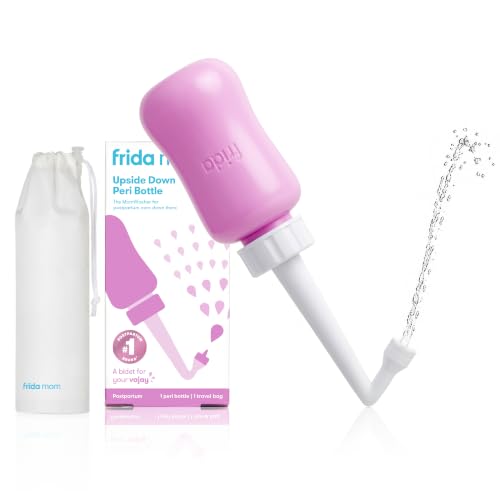
Frida Mom Upside Down Peri Bottle
Best for: Rinsing without twisting
An angled neck lets the bottle spray upward while you hold it comfortably, which is exactly the squeeze-bottle rinse ACOG recommends after each bathroom trip. The listing says to hand wash it and let it air-dry upside down.
- Angled neck sprays upward
- Narrow nozzle for a targeted stream
- Listed for use after vaginal birth or C-section
- Hand wash only, not dishwasher safe
Keep in mind: The basic bottle the hospital gives you does the same job, just less comfortably.

Medline Premium Perineal Cold Packs (24 Count)
Best for: The first one to three days
A crack-to-activate ice pack combined with an absorbent OB pad, so you get cold and absorbency in one piece. The listing says the pads are 4.5 by 14.25 inches with an adhesive strip and are meant for intermittent use in the first 36 to 48 hours.
- Instant single-use cold pack plus pad
- Adhesive strip holds it in place
- 4.5 x 14.25 inch pads
- Case of 24
Keep in mind: Single use, and you'll stop needing them after the first few days.

Always Maxi Overnight Pads, Size 5 (36 Count)
Best for: Restocking pads in bulk
Extra-heavy overnight pads with wings, unscented, in a 36-count pack. Thick maxi pads like these are the everyday workhorse once the kit runs out. The listing says they absorb 50% more than the same-size Always Ultra Thin pad.
- Size 5, extra heavy overnight absorbency
- Wings to stay in place
- Unscented
- 36 count
Keep in mind: Made for periods, not specifically postpartum, so they're less cushioned than dedicated postpartum pads.

Frida Mom Disposable Postpartum Underwear, Boyshort
Best for: Holding pads after a vaginal birth
Mesh-free, latex-free microfiber and spandex underwear in a generous boyshort cut. The listing is clear that it isn't absorbent by itself; it holds a pad or liner in place. It also notes the fabric can feel a little stiff at first and softens with wear.
- Holds pads and liners in place
- Mesh-free, latex-free fabric
- Stretchy boyshort cut for swelling
- 8-pack, size M/L
Keep in mind: Disposable, so you'll reorder if you wear them for weeks; not absorbent on its own.

Frida Mom Disposable C-Section Underwear, High Waist
Best for: C-section recovery
High-waisted, seamless, tagless briefs designed so the waistband sits above the incision instead of rolling onto it. The listing offers a Regular size (waist 28 to 42 inches stretched) and a Petite size (23 to 34 inches) in an 8-pack.
- Full-coverage high waist
- Seamless and tagless
- Mesh-free, latex-free fabric
- Regular and Petite sizes
Keep in mind: Still disposable, and you'll need pads with it.

Tucks Medicated Cooling Pads (Witch Hazel), 100 Count
Best for: Cooling relief and hemorrhoids
Classic witch-hazel pads, which ACOG lists for perineal soreness and, as cold compresses, for hemorrhoids. The listing says they help relieve discomfort following childbirth and can be folded into a compress and left in place for up to 15 minutes. Many people layer a few on top of a maxi pad.
- Witch hazel cooling pads
- Listed for discomfort after childbirth
- Can be used as a moist compress
- 100 count
Keep in mind: Single-use pads you'll go through quickly.

Dermoplast Pain, Burn & Itch Relief Spray
Best for: Numbing soreness without touching
A no-touch spray that many new parents first meet in the hospital. The listing says it combines benzocaine with aloe, lanolin, and menthol. ACOG suggests asking your ob-gyn about a numbing spray or cream for perineal pain, so check with them before using it.
- No-touch spray application
- Benzocaine plus aloe, lanolin, and menthol
- 2.75 oz can
- Common in hospital postpartum care
Keep in mind: Contains lanolin and benzocaine; ask your provider first, especially if you have sensitivities.

Pochik Sitz Bath for Toilet Seat
Best for: Easy sitz baths at home
A collapsible basin that sits on the toilet with a flusher hose and drain holes, so you can take the warm, shallow soak ACOG suggests without filling a tub. The listing recommends water at 94°F to 98°F and says it folds to store or hang.
- Fits on the toilet seat
- Flusher hose and drain holes
- Wider seating area, deeper bowl
- Collapsible for storage
Keep in mind: Another thing to clean and store; a shallow bath in the tub works too.

Lansinoh Sitz Bath Salts
Best for: An optional add-in for sitz soaks
Epsom salt with aloe vera, lavender oil, and plant-based ingredients that dissolves in warm water for a sitz bath or full tub. The listing says it's non-medicated and free of parabens, petroleum, and artificial fragrances. Warm water alone is what ACOG describes, so treat salts as a nice extra.
- Epsom salt and botanical blend
- Non-medicated
- No parabens, petroleum, or artificial fragrance
- 10 oz pouch, multiple baths
Keep in mind: Optional; you'll want a basin for convenience.

Frida Mom Postpartum Belly Binder
Best for: Abdominal support, if your provider agrees
A 9-inch-high binder with three adjustable straps, so you can set compression in different spots, and a mesh exterior. ACOG lists an abdominal binder as one option for C-section incision pain. Ask your OB or surgeon whether to wear one and how snug before you start.
- Three adjustable straps
- 9 inches high
- Listed for vaginal and C-section recovery
- Breathable mesh exterior
Keep in mind: Not for everyone; get your provider's okay on timing and fit.

Lansinoh Stay Dry Disposable Nursing Pads, 100 Count
Best for: Leaks while milk comes in
Thin, contoured disposable pads that sit inside your bra to catch leaks. The listing says they're fragrance-free, dermatologist tested, and absorb 20 times their weight.
- Fragrance-free, BPA and BPS free
- Absorbs 20 times its weight (per listing)
- Thin, contoured shape
- 100 count
Keep in mind: Only relevant if you're breastfeeding or pumping.

Earth Mama Organic Nipple Butter
Best for: Sore nipples while nursing
A lanolin-free balm made with organic herbs and oils. The listing says it's made without petroleum or preservatives and doesn't need to be washed or wiped off before nursing. If feeding keeps hurting, a lactation consultant is the real fix.
- Lanolin-free
- No need to wipe off before feeding
- Made without petroleum or preservatives
- 2 fl oz
Keep in mind: Only relevant if you're breastfeeding or pumping.
As an Amazon Associate I earn from qualifying purchases. Mom's Magazine may earn a commission when you buy through links on this page, at no extra cost to you. Learn more.
Frequently Asked Questions
What are the true essentials for postpartum recovery?
For most people: a peri bottle, disposable or mesh underwear, high-absorbency fragrance-free pads, and cooling witch-hazel pads, plus nipple balm and pads if nursing. A numbing spray and sitz bath are nice-to-haves. You do not need everything — build the kit around your birth and your provider's instructions.
Should I buy a pre-made kit or make my own?
Either works. A kit is convenient and good for the hospital bag or as a gift; a DIY approach lets you control quantities, skip what your hospital already provides, and save money with store brands. Many parents buy a kit and simply top up the pads and underwear they run through fastest.
How is the list different after a C-section?
Perineal items like a numbing spray and sitz bath matter less. You'll still bleed, so pads and high-waisted underwear that clears the incision are important, along with loose, soft clothing. Follow your provider's specific incision-care instructions, which no product replaces.
What postpartum products help with breastfeeding soreness?
A baby-safe nipple balm and soft, breathable nursing pads help with early tenderness. But because most soreness comes from latch, the AAP encourages seeking lactation or pediatric support early — fixing the latch addresses the cause. Call your provider about cracked, bleeding, or severely painful nipples or any breast pain with fever.
When should I stop relying on comfort products and call my provider?
Right away for any warning sign: soaking a pad in an hour, large clots, fever, foul-smelling discharge, severe or worsening pain, or emotional distress. These items ease normal soreness and bleeding; they are not treatment. When in doubt, contact your OB or midwife.
Sources & Further Reading
- Postpartum Pain Management (FAQ519) — American College of Obstetricians and Gynecologists (ACOG) (reviewed 2026-10-09)
- Postpartum care: What to expect after a vaginal birth — Mayo Clinic (reviewed 2026-10-09)
Related Guides

Postpartum Recovery: What to Expect
A gentle, honest overview of postpartum recovery — physical and emotional — and when to call your provider.
Hospital Bag Checklist for Labor and Delivery
A complete hospital bag checklist for labor and delivery — for you, your baby, and your partner — plus when to actually head in.

Best Nursing Bras 2026
What actually matters in a nursing bra — clip-down vs pull-aside access, wire-free fit while your size is still changing, and three real options across price points, from a splurge seamless bra to an Amazon Essentials budget pick.
Best Nursing Pillows of 2026: What Changed After the CPSC Rule
The April 2025 federal nursing-pillow rule changed what you should buy. How to read the manufacture date, why these pillows are never for sleep, and three current models compared.
Postpartum Depression vs. Baby Blues: Signs, Screening, and When to Get Help
How to tell ordinary baby blues from something that needs treatment, what the EPDS screening tool actually measures, and exactly when a symptom stops being normal.

Postpartum Anxiety: Signs, How It Differs From Baby Blues and PPD, and When to Get Help
Postpartum anxiety looks different from postpartum depression — racing thoughts and physical symptoms more than sadness — and it's screened for far less consistently. Here's how to recognize it and where to get help.
Mom's Magazine Editorial Team
Editorial Team
The Mom's Magazine editorial team researches and writes practical, plainly-sourced guidance for parents and families. Guides are reviewed for accuracy and updated as recommendations change. Where a topic calls for professional expertise, we cite reputable organizations and, for health topics, add a qualified reviewer before publishing.
Newsletter
Get the Weekly Mom List
One short email a week: the most useful guides, activities, and picks for your family. No spam, unsubscribe anytime.