Products
Best Baby Sleep Sacks and Wearable Blankets of 2026
The AAP's actual rule for when to stop arms-in swaddling, how to read a TOG rating, and four real sleep sacks compared for the swaddle-transition, temperature-regulation, and rolling-safe stages.

As an Amazon Associate I earn from qualifying purchases.Some links on this page are affiliate links. If you buy through them, Mom's Magazine may earn a small commission at no extra cost to you. It never changes which products we recommend. How we recommend products.
A wearable blanket (sleep sack) is what the American Academy of Pediatrics recommends in place of loose crib blankets at any age, and it's the required next step once a swaddled baby shows early signs of rolling — usually somewhere between 2 and 4 months, sometimes earlier. The AAP is specific that anything compressing the arms, chest, or body against a baby's sides should stop once rolling starts, while a non-restrictive sleep sack that lets a baby move their arms and legs freely can be used for as long as it still fits. Match the sack to the stage: a swaddle-transition style like the HALO SleepSack or Baby Merlin's Magic Sleepsuit for the first few weeks after arms come out, then a fully arms-free sleep sack like the Zipadee-Zip or a Kyte Baby Sleep Bag once your baby is reliably rolling and needs to move freely.
Best overall swaddle-transition pick
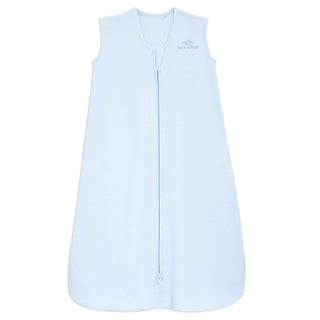
HALO SleepSack, 100% Cotton Wearable Blanket, TOG 0.5
Best for: Classic swaddle-transition wearable blanket with a roomy, hip-healthy cut
Quick picks
| Product | Best for | |
|---|---|---|
| HALO SleepSack, 100% Cotton Wearable Blanket, TOG 0.5 Best overall swaddle-transition pick | Classic swaddle-transition wearable blanket with a roomy, hip-healthy cut | Check price on Amazon |
| Baby Merlin's Magic Sleepsuit, 100% Cotton Best for easing the startle reflex | Calming the startle reflex right after a full swaddle ends | Check price on Amazon |
| Kyte Baby Sleep Bag, Bamboo Rayon Best breathable fabric / widest TOG range | Breathable fabric with a wide TOG range for a year-round nursery | Check price on Amazon |
| Zipadee-Zip Transition Swaddle Best arms-out pick once rolling starts | Arms-out freedom for a baby who has just started rolling | Check price on Amazon |
Affiliate disclosure
Mom's Magazine may earn a commission if you buy through Amazon links on this page (rel=sponsored nofollow). This is a researched buying guide using manufacturer specifications and public safety guidance, not a hands-on test — if we test products later, we'll say so and date it. Editorially reviewed, not medically reviewed.
Why a sleep sack instead of a blanket
The American Academy of Pediatrics has recommended against loose blankets, pillows, and crib bumpers in a baby's sleep space for years, as part of its safe-sleep guidance to reduce the risk of suffocation and SIDS. Infant sleep clothing — layers, a wearable blanket, or a sleep sack — is the alternative the AAP names directly: something that keeps a baby warm without a loose fabric that can end up over their face. That's true from birth through the first couple of years, well past the newborn stage most parents associate with swaddling.
The rule that actually matters: when arms-in has to stop
This is the safety distinction that gets missed most often. A swaddle or swaddle-style sleep sack that compresses a baby's arms against their body is fine for a newborn who can't roll yet, and the AAP is specific that it should stop as soon as a baby shows early signs of trying to roll over — pushing up during tummy time, rocking onto a shoulder, a hip starting to turn. That can start as early as 2 months for some babies and closer to 4 months for others; it's a developmental sign to watch for, not a date on a calendar. The reason is direct: a baby who rolls onto their stomach while their arms are pinned can't push up or turn their head to breathe, which is a real suffocation risk that a fully arms-free sleep sack removes.
A sleep sack that leaves the arms and legs completely free to move has no equivalent age cutoff — the AAP's guidance is that it can be used for as long as it fits and a baby sleeps better in it, well into toddlerhood. That's the split this roundup is built around: swaddle-transition products for the arms-tucked stage, and fully open sleep sacks for after rolling starts. If your baby is still newborn-swaddled with arms in, our full swaddling guide covers technique, hip positioning, and the staged arms-out transition in more depth than this roundup does.
A February 2026 safety standard exists for a reason
In February 2026, ASTM approved a new voluntary safety standard covering design, sizing, labeling, and testing for swaddles and wearable sleep products for children under 2, built on safety issues the Consumer Product Safety Commission had already flagged. It's voluntary, not a law, but it's a signal that fit, sizing accuracy, and hip and arm positioning are real variables between products — not just color and print differences. Infant-safety groups also advise against weighted swaddles or weighted blankets specifically; none of the products below add weight.
How we picked these four
We compared widely available sleep sacks and wearable blankets on fabric and TOG range, how the swaddle-transition products handle the arms-tucked stage, ease of diaper changes (a two-way or double zipper matters more here than it sounds), hip room, and how each brand positions its product for the rolling-safe, fully-open stage. This is a researched comparison of manufacturer specifications and public product positioning — not a hands-on sleep lab test. Badges describe a use-case fit, not a laboratory winner.
Reading a TOG rating
TOG (thermal overall grade) measures warmth, not size — higher TOG means a thicker, warmer sack. It's the same rating system used on European baby sleepwear generally, and most sleep sack brands print it directly on the label or product page.
| TOG rating | Typical room temperature | Layering underneath |
|---|---|---|
| 0.5 | 75°F and warmer | Short-sleeve onesie or bare skin in very warm rooms |
| 1.0 | 69–73°F | Long-sleeve onesie or light pajamas |
| 2.5 | 61–68°F | Long-sleeve onesie plus footed pajamas |
| 3.5 | Below 61°F | Warm layers underneath; check the room temperature before reaching for this instead of turning up the heat |
A baby who feels hot to the touch at the chest or back of the neck, has damp hair, or has flushed skin is a better overheating check than counting layers — overheating is itself a recognized risk factor in safe-sleep guidance, so err toward a lighter TOG or fewer layers rather than bundling for a worst-case cold night.
Side-by-side: the four sacks on this page
| Sack | Best for | Stage | TOG range | Diaper-change access |
|---|---|---|---|---|
| HALO SleepSack (100% Cotton) | Classic swaddle-transition, roomy hip fit | Arms-in transition → early arms-out | 0.5 (this pick) | Bottom zipper |
| Baby Merlin's Magic Sleepsuit | Calming the startle reflex right after arms come out | Arms-tucked transition (not for after rolling starts) | N/A — three-layer fleece/cotton construction | Double zipper, both directions |
| Kyte Baby Sleep Bag | Breathable fabric, wide TOG range across seasons, sizes into toddler "walker" styles | Fully arms-free — rolling-safe | 0.5, 1.0, 2.5 depending on sack | Dual zipper |
| Zipadee-Zip | Arms-out freedom for a baby who's just started rolling | Fully arms-free — rolling-safe | 0.8 (fleece pick) | Two-way zipper |
How each pick earns its spot
HALO SleepSack, 100% Cotton is the long-running standard for the swaddle-transition stage: a roomy, extra-long cut that the International Hip Dysplasia Institute has recognized for hip positioning, a bottom zipper for changes, and cotton fabric at a 0.5 TOG for warmer rooms. It's a wearable blanket, not an arms-tucked swaddle, so it works for a baby who's already out of a full swaddle but still benefits from a snugger, roomier bag than a toddler-stage sack.
Check HALO SleepSack on AmazonAffiliate link. 100% cotton, TOG 0.5, hip-healthy cut.
Baby Merlin's Magic Sleepsuit is built specifically for the first stretch after a full swaddle: three layers (fleece or cotton outer, soft inner, light fill) that keep a baby's arms loosely tucked in a pocket rather than pinned tight, aimed at calming the startle reflex while still letting a baby settle without the containment of a true swaddle. This one is a transition step, not a long-term pick — like any arms-tucked product, the maker positions it for back sleeping before a baby is reliably rolling, not after.
Check Baby Merlin's Magic Sleepsuit on AmazonAffiliate link.
Kyte Baby Sleep Bag is a fully arms-free bamboo-rayon sack sold across multiple TOG weights (0.5 through 2.5), so one brand can cover a nursery through most of the year with a size and weight swap rather than a different product. Kyte also sells a "walker" version sized for toddlers who are up and moving, which extends the same product family well past the newborn stage. Bamboo rayon runs soft and breathable but isn't the cheapest fabric in this category.
Check Kyte Baby Sleep Bag on AmazonAffiliate link. Bamboo rayon, arms-free, 1.0 TOG.
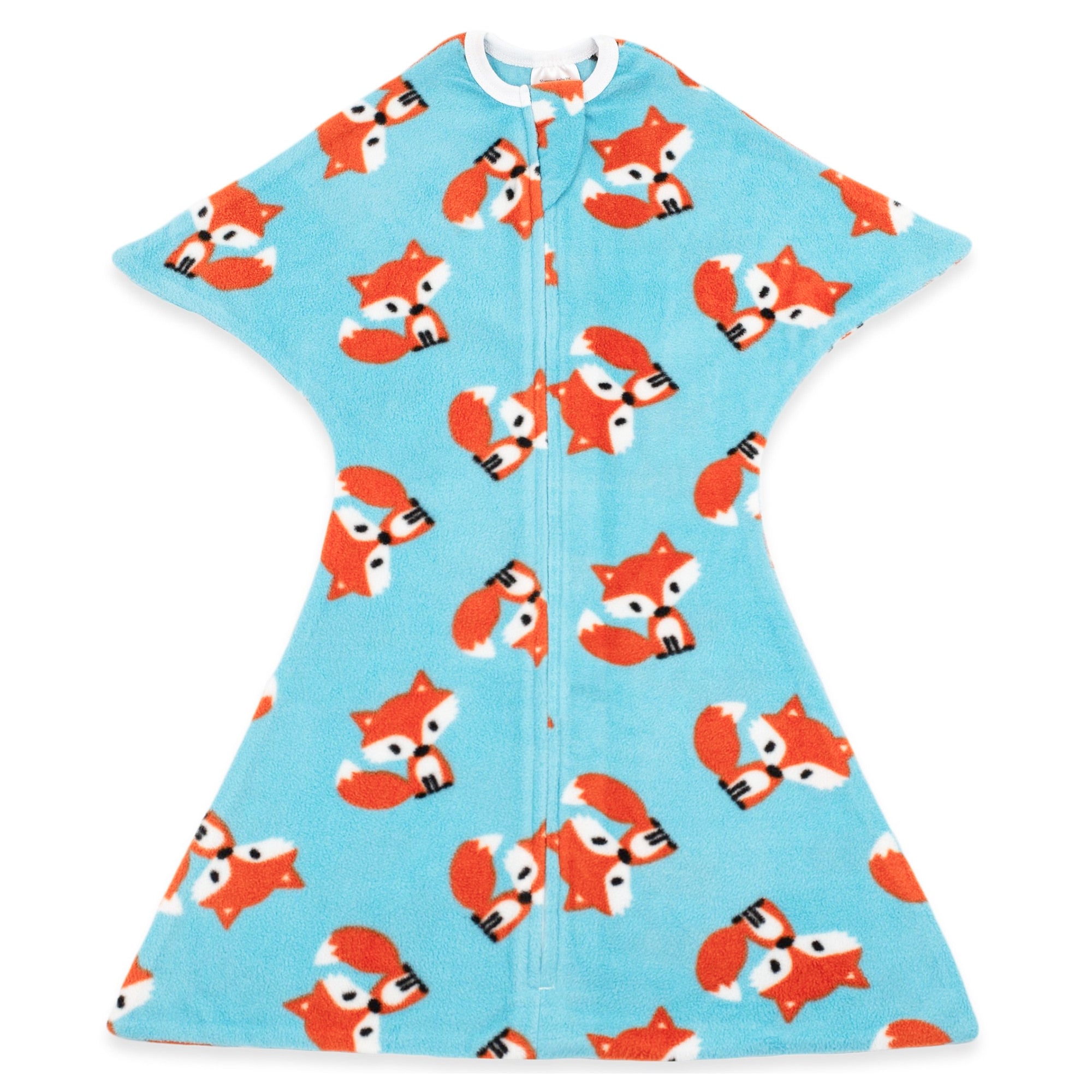
Zipadee-Zip uses a distinctive starfish-shaped cut with roomy arm and leg pockets, aimed at a baby who's just lost the swaddle and startles or wakes themselves up with the new freedom to move. The two-way zipper opens from the bottom for changes without fully undressing a sleeping baby. The fleece version runs warm — check TOG against your room before choosing it over a lighter cotton or bamboo option in a warm nursery.
Check Zipadee-Zip on AmazonAffiliate link. Arms-out starfish cut, rolling-safe.
Mistakes worth naming
- Keeping arms tucked in a swaddle-style sack past the first sign of rolling — that's the one guidance point that isn't a style preference.
- Buying a single TOG weight and layering heavily underneath for every season instead of a couple of TOG weights for a year-round nursery.
- Sizing up "for growth room" on a sack meant to be snug through the body — too loose defeats some of the safety reasoning behind a fitted wearable blanket.
- Choosing a weighted swaddle or weighted sleep sack for calming — infant-safety groups advise against these specifically; none of the picks above add weight.
- Judging warmth by touching hands or feet — check the chest or the back of the neck instead; hands and feet run cooler than core body temperature even when a baby is comfortable.
Related reading on Mom's Magazine
If your baby is still in a full arms-in swaddle, our newborn swaddling guide covers the step-by-step wrap, hip positioning, and exactly when to start easing arms out. For the sleep disruptions that tend to land around the same stretch as this transition, our guide to sleep regressions by age covers what's happening at 4 months specifically, and our nap schedules by age guide covers daytime sleep across the same window.
Bottom line on the best baby sleep sack
Match the product to the stage, not the other way around: an arms-tucked transition sack for the weeks right after swaddling stops, then a fully arms-free sleep sack the moment rolling starts, with TOG chosen for the room rather than the season on a calendar. That sequence, not any single brand, is what the AAP's own guidance is actually built around.
Our Recommendations
HALO SleepSack, 100% Cotton Wearable Blanket, TOG 0.5
Best for: Classic swaddle-transition wearable blanket with a roomy, hip-healthy cut
A long-running standard for the stage right after a full swaddle: roomy through the hips (recognized by the International Hip Dysplasia Institute), a bottom zipper for diaper changes, and breathable 100% cotton at a 0.5 TOG for warmer rooms.
- Extra-long, roomy hip-healthy cut
- 100% cotton, TOG 0.5 for warm rooms
- Bottom zipper for diaper changes
- Zipper cover to prevent skin irritation
Keep in mind: TOG 0.5 cotton suits warm rooms specifically — cold-weather nurseries need a heavier-TOG version or added layers.

Baby Merlin's Magic Sleepsuit, 100% Cotton
Best for: Calming the startle reflex right after a full swaddle ends
A three-layer suit (soft cotton inner, light fill, outer layer) that keeps a baby's arms loosely tucked in a pocket rather than pinned tight, aimed at easing the startle reflex during the swaddle-transition stage without the full containment of a traditional swaddle.
- Three gentle layers for a cozy but not fully pinned feel
- Double zipper for faster diaper changes
- Arms rest in a loose pocket rather than tucked tight
- Available in cotton or microfleece versions
Keep in mind: This is a transition-stage product for back sleeping before reliable rolling starts — it's not positioned as a long-term or rolling-stage sleep sack the way a fully arms-free sack is.

Kyte Baby Sleep Bag, Bamboo Rayon
Best for: Breathable fabric with a wide TOG range for a year-round nursery
A fully arms-free bamboo-rayon sleep bag sold across multiple TOG weights, so one brand can cover most of a year with a size and weight swap. Kyte also sells a toddler "walker" version, extending the same product line well past infancy.
- Soft, breathable rayon made from bamboo
- Sold across several TOG weights (roughly 0.5–2.5) for different room temperatures
- Dual zipper for easy diaper changes
- Sized into a toddler "walker" version for continued use
Keep in mind: Bamboo rayon runs soft but costs more than basic cotton or fleece sleep sacks in this category.
Zipadee-Zip Transition Swaddle
Best for: Arms-out freedom for a baby who has just started rolling
A distinctive starfish-shaped cut with roomy pockets for arms and legs, built for the stage right after rolling starts, when a baby needs full arm movement but still startles or resettles more easily in something more structured than a loose sack.
- Starfish-shaped cut with arm and leg pockets
- Two-way zipper opens from the bottom for changes
- Fully arms-free — no compression at the rolling stage
- Available in fleece and lighter fabric versions
Keep in mind: The fleece version runs warm — check the TOG rating against your room temperature before choosing it over a lighter fabric option.
As an Amazon Associate I earn from qualifying purchases. Mom's Magazine may earn a commission when you buy through links on this page, at no extra cost to you. Learn more.
Frequently Asked Questions
What is the best baby sleep sack?
It depends on the stage. For the weeks right after a full swaddle ends, a swaddle-transition style like the HALO SleepSack or Baby Merlin's Magic Sleepsuit keeps arms loosely tucked. Once a baby shows signs of rolling, a fully arms-free sack like the Zipadee-Zip or a Kyte Baby Sleep Bag is what AAP guidance actually calls for — arm compression should stop once rolling starts.
When do I need to stop swaddling and switch to a sleep sack?
As soon as a baby shows early signs of trying to roll — pushing up during tummy time, rocking onto a shoulder, a hip starting to turn. That's often between 2 and 4 months, sometimes earlier, and it's a developmental sign to watch for rather than a fixed age.
How do I know what TOG rating to buy?
TOG measures warmth: 0.5 suits rooms 75°F and warmer, 1.0 suits 69–73°F, 2.5 suits 61–68°F, and 3.5 suits colder rooms. Check your baby's chest or the back of their neck for overheating rather than relying on hands or feet, which run cooler even when a baby is comfortable.
Are weighted sleep sacks or weighted swaddles safe?
Infant-safety groups advise against weighted swaddles and weighted blankets specifically, since they can add pressure to a baby's chest and lungs. None of the products in this roundup add weight.
How long can a baby use a sleep sack?
A fully arms-free, non-restrictive sleep sack has no age cutoff in AAP guidance — it can be used as long as it fits and a child sleeps well in it, which is why brands like Kyte Baby extend the same product line into toddler-sized "walker" versions.
Sources & Further Reading
- Swaddling: Is it Safe for Your Baby? — American Academy of Pediatrics (HealthyChildren.org) (reviewed 2026-09-10)
- How and When to Use Swaddles and Sleep Sacks for Your Baby — Consumer Reports (reviewed 2026-09-10)
Related Guides
How to Swaddle a Newborn Safely: Step-by-Step (and When to Stop)
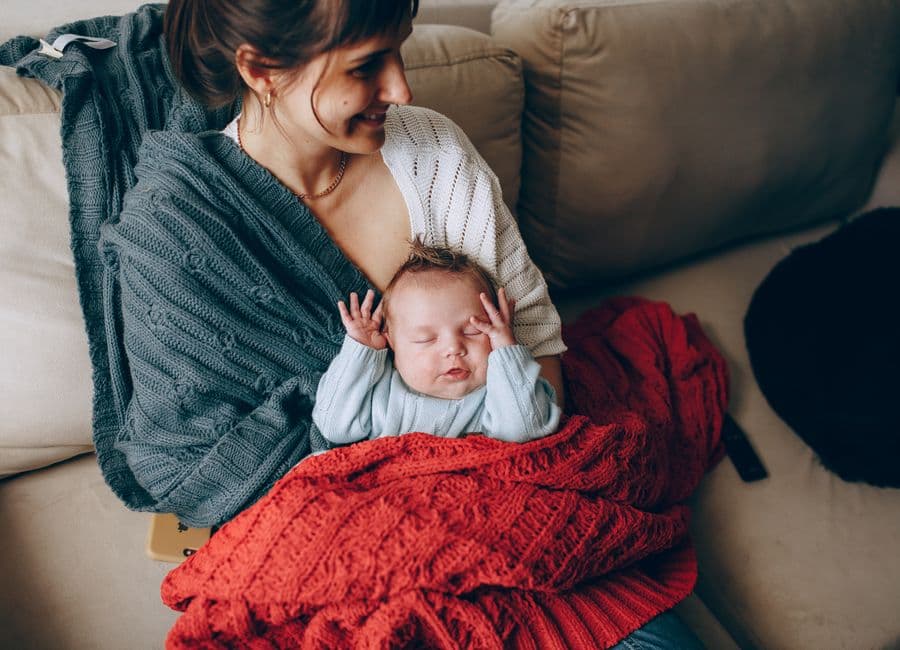
Hip-healthy swaddling technique step by step, why a snug wrap needs room at the hips, and the specific sign — not an age on a calendar — that means it's time to stop.
Baby and Toddler Sleep Regressions by Age: What's Happening at 4, 8, and 18 Months
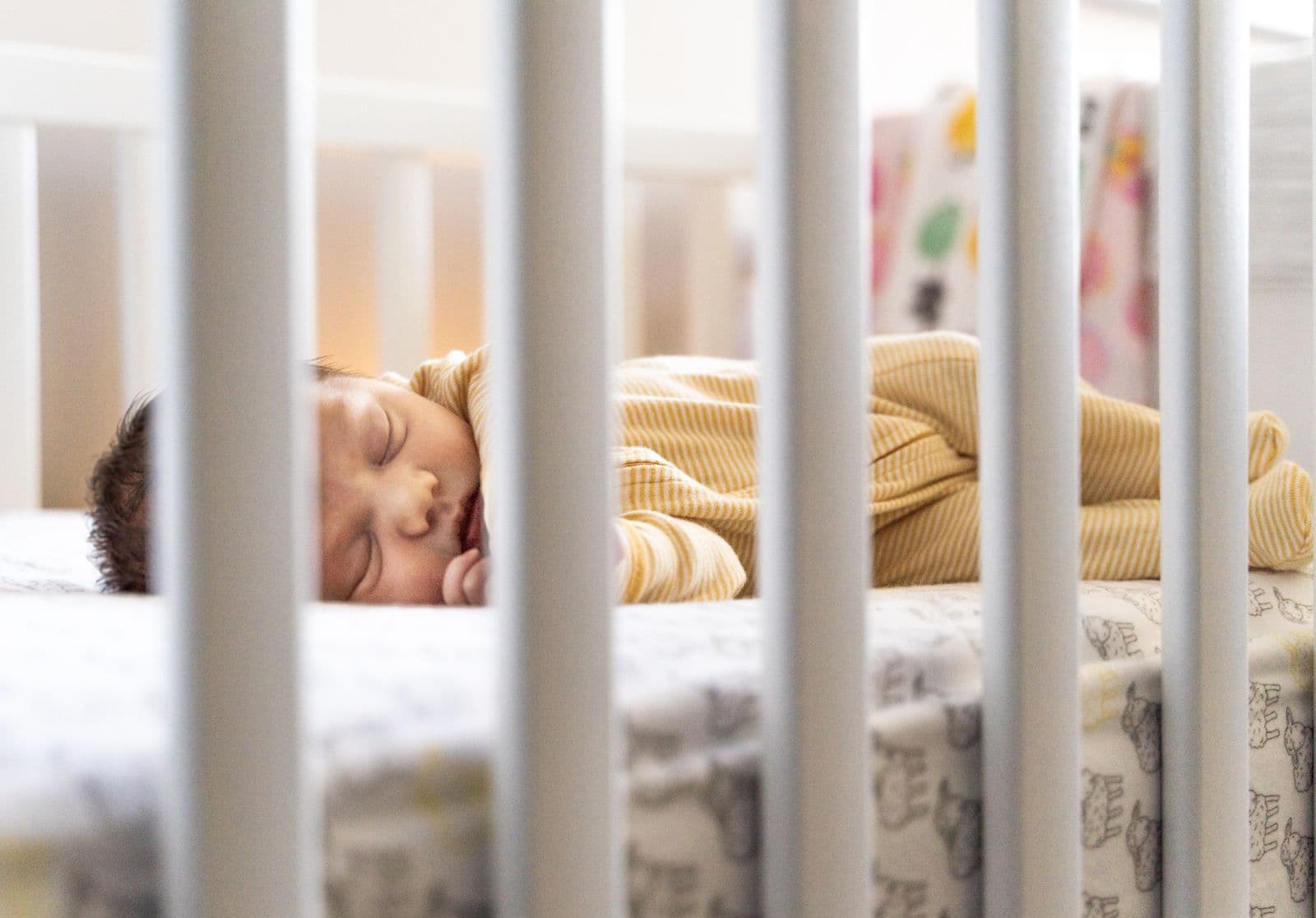
Why sleep suddenly falls apart at 4 months, 8 months, and around 18 months, what's actually driving each one developmentally, and what to do differently (and not differently) at each stage.
Baby and Toddler Nap Schedules by Age: A Realistic Guide
How many naps to expect at each age, from newborn chaos to the one-nap toddler years, and why wake windows matter more than the clock.
Newborn Sleep: What to Expect in the First Weeks
A realistic look at newborn sleep in the first weeks — plus the safe-sleep basics every parent should know.
Mom's Magazine Editorial Team
Editorial Team
The Mom's Magazine editorial team researches and writes practical, plainly-sourced guidance for parents and families. Guides are reviewed for accuracy and updated as recommendations change. Where a topic calls for professional expertise, we cite reputable organizations and, for health topics, add a qualified reviewer before publishing.
Newsletter
Get the Weekly Mom List
One short email a week: the most useful guides, activities, and picks for your family. No spam, unsubscribe anytime.