Parenting
Potty Training: Signs of Readiness and How to Start
How to tell your toddler is ready for potty training, and a calm, child-led way to get started without power struggles.
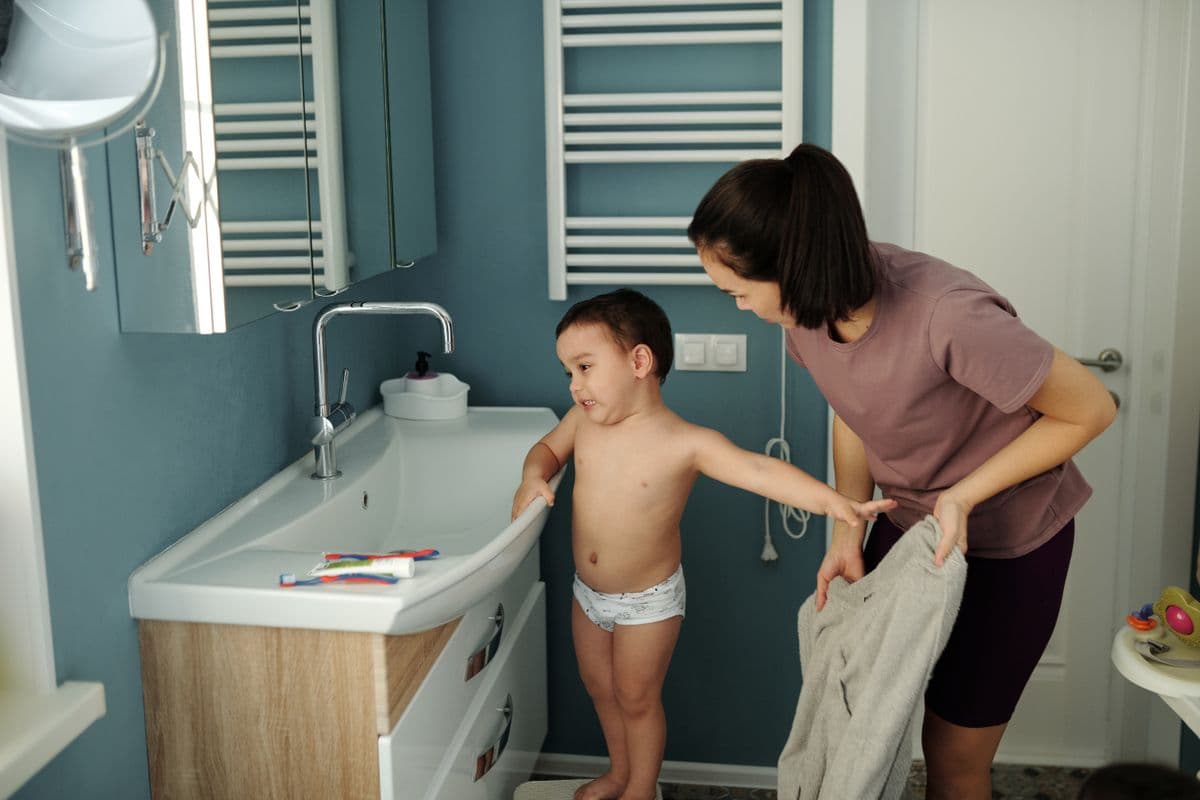
Most toddlers show real readiness signs sometime between 18 months and 3 years — walking well, staying dry for a couple of hours, and telling you when they're wet or need to go. The American Academy of Pediatrics recommends following your child's readiness rather than a fixed age or a deadline like preschool enrollment: starting before a child is ready tends to make the process longer and harder, not shorter. Once you see the signs, a calm, consistent, child-led approach with a lot of patience for accidents works better than pressure.
Signs your toddler may be ready
Physical readiness (bladder and bowel control mature enough to notice and briefly hold) usually develops before the cognitive and communication skills needed to act on it — which is why most toddlers aren't truly ready until somewhere after their second birthday, even though the physical groundwork can be in place earlier. Look for a cluster of these signs rather than just one:
- Walks well and can help pull pants up and down
- Stays dry for a stretch of two to three hours, or wakes up dry from a nap
- Tells you (with words, signs, or a clear expression) when they're wet, soiled, or about to go
- Shows interest in the bathroom or in imitating a sibling or parent
- Seems uncomfortable in a dirty diaper and wants it changed
- Can follow simple two-step instructions
There's no deadline
A child who isn't ready at 2 isn't behind — many children potty train closer to 3, and that's within a normal range. Starting when the signs are actually there tends to go faster than starting early and stalling out.
How to get started
- Introduce the potty chair or seat as a normal bathroom object, with no pressure to use it yet.
- Let your child watch a parent or sibling use the bathroom, if that's comfortable for your family.
- Start sitting on the potty at predictable times (after waking, after meals) for a couple of minutes, clothed at first if that helps.
- Move to sitting without a diaper once your child is comfortable with the routine.
- Use simple, consistent words for the whole family ("potty," "go") and praise the attempt, not just the result.
- Switch to underwear during the day once your child is showing awareness before accidents, not just after.
Keep it low-key
Matter-of-fact reactions to accidents — a quick clean-up and a reminder, not frustration — keep the bathroom from becoming a source of anxiety, which tends to slow things down.
Accidents, regressions, and night training
Accidents are part of the process, not a sign it's failing. Regression — a child who was doing well and suddenly isn't — is common around stress, illness, a new sibling, starting daycare, or a move. Treat a regression as temporary: go back to more frequent reminders and sits for a few weeks rather than starting over completely.
Night dryness depends on a child's bladder capacity and a hormonal change that isn't under their control, so it often lags daytime training by months or, for some kids, a couple of years. Many families keep a nighttime pull-up or protective mattress cover going well after daytime training is solid, and that's normal too.
Potty training often lands around the same window as another big sleep change — moving out of the crib. If both are on the horizon, our guide to the crib-to-toddler-bed transition has tips on spacing changes out so they don't collide and undo each other's progress. And if a preschool application deadline is part of what's pushing the timeline, our guide to choosing a preschool covers asking directly about a program's potty-training policy rather than assuming your child needs to be fully trained to enroll.
Once you're past the readiness signs and actually starting, a book your toddler will ask for at every sit can lower the resistance around the topic — our roundup of potty training books covers which ones hold up to being read on repeat instead of once and forgotten.
Frequently Asked Questions
What age should potty training start?
There's no single right age — most toddlers show real readiness somewhere between 18 months and 3 years. Following your child's individual readiness signs works better than targeting a specific age or a deadline like preschool enrollment.
How long does potty training usually take?
It varies widely by child, from a few weeks to several months for daytime training, with night training often taking longer. Starting once real readiness signs are present tends to shorten the process compared with starting early.
My toddler was doing well and just started having accidents again — what happened?
This is a common regression, often tied to a stressful or big change like a new sibling, starting daycare, illness, or a move. Go back to more frequent reminders and scheduled sits for a few weeks rather than treating it as a failure or starting from scratch.
Should boys and girls be potty trained differently?
The basic approach is the same. Boys are sometimes reported to complete training a bit later on average than girls, but individual variation is much larger than any average difference, so it's not a reason to change your approach.
Is it normal for a child to be daytime trained but still need pull-ups at night?
Yes — night dryness depends on bladder capacity and hormonal changes a child doesn't control, so it commonly lags daytime training by months or longer. Continuing overnight protection after daytime success is normal, not a step backward.
Sources & Further Reading
- How to Tell When Your Child is Ready (Toilet Training) — American Academy of Pediatrics (HealthyChildren.org) (reviewed 2026-08-04)
Related Guides
How to Handle Toddler Tantrums: Real Help That Works, According to AAP and CDC
Help with toddler tantrums, how to handle toddler tantrums, and how to deal with toddler tantrums, using AAP, CDC, and NIH pages: what actually helps in the moment, an age-by-age look at what's typical at 1, 2, and 3, tantrums by setting (car seat, store, bedtime, drop-off), how to prevent the next one, and when to call your pediatrician. Editorially reviewed general information — not medical advice.
Activities for 3-Year-Olds
Activities for 3-year-olds that match just-turned-three play: pretend scenes, simple crafts, early counting, helper jobs, and one outdoor outing. Based on CDC 3-year milestones and AAP pretend-play and toy-safety guidance.

When to Move a Toddler Out of the Crib — Safety Signs and How to Switch
When to move a toddler out of the crib, according to AAP height and climbing cues and CPSC crib and toddler-bed rules — plus how to switch the room safely. Editorially reviewed general information, not medical advice.
Mom's Magazine Editorial Team
Editorial Team
The Mom's Magazine editorial team researches and writes practical, plainly-sourced guidance for parents and families. Guides are reviewed for accuracy and updated as recommendations change. Where a topic calls for professional expertise, we cite reputable organizations and, for health topics, add a qualified reviewer before publishing.
Newsletter
Get the Weekly Mom List
One short email a week: the most useful guides, activities, and picks for your family. No spam, unsubscribe anytime.