Parenting
When to Introduce Peanuts, Eggs, and Other Allergens to Your Baby
What changed in the allergy-prevention guidance, the nine major allergens and safe first forms for each, how to introduce them one at a time, and which babies should talk to an allergist before starting at home. Editorially reviewed general information, not medical advice.

Current AAP and allergist guidance, built on the 2015 LEAP study and reaffirmed in a 2026 Pediatrics clinical report, says most babies should start peanut, egg, and other common allergens around 4 to 6 months, alongside their other first foods — not after age 1, and not avoided out of caution. The LEAP trial found that regularly feeding peanut protein to high-risk infants starting between 4 and 11 months cut their risk of developing a peanut allergy by up to 81% compared to avoidance. The nine foods responsible for most food allergies are peanut, egg, cow's milk, tree nuts, soy, wheat, fish, shellfish, and sesame; each can be offered in an age-safe form (never whole nuts or a thick spoonful of peanut butter, which are choking hazards) once your baby is already taking some solid food. Babies with severe eczema or an already-diagnosed food allergy are the exception — talk to your pediatrician or an allergist about allergy testing before introducing peanut or egg at home, since early introduction is still the recommended direction but the how may differ. This is general information from AAP and NIAID-sponsored guidance, not medical advice for your specific child.
What changed, and why
For most of the 2000s, the standard advice was to delay common allergens — peanut until age 3, egg until age 2, cow's milk until age 1 — on the theory that a baby's immune system needed time before it could handle them safely. Food allergy rates kept climbing anyway. The Learning Early About Peanut Allergy (LEAP) trial, published in 2015, tested the opposite approach in infants already considered high-risk (babies with severe eczema, an egg allergy, or both): one group avoided peanut entirely, the other ate peanut protein regularly starting between 4 and 11 months. By age 5, the avoidance group had a peanut allergy rate several times higher than the early-introduction group — an 81% relative reduction in risk. That result reshaped guidance across the AAP, NIAID, and allergist organizations, and a 2026 Pediatrics clinical report reaffirmed the same window: introduce common allergens, including peanut, around 4 to 6 months for essentially all infants, not just those considered high-risk.
This is a reversal, not a minor tweak
If your own parents were told to keep peanut butter away from you until age 3, that reflects guidance that's now considered outdated based on the evidence above. It's a common source of confusion at family gatherings — the current direction is earlier, not later, and it applies to typical-risk babies too, not only babies with eczema or a family history of allergy.
The nine major allergens, and a safe first form for each
Roughly 90% of food allergies in the US trace back to nine foods. None of them need to be avoided or saved for later — the goal is introducing each one in a form your baby can actually swallow safely at their current stage, not a specific order between them.
| Allergen | Safe first form around 6 months |
|---|---|
| Peanut | Peanut butter thinned with warm water, breast milk, or formula until runny, stirred into puree — never a spoonful of straight peanut butter or whole/chopped peanuts |
| Egg | Well-cooked egg, scrambled soft or mashed hard-boiled — not raw or undercooked egg in any form |
| Cow's milk | As an ingredient in yogurt or cooked into food — whole cow's milk as a drink isn't recommended before 12 months regardless of allergy status |
| Tree nuts (almond, cashew, walnut, etc.) | Smooth nut butter thinned the same way as peanut butter, or finely ground nut flour stirred into puree — never whole or chopped nuts |
| Soy | Soft tofu mashed or cut into small pieces, or soy-based infant formula if already in use |
| Wheat | Infant cereal made with wheat, or small pieces of soft bread or pasta |
| Fish | Well-cooked, flaked, boneless fish such as salmon or cod, mashed or finely flaked |
| Shellfish | Well-cooked, finely chopped shrimp or similar, offered once your baby is comfortable with other new textures |
| Sesame | Tahini thinned and stirred into puree, or a pinch of sesame seasoning mixed into a familiar food |
How to introduce a new allergen
- Pick a time of day when you can watch your baby for a couple of hours afterward — not right before a nap, bedtime, or when you're about to leave the house.
- Offer a small amount first, not a full portion — a half-teaspoon of thinned peanut butter mixed into puree is enough for a first try.
- Watch for a reaction over the next 2 hours: hives, facial swelling, vomiting, repeated coughing, or trouble breathing are the signs to act on (see below).
- If there's no reaction, you can offer a slightly larger amount at the next sitting, working toward a regular serving size over the following days.
- Once a food is tolerated, keep it in the regular rotation — the protective effect from early introduction studies came from regular ongoing exposure, not a single successful taste.
- Wait about 3 to 5 days before introducing the next new allergen, so if a reaction does happen, it's clear which food caused it.
Choking risk and allergy risk are two different problems
Whole peanuts, tree nuts, and thick spoonfuls of any nut butter are a choking hazard for a baby or young toddler regardless of allergy status — the fix is texture, not avoidance. Thin nut butter until it drips off a spoon, and never hand a baby or toddler whole nuts, popcorn, or hard raw fruit and vegetable chunks. Choking-safe preparation is a separate skill from allergen introduction, and both matter at the same meal.
Babies with severe eczema or an existing food allergy
The direction is the same for these babies — earlier introduction is still the goal — but the how differs. The NIAID-sponsored addendum guidelines that followed the LEAP study specifically recommend that infants with severe eczema, egg allergy, or both talk with their pediatrician about peanut introduction, and some of these babies benefit from an in-office peanut challenge or allergy testing (a skin-prick test or blood test) before trying it at home for the first time. This isn't a reason to delay past 4 to 6 months on your own — it's a reason to bring your pediatrician into the specific plan rather than following the general at-home steps above. If your baby has moderate or severe eczema that isn't well controlled, treating the eczema itself is often part of the same conversation, since some research has linked eczema severity to a higher likelihood of developing a food allergy through skin exposure.
Signs of a reaction, and what each one means
| What you see | Likely meaning | What to do |
|---|---|---|
| A few hives around the mouth or chin, mild fussiness | Common, often from food touching the skin rather than a true allergic reaction | Wipe the area, watch for anything spreading or worsening, mention it at the next well visit if you're unsure |
| Hives spreading beyond the mouth, vomiting, persistent coughing | Possible allergic reaction | Stop the food, call your pediatrician or a nurse line for guidance on next steps |
| Swelling of the lips, tongue, or face; wheezing; difficulty breathing; sudden paleness or limpness | Possible anaphylaxis — a medical emergency | Call 911 immediately; this is not a wait-and-see situation regardless of how mild it looked a minute earlier |
Most first reactions, when they happen at all, are mild — a little redness around the mouth that clears up on its own. True anaphylaxis after a first exposure is uncommon, but it's the reason the introduction steps above tell you to start small and stay nearby rather than serving a full portion of a new allergen and leaving the room.
Mistakes worth avoiding
- Waiting until after 6 months, or well into the toddler years, on the theory that later is safer — the evidence points the other way for most babies.
- Introducing a new allergen for the first time right before bed or before leaving the house, which makes it harder to notice and respond to an early reaction.
- Serving whole nuts, chunks of nut butter, or other choking-hazard forms because they seem like a faster way to "get it over with" — texture safety doesn't get a shortcut.
- Trying two new allergens on the same day, which makes it impossible to know which one caused a reaction if something happens.
- Stopping a food after one successful try instead of keeping it in the rotation — the protective effect from the research above depended on continued, regular exposure, not a single taste test.
- Skipping the pediatrician conversation for a baby with severe eczema or an existing allergy and just winging it at home the same way you would for a lower-risk baby.
Allergen introduction is really just one piece of starting solids, not a separate project — our beginner's guide to starting solid foods covers readiness signs, first-food choices, and timing in more depth, and pairs naturally with the steps above. If you're deciding between purees and letting your baby self-feed soft pieces, our baby-led weaning vs. purees comparison covers how that choice interacts with introducing new textures and allergens safely. And once you're making food at home instead of relying on store-bought purees, our guide to storing and freezing homemade baby food covers batch-cooking the allergen-containing foods above without a fridge full of half-used jars.
Frequently Asked Questions
Do I need to introduce allergens in a specific order?
No. There's no required sequence between peanut, egg, tree nuts, and the other common allergens — introduce them alongside your baby's other first foods, one at a time, in whatever order is practical for your household and grocery list.
What if my baby already has a diagnosed food allergy — should I avoid other allergens too?
Not automatically. An existing food allergy or severe eczema is a reason to loop in your pediatrician or an allergist before introducing peanut or egg specifically, sometimes with in-office testing first, but it isn't a reason to avoid every other allergen on the list. Ask your doctor for a plan specific to your baby rather than defaulting to broad avoidance.
Can I introduce allergens before my baby starts other solid foods?
Generally no — allergen introduction guidance assumes your baby is already showing readiness signs and eating some solid food, typically starting around 6 months. Introducing peanut or egg in isolation before your baby can safely eat other purees or soft foods isn't the standard approach; talk to your pediatrician if you're considering starting earlier than 4 months for any reason.
How much peanut butter counts as a serving for a baby?
Research protocols like LEAP used roughly 2 grams of peanut protein a few times a week for maintenance, which works out to about 2 teaspoons of peanut butter, thinned, split across a few sittings — not a single large spoonful at once. The exact amount matters less than starting small on the first try and building up gradually once you know your baby tolerates it.
Is it too late to introduce allergens if my baby is already over a year old?
No — introduction can still happen at any age; earlier is simply associated with a lower allergy risk in the research above, particularly for peanut. If your toddler hasn't tried common allergens yet, the same one-at-a-time approach still applies, and it's worth mentioning to your pediatrician at your next visit rather than assuming the window has closed.
Sources & Further Reading
- Guidelines for Early Food Introduction and Patterns of Food Allergy — Pediatrics (American Academy of Pediatrics journal), 2026 (reviewed 2026-09-18)
- Randomized Trial of Peanut Consumption in Infants at Risk for Peanut Allergy (LEAP study) — New England Journal of Medicine, Du Toit G, et al., 2015 (reviewed 2026-09-18)
Related Guides

Best First Baby Foods & Best First Foods for Baby (CDC and AAP Guide)
Best first baby foods and best first foods for baby, in plain CDC and AAP terms: iron-rich starters around 6 months, one food at a time, allergen timing, first-feeding setup (bibs, spoons, cups), and what not to give. Editorially reviewed general information, not medical advice — not a ranked jar list.

Baby-Led Weaning vs. Purees: How to Choose (or Combine Both)
Baby-led weaning vs purees (and BLW vs purees combination feeding): mess, iron, gagging vs choking, and what CDC and AAP actually say about textures, readiness, and safety.
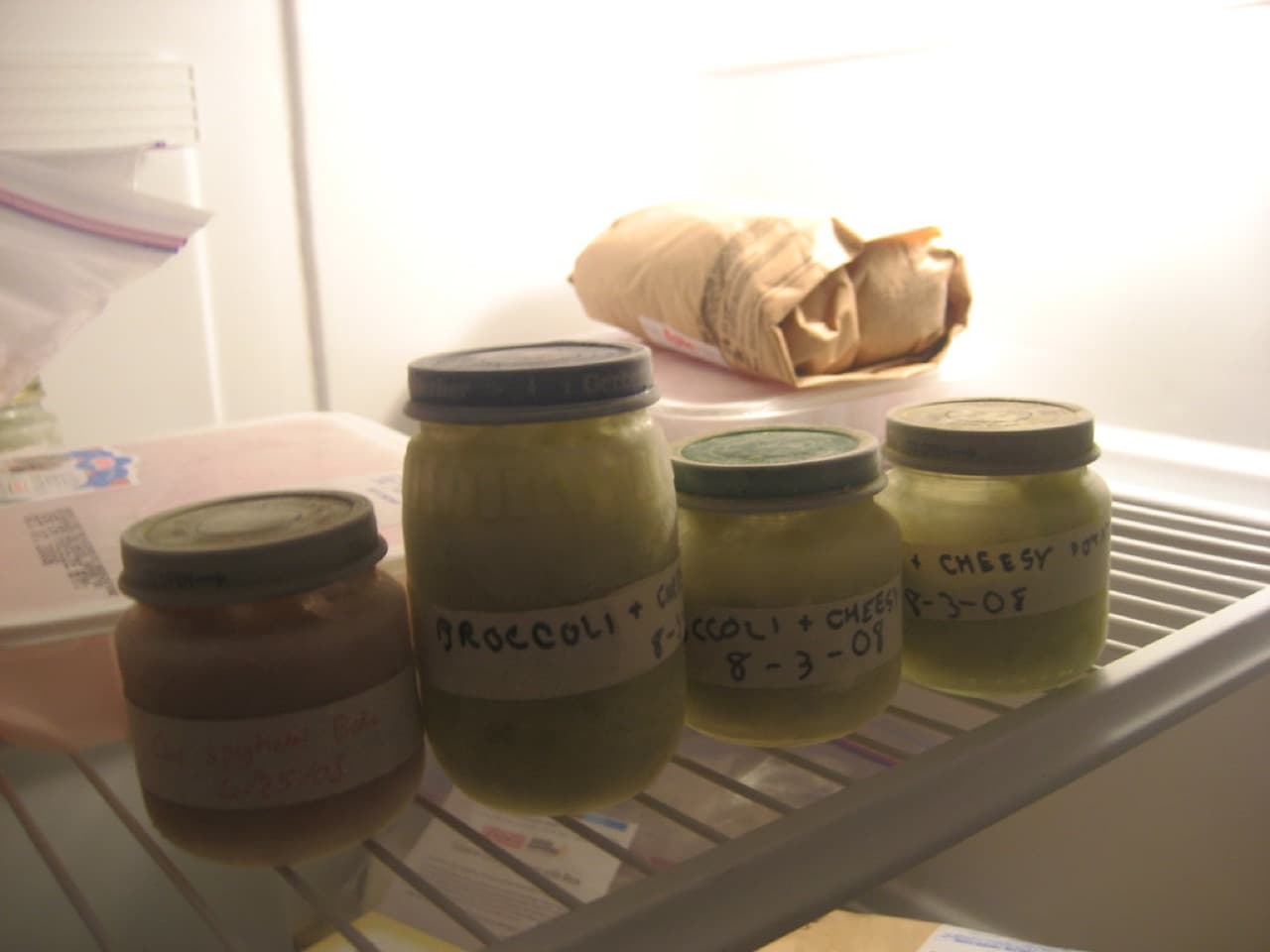
How to Freeze Homemade Baby Food (and Store It Safely in the Fridge)
How to freeze homemade baby food safely, how long it keeps in the fridge and freezer by food type, and a practical week-one freezer workflow — grounded in FDA and University of Illinois Extension food-safety guidance, not a blog-invented number.
Mom's Magazine Editorial Team
Editorial Team
The Mom's Magazine editorial team researches and writes practical, plainly-sourced guidance for parents and families. Guides are reviewed for accuracy and updated as recommendations change. Where a topic calls for professional expertise, we cite reputable organizations and, for health topics, add a qualified reviewer before publishing.
Newsletter
Get the Weekly Mom List
One short email a week: the most useful guides, activities, and picks for your family. No spam, unsubscribe anytime.