Products
Best Toddler Books About Becoming a Big Sibling (2026)
Which sibling-prep books actually help a toddler through the adjustment — and why the ones that admit it's hard tend to land better than the ones that only show the easy part.
As an Amazon Associate I earn from qualifying purchases.Some links on this page are affiliate links. If you buy through them, Mom's Magazine may earn a small commission at no extra cost to you. It never changes which products we recommend. How we recommend products.
The books that actually help a toddler through a new sibling aren't the ones that promise a smooth transition — they're the ones that name the hard parts out loud. The Berenstain Bears' New Baby and Mercer Mayer's The New Baby both let the older sibling feel annoyed or left out before coming around, which matches how the adjustment actually goes for most toddlers. Joanna Cole's I'm a Big Sister (and its Big Brother companion) works better for the youngest end of this age range — simple, short text for a one- or two-year-old who won't sit through a longer story. Jo Witek's Hello In There! is built specifically for the waiting period before the baby arrives, which is a different job than the after-the-baby's-home books.
Quick picks
| Product | Best for | |
|---|---|---|
| Hello In There! A Big Sister's Book of Waiting Best for the waiting period | The waiting period before the baby arrives | Check price on Amazon |
| I'm a Big Sister Best for the youngest siblings | The youngest siblings, roughly age 1-3 | Check price on Amazon |
| The New Baby (Little Critter) Best after the baby's home | After the baby is home, when the adjustment gets real | Check price on Amazon |
| The Berenstain Bears' New Baby Best for a fuller story | A fuller story-time read for slightly older siblings | Check price on Amazon |
How we picked
This is a researched list, not a story-time test we ran ourselves — we haven't sat down and read all four of these to a specific toddler and tracked how they reacted. We pulled from books that show up repeatedly across parenting and child-development-informed sibling-prep lists, and prioritized differentiating on what actually matters for this category: what stage of the transition a book is built for, and whether it's honest about the hard parts or only shows the easy ones.
Why honesty beats relentless cheerfulness
AAP's guidance on preparing a child for a new sibling is direct about setting realistic expectations rather than a rosy preview: be honest that the baby will be cute but will also cry and take a lot of time and attention, and expect that your older child may not understand much about what having a sibling actually means, especially at the younger end of toddlerhood. A book that shows an older sibling feeling put out, ignored, or annoyed before eventually warming up isn't a downer — it's giving a toddler permission to feel what they're probably already going to feel, instead of implying something's wrong with them for not being thrilled on day one.
Before the baby arrives vs. after — different jobs
| Book | Best timing | Age range | Tone |
|---|---|---|---|
| Hello In There! A Big Sister's Book of Waiting (also available as a Big Brother edition) | Before the baby arrives | Roughly 2-5 | Anticipatory and interactive — a lift-the-flap format for imagining what's coming |
| I'm a Big Sister / I'm a Big Brother | Either — works as a simple ongoing reference | Roughly 1-3 | Short, matter-of-fact, board-book format |
| The New Baby (Little Critter) | After the baby's home | Roughly 2-5 | Gently honest about mixed feelings, resolves with genuine sibling bonding |
| The Berenstain Bears' New Baby | After the baby's home | Roughly 3-6 | Longer narrative arc from jealousy through adjustment |
Hello In There! A Big Sister's Book of Waiting
Jo Witek's lift-the-flap book is built specifically for the waiting period, which most sibling-prep books skip past entirely in favor of the after-the-baby's-home story. An eager sibling-to-be imagines what they'll do together once the baby arrives — the interactive flaps give a toddler something to physically do with the book, which matters for holding attention at the younger end of this range. A Big Brother edition covers the same ground for families expecting a boy in the older-sibling role.
Check price on AmazonHello In There! A Big Sister's Book of Waiting
I'm a Big Sister / I'm a Big Brother
Joanna Cole and illustrator Rosalinda Kightley's board book is the right length for the youngest end of this list — a one- or two-year-old who won't sit through a full picture-book narrative still gets something out of short, simple, repeated lines about what a big sibling gets to do. It's less about processing complicated feelings and more about building the vocabulary ("sister," "brother," "baby") a toddler needs before the bigger emotional conversation is even possible.
Check price on AmazonI'm a Big Sister
The New Baby (Little Critter)
Mercer Mayer's Little Critter finds out having a baby sister around isn't all bad, but the book doesn't rush past the parts where it clearly is annoying at first — that mix of real disappointment and eventual genuine bonding is closer to how most toddlers actually experience a new sibling than a story where everyone's delighted from page one. It reads well after the baby's already home, when the abstract idea has become a real, attention-absorbing person.
Check price on AmazonThe New Baby (Little Critter)
The Berenstain Bears' New Baby
This one has a longer narrative arc than the others on this list, which makes it a better fit once a child is old enough to follow a fuller story — generally closer to age 3 and up. Brother Bear's jealousy is named directly rather than glossed over, and the resolution comes from the family actively making room for him rather than the baby simply becoming less demanding. It's a slower read for story time, not a quick pre-bed check-in.
Check price on AmazonThe Berenstain Bears' New Baby
How to actually use these books
Reading a single sibling-prep book once, right before the baby arrives, does less than reading a shorter list of two or three books repeatedly across the weeks before and after. Toddlers process a big change through repetition, not a one-time explanation — the fifth reading of the same book often prompts a comment or question the first reading didn't. Let a toddler hold the book, point at pictures, or interrupt with unrelated comments rather than steering every reading toward a lesson; the exposure matters more than a perfectly executed conversation about feelings.
What's not worth prioritizing
Personalized story services that insert your child's name and appearance can genuinely hold a toddler's attention through name-recognition alone, which is a real strength at this age — but they cost meaningfully more than a standard picture book and aren't inherently better at the emotional content, since the personalization is cosmetic, not developmental. If budget is a factor, a library copy of any of the honest, well-reviewed titles above does the same job as buying every option on this list.
If sibling adjustment turns into ongoing rivalry once the baby's older and more mobile, our guide to handling sibling rivalry picks up where this one leaves off, and our guide to preparing a toddler for a new baby covers the broader logistics of the transition beyond just the books.
Our Recommendations

Hello In There! A Big Sister's Book of Waiting
Best for: The waiting period before the baby arrives
A lift-the-flap board book following an eager older sibling imagining what's ahead — built specifically for the anticipation stage that most sibling-prep books skip past.
- Interactive lift-the-flap pages on every spread
- Written for the before-baby-arrives stage specifically
- Also available as a Big Brother edition
- Short, toddler-appropriate text length
Keep in mind: Once the baby actually arrives, the anticipatory framing no longer fits — pair it with an after-the-baby's-home book rather than relying on it alone.

I'm a Big Sister
Best for: The youngest siblings, roughly age 1-3
A short, simple board book naming what a big sibling gets to do, in language a one- or two-year-old can actually follow — a companion I'm a Big Brother edition covers the same ground.
- Board book format built for the youngest readers
- Short, repeated, age-appropriate text
- Bright, straightforward illustrations
- Companion Big Brother edition available
Keep in mind: Too simple to hold a preschooler's attention on its own — better as an early, ongoing reference than a one-time emotional conversation starter.

The New Baby (Little Critter)
Best for: After the baby is home, when the adjustment gets real
Little Critter works through genuine annoyance at a new baby sister before landing on real bonding — the mixed feelings are shown honestly rather than skipped for a tidier story.
- Familiar, long-running Little Critter character
- Balances real disappointment with eventual sibling bonding
- Picture-book length, works well after the baby's home
- Part of a wide, easy-to-find series
Keep in mind: Less useful for the before-baby waiting period, since the story assumes the baby is already there and part of daily life.
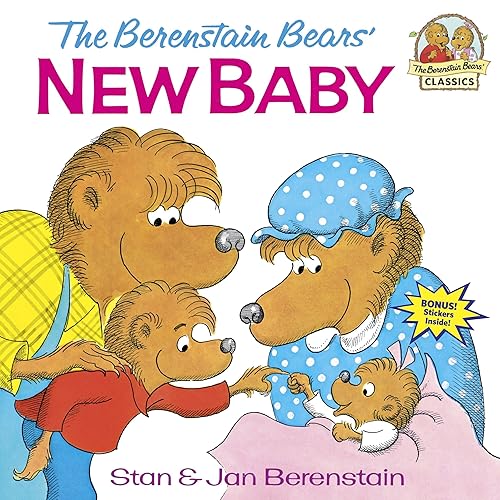
The Berenstain Bears' New Baby
Best for: A fuller story-time read for slightly older siblings
A longer narrative arc than the others on this list — Brother Bear's jealousy is named directly, and the resolution comes from the family making deliberate room for him rather than the baby simply becoming easier.
- Longer narrative than typical board books, better for sustained story time
- Names sibling jealousy directly rather than glossing over it
- Part of the long-running, widely available Berenstain Bears series
- Resolution focuses on parents actively including the older child
Keep in mind: The longer format is a poor fit for a child under about 3 who won't sit through a fuller story arc.
As an Amazon Associate I earn from qualifying purchases. Mom's Magazine may earn a commission when you buy through links on this page, at no extra cost to you. Learn more.
Frequently Asked Questions
When should we start reading sibling-prep books with a toddler?
As soon as the pregnancy is being talked about openly at home works for most families — a book like Hello In There! is built for exactly that waiting period. There's no need to wait until close to the due date; repetition over months does more than a single reading right before the baby arrives.
Should we read these books before or after the baby is born?
Both, ideally with different books for each stage. Anticipatory books work best before the baby arrives; books like The New Baby or The Berenstain Bears' New Baby, which show the actual day-to-day adjustment, land better once the baby is home and the older sibling has something real to relate the story to.
My toddler seems more upset after reading these books — is that normal?
It can be, and it isn't necessarily a sign to stop. A book that names jealousy or annoyance directly can surface feelings a toddler was already having but hadn't put into words — that's often the book doing its job, not causing a new problem. If distress is significant or ongoing, following the child's lead on how much to read, or talking with your pediatrician, is reasonable.
Board book or full picture book — how do I choose?
Go by your toddler's current attention span, not their age on paper. A board book with short, simple text works better for a child who can't yet sit through a full story, regardless of whether they're 18 months or nearly 3; move to a longer picture-book format once they're reliably engaged through a full story at bedtime.
Are personalized sibling-prep books worth the extra cost?
They can genuinely hold a toddler's attention better through name recognition, which is a real, legitimate benefit at this age — but the personalization is cosmetic rather than developmental, so a standard, well-reviewed book (or a library copy) does the same emotional work for less money.
Sources & Further Reading
- Preparing Your Older Child for a New Baby: How to Help Siblings Adjust — American Academy of Pediatrics (HealthyChildren.org) (reviewed 2026-08-26)
Related Guides
Preparing Your Toddler for a New Baby (and Surviving the Adjustment)
How to prepare a toddler for a new sibling before and after the birth, how to handle regression and jealousy — and why the transition is hard on parents, too.

How to Handle Sibling Rivalry
Why siblings fight, what actually helps in the moment and over time, and what to skip because it tends to backfire.
Best Books for New and Expecting Moms in 2026
Four books worth actually reading during pregnancy and the fourth trimester — grouped by what stage you're in, not just a long undifferentiated list.
Mom's Magazine Editorial Team
Editorial Team
The Mom's Magazine editorial team researches and writes practical, plainly-sourced guidance for parents and families. Guides are reviewed for accuracy and updated as recommendations change. Where a topic calls for professional expertise, we cite reputable organizations and, for health topics, add a qualified reviewer before publishing.
Newsletter
Get the Weekly Mom List
One short email a week: the most useful guides, activities, and picks for your family. No spam, unsubscribe anytime.