Parenting
Gentle Parenting: What It Actually Means (and What It Doesn't)
Gentle parenting explained without the myths: empathy plus firm, consistent limits — not permissiveness — and how it lines up with what pediatricians recommend.

Gentle parenting means responding to kids with empathy while holding firm, consistent limits — it is not permissive, and it doesn't mean no boundaries or no consequences. You acknowledge the feeling, stay calm, and keep the limit ("I won't let you hit — you're really mad"). That approach lines up with what the American Academy of Pediatrics recommends: positive discipline (limits, redirecting, and modeling) instead of spanking, yelling, or shaming, which research finds ineffective and even harmful.
"Gentle parenting" might be the most argued-about phrase in modern parenting — partly because so many people think it means letting kids run the show. One of r/toddlers' most-upvoted posts of all time is a parent who calmly rode out a full toddler meltdown in a Walmart, only to have a child therapist stop them afterward to say how well they'd handled it. That calm-but-firm response is gentle parenting in a nutshell — and it's nothing like permissiveness.
What gentle parenting actually is
- Acknowledge the feeling: "You're so mad the screen went off."
- Hold the limit anyway: "It's still time to turn it off."
- Stay regulated yourself — your calm is what helps them settle.
- Use natural or logical consequences instead of punishment where you can.
- Model the behavior you want; kids copy what they see far more than what they're told.
What it's NOT
- It's not permissive — limits and "no" are absolutely part of it.
- It's not consequence-free — it's just not punishment-based.
- It's not negotiating with a toddler until they're happy about bedtime.
- It's not the child in charge — the adult still leads, calmly.
It lines up with the pediatric consensus
The AAP recommends "positive discipline" — setting limits, redirecting, praising good behavior, and modeling — and advises against spanking, yelling, insulting, or shaming, which the evidence shows are ineffective long-term and linked to more aggression, not less.
Gentle parenting in action
A favorite technique from the toddler communities is the "improv rule": instead of a flat "no" that triggers a battle, you redirect with a "yes, and." "Yes, we can splash — and we keep the water in the tub." "Yes, you can throw — and we throw the soft ball, not the truck." It holds the limit while giving the child a yes to move toward.
Calm AND firm — not calm OR firm
The goal isn't to avoid the boundary; it's to deliver it without the yelling. "I love you, and the answer is still no" is the whole method in one sentence.
Calm-but-firm scripts for the top flashpoints
Gentle parenting gets a lot easier when you have a few lines ready before the storm hits, so you're not improvising while a toddler screams. The pattern is always the same: name the feeling, hold the limit, offer a path forward. A few of the most common battles:
- Hitting: "You're so angry. I won't let you hit — hitting hurts. You can stomp your feet or squeeze this pillow." (Block the hit calmly as you say it.)
- Leaving the park: "You wish we could stay — it's so fun here. It's time to go now. Do you want to hop like a bunny to the car or walk like a bear?"
- Won't share on a playdate: "He's using it right now, and it's your turn next. I'll help you find something to do while you wait."
- Bedtime stalling: "You don't want the day to end. It's still time for bed. One more book, then lights out — every night."
- The grocery-store meltdown: "You really want the candy. We're not buying it today. I know that's disappointing — you can be sad, and I'm right here."
Consequences, gently: natural vs. logical
Gentle parenting keeps consequences — it just favors ones that make sense over punishments that don't. A natural consequence is one you let happen (they refuse a coat, they feel chilly). A logical consequence is one you set that connects to the behavior (they throw the blocks, the blocks get put away for now). Both teach far more than an unrelated punishment like taking away a toy for a dinnertime issue.
When "gentle" isn't working
The most common reason gentle parenting seems to "fail" is that the empathy is there but the follow-through isn't — endless acknowledging and negotiating with no actual limit. Empathy without a boundary is permissiveness, and kids feel unsafe without limits. If it isn't working, check whether you're actually holding the line:
- Say the limit once, clearly, then follow through with action rather than repeating it ten times.
- Don't negotiate a set boundary (safety, bedtime, hitting) into a debate — acknowledge the feeling, keep the limit.
- Follow-through means you calmly help it happen: if it's time to leave, you gently guide them out, tantrum and all.
- Consistency across days and caregivers is what makes limits actually land — a boundary that holds only sometimes gets tested constantly.
The repair is part of the method
You will lose your temper sometimes — everyone does. Gentle parenting doesn't require perfection; it includes repair. "I got loud earlier and that wasn't okay. I'm sorry. Let's try again" models accountability and emotional regulation better than never slipping ever could.
When you're not the only one parenting
Gentle parenting is far easier to run when everyone caring for your child is roughly aligned — and a real source of friction when they aren't. A partner raised on "because I said so," a grandparent who thinks it's too soft, or a daycare with different rules can all leave a child getting mixed messages. A few things help without demanding everyone parent identically:
- Agree with your co-parent on the non-negotiables (safety, how you handle hitting) so the child gets one consistent answer on the things that matter most.
- Focus on shared goals rather than labels — most caregivers agree on "we don't hit and we do stay calm," even if "gentle parenting" as a term raises eyebrows.
- Let grandparents and other caregivers have slightly different styles on small stuff; kids can learn that different homes have different rules.
- Share a couple of your go-to scripts with regular caregivers so the calm-but-firm response carries across settings.
It's a long game, and that's the point
Gentle parenting often takes more effort in the moment than a sharp "stop it," and it doesn't always end a behavior faster today. What it's building is longer-term: emotional regulation, problem-solving, and a kid who cooperates because they trust you, not because they fear you. Judge it over months, not single moments.
Gentle parenting really gets tested in the hard moments — how to handle toddler tantrums and how to handle toddler biting put the calm-but-firm approach to work on the two toughest ones. The quieter, more everyday test is whining — it's a smaller ask than a tantrum or a bite, but it's where naming a feeling instead of just saying "stop" gets practiced most often, since it happens the most.
Frequently Asked Questions
Isn't gentle parenting just letting kids do whatever they want?
No — that's permissive parenting, which is a different thing. Gentle parenting pairs empathy with clear, consistent limits. You still say no, still hold boundaries, and still have consequences; you just deliver them calmly instead of with punishment or shaming.
Does gentle parenting actually work?
Its core — warmth plus firm limits, and positive discipline over punishment — is exactly what pediatric guidance supports, and research links harsh punishment to worse behavior over time, not better. It asks more of the parent in the moment (staying calm is hard), but it's building skills, not just stopping a behavior.
What do I do when staying calm feels impossible?
Lower the bar to "don't escalate." Take a breath, keep your voice quiet, hold the limit, and reconnect once everyone's settled. You won't be calm every time — repair afterward ("I got loud, I'm sorry, let's try again") is part of it, and it models exactly what you want them to learn.
Does gentle parenting mean no consequences or punishments?
It means no punishment-for-punishment's-sake, not no consequences. Natural consequences (you skip your coat, you feel cold) and logical ones (you throw the blocks, the blocks go away for now) are core to the approach — they teach cause and effect. What it drops is spanking, yelling, shaming, and unrelated punishments, which research links to worse behavior over time, not better.
My family says I'm 'too soft' and spoiling my kid. Are they right?
Not if you're actually holding limits. Gentle parenting done well is warm and firm — the child is not in charge, boundaries are clear, and consequences exist; they're just delivered calmly. "Spoiling" comes from a lack of limits, not from empathy. If your version has drifted into endless negotiating with no follow-through, that's worth tightening — but warmth itself isn't the problem.
How do I do gentle parenting if my partner or my kid's grandparents parent differently?
Agree with your co-parent on the non-negotiables — safety and how you handle things like hitting — so your child gets one consistent answer where it matters most. Focus on shared goals ('we don't hit, we stay calm') rather than the label, which sidesteps a lot of resistance. Kids can handle that different homes have slightly different rules, so let grandparents have their own style on small things while you hold the line on the big ones.
Is gentle parenting actually proven to work, or is it a trend?
Its core — warmth combined with firm, consistent limits, and positive discipline over punishment — is exactly what the American Academy of Pediatrics recommends, and research links harsh punishment like spanking and shaming to more aggression over time, not less. It asks more of the parent in the moment because staying calm is hard, and it's a long game aimed at building skills rather than just stopping a behavior today — but the underlying approach is well supported, not a fad.
Sources & Further Reading
- Effective Discipline to Raise Healthy Children — Pediatrics (American Academy of Pediatrics) (reviewed 2026-08-12)
- What's the Best Way to Discipline My Child? — American Academy of Pediatrics (HealthyChildren.org) (reviewed 2026-08-12)
Related Guides
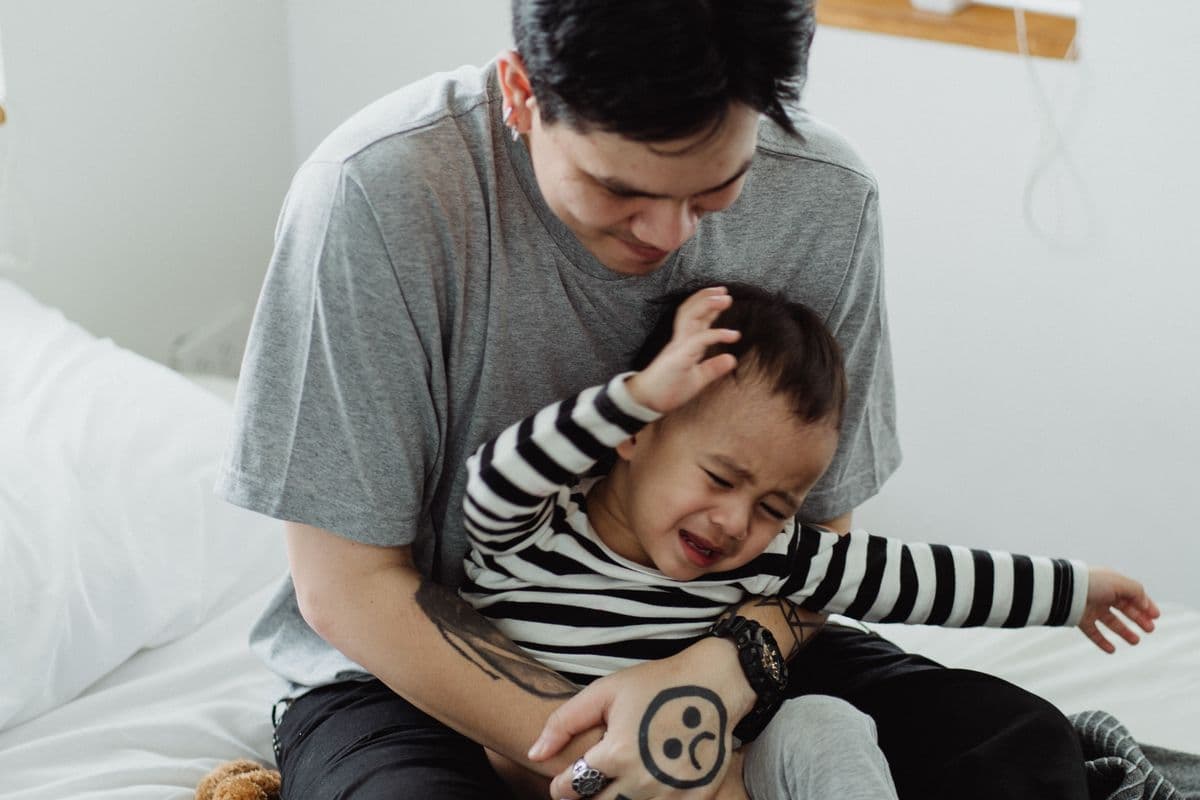
How to Handle Toddler Tantrums: Real Help That Works, According to AAP and CDC
Help with toddler tantrums, how to handle toddler tantrums, and how to deal with toddler tantrums, using AAP, CDC, and NIH pages: what actually helps in the moment, an age-by-age look at what's typical at 1, 2, and 3, tantrums by setting (car seat, store, bedtime, drop-off), how to prevent the next one, and when to call your pediatrician. Editorially reviewed general information — not medical advice.

How to Handle Toddler Biting
Why toddlers bite, the calm-and-firm response that actually reduces it, and when biting is more than a developmental phase.

Separation Anxiety & Daycare Drop-Offs: What Helps (and What Makes It Worse)
Why separation anxiety is a normal, healthy phase, when it peaks, and how to make daycare drop-offs easier — including the truth that it's usually harder on you.
Why Toddlers Whine (and What Actually Helps)
Whining peaks for a reason: it sits in the gap between having the words to ask for something and the emotional control to handle not getting it. What escalates it, what defuses it, and why "stop whining" rarely works.
Mom's Magazine Editorial Team
Editorial Team
The Mom's Magazine editorial team researches and writes practical, plainly-sourced guidance for parents and families. Guides are reviewed for accuracy and updated as recommendations change. Where a topic calls for professional expertise, we cite reputable organizations and, for health topics, add a qualified reviewer before publishing.
Newsletter
Get the Weekly Mom List
One short email a week: the most useful guides, activities, and picks for your family. No spam, unsubscribe anytime.