Family Life
What 1, 1.5 and 2 Carat Lab-Grown Diamonds Actually Look Like (Sizes in mm by Shape)
How big is a 1, 1.5 or 2 carat lab-grown diamond? Real millimeter sizes for round, oval, emerald and pear stones, what changes between each step, and how to picture it before you buy a push present or anniversary gift.

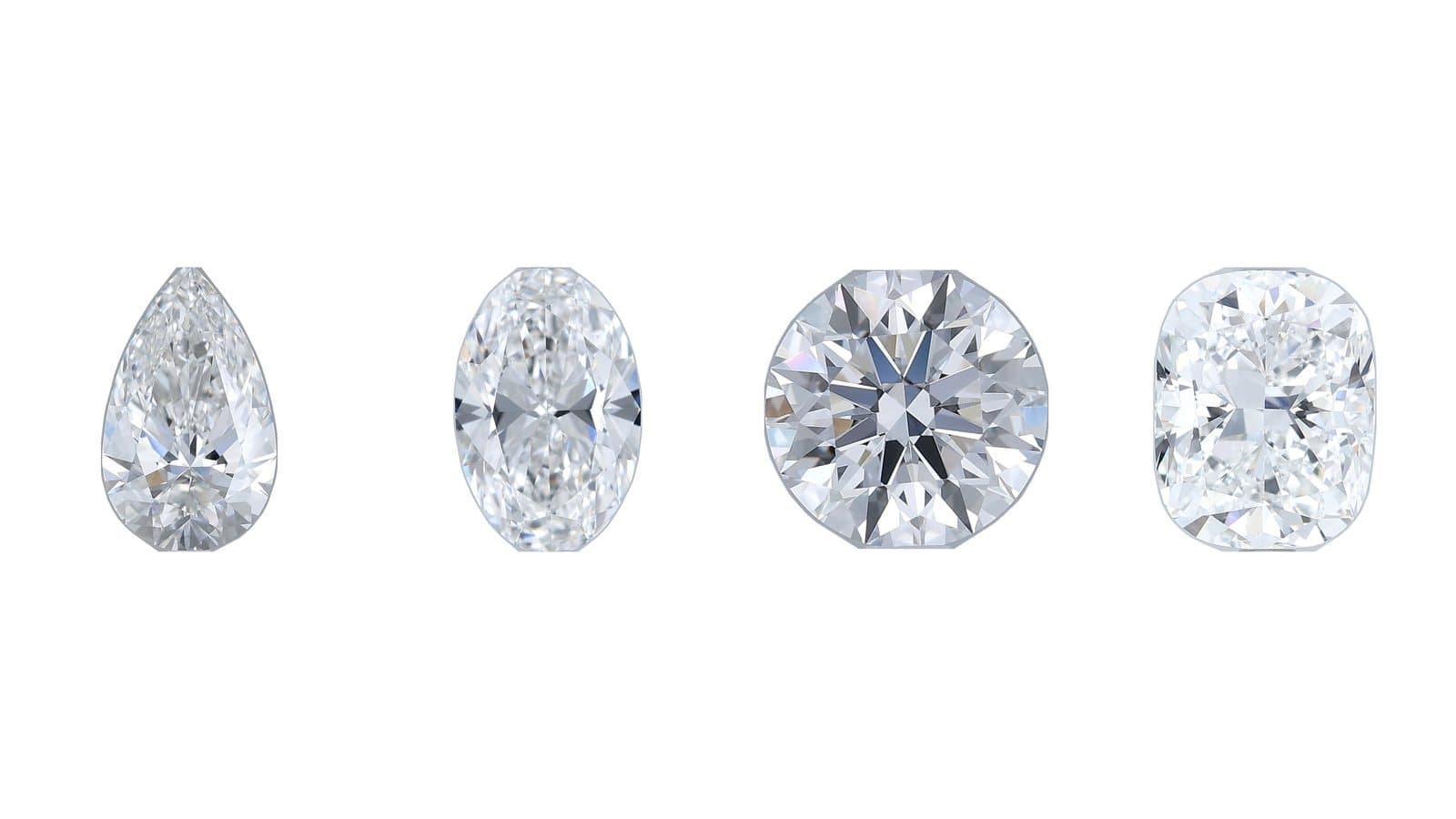
A 1 carat round lab-grown diamond is typically about 6.5 mm across, a 1.5 carat round about 7.4 mm, and a 2 carat round about 8.2 mm. Elongated shapes look longer for the same weight: a typical 1 carat oval is about 8.2 × 5.6 mm and a 2 carat oval about 10.2 × 7.0 mm. Carat is weight, not size, so going from 1 to 2 carats adds about a quarter to the width of a round, not double.
If you are shopping for a push present, an anniversary gift or a first "real" piece of jewelry, carat weight is usually the first number you see, and it's the hardest one to picture. A 2 carat diamond sounds like it should be twice the size of a 1 carat diamond. It isn't. This guide turns carats into millimeters you can actually picture, shape by shape, so you know what you are getting before you buy.
The sizes below are medians from the measurements printed on real IGI and GIA grading reports for white loose lab-grown diamonds, taken from the size chart published by our partner, Carat Confidential. In partnership with Carat Confidential.
First, carat is weight, not size
A carat is a unit of mass. GIA defines the metric carat as 200 milligrams, so a 1 carat diamond weighs a fifth of a gram. What you see when you look down at a ring or pendant is the stone's face-up outline, and that depends on three things: the shape, how deep the stone is cut, and (for elongated shapes) its length-to-width ratio.
Lab-grown diamonds are real diamonds. The FTC's Jewelry Guides define a diamond as a mineral of essentially pure carbon crystallized in the cubic system, and lab-grown and mined diamonds share the same density. That means a lab-grown stone and a mined stone of the same weight and proportions measure the same, so any honest size chart works for both.
Round diamonds: 1 vs 1.5 vs 2 carats
Rounds are the easiest to compare because only one number matters face-up: the diameter.
| Carat weight | Typical diameter | Range seen on real reports | Face-up area vs 1 carat |
|---|---|---|---|
| 1 carat | 6.5 mm | 6.4 to 6.6 mm | Baseline |
| 1.5 carats | 7.4 mm | 7.3 to 7.5 mm | About 30% more |
| 2 carats | 8.2 mm | 8.0 to 8.3 mm | About 58% more |
The jump from 1 to 2 carats adds a little under 2 mm to the diameter. Because face-up area grows with the square of the diameter, a 2 carat round covers roughly 58% more surface than a 1 carat round. It's noticeably bigger, but it won't look twice as big. The 1.5 carat round sits almost exactly in between, which is why many people find it a comfortable middle ground.
See it at real size
Grab a ruler and draw three circles on paper: 6.5 mm, 7.4 mm and 8.2 mm across. Hold the paper against a hand or a collarbone. It is a surprisingly good way to decide which size feels right before you ever look at a listing.
Oval, emerald and pear: how the same weights look in other shapes
Elongated shapes put more of their weight into length, so they tend to look larger from above than a round of the same carat weight. The table shows typical length × width in millimeters.
| Shape | 1 carat | 1.5 carats | 2 carats |
|---|---|---|---|
| Round (diameter) | 6.5 mm | 7.4 mm | 8.2 mm |
| Oval | 8.2 × 5.6 mm | 9.2 × 6.3 mm | 10.2 × 7.0 mm |
| Pear | 9.0 × 5.5 mm | 10.2 × 6.3 mm | 11.2 × 6.9 mm |
| Emerald | 6.8 × 4.7 mm | 7.6 × 5.4 mm | 8.5 × 5.9 mm |
| Cushion | 6.7 × 5.3 mm | 7.6 × 6.1 mm | 8.6 × 6.6 mm |
| Princess | 5.5 × 5.4 mm | 6.3 × 6.1 mm | 7.0 × 6.9 mm |
- Ovals look generous for the weight. Using the 1 carat medians and simple geometry, a 1 carat oval covers about 8% more surface than a 1 carat round, and its length makes it read bigger on a finger.
- Pears are measured tip to tip, so their length includes the point. They make a natural pendant shape because the point leads the eye downward.
- Emerald and princess cuts look more compact. Their deeper, step-cut or square shapes carry more weight below the surface, so a 1 carat princess is only about 5.5 mm across.
- Cushions come in square and elongated versions, so check the length-to-width ratio on any listing rather than relying on the shape name.
For the full chart, including 0.5 to 5 carats and ten shapes, see Carat Confidential's lab-grown diamond size chart (carat to mm). If you are leaning toward an oval, its oval buying guide explains ratio and the "bow-tie" shadow.
What each size tends to suit
There is no right size, only the one she'll love wearing. These are starting points, not rules.
| Piece | How carat works here | What to keep in mind |
|---|---|---|
| Stud earrings | Pairs are usually sold by total carat weight (often written ctw). "1 carat studs" usually means two stones of about 0.5 carat each, roughly 5.2 mm across for rounds. | Ask whether a weight is per stone or total before comparing. |
| Solitaire pendant | A 1 to 1.5 carat round or a pear in the same range reads clearly at the collarbone. | A sturdy chain and a bezel or low-profile setting hold up better to a grabby baby. |
| Right-hand or anniversary ring | An oval or pear at 1 to 1.5 carats looks larger than a round of the same weight. | Hands can change after pregnancy, so many couples size the ring once things settle. |
| Engagement or upgrade ring | Many people compare 1.5 and 2 carats side by side. | Compare millimeters and look at the stone on video, not just the carat number. |
Two stones, same weight, different sizes
Two diamonds of the same weight can measure differently. A deeper stone hides more of its weight below the girdle, where you can't see it. The report lists measurements (length × width × depth) and a total depth percentage, so compare length and width first. If one 2 carat round measures 8.0 mm and another 8.3 mm, the second will look bigger face-up. Very shallow stones can lose brightness, though, so the biggest number isn't automatically the best stone.
Round numbers are also where most search filters sit. A 1.90 carat round and a 2.00 carat round differ by about a tenth of a millimeter in diameter, which no one can see. It's worth browsing just under the round number and comparing measurements.
How to check the size before you buy
- Find the report number on the listing. Reputable lab-grown sellers show it on the product page.
- Look it up on the lab's own site (IGI's Verify Your Report page, or GIA's Report Check).
- Confirm the shape, carat weight and measurements match the listing exactly.
- Check the report says the stone is laboratory-grown. The FTC requires clear lab-grown disclosure.
- Watch any video of the actual stone to see how the size and sparkle come across.
Carat Confidential sells certified loose lab-grown diamonds. Each certified stone's page lists the report number and the measurements from the report, and most have a 360° video of the actual diamond. In partnership with Carat Confidential. Because the stones are loose, you choose the diamond and then have a jeweler set it in a pendant, studs or ring. If she loves color, its guide to pink, blue and fancy-color lab-grown diamonds explains how those colors are graded and disclosed.
See the full carat-to-mm size chartOpens caratconfidential.com in a new tab.
Disclosure
In partnership with Carat Confidential. We may be compensated when you visit their site. The millimeter figures in this article are medians from Carat Confidential's published size chart, which it built from the measurements on IGI and GIA reports for the white loose lab-grown diamonds it listed on October 11, 2026. Mom's Magazine did not measure or examine these diamonds. Individual stones vary, so the measurements on a stone's own report are what count. Educational facts come from GIA, IGI and the FTC, linked in the sources below. This article is general information, not appraisal advice.
Frequently Asked Questions
How big is a 1 carat lab-grown diamond?
A 1 carat round lab-grown diamond is typically about 6.4 to 6.6 mm in diameter. A 1 carat oval is typically about 8.2 × 5.6 mm, a 1 carat pear about 9.0 × 5.5 mm and a 1 carat emerald cut about 6.8 × 4.7 mm.
How much bigger is a 2 carat diamond than a 1 carat?
A 2 carat round is typically about 8.2 mm across, compared with about 6.5 mm for a 1 carat round. That is roughly 26% wider and about 58% more face-up surface, not twice the size, because the extra weight is spread through the depth of the stone as well as its width.
What size is a 1.5 carat lab-grown diamond?
A 1.5 carat round is typically about 7.4 mm in diameter. A 1.5 carat oval is typically about 9.2 × 6.3 mm and a 1.5 carat pear about 10.2 × 6.3 mm.
Is a lab-grown diamond the same size as a mined diamond of the same carat?
Yes, at the same weight and proportions. Lab-grown and mined diamonds are the same material with the same density, so a 1 carat lab-grown diamond and a 1 carat mined diamond cut the same way measure the same.
Which diamond shape looks biggest for its carat weight?
Elongated brilliant shapes such as oval, pear and marquise usually look the largest from above for their weight, because they spread it into length. Deep square cuts such as princess and Asscher look the most compact.
Does 1 carat diamond studs mean each earring is 1 carat?
Usually not. Stud pairs are commonly described by total carat weight, so 1 carat studs usually means two stones of about half a carat each. Check whether a listing gives the weight per stone or in total.
Sources & Further Reading
- Carat Weight (GIA 4Cs) — Gemological Institute of America (GIA) (reviewed 2026-10-11)
- 16 CFR 23.12, Definition of diamond — Electronic Code of Federal Regulations (eCFR) (reviewed 2026-10-11)
- FTC Approves Final Revisions to Jewelry Guides (July 24, 2018) — Federal Trade Commission (reviewed 2026-10-11)
- Lab-Grown Diamond Report — International Gemological Institute (IGI) (reviewed 2026-10-11)
- Verify Your Report — International Gemological Institute (IGI) (reviewed 2026-10-11)
- Lab-Grown Diamond Size Chart: Carat to MM by Shape — Carat Confidential (reviewed 2026-10-11)
Related Guides
Lab-Grown Diamond Push Present Ideas: A Guide for Partners (Guest Post from Carat Confidential)
A guest post in partnership with Carat Confidential on lab-grown diamond push present ideas: whether to do one, pendant vs. studs vs. rings, baby-proof settings, a 4Cs crash course, and how to verify an IGI or GIA report.

The Mental Load: How to Actually Share Invisible Labor With Your Partner
What the mental load is, why splitting chores doesn't fix it, and a domain-based way to redistribute the invisible work of running a household.
Personalized Photo Gift Ideas the Whole Family Will Love
Thoughtful, personal gift ideas made from the photos you already have — for grandparents, partners, and kids.

Postpartum Recovery: What to Expect
A gentle, honest overview of postpartum recovery — physical and emotional — and when to call your provider.
Mom's Magazine Editorial Team
Editorial Team
The Mom's Magazine editorial team researches and writes practical, plainly-sourced guidance for parents and families. Guides are reviewed for accuracy and updated as recommendations change. Where a topic calls for professional expertise, we cite reputable organizations and, for health topics, add a qualified reviewer before publishing.
Newsletter
Get the Weekly Mom List
One short email a week: the most useful guides, activities, and picks for your family. No spam, unsubscribe anytime.